In 2013, Jairo Mora Sandoval a 26-year-old Costa Rican sea turtle conservationist, who patrolled beaches near Limon, was murdered. To many conservationists and international organizations protecting the environment, it has seemed that there is no end to the violence against environmentalists and community-rights campaigners as Berta Cáceres (read our story in March of this year), a much-lauded Honduran indigenous activist, was also murdered.
But at least once in awhile, there’s a hint of justice as New York Times reported. Brave testimony helped to convict killers of Sandoval after three years. Four men were convicted of the murder and related attacks on four female volunteers who worked with the young man. Three other men were acquitted on all charges. A previous trial had ended in acquittals all around, largely because of missteps by investigators and prosecutors, but an appeals court sent the case back for retrial.
The major factor that helped to convict the killers was the gripping testimony provided last month by Skype of Almudena Amador, a Spanish veterinarian who was one of the attackers’ victims according to the reports. In fact, it was significant that the court found that the killing was no random incident, but clearly linked to the illicit trade of turtle eggs. The court’s panel of three judges highlighted Mora’s work with sea turtles as the primary motivation for his murder.
As more and more conservationists put their lives in danger in order to safe-guard the natural resources and heritage sites, it is important for local and national governments and authorities to create more restrict laws, regulations, measures, and punishments for crimes that focus on protecting these environmentalists and their organizations. The recent victory is a small one for conservationists and environmentalists but hopefully the first of many more for those who preserve and conserve our planet’s natural heritage.
Destruction of an Ancient Water System in Iran
On April 16, 2016 the head of the Cultural Heritage office in Dezful, Iran, announced that, “due to the recent rainstorm in Dezful and the rise of water levels in the Dez River, a part of the historical water mills and the ancient bridge of this city have been wrecked, and some of the facilities are completely destroyed.”
The ancient bridge and water mills built over the Dez River are 1700 years old and date back to the Sassanid Dynasty and King Shapur in Iran. Most of these mills were used before the beginning of the 20th century. The bridge has been repaired and rebuilt over the years by King Azdodole Deilami during the Saffavid and Pahlavi dynasties.
Professor Roman Ghirshman believes that the site represents the oldest water system in the world. The system was registered in the Iranian national list of historical sites and was on the verge of getting registered in the UNESCO list of world heritage sites.
Considering the site has been intact for many centuries, the present situation reflects a degree of negligence on the part of relevant authorities, despite the fact that the experts working for the Iranian Cultural Heritage Organization have repeatedly noted the dangers of heavy transportation activities over the bridge.
The real extent of destruction to the water mills and the bridge is still unknown.
Save Our Earth
April 22 Earth Day
Earth Day was first celebrated in the United States in 1970 and is organized by the Earth Day Network. Its mission is to broaden and diversify the environmental movement worldwide and to mobilize it as the most effective vehicle to build a healthy, sustainable environment, address climate change, and protect the Earth for future generations. With this year’s theme, looking forward to its 50th anniversary, it sets the goal of planting 7.8 billion trees over the next five years.
World Heritage Day
In 1983 UNESCO established 18th of April as the International Day for Monuments and Sites. The designation of this day aims to raise public awareness about the diversity and vulnerability of the world’s built monuments and heritage sites and the efforts required to protect and conserve them. In addition, each year has a different theme. The 2016 theme for the International Council on Monuments and Sites (ICOMOS) International Day on Monuments and Sites celebrated is: The Heritage of Sport, looking ahead to the Olympics in Brazil, is The Heritage of Sport.
This day is also commonly known as World Heritage Day. However, whilst UNESCO is the organization that lists World Heritage Sites, this day is not just about the listed sites, but brings attention to all cultural heritage places and landscapes of international, national and local significance.
The World Heritage Day is also a good day to create educational and informative projects for students and educators. For example The UNESCO site gives details of success stories and successful restorations as well as world heritage sites in danger.
In addition, ICOMOS also gives a list of ways for the public to celebrate the day or the week:
- Visits to monuments and sites, and restoration works, possibly with free admission
- Articles in newspapers and magazines, as well as television and radio broadcasts
- Hanging banners in town squares or principal traffic arteries calling attention to the day and the preservation of cultural heritage
- Inviting local and foreign experts and personalities for conferences and interviews
Organizing discussions in cultural-centers, city halls, and other public spaces - Exhibitions (photos, paintings, etc)
- Publication of books, post-cards, stamps, posters
- Awarding prizes to organizations or persons who have made an outstanding contribution to the conservation and promotion of cultural heritage or produced an excellent publication on the subject.
- Inaugurate a recently restored monument
- Special awareness raising activities amongst school children and youth
- Promotion of collaborative opportunities between organizations, defining areas for co-operation’ exchange of speakers; organization of meetings and seminars, or editing of joint publications.
UNESCO Calls for United Action to Protect Vulnerable Sites, and Thanks NGOs

Director of the UNESCO World Heritage Centre, Mechtild Rössler, in a recent call, acknowledges the great efforts of those engaged for World Heritage protection, and calls for civil society as a whole to increase its commitment to protecting World Heritage sites, stating that World Heritage is humankind’s common heritage, and the responsibility for its conservation is shared by everyone.
In the call, UNESCO acknowledged the support of NGOs such as World Wide Fund for Nature (WWF) and referred to its latest report, stating that 2015 saw an unprecedented level of action from governments and the private sector around the world. “In January last year, the government of Kiribati declared its entire World Heritage site – the largest site on UNESCO’s World Heritage List – off limits for fisheries; in May Shell decided to renounce drilling in the Chukchi Sea which threatened Wrangel Island Reserve System in Russia; and in December the government of Belize announced a permanent ban on oil extraction in its World Heritage area.”
In addition, The Director of the World Heritage Center welcomes cooperation with NGOs, including WWF, on the protection of World Heritage sites worldwide as partners in the identification, nomination and protection of World Heritage properties. UNESCO also stated that, thanks to NGOs and civil society, many States Parties have been alerted to potential threats to their irreplaceable heritage and to sites of Outstanding Universal Value. The World Heritage Committee is taking increasingly strong action to prevent deterioration of World Heritage sites and mitigate threats to them.
Half of World Heritage Sites Threatened by Development
In a recent report by the World Wildlife Fund (WWF), the organization reports that at least 114 of 229, close to half, of world heritage sites of outstanding importance for species and habitats are now being threatened by industrial development, mining and other activities.
These sites include Australia’s Great Barrier Reef, the Grand Canyon in the US, and China’s giant panda sanctuaries in Szechuan among many others. These sites are all supposed to be protected under the United Nations’ designated world heritage status. But encroachments from industries, including fossil fuel exploration and illegal logging, are threatening to destroy the valuable habitats, the conservation charity WWF said on Wednesday, April 6th, 2016.
World heritage sites fall under three categories: cultural, natural and mixed. “Natural” heritage refers to sites with outstanding physical, biological and geological formations, including the habitats of threatened species of animals and plants, and areas with scientific, conservation or aesthetic value. On the other hand, Cultural heritage refers to monuments, groups of buildings and sites with historical, aesthetic, archaeological, scientific, ethnological or anthropological value. However, many sites hold qualities that give them what is called “Mixed heritage”, referring to sites which include both cultural and natural criteria.
According to UNESCO’s criteria, there are currently 229 designated world heritage sites with natural “outstanding universal value”. Currently, 197 are solely natural sites, and 32 are mixed, displaying both natural advantages and cultural input. These two designations account for more than a fifth of all UNESCO world heritage sites, the others being mainly human constructions, such as Venice.
The Guardian Newspaper reports that the critics have suggested that the UN has not done enough to ensure the protection of the many sites that it designates as worthy of special conservation. UNESCO world heritage status is a coveted accolade, but also confers responsibilities on the governments of the countries in charge of the sites.
The benefits of preserving such sites extend far beyond the boundaries of the areas under special protection, according to the report. It is clear that having a site designated as a Heritage site brings attention and tourism and with that comes Jobs in tourism and conservation. On the other hand the protected areas provide food, plants, water, medicine and other benefits to millions of people. One great example is the case of the Belize Barrier Reef, where the construction of buildings along the coast, accompanying clearance of the mangrove swamps – which provide a shelter against storm damage and erosion – are affecting the lives of 190,000 people, or about half the state’s population.
WWF is calling on governments to ban harmful industrial activities in designated world heritage sites and their surroundings, and calling on the international companies with interests in such areas to take responsibility.
Violation of Ancient Chogha Zanbil Site
According to reports by Iranian sources, the Cultural Heritage Authority of Iran (CHAI) issued a permit two months ago for industrial tree plantations within 600 acres of the registered limits of the Chogha Zanbil* site, an ancient Elamite complex in the Khuzestan province of Iran and one of the few non-Mesopotamian ziggurats in existence.
Answering the worried questions of media, local authorities say that they are not aware of
the existence of any such permit. Mohammad Hassan Talebiab, the deputy of CHAI, has also declared that there was a previous understanding with their Khuzestan office in which all such projects had to be studied and sanctioned by the central office so that no violation could happened within the limits of the Chogha Zanbil site. He has also claimed that such a permit has not been issued by his office. While machinery of the company involved is already at work on the site, no one knows what governmental source has authorized the operations.
*Chogha Zanbil is an ancient Elamite complex in the Khuzestan province of Iran. It is one of the few existent ziggurats outside of Mesopotamia. It lies approximately 42 km south-southeast of Dezful, 30 km south-east of Susa and 80 km north of Ahvaz
Ancient Marketplace Found in Denizli
Ongoing excavations in the ancient city of Tripoli in the western province of Denizli’s Buldan district have unearthed a 2,000-year-old market place, indicating that the city was a significant center of trade in the past.
Pamukkale University (PAU) Archaeology Department academic and excavation head Bahadır Duman said they had started excavations last week in Tripoli, which was a Lydian city located at the intersection of Phrygia, Karia and Lydia in the Hellenistic era.
Palmyra After The Destruction
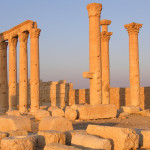
Just a few days ago, the Syrian forces recaptured the city of Palmyra and some of the images offer hope amid ruins. According to the reports in several international news outlets some parts of the ancient citadel seem to have survived occupation by Islamic Terrorists ISIS.
The Terrorist group has destroyed some of Palmyra’s most treasured artifacts, including the Temple of Bel and the Arch of Triumph. However, some of Palmyra’s ruins appear to have survived, including the Agora and the celebrated Roman theatre. The Photographs taken following the recapture of the city of the UNESCO world heritage-listed site, known as “the bride of the desert”, show the damage made by ISIS during its 10-month occupation.
While many experts expected the worst, the Syrian government is now sending a team of archaeologists to Palmyra in the coming days to assess the damage to its monuments, and the government is pledging to rebuild the destroyed temples and arch.
However, another immediate danger still remains. It is believed that while the terrorists were leaving, they left hidden mines behind around the city and also in many historical and archeological sites. Therefore, the troops are now working on clearing mines from the town and its monuments, where numerous booby traps were laid down by the militants before their retreat.
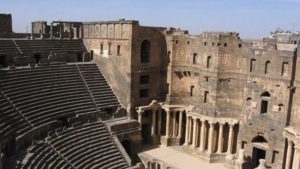
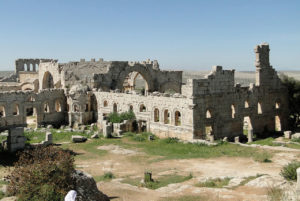
The city of Palmyra and the area had been taken over by the ISIS terrorists in May 2015. The terrorists are responsible for damaging or destroying all six of Syria’s UNESCO’s World Heritage sites, which Palymra is one of. Other sites include the pilgrimage site of Bosra, Crac des Chevaliers – one of the most important and well preserved medieval castles – and Qal’at Salah El-Din. Aleppo and Damascus are also UNESCO sites and have suffered after fighting, along with the ancient villages of Northern Syria.
A French team of digital surveyors from ICONEM are working with archaeologists from the Syrian Directorate General of Antiquities and Museums (DGAM) to preserve the historic sites by creating detailed 3D maps of the sites.
City of Palmyra Recaptured from ISIS
Syrian government forces, backed by Russian air power, have recaptured the ancient city of Palmyra from the Islamic State of (ISIS) after days of intense fighting.
The Britain-based Syrian Observatory for Human Rights said gunfire could still be heard in the eastern part of the city on Sunday morning, but that the bulk of ISIS’s forces had retreated.
Palmyra, known as the “bride of the desert”, used to attract tens of thousands of tourists a year before the conflict started in 2011.
The army was now trying to dismantle booby trap bombs in some of the city’s neighborhoods, sources told Al Jazeera