We believe that all cultural, historical and natural heritage, wherever they are should be preserved. LEARN MORE
News

Default Category

US Returns 200 Stolen Artifacts to India

indiaIt took almost a decade but over two hundred artifacts which had been stolen and smuggled out of India to be sold in the international market were finally returned to India.

It has been reported by a number of media outlets that about nine years ago, federal investigators received a tip about a shipment of seven crates destined for the U.S. The shipment had been labeled as “marble garden table sets.” Further examination of the shipment by the U.S. border authorities revealed that the crates actually contained numerous antiquities, setting off “Operation Hidden Idol,” which resulted in the arrest of six people. According to Homeland Security Investigations (HSI), an investigative arm of U.S. Immigration and Customs Enforcement (ICE), the artifacts are worth more than $100 million.

Last week, more than 200 of those artifacts were returned to the government of India in a joint ceremony with U.S. Attorney General Loretta Lynch and India’s Prime Minister Narendra Modi.


As reported by CNN and ABC, the treasured artifacts were stolen from religious sites and date back to 2,000 years ago. The Department of Homeland Security returned religious statues, bronzes and terracotta pieces to the Indian government. The collection includes a statue of Saint Manikkavichavakar, a Hindu mystic and poet from the Chola period (circa 850 AD to 1250 AD), that was stolen from the Sivan Temple in Chennai, India. It is valued at an estimated $1.5 million. The items also include a bronze sculpture of the Hindu god Ganesh estimated to be 1,000 years old.

The crates were allegedly imported by former New York-based art dealer Subhash Kapoor, who was arrested and is now awaiting trial in India for allegedly looting tens of millions of dollars’ worth of rare antiquities from several nations, according to ICE. He has pleaded not guilty. ABC reported that, in addition to Kappor, five people were arrested in connection to the looted artifacts. Some items allegedly brought into the U.S. through various schemes were found in the Honolulu Museum and Peabody Essex. It is unclear how those museums actually obtained the artifacts. Those items were also turned over to federal authorities.

Over the past decade, the U.S. has returned more than 7,500 artifacts to countries around the world. Last summer, a $15 million Picasso painting was turned over to France at least 14 years after it was stolen from a Paris museum. And, just last month, a stolen Christopher Columbus letter, which turned up in the Library of Congress, was returned to Italy.


Experts Agree to Emergency Measures for Safeguarding Syria’s Heritage

syriaEarlier this month on June 2nd, an expert meeting was held in Berlin for two days and brought together over 230 Syrian and international experts to discuss safeguarding Syria’s heritage.  The meeting which was organized by UNESCO and Germany aimed to assess damage to cultural heritage sites in Syria, develop methodologies and define priority emergency safeguarding measures for the country’s heritage. The meeting was opened by Irina Bokova, Director-General of UNESCO, and Maria Böhmer, Minister of State for Foreign Affairs of Germany.

The Conference participants included leading archaeologists, anthropologists, and experts in monument preservation, architects and urban planners. Among them were representatives of the Syrian Antiquities Directorate (DGAM) as well as other scientists and experts from or working in Syria.  A number of young Syrian experts were also invited to the meeting and a new mentoring system structure was proposed to bring together young experts and to establish training of professionals for the protection of Syrian cultural heritage.

According to the UNESCO’s website, the expert meeting for the emergency safeguarding of Syria’s cultural heritage included several roundtable discussions on damage assessment and current actions by cultural heritage professionals. In addition, thematic sessions focused on the role of local communities, documentation and archives, capacity building and safeguarding plans. Participants also proposed practical measures to address damage assessment, mapping and inventories, legal and institutional frameworks, technical assistance, including first aid measures for built heritage, and capacity building, as well as communication and awareness-raising. Concrete measures were identified for historic cities, archaeological sites, museums, movable objects and intangible heritage and these were added to the UNESCO Recommendations and Road Map, adopted in 2014.

One of the major subjects discussed included the critical and persistent issue of looting and illicit trafficking of cultural heritage. The experts called for a comprehensive list of looted objects from Syria to complement the International Council of Museum’s existing Red List and appealed on all governments to implement United Nations Security Council Resolutions banning the trade in cultural heritage from the country.

Furthermore the experts appealed to international funding and development agencies to include cultural heritage in major funding programs and post-conflict recovery plans. At the end of the conference, the experts presented proposals to improve the future prospects of Syria’s heritage through post-conflict recovery plans.

2500 year-old “Black Bardak Palace” is on the verge of extinction

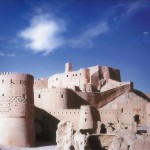
Bardak-Siah-1 According to a report published on the Iranian site ” Aftab Net Daily”, the Black Bardak Palace and its valuable contents, those which belonged to the Iranian emperor Darius the Great around 500 B.C., are in a rapidly stage of deterioration.
The palace was discovered and unearthed by a group of Iranian archaeologists headed by Ehsan Yaghmaei, in the city of Bushehr in southern Iran. It is mainly made of two kinds of black and white stones, unique in color and structure. A large amount of gold has also been discovered that is believed to be the cover of wooden doors of the palace. From the beginning of the excavations, the archaeologist came to believe that this palace might have been larger and more luxurious than Persepolis.
Due to unknown reasons, however, the Cultural Heritage Organization of Iran stopped further excavations ten years ago and the site was left without any security and control.
During this long period, the remains of the palace, including the columns and black murals, have been deteriorating due to the lack of supervision.
One of the unique Bardak-Siah-2artifacts discovered in the palace is a bas-relief depicting Darius and his entourage, very similar to the bas-reliefs in Persepolis. The artifact possesses written lines of Babylonian calligraphy, and was put inside a short oval wall made of bricks, held together by mortar and then covered in textile material. Experts believe that the penetration of water can damage the stony bas-relief.
The existence of other scattered broken stones and smashed artifacts at the site show the extent of many unauthorized excavations.
It is interesting to note that the palace was registered in the list of national treasures of the country but never received any due maintenance and control.
In an interview with the head of the archaeological group, Ehsan Yaghmaei has expressed his utmost apprehension about the situation, adding that the Cultural Heritage Organization of the country has been reluctant to publish a book that details the two seasons of excavations at this ancient site.

World Environment Day

khali.1World Environment Day is celebrated every year on JUNE 5 to raise global awareness to take positive environmental action to protect nature and the planet Earth. It is run by the United Nations Environment Program.I

It was established by the United Nations General Assembly in 1972 on the day that United Nations Conference on the Human Environment began.

Le Corbusier, An Architect’s Global Heritage

lecorbusierLe Corbusier was one of the greatest architects of the 20th century, and his work both built and written have had a enormous impact on the world. According to the UNESCO’s website, his work demonstrates major technical and conceptual changes of the Modern Movement in the field of architecture and Urbanism, and reflects an ongoing search for new forms as well as constructive principles and models for living. Le Corbusier wanted his work to be collective and universal, and accordingly he designed buildings not only in his native France but also in several other countries including Japan, Germany, Argentina and India. Le Corbusier was also a prolific theorist and his ideas were not only disseminated through his projects and constructions but also through his writings.

In the early 2000’s, France started creating a tentative list to be submitted to UNESCO to be featured on the World Heritage List at the time. Following this, and on the basis of a nomination project for the urban design of Firminy-Vert, where two works of Le Corbusier existed (without counting an unfinished project from that time), a review was conducted by the French Ministry of Culture and the Fondation Le Corbusier on the works of Le Corbusier that could and should be proposed for nomination for the World Heritage List. According to the UNESCO’s website, after initially focusing on the iconic monument of Le Corbusier, the reflection then turned to all of his work and the international influence that his work has had on the world. This analysis led to cooperation between several countries (France, Germany, Argentina, Belgium, Switzerland, Japan and India) and a project to develop a trans-boundary nomination proposal centered on the series of his work and its influence at the international level. On France’s initiative, with the support of the Fondation Le Corbusier, an important preparatory work was initiated to examine the feasibility of a nomination proposal.

In order to provide international support the France-UNESCO Cooperation Agreement assisted in the organization of two international experts’ meetings by the Fondation Le Corbusier and the French Ministry of Culture. One of them took place at the Fondation Le Corbusier on 18 June 2004 in Paris, followed by a second in Firminy-Vert and at Couvent de la Tourette (France) on 19 June. These information, coordination, and awareness-raising meetings with international experts led to the launch of a working group to put in place a working method in order to develop a nomination proposal. The challenge within the context of the France-UNESCO Cooperation Agreement (according to the UNESCO’s website) was to participate in an approach to promote modern heritage, underrepresented at that time on the World Heritage List, and to support reflection on the methodology of a serial and trans-boundary nominations.

Finally in 2008, the first proposal was submitted, and was examined during the 33th Session of the World Heritage Committee (Sevilla, 2009), but was referred, and was once again examined during the 35th Session of the World Heritage Committee (Paris, 2011), where it was deferred. A revised version was submitted in 2015.   France and six other countries have nominated 17 works as a single entry on the World Heritage List. The proposal will be reviewed again at the July meeting in Turkey, when the UNESCO World Heritage Committee reviews the nomination again.

Church of Saint Simeon Severely Damaged

SimeonAccording to reports in several news outlets, the recent airstrikes have caused severe damage to the Church of Saint Simeon, part of the UNESCO World Heritage property of the Ancient Villages of Northern Syria. The photographs of the area show that the byzantine Church which is believed to have been built in the year 490 AD on Mount Simeon and used to be a popular destination for worshipers and tourists alike before the civil war has been mostly destroyed.

UNESCO reports that the Director-General of UNESCO, Ms Irina Bokova, has now issued a statement and has deplored the heavy damage incurred to the historic and heritage site in Northern Syria. It is believed that the destruction is possibly a result of an air strike on May 12th, 2016. 

UNESCO statement reads: “I again reiterate my call on all parties to the conflict to refrain from any military use and from targeting cultural heritage sites and monuments across all of Syria, in respect of their obligations under international treaties, particularly the 1954 UNESCO Convention on the Protection of Cultural Property in the Event of Armed Conflict and its two Protocols, as well as the 1972 World Heritage Convention.”

It has also been reported that UNESCO has received information and photographic evidence showing that the Church appears to have suffered extensive damage, including to the remains of the pillars on which Saint Simeon is said to have spent forty years as a hermit.

According to the UNESCO’s site, the Church of Saint Simeon Stylites is part of the UNESCO World Heritage site of the Ancient Villages of Northern Syria, some 40 villages grouped in eight parks situated in north-western Syria that provide remarkable testimony to rural life in late Antiquity and during the Byzantine period. These villages are believed to have been abandoned in the 8th to 10th centuries, but they date back from the 1st to 7th centuries, and feature a remarkably well preserved landscape and the architectural remains of dwellings, pagan temples, churches, cisterns, bathhouses etc. The relict cultural landscape of the villages also constitutes an important illustration of the transition from the ancient pagan world of the Roman Empire to Byzantine Christianity. The archaeologists have also observed vestiges illustrating hydraulic techniques, protective walls and Roman agricultural plot plans which furthermore offer testimony to the inhabitants’ mastery of agricultural production.


Museum Day

MuseumEvery year since 1977 International Museum Day is organized worldwide around May 18.

This day is an occasion to raise awareness on how important museums are in the development of society.

ICOM Advisory Committee organizes the theme of this event that, given the high number of countries involved, lasts a day, a weekend, a week or even a month.

From America to Oceania including Africa, Europe and Asia, this international event has confirmed its popularity. mozeh-meli-iran.htm-2

These recent years, International Museum Day has been experiencing its highest involvement with almost 30,000 museums that organized activities in more than 120 countries.

Egyptian Statue Disappears Into Private Collection

Statue_of_Sekhemka_1950sThe case that created a campaign and so many objections from the public and international outcry might be over. It was reported yesterday that an ancient Egyptian statue described as an “irreplaceable masterpiece” has most probably left the United Kingdom (UK). The statute was sold to a mysterious private collector for nearly £16m by a British museum about two years ago. The campaigners now call for an end to anonymous auction house sales of art. The UK Government had put an export ban on the 4,500-year-old statue of Sekhemka, amid attempts in Egypt to crowd fund enough money to buy it. Campaigners in the UK (against the sale of the statute to a private buyer) and the Egyptian antiquities minister Mamdouh al-Damaty were appalled and described its sale by Northampton Borough Council as “a moral crime against world heritage” as a number of news outlets have reported.

The campaigners had asked the government to put a ban on the move of the statute even after it was sold. However, the export ban was lifted recently and the Save Sekhemka Action Group UK announced their failure in securing enough funds to buy the statute back. The group announced that they had found no official support for their campaign from the great national museums and that the impartial condemnation of Northampton Borough Council – which had sold the statute- by Arts Council England and the Museums Association made no impression.

The 4,500-year-old statue of Sekhemka has been rumored to have been sold to a private American collector. The limestone statue, which is about 2.5ft high, shows Sekhemka and a smaller figure, assumed to be his wife, kneeling beside him. It is believed that Spencer Compton, the second Marquis of Northampton, acquired the statue during a trip to Egypt in around 1850, but it was donated to the museum by the family about 30 years later.

Arts Council England has stripped Northampton Museum of its accreditation status until at least 2019, meaning the Museum is no longer eligible for a string of public grants and other funding, because the sale breached conditions covering the disposal of historic artifacts.

The campaign might be over for the UK group but the Egyptian government has decided to continue to seek legal advice over the unethical sale of Sekhemka. The UK group has however appealed publicly to the mysterious buyer to lend the statue permanently to the Brooklyn Museum, New York, which is already looking after a damaged statue of a similar age and history.

One Elephant Killed Every 15 Minutes

As reported recently, The demand for ivory has skyrocketed and can now fetch more than $600 per pound on the black market. This increased demand has sent poaching rates soaring, with an estimated one elephant killed every 15 minutes.

Beyond the immediate effects this has on the ecosystem, poaching also threatens the livelihoods of people living in places where elephants range. Poachers spread crime and rob communities of one of their most valuable assets. Elephants draw tourists from around the world, providing a legal, sustainable source of income for people living in communities where elephants range.

In response, the Nature Conservancy in Africa has launched the African Elephant Initiative to scale up and expand our elephant conservation efforts.

AfricanElephant1african elephant1