We believe that all cultural, historical and natural heritage, wherever they are should be preserved. LEARN MORE
News

Default Category

Ancient Marketplace Found in Denizli

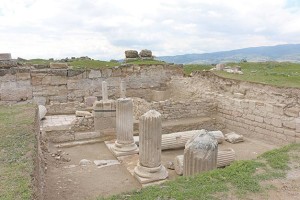
marketplaceOngoing excavations in the ancient city of Tripoli in the western province of Denizli’s Buldan district have unearthed a 2,000-year-old market place, indicating that the city was a significant center of trade in the past. 

Pamukkale University (PAU) Archaeology Department academic and excavation head Bahadır Duman said they had started excavations last week in Tripoli, which was a Lydian city located at the intersection of Phrygia, Karia and Lydia in the Hellenistic era. 

Palmyra After The Destruction

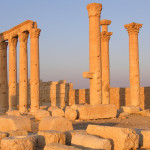
Palmyra_03Just a few days ago, the Syrian forces recaptured the city of Palmyra and some of the images offer hope amid ruins. According to the reports in several international news outlets some parts of the ancient citadel seem to have survived occupation by Islamic Terrorists ISIS.
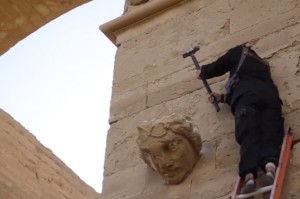
The Terrorist group has destroyed some of Palmyra’s most treasured artifacts, including the Temple of Bel and the Arch of Triumph. However, some of Palmyra’s ruins appear to have survived, including the Agora and the celebrated Roman theatre. The Photographs taken following the recapture of the city of the UNESCO world heritage-listed site, known as “the bride of the desert”, show the damage made by ISIS during its 10-month occupation.
While many experts expected the worst, the Syrian government is now sending a team of archaeologists to Palmyra in the coming days to assess the damage to its monuments, and the government is pledging to rebuild the destroyed temples and arch.
However, another immediate danger still remains. It is believed that while the terrorists were leaving, they left hidden mines behind around the city and also in many historical and archeological sites. Therefore, the troops are now working on clearing mines from the town and its monuments, where numerous booby traps were laid down by the militants before their retreat.
The city of Palmyra and the area had been taken over by the ISIS terrorists in May 2015. The terrorists are responsible for damaging or destroying all six of Syria’s UNESCO’s World Heritage sites, which Palymra is one of. Other sites include the pilgrimage site of Bosra, Crac des Chevaliers – one of the most important and well preserved medieval castles – and Qal’at Salah El-Din. Aleppo and Damascus are also UNESCO sites and have suffered after fighting, along with the ancient villages of Northern Syria. 
A French team of digital surveyors from ICONEM are working with archaeologists from the Syrian Directorate General of Antiquities and Museums (DGAM) to preserve the historic sites by creating detailed 3D maps of the sites.

City of Palmyra Recaptured from ISIS

palmira7 Syrian government forces, backed by Russian air power, have recaptured the ancient city of Palmyra from the Islamic State of (ISIS) after days of intense fighting.
The Britain-based Syrian Observatory for Human Rights said gunfire could still be heard in the eastern part of the city on Sunday morning, but that the bulk of ISIS’s forces had retreated.palmira3
Palmyra, known as the “bride of the desert”, used to attract tens of thousands of tourists a year before the conflict started in 2011.
The army was now trying to dismantle booby trap bombs in some of the city’s neighborhoods, sources told Al Jazeera

Happy Nowruz – March 20, 2016

Nowruz-posterNowruz is first day of Spring and the beginning of the Iranian year.  Nowruz is celebrated on the day of the vernal equinox, on 21st March or the previous / following day depending on where it is celebrated.  Nowruz is celebrated and observed by Iranian people as well as several other countries across Asia including Afghanistan, Turkey, Azerbaijan, Georgia, Tajikistan and many more.   The new year starts at the moment the Sun crosses the celestial equator and equalizes night and day or exactly when the Earth has completed one cycle around the Sun.

The celebration has its roots in Ancient Iran. Due to its antiquity, there exist various foundation myths for Nowruz in Iranian mythology.  The Shahnameh dates Nowruz as far back to the reign of Jamshid, who in Zoroastrian texts saved mankind from a killer winter that was destined to kill every living creature.  In the Shahnameh and Iranian mythology, Jamshid is credited with the foundation of Nowruz.  In the Shahnama,  Jamshid constructed a throne studded with gems. He had demons raise him above the earth into the heavens; there he sat on his throne like the sun shining in the sky. The world’s creatures gathered in wonder about him and scattered jewels around him, and called this day the New Day or No/Now-Ruz. This was the first day of the month of Farvardin (the first month of the Persian calendar).   On Nowruz, families gather together to observe the rituals and celebrate the beginning of the new year.

In addition, it is believed that originally the celebration was the holiest Zoroastrian festival, and Nowruz is believed to have been invented by Zoroaster himself, although there is no clear date of origin.  Since the Achaemenid era, the official year has begun with the New Day when the Sun leaves the zodiac of Pisces and enters the zodiacal sign of Aries, signifying the Spring Equinox.

International Nowruz Day was proclaimed by the United Nations General Assembly, in its resolution A/RES/64/253 of 2010, at the initiative of several countries that share this holiday (Afghanistan, Albania, Azerbaijan, the Former Yugoslav Republic of Macedonia, India, Iran (Islamic Republic of), Kazakhstan, Kyrgyzstan, Tajikistan, Turkey and Turkmenistan.

World Cultural Heritage Voices

Sassanid2 Sassanid_Music_Plate_7thcentury Persianmusic-sasanian

Ancient Nowruz artifacts from the Sassanian Dynasty – 224 CE to 651 CE.

DIGITAL CAMERA

Nowruz during the Safavid Dynasty circa 1501 to 1722 and 1729 to 1736.

WhiteHouse

Nowruz table ,and Persian New Year celebration in the White House

Nowruz Award for Dr. Abdolmajid Arfaee

arfaieDr. Abdolmajid Arfaee, is a unique expert of ancient languages of Akkad and Ilam and a researcher in the history of Ilam. He is one of the exceptional authorities and translators of cuneiform scripts in the world.
Dr. Arfaee is the recipient of “The Nowruz Prize” for the best personality of the year 2016, in the category of “Cultural Heritage”. He receives the award for:
– His lifelong perpetual efforts in support of preservation of cultural and historical heritage of Iran.
– Creating the first translation of the Cyrus the Great cylinder from its original language.
– His Collection of unique treasures of periodicals, magazines, pamphlets and books about the history of Iran and the world, and the texts of many ancient scripts on stone and clay, with the cooperation of Dr. Parviz Natel-Khanlari.
– Organizing a dedicated section of the Iranian National Museum to inscriptions and epigraphs.
– Reading and translating a large number of Persepolis clay inscriptions, as well as legal texts of Mesopotamia.
– And his unique collection of research and writings on Iranian history and culture.

Dr. Arfaee is one the most distinguished contemporary linguists and researchers of the Iranian history whose contributions to the field have not been appreciated adequately. He was the first Iranian to get involved in the saga of important Persepolis clay inscriptions that are the very documents, narrating the important aspects of Darius the Great era. Dr. Arfaee studied for eight years at the oriental section of Chicago University in order to read the Persepolis clay inscriptions. In Chicago, he worked under the supervision of Professor Richard Hallock, the famous authority on Ilam’s script and language. After the advent of the Islamic Revolution in Iran, Dr. Arfaee was no longer allowed to continue his work on the inscriptions and could no longer work at the Iranian Center for Literature and Arts, together with other authorities like Dr. Parviz Natel-Khanlari. Even though he was separated from his field of work and research, he did not stop his work and efforts. For the last few years he has been engaged again in reading and deciphering the Persepolis clay inscriptions, providing the young generations with the proud history of their Persian ancestors.

Nowruz Awards for Nikahang Kowsar

Nikahang7Mr. Nikahang Kowsar, an earthologist and environmental activist, is the Personality of the Year 2016, in the category of “Environment and Natural Heritage” for:
– His invaluable efforts to promote and increase people’s knowledge of the environment and natural heritage of his country, Iran.
– His ability to utilize his journalistic talent for preservation of environment and natural heritage.
– The publication of hundreds of articles and reports, as well as production of numerous videos in order to inform the public about the environment and natural heritage issues.
– And establishing a successful NGO with the aim of spreading knowledge about the subject.

Mr. Kowsar’s activities have become important and significant contributions in informing public and keeping the relevant issues alive in the critical and very sensitive area of water resources management and conservation of Iran’s environment.

Despite the fact that Mr. Kowsar was threatened in Iran due to his journalistic activities, and was eventually forced to flee his country, he has continued his activities both in Canada and Iran. He has continued using the free media and media outlets effectively for expanding knowledge of natural heritage and environmental issues amongst his compatriots and encouraging them to become active in the preservation of such treasures.

Nikahang Kowsar bio:

Nikahang (Nik) Kowsar, is an Iranian-Canadian cartoonist and journalist residing in Washington D.C. Born in Tehran, Kowsar, 46, studied Geology and Sedimentology in Iran and Journalism in Canada and has worked for the media, environmental organizations and non-profits since 1991.

Growing up in Iran, he learned a great deal from his father on aquifer management projects and from his mother who is a painter.

Kowsar joined Golagha satirical magazine while studying Geology in 1991 and later became a staff cartoonist of Hamshahri Newspaper in 1993. He was a staff cartoonists and editorial board member of a number of newspapers before leaving Iran in 2003. He was also a managing editor of the bilingual Newsletter of the International Rainwater Catchment Systems from 1996 to 1997.

Nikahang wrote numerous Op-Eds criticizing the water management in Iran and alerted the President on the negative impact of building hundreds of dams without paying attention to the water loss in aquifers and on not having a national program for reversing the situation in 2001.

He ran as an environmentalist in the 2003 City Council elections creating the “Green Coalition”, where all groups lost to Ahmadinejad’s Abadgaran.

Kowsar was arrested in 2000 for one of his cartoon that had triggered a 4 day protest in the holy city of Qum and caused a national security crisis before the parliamentary elections. He left Iran for Canada in 2003 after receiving a death threat, where his family joined him 4 years later.

He has worked as an editor and assistant editor, radio producer and cartoonist for Marketwire, IFEX, Radio Zamaneh and Roozonline and has been running Khodnevis.org as the editor-in-chief. He is a member of the New York Times Syndicate and is on the board of directors of Cartoonists Rights Network International. He produces Abangan, a weekly video show on drought and water crisis in Iran that’s aired by Andisheh TV/Ofogh-e Iran satellite TV Channel.

Nikahang is the recipient of 3 Crystal Pen Awards of the Iranian Press Festival and International Courage Award for Editorial Cartooning from CRNI and Honorary Diplomas from The Canadian National Press Club and Tolentino Caricature Contest in Italy.

Nowruz Award for Mohammad Ali Inanloo

inanlo3The prize for the best filmmaker and artist of the year 2016, in the category of natural heritage and environment goes posthumously, to Mr. Mohammad Ali Inanloo who was an expert and producer of documentaries on environment and natural heritage of Iran and one of the pioneers of educating people on ecotourism, Mr. Inanloo’s activities also included the followings:
– Forty years of systematic activities in introducing the exceptional environment of his country, Iran  to his compatriots.
– Producing numerous TV programs that entailed his vast travels to many unknown corners of his country.
– Ceaseless enthusiasm to attract the attention of his audience to issues and problems inflicting Iranian natural heritage and environment.
–  Pioneering in setting up ecotourism classes with the aim of teaching the correct methods of enjoying and dealing with the environment.

Mr. Inanloo worked on Iranian nature and environment for 40 years. His perseverance and enthusiasm to introduce the subject and encourage the appreciation of nature was unsurpassed. His travels in Iran covered 2 million kilometers, resulting in numerous documentaries, programs and articles. Although his activities were mostly centered in the government radio and TV, he never participated in anti-culture and anti-national programs and confined his cooperation to teaching and propagating his beloved subject of nature and environment.

Nowruz Award for Abangaan NGO

AbanganlogoAbangaan NGO:   The recipient of “The Nowruz Prize” for the best civil society of the year 2016, in the category of “Natural Heritage”, for:

– Establishing itself as a non-governmental institution, dedicated to the preservation of natural heritage, environment, and especially water resources of Iran.
– Gathering a number of American- Canadian- and European-Iranian young activists working on the above subjects.
– Striving to elevate and expand public education on such subjects through setting up discussions among experts and professionals.
– Production of educational and informative videos on relevant subjects.

It is not a secret that there are grim and critical conditions for natural heritage in Iran There is also a continued intentional and non-intentional negligence of relevant authorities, who also block activist and NGOs to continue their work for the conservation of environment and national heritage. The situation has resulted in the formation of Abangaan NGO outside Iran by a number of experts and people who are interested in the field of environmental conservation and in bringing this subject to the attention of the public through optimal use of the available media.  Although this organization is less than one year old, the members of this NGO have excelled in their cause despite the lack of financial and technical facilities.
Within the span of last six months, Abangaan NGO has been able to interview more than 20 experts, researchers in the field of environment who come from academic, political, cultural and artistic walks of life. These interviews have been compiled in a number of 26 minutes videos and have been broadcasted in Ofogh-e-Iran TV programs and later posted on the internet. Being of educational and analytical benefits, the videos have already attracted a vast number of audiences from all over the world and especially from Iran.
Their excellent work so far deserves much appreciation.

Abanganlogo

Iranian New Year Named: The Celebration of Mahasti Ganjavi

mahsati-ganjavi-wchvEvery year, on the advent of each Iranian New Year (which coincides with the beginning of spring), Pasargad Heritage Foundation (PHF) designates a name for the coming year that signifies a certain aspect of its mission. PHF is an organization established a decade ago outside Iran with the aim of preserving Iranian cultural heritage and has observed this name designation for the last 10 years.  The main purpose is to emphasize on the priceless values of the ancient cultural heritage of Iran that are exposed to constant destruction due to intentional and accidental negligence of the relevant authorities in that country.

The coming New Year of the Iranian calendar has been named as the “Year of Mahasti Ganjavi”, to commemorate a Farsi-speaking courageous poetess of 900 years ago who thought and spoke about the very subject matters that are expressed today by great anti-discrimination women of our times.

She was born in Ganje, an Iranian city that now is located in Azerbaijan Republic, before the language of that area was turned into Turkish. Thus, she is now being introduced as an Azerbaijani poetess whereas all her poetry is in Farsi.

Unfortunately, all through history, religious zealots have banned the spread and publication of her poetry in as many ways as possible. And then, by the advent of the Islamic Republic in Iran, she has been officially been recognized as a non-Iranian poet and the Islamic government has not accepted even to co-apply, together with Azerbaijanis, for the registration of her name as a poetess of Farsi literature in the Intangible Heritage Index of UNESCO.

Proposed by Pasargad Heritage Foundation