We believe that all cultural, historical and natural heritage, wherever they are should be preserved. LEARN MORE
Festivals

2014 Persian New Year Festival & Fire Jumping | Berkeley

firejumper-250x185

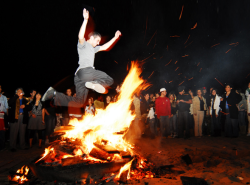
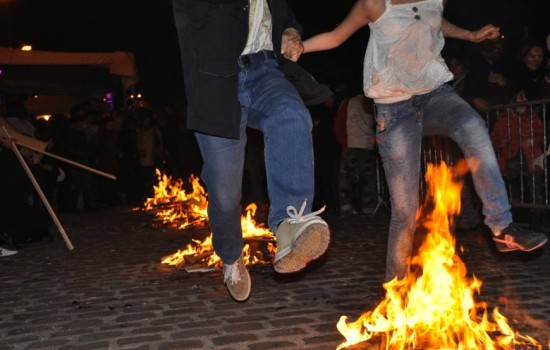
Jump over a bonfire (or watch others do it) in the ritual of “Chahr-Shanbeh Souri” as the Persian Center celebrates Nowruz, or Persian New Year to say goodbye to the darkness of winter and welcome the lightness of spring.


2014 Persian New Year Festival & Fire Jumping
Tuesday, March 18, 2014 | 6-10PM
Persian Center, 2029 Durant Avenue, Berkeley, CA
FREE


Inside the Persian Center, a traditional altar holds green grass, live goldfish, food and other items representative of spring called the “haftseen” or seven ‘s’s as each item on the table begins with the letter ‘s’.


Persian music, food, and craft vendors, cultural organizations, and children’s activities add to the nighttime experience. This is a free, family-friendly, non-alcoholic event held outdoors at night, rain or shine.


A Persian ritual passed down since ancient Zoroastrian times, the Persian New Year Festival, called Chahar-Shanbeh Souri, literally means ‘Eve of Wednesday” because the festival is always held on the last Tuesday of winter, just before the Vernal Equinox or first moment of spring.Chahar-Shanbe_Suri_1-550x350

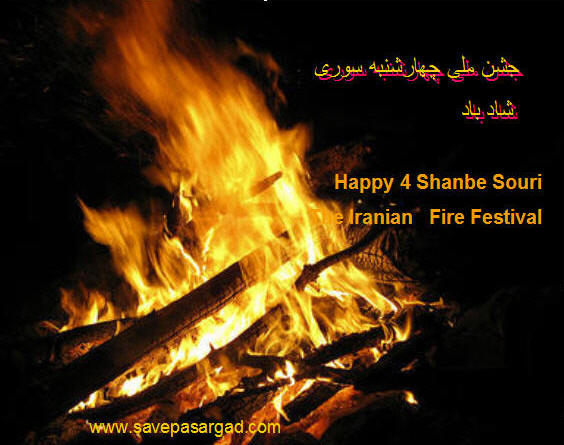
Chahar Shanbeh Souri, The Iranian Fire Jumping Festival

4shanbe souri.3Last  Wednesday of the Iranian year (Nowruz) know as Chahar Shanbeh Souri, is celebrated in the evening of the last Tuesday of each year, Iranians celebrate a fire festival with its roots in the ancient customs and history of the country.

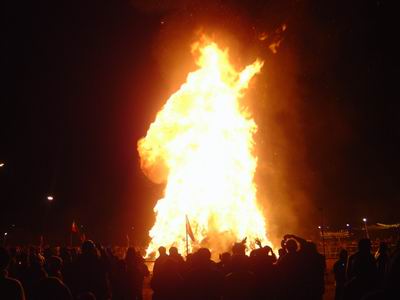
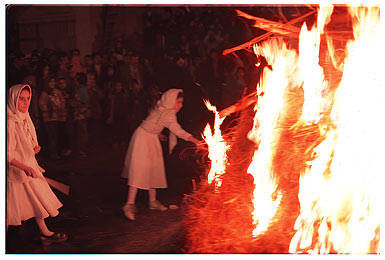
Jumping over a bonfire is the ritual of “Chahr-Shanbeh Souri” during the Persian celebration of  Nowruz, or the Persian New Year.  It signifies a time to say goodbye to the darkness of winter and welcome to the lightness of spring.

Bonfires are lit to “keep the sun alive” until early morning. The celebration usually starts in the evening, with people making bonfires in the streets and jumping over them singing “zardi-ye man az toh, sorkhi-ye toh az man”. The literal translation is, my yellow is yours, your red is mine. This is a purification rite. Loosely translated, this means you want the fire to take your pallor, sickness, and problems and in turn give you redness, warmth, and energy.

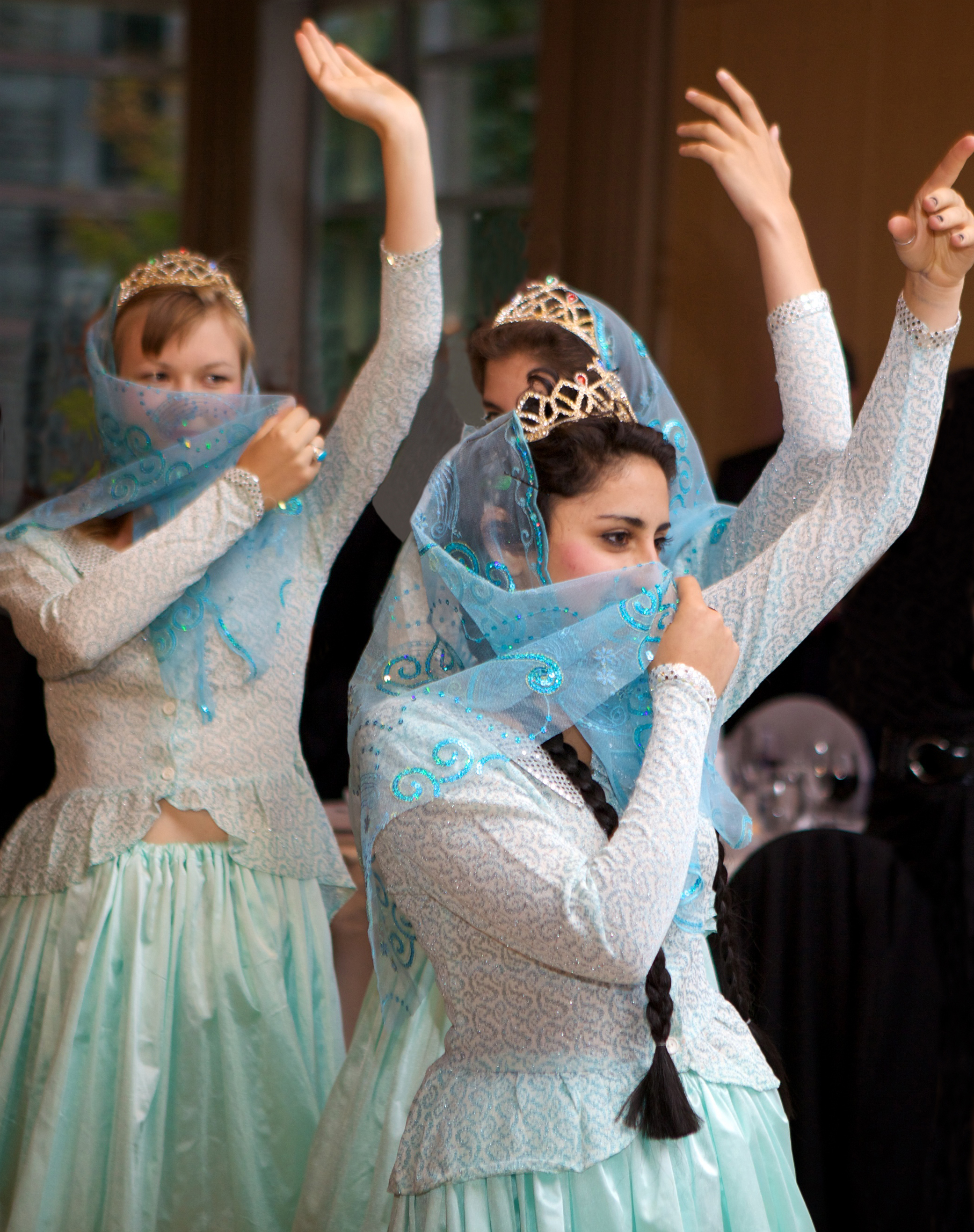
Dance-1

Nowruz 1393, The Year of Celebrating Iranian Festivities


Pasargad Heritage Foundation has named the Iranian New Year 1393 as the Year of Iranian Festivities.
 

Dance-318932_520630801282933_1256381498_nThis is the ninth year that Pasargad Heritage Foundation (PHF) is suggesting naming the Iranian New Year which begins with Nowruz, the most important festivity of the nation.

This name designation has always been according to international conventions that are related to the preservation of cultural and natural heritage of the nation. The goal is to increase the awareness about the endangered heritage that are being eliminated from the list of cultural heritage either by negligence or by intentional discrimination policies based on religious, cultural and political considerations.

Upon such premise, and due to the fact that the relevant Iranian governmental organizations ignore Nowruz on one hand, and the baseless enmity of religious zealots on the other, PHF is naming 1393 as The Year of  Celebrating Iranian Festivities.

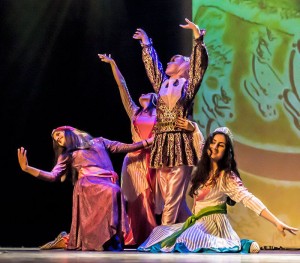
Most of the Iranian festivities include dance, songs, elements of water and fire (symbolizing purity and life) and, thus, according to the criteria put forward by the UNESCO, they are amongst the Intangible Cultural heritage of the nation and candidates for being registered in the world heritage list. Nonetheless, and apart from the fact that dancing of couples is forbidden in Iran and therefore major parts of Iranian festivities are barred from being observed, none of Persian festivities have been sent to UNESCO for consideration. Nowruz is an exception due to the fact that a number of countries have participated in the efforts for its registration.

Popular Iranian festivities are all none-religious and have their roots in nature and all people, regardless of their sex, religion, race, language and opinions and everyone can freely take part in them. Such happy and glorious gatherings not only contribute to the expansion of peace, friendship and union of Iranian people, they can also help the realization and return of the country to the forum of developed societies with actions based on the Universal Declaration of Human Rights.

Having endeavored to introduce Iranian festivities for nine long years, Pasargad Heritage Foundation wishes a Merry Nowruz and a Happy New Year for all Iranians on the arrival of such a great and beautiful occasion. In addition, we invite everyone to participate in observing and celebrating all Iranian festivities by whatever means at their disposal and contribute to the preservation of this humanistic occasion for generations to come.


With love and Nowruz greetings

Shokooh Mirzadegi

On behalf of PHF
Happy Sadeh, Iranian festival

sadeh-tehran

Sadé festival (in Persian: (جشن سده)is an ancient Iranian tradition celebrated 50 days (Jan 30th) before Nowruz (Iranian New year). Sadeh in Persian means “hundred” and refers to one hundred days and nights past the end of summer (or the beginning of long-winter known to start at the end of summer in ancient Iran). Sadeh is a mid winter festival that was celebrated with grandeur and magnificence. It was a festivity to honor fire and to defeat the forces of darkness.

 sadeh-yazd sadeh-yazd3 sadeh-yazd.2jpg