We believe that all cultural, historical and natural heritage, wherever they are should be preserved. LEARN MORE
Festivals

Yalda, Persian’s Most Beautiful Song in Praise of Light and Love – 2013

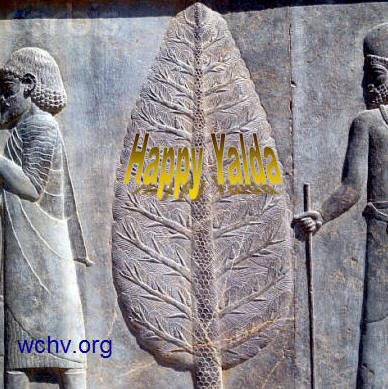
happy-yalda1For thousands of years, Iranians have celebrated the last night of winter.  They have stayed up through the evening, waiting for the dawn, to witness the birth of the Sun; the source of life which has also been named “Mehr”.

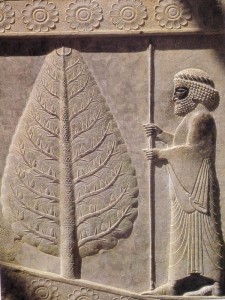
Praising the sun, on the night of the birth of Mithra, celebrating around a cedar tree, adorned with colorful fabrics and stones, which was one of the most important rituals of the ancient Persians. At the time, there were still mysteries of the sun and moon and other natural phenomena for human exploration, and the Persians, like many other people had self-made gods who ruled over all the elements of nature. Man therefore, escaping sadness, darkness, cold, and pain (whether physical or emotional) took refuge in the gods.

Discovering the secrets of nature, and the transition from the myths of the gods did not hurt people’s relationship with the natural elements. Because Persian culture, and even religious orders of Zoroaster (the Persian prophet), were based on love and respect for the land, water, trees, rivers, mountains and their preservation was considered good will.

However, most of our habits and traditions could be updated and modified with time as well as people’s desire and wishes. Therefore, praising the sun, light, love, and life has become a part of Iranian psyche and beliefs in spite of all the objections that historically, under the pretext of religion, has considered these Persian celebrations as blasphemy.

Unfortunately, in the past thirty-four years of clerical rule in Iran, they have not accepted these celebrations. They not only do not accept these traditional festivities as part of national celebration, they are not willing to report and request UNESCO for addition to World Heritage list. The government has simply tried to force innocent people to stop holding these celebrations.

As Persian/Iranian celebrations and festivities have risen from nature and the land, with kindness and love, engraved with anti-discrimination, and interest of/for all people, irrespective of their religion, belief and opinion.

“Yalda” is one such festivity which continues to be even now more than ever, at the center of interest of Iranian people because history has shown that during dark times people have shown interest with the hope and belief that victory can be sealed and reach the world community to end all wars, suffering, discrimination and denial.

This year like many previous years, Pasargad Heritage Foundation, has asked the Iranian public to celebrate the tradition of Yalda by decorating and adorning an evergreen cedar tree and celebrate this glorious Persian feast more and more beautifully and grandly and  welcome the everlasting sun of our land in order to conqueror all perpetual darkness.

Let us not forget that the festive night of Winter Solstice, “Yalda,” is one of the few festivals compatible with the tenants of human rights, with this message that “only expressions of joy and love are symbols of light in human life”.

Happy Yalda

Shokooh Mirzadegi

Pasargad Heritage Foundation

www.savepasargad.com

Happy Cyrus the Great Day

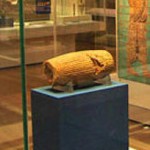
This year, the twenty-ninth day of October 2013, coincides with the annual celebration of “Cyrus the Great Day” by Iranian people and many friends of culture across the globe. In 2005, the Pasargad Heritage Foundation – the first international NGO for preservation of the cultural heritage of Iran- that introduced the idea. At the time, Cyrus’ mausoleum in Iran- a monument registered on the UNESCO’s world heritage list – was in danger of being inundated and eventually destroyed. However, the hard work of this Foundation and timely intervention of UNESCO, human rights activists and organizations removed the danger and led to a world-wide recognition of Cyrus’ seminal contribution to the survival of our common human civilization. Such recognition has been further evidenced by the exhibition of Cyrus cylinder in a number of museums in major cities in United States of America. 

 

October 29, the “Cyrus the Great Day” and the anniversary of the first declaration of human rights. Twenty six centuries ago, when savagery was the dominant factor in human societies, a civilized and compassionate declaration was written on clay and issued to the “four corners of the world”, addressing important issues relevant to human rights; the very same issues that today we face and could also inspire and mobilize those who believe in human dignity and rights. 

This document, known as “The Declaration of Cyrus the Great,” emphasized the removal of all racial discrimination and slavery, and bestowing to all people, freedom to choose their places of residence, and practice their own chosen faith and religion, therefore, attempting to create peace amongst all nations. This Declaration could actually be considered a present from the Iranian people to all humanity, expressed through the words of Cyrus, the founder of the first empire in the Iran. In 1971, the general assembly of the United Nations recognized this declaration as the first Declaration of Human Rights.

From savepasargad.com

Mehregan, An Avant-Garde Ancient Iranian Festival

     mehrga7We are one more time approaching another Mehregan, an annual Persian festivity that has been observed for centuries by Iranians. Despite all the barriers and difficulties in the way of observing this occasion, Iranians have never failed to celebrate this festival openly or sometimes even secretly.

     Mehregan, just like other festivities of Iranian culture, has its humane and popular roots. It was initiated as a ritual to worship the sun-god Mithra, but this day had gradually lost its religious origins to become a national day of celebration due to the valuable message that is embedded in it.

    Mehregan, just like other Iranian festivities, has been a day of honoring Light and Kindness, as well as Faithfulness to Promises.

     In ancient Iran, parents considered breaking the promises as unforgivable evil as lies and destruction. They believed that breaking promises can cause destruction of the land and society. It seems that such a belief has an implied connotation, referring to the rulers and decision makers who, by breaking their promises to the people, cause the desolation and destruction of their lands and peoples.

     In a verse in Zoroastrian book of Mehryasht, one can read: “The wicked one who breaks his promises will destroy the whole country”. That is why the message of Mehregan has been lasting and now is an updated one.  Like the previous years, the Committee to Save Pasargad, would like to ask all Iranians and especially the friends of Iranian culture to observe Mehregan in whatever way they deem feasible, aiming to preserve this precious festival and spread its true message.  We also need the help and support of all cultural activists in our campaign to register Mehregan on the World Spiritual Heritage list. The relevant application was filed with UNESCO in 2010 by the Committee.

With love and respect,

Pasargad Heritage Foundation
October 2013

http://www.savepasargad.com/

Christmas & Yaldâ

sarve-takhat-jamshid2

By: Zia Fatherazi

Mithraism (the worship of the Persian Sun-God Mithra) was introduced to Rome during the first Century BC. It spread throughout the Empire and many Mithraic temples were built in Italy and other countries controlled by Rome.  

The main festivity of Mithraism was the night of the winter solstice (longest night of the year), celebrating the assumed birth of Mithra, A popular festival which was observed throughout the Empire. 

In 312, Constantine the Great invaded Italy and moved to Rome. Having had a vision of the Cross-against the sun, on the eve of his victory, he became a supporter of the Christianity. In 313, he issued the Edict of Milan granting freedom and equality of religions in the Empire. He also recommended that the Christians should celebrate Christ’s Birth on the same day as that of Mithra’s since they also considered Christ to be “Light of the World”. Some conservative Christians didn’t agree and the Orthodox Church like the Armenians celebrate only the 6th of January, the Epiphany day. In addition, Constantine changed the holy day of the week from the Judaic Sabbath to Sunday. 

According to the Julian calendar (devised in 46 BC) at the time, the Vernal Equinox fell on March 25 and the Winter Solstice coincided with December 25. Christmas and Mithra’s birth were therefore celebrated on December 25.  The first Christian Council held in Nicaea in 325 decided to set March 21 as the date for Vernal Equinox on the ground of calendar inaccuracies and its lag of 4 days. As a result the Winter Solstice was moved to December 21 but the Council didn’t change the date of Christmas.

During the following years, Christianity was declared as the official religion of the Empire and in 391 Pagan worship was prohibited. All Mithraic temples were destroyed and there remained not a single prayer book or document that could explain their rites, beliefs and traditions. 

Very much like the Halloween celebrations in the United States, most Iranians celebrate the Winter Solstice on the evening of December 21 as the eve of Yaldâ (Birth) – a traditional festival without reference to its origin.