We believe that all cultural, historical and natural heritage, wherever they are should be preserved. LEARN MORE
Festivals

Cyrus the Great Day 2015

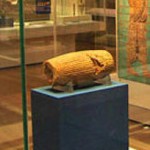
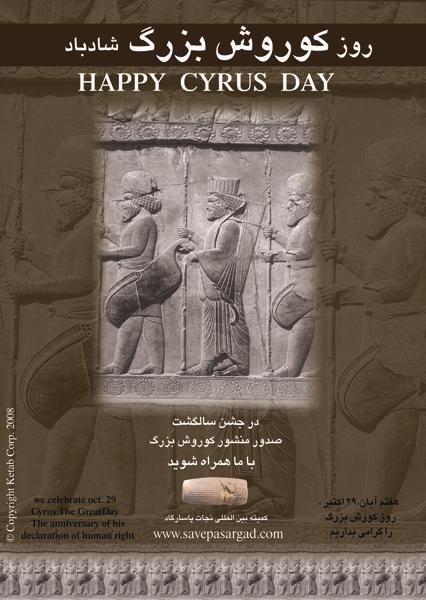
Cyrus_day_-poster.2jpgThis year, the twenty-ninth day of October 2015, coincides with the annual celebration of “Cyrus the Great Day” by Iranian people and many friends of culture across the globe. In 2005, the Pasargad Heritage Foundation – the first international NGO for preservation of the cultural heritage of Iran- that introduced the idea. At the time, Cyrus’ mausoleum in Iran- a monument registered on the UNESCO’s world heritage list – was in danger of being inundated and eventually destroyed. However, the hard work of this Foundation and timely intervention of UNESCO, human rights activists and organizations removed the danger and led to a world-wide recognition of Cyrus’ seminal contribution to the survival of our common human civilization. Such recognition has been further evidenced by the exhibition of Cyrus cylinder in a number of museums in major cities in United States of America. 

October 29, the “Cyrus the Great Day” and the anniversary of the first declaration of human rights. Twenty six centuries ago, when savagery was the dominant factor in human societies, a civilized and compassionate declaration was written on clay and issued to the “four corners of the world”, addressing important issues relevant to human rights; the very same issues that today we face and could also inspire and mobilize those who believe in human dignity and rights. 

This document, known as “The Declaration of Cyrus the Great,” emphasized the removal of all racial discrimination and slavery, and bestowing to all people, freedom to choose their places of residence, and practice their own chosen faith and religion, therefore, attempting to create peace amongst all nations. This Declaration could actually be considered a present from the Iranian people to all humanity, expressed through the words of Cyrus, the founder of the first empire in the Iran. In 1971, the general assembly of the United Nations recognized this declaration as the first Declaration of Human Rights.
Happy Nowruz

poster happy-nowruz3

Nowruz

(Nowruz 1394 video link click here)

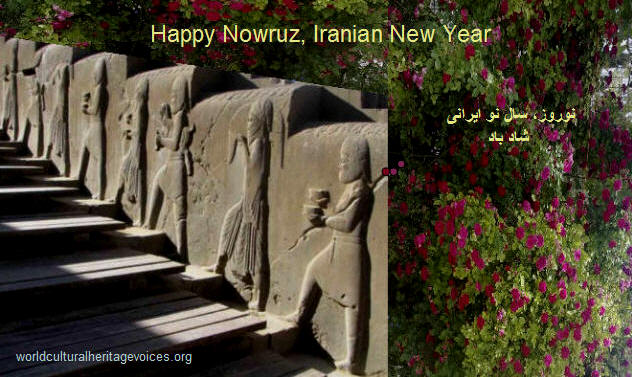
Nowruz is first day of Spring and the beginning of the Iranian year.  Nowruz is celebrated on the day of the vernal equinox, on 21st March or the previous / following day depending on where it is celebrated.  Nowruz is celebrated and observed by Iranian people as well as several other countries across Asia including Afghanistan, Turkey, Azerbaijan, Georgia, Tajikistan and many more.   The new year starts at the moment the Sun crosses the celestial equator and equalizes night and day or exactly when the Earth has completed one cycle around the Sun.

The celebration has its roots in Ancient Iran. Due to its antiquity, there exist various foundation myths for Nowruz in Iranian mythology.  The Shahnameh dates Nowruz as far back to the reign of Jamshid, who in Zoroastrian texts saved mankind from a killer winter that was destined to kill every living creature.  In the Shahnameh and Iranian mythology, Jamshid is credited with the foundation of Nowruz.  In the Shahnama,  Jamshid constructed a throne studded with gems. He had demons raise him above the earth into the heavens; there he sat on his throne like the sun shining in the sky. The world’s creatures gathered in wonder about him and scattered jewels around him, and called this day the New Day or No/Now-Ruz. This was the first day of the month of Farvardin (the first month of the Persian calendar).   On Nowruz, families gather together to observe the rituals and celebrate the beginning of the new year.

In addition, it is believed that originally the celebration was the holiest Zoroastrian festival, and Nowruz is believed to have been invented by Zoroaster himself, although there is no clear date of origin.  Since the Achaemenid era, the official year has begun with the New Day when the Sun leaves the zodiac of Pisces and enters the zodiacal sign of Aries, signifying the Spring Equinox.

International Nowruz Day was proclaimed by the United Nations General Assembly, in its resolution A/RES/64/253 of 2010, at the initiative of several countries that share this holiday (Afghanistan, Albania, Azerbaijan, the Former Yugoslav Republic of Macedonia, India, Iran (Islamic Republic of), Kazakhstan, Kyrgyzstan, Tajikistan, Turkey and Turkmenistan.

World Cultural Heritage Voices

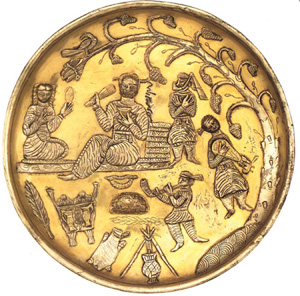
Sassanid2 Sassanid_Music_Plate_7thcentury Persianmusic-sasanian

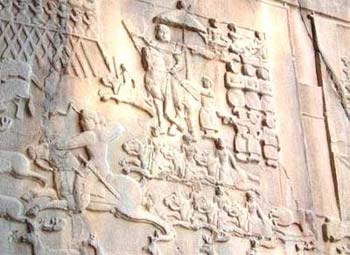
Ancient Nowruz artifacts from the Sassanian Dynasty – 224 CE to 651 CE.

DIGITAL CAMERA

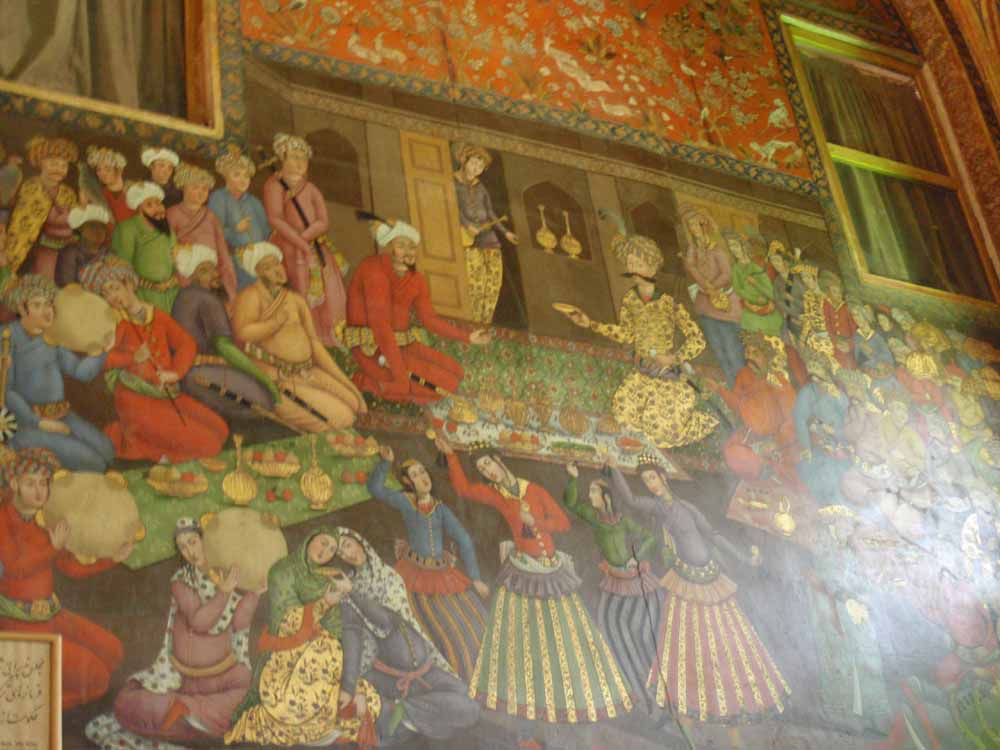
Nowruz during the Safavid Dynasty circa 1501 to 1722 and 1729 to 1736.


Let’s Celebrate Yalda, Christmas, Hanukkah, Kwanza – 2014

Happy Yalda, Merry Christmas, Happy Hanukkah, Happy Kwanzaa. 

The Yalda festival was a Mithraic celebration, which finds its origins among the earliest Iranians. But in 53 BCE, when Roman legions were unable to conquer Parthian Mithraists, they adopted Mithra the “Unconquered Sun” as their own military deity, and Yalda or “Yule” became an official celebration of the Roman Empire.

Many of the original pagan symbols survive in what has come to be known as Christmas such as: holly, ivy, the color red, the mistletoe, Yule logs, the giving of gifts, decorated evergreen trees, Santa Claus, etc..

Christmas Day (December 25th) is a Christian holiday which is celebrated around the world by decorating Christmas trees, attending church, traditional food, and exchanging gifts.

Kwanzaa is an African American holiday celebrated by millions of people in the United States.  It is a week long holiday, observed from December 26th to January 1st every year. 

Hanukkah (also known as Chanukah) is an eight-day festival of lights and a Jewish holiday.  It commemorates the rededication of the holy Temple in Jerusalem during the second century BC.  It begins on the 25th day of the Jewish month of Kislev and usually falls in November or December.  Hanukkah is celebrated for 8 days and nights with the lightening of the menorah, food, and gifts. 

Festiv6

Happy Cyrus the Great Day

happy cyrus day 2This year, the twenty-ninth day of October 2014, coincides with the annual celebration of “Cyrus the Great Day” by Iranian people and many friends of culture across the globe. In 2005, the Pasargad Heritage Foundation – the first international NGO for preservation of the cultural heritage of Iran- that introduced the idea. At the time, Cyrus’ mausoleum in Iran- a monument registered on the UNESCO’s world heritage list – was in danger of being inundated and eventually destroyed. However, the hard work of this Foundation and timely intervention of UNESCO, human rights activists and organizations removed the danger and led to a world-wide recognition of Cyrus’ seminal contribution to the survival of our common human civilization. Such recognition has been further evidenced by the exhibition of Cyrus cylinder in a number of museums in major cities in United States of America. 

Happy cyrus day

October 29, the “Cyrus the Great Day” and the anniversary of the first declaration of human rights. Twenty six centuries ago, when savagery was the dominant factor in human societies, a civilized and compassionate declaration was written on clay and issued to the “four corners of the world”, addressing important issues relevant to human rights; the very same issues that today we face and could also inspire and mobilize those who believe in human dignity and rights. 

This document, known as “The Declaration of Cyrus the Great,” emphasized the removal of all racial discrimination and slavery, and bestowing to all people, freedom to choose their places of residence, and practice their own chosen faith and religion, therefore, attempting to create peace amongst all nations. This Declaration could actually be considered a present from the Iranian people to all humanity, expressed through the words of Cyrus, the founder of the first empire in the Iran. In 1971, the general assembly of the United Nations recognized this declaration as the first Declaration of Human Rights.
From savepasargad.com