We believe that all cultural, historical and natural heritage, wherever they are should be preserved. LEARN MORE
Education

CyArk: 3D Laser Technology Helping to Preserve World Heritage

CyArkIt is no longer science fiction to use the newest information technology and bio-technology techniques (as we have reported here on WCHV in the past) to help and preserve the World Heritage Sites. The reality is that today archeologists, scientists, and innovators from many different disciplines work together with the same goals: saving and preserving the world heritage sites for the future generations.

Now, a non-profit organization in the United States called CyArk – which stands for Cyber Archive – has an ambitious plan to scan hundreds of the planet’s world heritage sites with a 3D laser. CyArk wants to digitally preserve 500 world heritage sites within the next five years.  Late last month during a special conference in London (October 20-22, 2013), the organization officially announced its plans.

If you think this is an almost impossible task, CyArk begs to differ as it has already scanned 100 sites around the world, including Mount Rushmore in South Dakota, Tikal in Guatemala and Pompeii in Italy.  Sites are scanned using the latest laser technology, which can plot millions of points of data. CyArk collects all the information and then archives it online, where it is free for the public to access. Then any one from around the world can go online and see the information on monuments through photos, videos, animations, and virtual tours.  CyArk’s 3D scanners have a range of hundreds of feet and since everything is digitally captured and stored, they can scan the site from all different angles in a fraction of time that it takes to do the same thing using traditional methods.

CyArk will keep a digital map of all locations scanned before (as the organization announced) these sites are ravaged by “nature” including flooding, acid rain, earthquakes, or “man” including conflicts and acts of terrorism. CyArk believes in leaving a digital legacy for future generations after some buildings are long gone, but it is also about empowering local communities connected to these sites as reported by Metro, a UK newspaper.

During a recent TED Conference, Ben Kacyra, the inventor of the 3D laser Technology which is used by CyArk and the founder of the organization gave a talk about his plans and how he and his wife came to start the organization.  The idea for CyArk was born out of the destruction in 2001 by the Taliban of the two Bamiyan Buddhas. The Buddha statutes in Afghanistan were carved into a sandstone cliff face in the 6th century, and one of the Buddhas was actually 55m tall.  Ben Kacyra says that there was no detailed documentation of the Buddhas and he didn’t want other monuments to suffer a similar fate.  Kacyra also talks about the great loss of cultural information which occurred in the 2003 earthquake in the city of Bam in Iran. In fact, Kacyras and CyArk greatly feel concerned about the sites in areas of turmoil, conflict and war.

During the TED talk, Kacyra also talked about how CyArk’s data has already proved very crucial.  When a part of the Kasubi Tombs in Uganda – a Unesco World Heritage Site that we have reported on here at WCHV – was destroyed in a suspected arson attack in 2010, the UNESCO and Ugandan authorities approached CyArk and requested the information and data the organization had already gathered. The plan is to restore the buildings using this data.

CyArk states that the selection of the remainder of the 500 monuments will be based on a number of factors, including the short-term risk of destruction and the impact its preservation will have on the surrounding community. The date and all the information that CyArk gathers is stored in a safe place. A gold copy of archive data is kept in a bunker 220 ft (67m) below the ground in Pennsylvania by records storage company Iron Mountain. 

Spiegel Magazine’s Attack on the Legacy of Cyrus the Great

Article By: Professor Kaveh Farokh


Greetings to the Distinguished Staff of Der Spiegel Magazine,
Recently a number of my colleagues as well as students have brought the following article to my humble attention:

FALLING FOR ANCIENT PROPAGANDA
UN Treasure Honors Persian Despot
By Matthias Schulz
http://www.spiegel.de/spiegel/0,1518,564395,00.html (German)
http://www.spiegel.de/international/world/0,1518,566027,00.html (English)

If the above report had been written by ideologues, it would not have been very surprising, as historical revisionism and political motivations do often accompany one another. It is however lamentable that a distinguished world-class magazine such as Der Speigel has chosen to perpetuate a series of half-truths that resemble the writings of conspiracy theorists. I will of course expostulate upon the narratives of the latter on item (7) below, but first allow me to briefly examine a number of statements made by Mr. Schulz in items (1) – (6).

(1) “Some Greeks praised the conqueror. Herodotus and Aeschylus (who lived after Cyrus’s death) called him merciful.”

Perhaps Mr. Schulz is not aware that it was not just “Some Greeks” who praised Cyrus. This is true despite the fact that Classical Greece and the Achaemenid Empire fought many bitter and bloody wars, notably at Marathon (490 BC), Thermopylae and Salamis (480 BC). It is also a fact that the mainland (European) Greeks fought hard against the Achaemenid Empire to retain their independence. Why would a nation that had fought so hard against the Achaemenid Empire, have any reason to selectively “flatter” Cyrus the Great? This is because the Greeks, who excelled in the disciplines of balanced thought and logical thinking realized that just because they were at war with the Achaemenid Empire did not mean that all members and rulers of that Empire were “evil”. Simply put, they did not allow their political passions to bias their views of “the other”, even if that other was a military opponent. Nobody forced the ancient Greeks to describe Cyrus the Great in a favorable manner. The Greeks in fact had written a virtual compendium of Cyrus entitled the Cyropedia of Xenophon.

To read the entire article continue at savepasargad.com

Cyrus the Great Day:Common Ground for World Religions?

Kristin-S-portrait-2-239x300Article by: Kristin Swenson, Ph.D.

On Oct. 29, in 539 B.C., Cyrus II rode into Babylon (about 50 miles south of modern Baghdad), and ancient sources say that its conquered masses threw palm fronds at his feet. Among the people who witnessed his arrival were those who had been taken captive some 50 years earlier when the Babylonian empire swept through the Middle East, destroying nations and dragging captives back to Babylon. They included people from ancient Israel who had witnessed the destruction not only of their nation, Judah, but also of its temple in Jerusalem. “By the rivers of Babylon,” a biblical psalm laments, “we sat down and wept when we remembered Zion.”
Cyrus allowed those exiles to return home, to rebuild their communities and to reestablish their religious practices. Excerpt from Huffington Post

The First Declaration of Human Rights

Cyrus12One of the significant events in ancient history is the conquest of Babylon by the Persian king, Cyrus the Great.

On October 4th, 539 BC, the Persian Army entered the city of Babylon, which was then the capital of the Babylonian state (in central Iraq). This was a bloodless campaign and no prisoners were taken. Later, on November 9th, King Cyrus of Persia visited the city. Babylonian history tells us that Cyrus was greeted by the people, who spread a pathway of green twigs before him as a sign of honor and peace (sulmu). Cyrus greeted all Babylonians in peace and brought peace to their city.

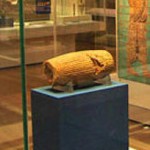
On this great event, Cyrus issued a declaration, inscribed on a clay barrel known as Cyrus’s inscription cylinder. It was discovered in 1879 by Hormoz Rassam in Babylon and today is kept in the British Museum. Many historians have reviewed it as the first declaration of human rights.

The Babylonian annals, as well as the first section of the Cyrus’ inscription, shed light on the religiopolitical plight that had angered the people of Babylon and why they invited Cyrus’s military campaign. Evidently, the Babyloninan king, Nabonidus, eliminated the festival of the new year and Nebo (one of the gods) was not brought into the city, and Bel (another god) was not taken in the procession of the festival. Also, the worship of Marduk, the king of the gods, was changed to an abomination and Nabonidus tormented the inhabitants with unbelievable oppression and forced labor. The sanctuaries of all their settlements were in ruins and the inhabitants of Sumer and Akkad had become like the living dead. Marduk, the king of the gods, scanned and searched for a righteous ruler, finally coming upon Cyrus’s good deeds and his upright mind and ordered him to march against the City of Babylon. The angry inhabitants of Akkad had revolted but were massacred by Nabonidus, who, upon his return to Babylon, was arrested, but nevertheless was treated with respect. When Nabonidus died in the year following, Cyrus participated in the national mourning time that was proclaimed for him. The gods of Akkad were then returned to their sacred cities. All the inhabitants of Sumer and Akkad, including princes and governors, greeted Cyrus as a master who brought them back from a living death. All who had been spared damage and disaster revered his very name.


Cyrus’s Declaration:

“I am Cyrus, the king of the world, great king, legitimate king (son of Cambyses) whose rule Bel and Nebo loved and whom they wanted as king to please their hearts.

“When I entered Babylon as a friend and established the seat of government in the place of the ruler under jubilation and rejoicing, Marduk, the great lord (induced) the magnanimous inhabitants of Babylon (Din Tir) (to love me) and I daily endeavored to praise him. My numerous troops walked around in Babylon in peace, I did not allow anybody to terrorize (any of the people) of the country of Sumer and Akkad. I strove for peace in Babylon (Ka Dingir ra) and in all his (other) sacred cities. As to the inhabitants of Babylon (who) against the will of the gods (had/were I abolished) the corvee (yoke) which was against their (social standing). I brought relief to their dilapidated housing, putting an end to their main complaints. Marduk, the great lord, was well pleased with my deeds and sent friendly blessing to myself, Cyrus, the King, who reveres him, to Cambyses, my son, as well as to all my troops, and we all (praised) his great (name) joyously, standing before him in peace I returned to (these) sacred cities on the other side of the Tigris, the sanctuaries of which have been ruins for a long time, the images which (used) to live therein and established for them permanent sanctuaries. I (also) gathered all their (former) inhabitants and returned (to them) their habitations. Furthermore, I resettled upon the command of Marduk, the great lord, all the gods of Sumer and Akkad who Nabonidus has brought to Babylon (su sa na) to the anger of the lord of the gods unharmed in their chapels, the places which make them happy.

May all the gods whom I have resettled in their sacred cities ask Bel and Nebo daily for a long life (six lines destroyed) and always with good words remember my good deeds that Babylonians incessantly cherished me because I resettled them in comfortable habitations I endeavored to strengthen the fortification of Imgur-Enlil and the great fortification of the City of Babylon the side brick wall by the city’s trench which the former king (had built and had not finished). This was finished around (the city), that none of the former kings, despite the labor of their yoked people, had not accomplished. I rebuilt and completed with tar and brick and installed large gates entrances were built by cedar wood covered with brass and copper pivot I strengthened all the gates I saw inscribed the name of my predecessor, King Ashurbanipal.”

On this historical turning point, by order of Cyrus, all the captive nationalities held as slaves for generations in Babylon were freed and the return to their homeland was financed. Among the liberated captives were 50,000 Jews held in Babylon for three generations whose return toward the rebuilding of their temple in Palestine, a policy that was followed by Darius and his successors. Some of the liberated Jews were invited to and did settle in Persia. Because of such a generous act, Cyrus has been anointed in the Bible. He is the only gentile in the Bible, who has been titled Messiah, an is mentioned explicitly as the Lord’s shepherd and his anointed (Messiah). Other references to Cyrus are attested in Isaiah 45:4 where Cyrus is called by name and given a title of honor; he is also called to rebuild the God’s city and free His people (Is. 45:13) and is chosen, called and brought successful by God (Is. 48:14-15).

What took place after the victory in Babylon was contrary to the standard of the time. Based on the inscriptions of the neighboring countries (Assyrians, Babylonians), it was customary to destroy the vanquished cities, level houses and temples, massacre the people or enslave the population, replace them with snakes, wolves and even carry away the soil to make the land barren. But here, peace and liberty replaced the massacre and slavery, and construction substituted for destruction. After Cyrus, his son Cambyses ruled for eight years (530BC to 522 BC) and captured Egypt, and as a sign of respect toward their culture and religion, he prostrated himself before the goddess, Meith and paid homage to Apis, the Egyptian totem (Bull).

After Cambyses, Darius took over the throne and ruled form 522BC to 486BC. From 518BC to 515BC he established peace and tranquility in Egypt and also paid homage to their totem, Apis. Darius, in his inscriptions, expresses faith in the commands of Ahuramazda. He declares “Whoever worships Ahuramazda, shall receive happiness in life and after death.” He calls Elamites faithless, and because they did not worship Ahuramazda, yet he does not pressure them to change faith. Darius exhorts his successors “thou shalt be king thereafter, protect yourself from the lies and punish the liar and deceitful.”

He entreats God’s grace for the protection of Persia against rancor, enemy, famine and the lie. At times he alludes to other gods that may either indicate the old Aryan gods who still had strong followings or the gods of other nations under his rule, for the display of reverence toward their religions.

REFERENCES:

A. Arfaee, The command of Cyrus the Great (in Persian), quoted the opinion of Sydney Smith.

Grayson, Assyrian and Babylonian chronicles, p110, dates the fall of Babylon on Oct. 12th and Cyrus’s entry on Oct 29th.

J. B. Pritchard, The ancient Near East, Vol. 1, 1958, p203.

A fragment in the Yale’s Babylon collection was identified in 1970 by P.R.Berger, the professor of Munster, Germany, as part of Cyrus’s cylinder that was transferred to the British Museum and added to the cylinder, who wrote in the journal of Assyrology (Zeiserrift fir Assiriologie), July 25, Vol. 64. The remainder of the text is quoted from A.

Arafaee, which was the missing portion kept in Yale University. Bible, 2 Chronicles 36:15-23
Bible, Ezra 1:1-11, Ezra 2:12-70
Bible, Ezra 7:8
Bible, Ezra 6:3-4-5
Bible, Ezra 7:15-25
Bible, Isaiah 44:28 and 45:1


Darius Jahanian, M.D. is an obstetrician-gynecologist in the Kansas City area, with degree from University of Tehran and Washington University, St. Louis. He is a co-founder and president of the Fravahar Zoroastrian Youth organization of Tehran. Darius served as trustee of the Rostam Guiv Trust of California 1981-89, is a trustee and VP of the Rostam Guiv Foundation of New York since 1990, and its president since 1992. He is a founder and two-term president of the Zoroastrian Association of Kansas. A noted author and lecturer on the Zoroastrian religion, Darius also teaches religion classes for children.

Source: Zoroastrianism and Biblical Connections

Application for “International Day of Freedom of Belief and Religion”


cyrus-UN-4


H.E. Mr. Ban Ki-moon, UN. Secretary General

United Nations

NY NY 10017


October 4, 2013


A Petition for UN’s Proclamation of October 29th as the “International Day of Freedom of Conscience and Religion”

Your Excellency:

     We, the undersigned, have been authorized by World Cultural Heritage Voices to respectfully urge your Excellency to call on the appropriate organization of the United Nations to designate 29 of October as “International Day of Freedom of Conscience and Religion.” The World Cultural Heritage Voices is an organization dedicated to the preservation of the cultural heritage of each member of the international community, particularly those that have been ravaged by scourges of wars, sectarian violence, poverty and unrepresentative governments.

     In the last few decades the world has witnessed widespread eruptions of violent ideological and sectarian conflicts within a number of societies.  Such conflicts have, among other things, led to the rise of organized attempts to desecrate or otherwise destroy national, cultural and religious heritage of particular historical value to the community of nations. Such attempts often take place in societies where respect for individual’s freedom of conscience and religion has not yet been fully recognized as an essential principle of human rights.


Your Excellency:          

     It is upon these premises that we believe the designation of a day for celebrating the freedom of conscience and religion on the UN calendar will further signify the importance of respect for cultural and religious diversity which is the cornerstone of peaceful coexistence of peoples all over the world.

     We further believe that 29 of October is an appropriate date for celebration of this freedom, for it was on this date that Cyrus the Great issued his historic decree on religious freedom and tolerance more than 2500 years ago. More importantly, Cyrus followed his decree on tolerance, diversity of cultures and freedom of worship by deeds that included delivering the enslaved Jews in Babylon. This decree has therefore been considered by many as the earliest expression of the recognition of a fundamental human freedom. The permanent exhibition of the decree at the entrance to the chamber of the Security Council of UN bespeaks of the universal recognition of its importance.

     This year, the twenty-ninth day of October 2013, coincides with the ninth annual celebration of “Cyrus the Great Day” by Iranian people and many friends of culture across the globe. In 2005, it was the Pasargad Heritage Foundation- the first international NGO for preservation of the cultural heritage of Iran- that introduced the idea. At the time, Cyrus’ mausoleum in Iran- a monument registered on the UNESCO’s world heritage list – was in danger of being inundated and eventually destroyed. However, the hard work of this Foundation and timely intervention of UNESCO, human rights activists and organizations removed the danger and led to a world-wide recognition of Cyrus’ seminal contribution to the survival of our common human civilization. Such recognition has been further evidenced by the exhibition of Cyrus cylinder in a number of museums in major cities in United States of America. 


Your Excellency:

   At a time when, in a number of regions of the world, particularly in Africa and Asia, the basic rights and freedoms of millions of individuals have been curtailed, disregarded and violently denied by undemocratic and illegitimate governments, setting aside a day of celebration for freedoms of conscience and religion by the Parliament of Mankind will be of great and lasting importance.  Such a measure would also constitute another vivid warning to political leaders of countries whose prisons are filled with prisoners of religion, conscience and belief.

     Nevertheless, millions of people are still afraid of freely announcing their beliefs. Without any doubt, creating a special day for Freedom of Conscience and Religion would help the advancement of human rights.

     Fully cognizant of your Excellency’s abiding respect for the fundamental rights and freedoms of all peoples of the world, we are looking forward to receiving a favorable response to our plea. 

 
Respectfully Yours,
Shokooh Mirzadegi
Founder and Executive Director
 
 
Farid Hekmat
Legal Counsel

***

Please sign this petition

http://www.thepetitionsite.com/takeaction/655/271/493/  


You may also sign without providing your address at:

http://www.ipetitions.com/petition/world-cultural-heritage-voices


ترجمه در خواست از سازمان ملل،

برای اعلام روز 29 اکتبر، به عنوان «روز بین المللی آزادی عقیده و مذهب»


 عالیجناب آقای بان کی مون

سازمان ملل

چهارم اکتبر 2013

درخواست از سازمان ملل، برای اعلام روز 29 اکتبر، به عنوان روز بین المللی آزادی عقیده و مذهب


عالیجناب:

ما امضا کنندگان این نامه، از جانب «صدای میراث فرهنگی جهانی» ماموریت داریم تا با احترام از آن عالیجناب مجدانه بخواهیم که از بخش مربوطه سازمان ملل بخواهند تا روز 29 اکتبر را به عنوان روز بین المللی آزادی عقیده و مذهب اعلام کنند. صدای میراث فرهنگی جهانی سازمانی است اختصاص یافته به حفظ میراث فرهنگی کلیه اعضای جامعه جهانی، به خصوص آن ها که به وسیله ی لطمه های حاصل از جنگ، خشونت های فرقه ای، فقر، و دولت های غیر انتخابی لطمه دیده اند.

در دهه های اخیر جهان شاهد طغیان گسترنده ی برخوردهای خشونت بار ایدئولوژیک و فرقه ای در میان اجتماعات مختلف بوده است. این برخوردها قبل از هر چیز منجر به پیدایش فعالیت های سازمان یافته در راستای تخریب و یا از میان بردن میراث های فرهنگی و مذهبی دارای ارزش های ويژه تاریخی برای جامعه ملل شده است. این رفتارها اغلب در جوامعی اتفاق می افتند که احترام به آزادی شخصی عقیده و مذهب هنوز به عنوان اصل گوهرین حقوق بشر کاملا به رسمیت شناخته نشده است.


عالیجناب:

 بر بنیاد این واقعیت هاست که ما باور داریم که تعیین روزی برای گرامیداشت آزادی عقیده و مذهب در تقویم سازمان ملل به اعتلای اهمیت احترام گذاری به گوناگونی فرهنگی و مذهبی که سنگ بنای همزیستی صلح آمیز مردمان سراسر جهان است کمک می کند.


ما همچنین باور داریم که روز 29 اکتبر روز مناسبی برای گرامیداشت این آزادی است چرا که در این روز بود که کورش بزرگ فرمان تاریخی خود را در 2500 سال پیش پیرامون آزادی مذهب و رواداری صادر کرد. مهم تر از آن این که او در پی صدور فرمان رواداری و پذیرش گوناگونی فرهنگ ها و آزادی نیایش، این نظر را با عمل خود به صورت آزادسازی یهودیان به بردگی گرفته شده در بابل تعقیب کرد. به همین دلیل است که این فرمان از جانب بسیارانی نخستین بیان پذیرش یک آزادی اصلی بشری تلقی شده است. به نمایش گذاشتن دایمی این فرمان در ورودیه تالار شورای امنیت سازمان ملل خود گویای شناخت جهانی اهمیت آن است.


امسال بیست و نهمین روز اکتبر 2013 با نهمین گرامیداشت سالیانه ی روز کورش بزرگ از جانب ایرانیان و مردمانی از فرهنگ های مختلف سراسر جهان است. در سال 2005 بنیاد میراث پاسارگاد که نخستین سازمان غیر انتفاعی بین المللی برای حفظ میراث فرهنگی ایران شناخته می شود فکر نام گذاری روز کورش را مطرح ساخت در آنزمان آرامگاه کورش در ایران که بنایی ثبت شده در فهرست میراث جهانی یونسکو است در خطر آب گرفتگی ویرانی ناشی از آن بود اما تلاش شدید این سازمان و دخالت به هنگام یونسکو، کنشگران و سازمان های حقوق بشری، از این خطر جلوگیری کرد و موجب آگاهی جهانی نسبت به دهش آغازین کورش در بقای تمدن مشترک انسان ها شد. شاهد چنین آگاهی گسترده ای برگزاری نمایش استوانه ی کورش در تعدادی از موزه های شهرهای بزرگ ایالات متحده آمریکا است.

عالیجناب:

 در زمانه ای که در مناطق مختلف دنیا و به خصوص در آفریقا و آسیا حقوق بنیادین و آزادی های میلیون ها انسان از آن ها دریغ شده، و مورد بی اعتنایی و انکار خشونت آمیز دولت های غیر دموکراتیک و نامشروع قرار گرفته است، گزینش روزی برای گرامیداشت عقیده و مذهب به وسیله ی پارلمان نسل بشر واجد اهمیتی عظیم و ماندگار است. این اقدام اخطاری آشکار به رهبران سیاسی کشورهایی است که زندان هاشان پر از زندانیان عقیده و مذهب و باورند.

با این وجود میلیون ها انسان هنوز از بیان آزادانه عقاید خود می هراسند و بدون شک گزینش روزی برای آزادی عقیده و مذهب موجب پیشرفت حقوق بشری خواهد شد.

با آگاهی کامل از احترامی که آن عالیجناب برای حقوق و آزادی های بنیادین همه ی مردم جهان قایل اند ما چشم انتظار دریافت پاسخ مثبتی به تقاضای خود هستیم.

با احترامات

شکوه میرزادگی

موسس و مسئول امور اجرایی  سازمان «صدای میراث فرهنگی جهانی»

فرید حکمت

وکیل سازمان «صدای میراث فرهنگی جهانی»


لطفا اگر مایل هستید این پتی شن را امضا کنید و برای دوستان تان بفرستید

http://www.thepetitionsite.com/takeaction/655/271/493/

You may also sign without providing your address at:

http://www.ipetitions.com/petition/world-cultural-heritage-voices