We believe that all cultural, historical and natural heritage, wherever they are should be preserved. LEARN MORE
Education

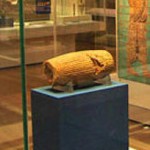
The Road to Persiana: The Cyrus Cylinder 2013 U. S. Tour


The Road to Persiana: The Cyrus Cylinder 2013 U. S. Tour

Book by author A.J. Cave


persiana

The Road to Persiana:The Cyrus Cylinder 2013

U. S. Tour, is an informal look at the ground-breaking tour of the Cyrus Cylinder across 5 U.S. museums. It is the first known declaration of Human Rights, issued by the emperor Cyrus II of Persia. In the 1970s, the Cyrus Cylinder has been described as the world’s first charter of human rights (Wikipedia).  A free eBook download is available on our Education page under the Literature tab.

Human Rights Day

Human Rights DayHuman Rights Day is celebrated on December 10, 2013. The date was chosen to honor the United Nations General Assembly’s adoption and proclamation on 10 December 1948, of the Universal Declaration of Human Rights (UDHR), the first global enunciation of human rights and one of the first major achievements of the new United Nations.

Human Rights Day is normally marked both by high-level political conferences and meetings and by cultural events and exhibitions dealing with human rights issues. In addition, it is traditionally on 10 December that the five-yearly United Nations Prize in the Field of Human Rights and Nobel Peace Prize are awarded. Many governmental and nongovernmental organizations active in the human rights field also schedule special events to commemorate the day, as do many civil and social-cause organisations.

The Declaration of Human Rights arose directly from the experience of the Second World War and represents the first global expression of rights to which all human beings are inherently entitled. It consists of 30 articles which have been elaborated in subsequent international treaties, regional human rights instruments, national constitutions and laws. The Guinness Book of Records describes the UDHR as the “Most Translated Document” in the world.

While not a treaty itself, the Declaration of Human Rights was explicitly adopted for the purpose of defining the meaning of the words “fundamental freedoms” and “human rights” appearing in the United Nations Charter, which is binding on all member states. For this reason the Universal Declaration is a fundamental constitutive document of the United Nations. Many international lawyers, in addition, believe that the Declaration forms part of customary international law[ and is a powerful tool in applying diplomatic and moral pressure to governments that violate any of its articles.

In South Africa, Human Rights Day is celebrated on 21 March, in remembrance of the Sharpeville massacre which took place on 21 March 1960. This massacre occurred as a result of protests against the Apartheid regime in South Africa. (With material from: Wikipedia)

Archeology in the War Zone

Karkemish_1When Professor Nicolò Marchetti of Bologna University found out that his team had won a bid to excavate in the ancient city of Karkemish beating a Japanese group that had offered to pay $1 million, the news came as mixed blessings – we assume.  In 2011, for the first time since the Turkish War of Independence, a joint team of Italian and Turkish archaeologists returned to Karkemish, an ancient city on the Syria-Turkey border, building on the work of British Museum teams that included T.E. Lawrence, who later became famous as “Lawrence of Arabia”.

Marchetti, a sort of new version of Indiana Jones as described by the New York Times is surely the only archeologist in the world as we know- digging for national heritage under the watchful eye of al-Qaeda machine guns where the everyday events include seeing pick-up trucks with the black al-Qaeda flag packed with armed militias, passing just a few feet away from the site. The team is unearthing the mythical Hittite capital of Karkemish, which has been named in the Bible. On the banks of the Euphrates River, the excavation site spans the border between Turkey and war-torn Syria. The site was first discovered and briefly explored in the early 20th century. Karkemish now lies within a mine-infested military zone, 65% of it in Turkey and 35% in Syria.

What drives Marchetti to work in such conditions?  Marchetti is proudest of a stele, or commemorative slab, carved with the face of Babylonian King Nebuchadnezzar, the conqueror of Karkemish. He destroyed Jerusalem and the Temple of Salomon in 587 BC, and built the Hanging Gardens of Babylon, which were the seventh wonder of the ancient world. Marchetti who reportedly speaks the native language and is highly respected by the local people, hopes to conserve the area and most likely help the Turkish government to apply for the UNESCO National Heritage designation. He hopes for the creation of a national park that covers the archaeological site and the natural beauty of the nearby river.

Last year, an Associated Press (AP) wire story about Karkemish shone new light on the site, from its ancient history as a strategic city along the Euphrates held by the Mitanni, Hittite and Neo-Assyrian Empires, to the artifacts and remains of palaces and temples uncovered by the British archaeologists in the early 20th century, to Marchetti’s team’s plans to open Karkemish to the public in 2014.


Cultural Heritage Helping to Improve Lives

tt-mapFor many, seeing and visiting world cultural heritage might only be glimpses of the past; lives and cultures that once were. However, in many countries in the world, national cultural heritage help to ensure better lives and future for the citizens of the country. One example of this situation and the opportunity is in East Timor or the Democratic Republic of Timor-Leste.

About 37% of Timor-Leste’s population lives below the international poverty line which means living on less than U.S. $1.25 per day and about 50% of the population is illiterate. However, Timor-Leste’s rich cultural heritage and beautiful landscapes have the potential for tourism which could help to improve the lives of many citizens.  Tourism development is one way of helping preserve the national heritage treasures while also diversifying the economy, and bringing employment and rural development to some of the poorest parts of the country.

The World Bank has already identified over ninety cultural heritage sites with tourism potential and at the same time has recognized that a major challenge is that about 70 percent of the country’s population of one million people live in rural areas, often with limited access to transportation and a lack of communication infrastructure. A poor road network and limited attention to the country’s cultural heritage is a major constraint. However, the World Bank is supporting the rehabilitation of roads and working with local communities to identify tourism potential of important heritage sites. The World Bank is working with the Ministry of Tourism and local communities to identify cultural heritage sites along the Dili, Aileu and Ainaro road. The Ninety sites that have been identified along with their local significance, potential management opportunities and constraints to develop sustainable tourism have been studied. Under the Road Climate Resilient Project, the Bank aims at improving the 110km road between Dili and Ainaro, with work expected to start by early 2014. This road serves as a vital link between the north and the south of the country, in some of the poorest and most remote parts as reported by the World Bank.


Timor-Leste has had a turbulent history and has a market economy that used to depend upon exports of a few commodities such as coffee, marble, oil and sandalwood. However, the economy grew by about 10% in 2011, and at a similar rate in 2012 mostly due to oil industry.

The history of Timor-Leste:

The Portuguese began to trade with the island of Timor in the early 16th century and colonized it in mid-century. Skirmishing with the Dutch in the region eventually resulted in an 1859 treaty in which Portugal ceded the western portion of the island. Imperial Japan occupied Portuguese Timor from 1942 to 1945, but Portugal resumed colonial authority after the Japanese defeat in World War II. East Timor declared itself independent from Portugal on 28 November 1975 and was invaded and occupied by Indonesian forces nine days later. It was incorporated into Indonesia in July 1976 as the province of Timor Timur (East Timor). An unsuccessful campaign of pacification followed over the next two decades, during which an estimated 100,000 to 250,000 individuals lost their lives. On 30 August 1999, in an UN-supervised popular referendum, an overwhelming majority of the people of Timor-Leste voted for independence from Indonesia. However, in the next three weeks, anti-independence Timorese militias – organized and supported by the Indonesian military – commenced a large-scale, scorched-earth campaign of retribution. The militias killed approximately 1,400 Timorese and forcibly pushed 300,000 people into western Timor as refugees. Most of the country’s infrastructure, including homes, irrigation systems, water supply systems, and schools, and nearly 100% of the country’s electrical grid were destroyed. On 20 September 1999, Australian-led peacekeeping troops deployed to the country and brought the violence to an end. On 20 May 2002, Timor-Leste was internationally recognized as an independent state. In 2006, internal tensions threatened the new nation’s security when a military strike led to violence and a breakdown of law and order. At Dili’s request, an Australian-led International Stabilization Force (ISF) deployed to Timor-Leste, and the UN Security Council established the UN Integrated Mission in Timor-Leste (UNMIT), which included an authorized police presence of over 1,600 personnel. The ISF and UNMIT restored stability, allowing for presidential and parliamentary elections in 2007 in a largely peaceful atmosphere. In February 2008, a rebel group staged an unsuccessful attack against the president and prime minister. The ringleader was killed in the attack, and most of the rebels surrendered in April 2008. Since the attack, the government has enjoyed one of its longest periods of post-independence stability, including successful 2012 elections for both the parliament and president. In late 2012, the UN Security Council voted to end its peacekeeping mission in Timor-Leste and the peace keeping forces departed the country by the end of the year.

Stolen Treasures Come Home

06_352-288


Earlier this month (November 2013), in an exhibition named Capolavori dell’archeologia: Recuperi, ritrovamenti, confronti or Masterpieces of archaeology: Recovery, findings, comparisons Italy’s lost artifacts were finally home. The exhibition which was held at Rome’s Castel Sant’Angelo, an imposing fortress-turned-state museum, visitors got the chance to see beautiful antiquities and artifacts that had been returned to Italy. The pieces which were either illegally exported, looted or stolen were sold in the international markets and most probably transported around the world to private collectors. This is another evidence that illegal smuggling of national heritage and archeological artifacts is not unique to war or conflict-torn regions and countries of the world as we have reported here at WCHV. In fact, the

Guardia di Finanza, Italy’s police force, has reported recovering 874,163 archaeological works and 2,416 paintings in the past two years as reported by BBC.

At the exhibition, one display showed that when an item is looted, the problem isn’t just that it risks disappearing into the hands of a private collector somewhere around the globe. One of the major problems is that many times the smuggled item is deliberately broken into smaller pieces to make it easier to hide and move and as a result the artifact is actually destroyed.

The items in the exhibit included ancient sarcophagi, sculptures, vases, and frescoes.

One of the treasures was the head and extremities of a Morgantina acrolith. Acroliths were statues generally made with wooden trunks and marble heads; dating from 530 to 520BC. That particular piece is one of the oldest in the Western world and believed to have been donated by a private collector to the University of Virginia’s Art Museum, which returned them to Italy in 2008. Another set of great pieces in the exhibit included large vibrant pieces of fresco from a villa in Pompeii which were returned to Italy in 2009 from the J Paul Getty Museum in Malibu, California.

In 1970 UNESCO Convention on the illicit movement of cultural property mandated that a buyer of stolen antiquities must return the items to the original country, even if purchased in good faith. The US signed the mandate in 1983.