News
African World Heritage Day May 5th
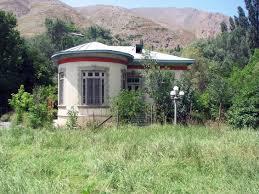
On 16 November 2015, the 38th Session of the General Conference of UNESCO adopted a resolution proclaiming May 5th as African World Heritage Day, in conjunction with the 10th anniversary of UNESCO’s decision to create the African World Heritage Fund (AWHF) (2006-2016).
This Resolution, in line with UNESCO’s Priority Africa programme, is aimed to increase international awareness of African heritage. It will foster cooperation on the local, regional, and global scale to allow for stronger involvement from many stakeholders in the conservation and promotion of African heritage. The World Heritage Convention sets out the duties of States Parties in identifying potential sites  and their role in protecting and preserving them. By signing the Convention, each country pledges to conserve not only the World Heritage properties situated on its territory, but also to protect its national heritage.
History of transformation and management of Amazonian rainforests
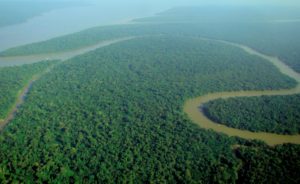 The new findings by a team of Brazilian and UK researchers provide new evidence for how indigenous people lived in the Amazon rainforest before European people arrived in the region.
The experts believe that the Amazonian rainforest was transformed over two thousand years ago by ancient people who built hundreds of large earthworks. In fact, the latest findings show that the ditched enclosures, in Acre state in the western Brazilian Amazon, were concealed for centuries by trees. And due to the recent deforestation more than 450 of these large geometrical geoglyphs have been discovered.
While archeologists are still not sure what the function of these sites were, they believe that the sites are unlikely to be villages, since archaeologists have recovered very few artifacts during excavations. In addition, the layout doesn’t suggest they were built for defensive reasons. The archeologists believe that the sites were used perhaps sporadically as ritual gathering places.
These new discoveries challenge assumptions that the rainforest ecosystem has been untouched by humans.
The team of researchers used state-of-the-art technology and methods, and they reconstructed 6000 years of vegetation and fire history around two geoglyph sites. They found that humans heavily altered bamboo forests for millennia and small, temporary clearings were made to build the geoglyphs. The results of the research by the researchers from the universities of Exeter, Reading and Swansea (UK), São Paulo, Belém and Acre (Brazil) was published in the proceedings of the National Academy of Sciences. The research was funded by the Arts and Humanities Research Council, National Geographic, and the Natural Environment Research Council Radiocarbon Facility.
World Day for Safety and Health at Work
 Each year, the International Labor Organization (ILO) marks April 28th as the World Day for Safety and Health at Work.
The ILO states that each year more than 2.3 million people die from work-related injuries and illnesses globally. Today is a day to mourn those who lost their lives on the job and it’s also a day to implement and improve safe work practices.
With workplace safety top-of-mind this time of year, the theme of this year’s World Day for Safety and Health at Work is “Workplace Stress: A collective challenge.” This theme is intended to bring awareness to the impact stress can have at work and on the safety of your employees.
At Blackline Safety, we echo the message of this awareness-building campaign, which serves as a wake-up call, for employers and their employees, on the importance of occupational safety and the impact work-related injuries and fatalities have worldwide. Our priority is the safety of lone workers—those working out of sight or sound from others.
International Jazz Day 2017 to take place in Havana, Cuba
 Earlier this month, UNESCO announced that the sixth annual International Jazz Day, which will be celebrated worldwide on April 30, 2017 will be held in Havana, Cuba. The day will culminate with an All-Star Global Concert presented at the Gran Teatro de La Habana Alicia Alonso, under the auspices of the Ministry of Culture of Cuba, the Cuban Institute of Music and the Cuban National Commission for UNESCO. The concert will be live streamed by UNESCO and will feature an extraordinary array of artists from around the world paying tribute to the international art form of jazz.
The musically vibrant and culturally rich city of Havana, Cuba, has been selected to serve as the 2017 Global Host City, presented each year on April 30th, in partnership with the Thelonious Monk Institute of Jazz. International Jazz Day highlights the power of jazz as a force for freedom and creativity, promotes intercultural dialogue through respect and understanding, and unites people from all corners of the globe. The day is recognized on the official calendars of both UNESCO and the United Nations. International Jazz Day programs are made possible by Toyota, the 2017 lead partner.
According to the UNESCO website, the All-Star Global Concert will have Herbie Hancock and Chucho Valdés serving as the artistic directors, and John Beasley and Emilio Vega as the evening’s musical co-directors. The Concert will feature stellar performances by a truly international roster of artists including Ambrose Akinmusire (United States), Carl Allen, (United States), Marc Antoine (France), Richard Bona (United States), Till Brönner (Germany), A Bu (China), Igor Butman (Russian Federation), Bobby Carcassés (Cuba) Regina Carter (United States), Kurt Elling, (United States), Kenny Garrett, (United States) Herbie Hancock (United States), Antonio Hart, (United States), Takuya Kuroda (Japan), Ivan Lins (Brazil), Sixto Llorente (Cuba), Marcus Miller (United States), Youn Sun Nah (Republic of Korea), Julio Padrón (Cuba), Gianluca Petrella (Italy), Gonzalo Rubalcaba (Cuba), Antonio Sánchez (Mexico), Christian Sands (United States), Esperanza Spalding (United States), Chucho Valdés (Cuba), Ben Williams (United States), Tarek Yamani (Lebanon), Dhafer Youssef (Tunisia), Pancho Amat (Cuba), César López (Cuba) and others, with further details to be announced in the days to follow.
The celebration in Havana of the International Jazz Day in 2017 marks the seventieth anniversary of Cuba’s accession to UNESCO and the foundation of the National Commission for UNESCO.
For more information about the International Jazz Day 2017 live stream, and to register events on the official website, please visit www.jazzday.com(link is external) or www.unesco.org/jazzday.
New report stresses urgency of protecting the Arctic
 A recent report just published earlier this month (April 2017), calls for urgent need for the protection of The Arctic Ocean. According to experts, due to the melting sea ice in the Arctic ocean, previously inaccessible areas are opening up to activities such as shipping, bottom trawl fishing and oil exploration. According to a recent scientific report by the International Union for Conservation of Nature (IUCN), in partnership with the US-based Natural Resources Defense Council (NRDC) and UNESCO’s World Heritage Centre, the experts identify seven globally significant marine sites in the Arctic Ocean that warrant protection and could potentially qualify for World Heritage status. The Director of IUCN’s Global Marine and Polar Programme, Carl Gustaf Lundin said recently that the Arctic Ocean plays a crucial role in shaping global climate and hosts a diverse range of species.
Currently, the climate change is posing a serious threat to the Arctic region, which is warming twice as fast as the rest of the planet. The Arctic Ocean stretches across the northern most side of the planet, spanning 14 million square kilometers. Environmentalists have reported that the arctic is home to wildlife found nowhere else on the planet, including bowhead whales, narwhals and walruses. As one of the most unspoiled oceans on Earth, it provides critical habitat for threatened species, such as polar bears and Atlantic puffins, both assessed as vulnerable by the IUCN Red List of Threatened Species.
The sites identified in the report that could potentially qualify for World Heritage status include: the Remnant Multi-Year Sea Ice and Northeast Water Polynya Ecoregion, which boasts the oldest and thickest ice in the Arctic and may give polar bears the greatest chance of survival through the 21st century; the Bering Strait Ecoregion, one of the world’s great migration corridors for millions of seabirds and marine mammals; the Northern Baffin Bay Ecoregion, which supports the largest aggregation of a single species of seabirds, the little auk; the Scoresby Sound Polynya Ecoregion, the world’s largest fjord system which supports the Critically Endangered Spitsbergen stock of bowhead whale; the High Arctic Archipelagos, which support 85% of the world’s population of ivory gulls; Disko Bay and Store Hellefiskebanke Ecoregion, a critical winter habitat for the West Greenland walrus and hundreds of thousands of king eiders; and the Great Siberian Polynya, where the seasonal formation and melting of ice influences oceanic processes on a large scale.
International Mother Earth Day April 22
 International Mother Earth Day was established in 2009, by the General Assembly under Resolution A/RES/63/278. The Resolution was introduced by The Plurinational State of Bolivia and endorsed by over 50 member states. It recognizes that “the Earth and its ecosystems are our home” and that “it is necessary to promote harmony with nature and the Earth.” The term Mother Earth is used because it “reflects the interdependence that exists among human beings, other living species and the planet we all inhabit”. It is decided to designate April 22 as International Mother Earth Day.
International Mother Earth Day is celebrated to remind each of us that the Earth and its ecosystems provide us with life and sustenance.
Tourists Vandalizes the Colosseum
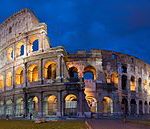 When you visit Rome, the very first place on your list of World Heritage places to see, is of course the Colosseum. But the 2,000-year-old amphitheater is a magnet for tourists and vandals alike. It has recently been reported that the police in Rome have ticketed yet another tourist for vandalizing the Colosseum.
This recent incident involves an Ecuadorian visitor who decided that it was a good idea to carve the names of his wife and child onto the ancient site, as reported by the Associated Press. An official tour guide for the Colosseum found the defacement in progress and reported it to the local authorities. Fines for this type of vandalism have ranged, carrying up to a 20,000 euro fine, or approximately $21,000, according to AP. The tourist will have his day in court and a judge has will decide what the fine will be.
The Colosseum is one of the most-visited attractions in the world, and it has been reported that the World Heritage site usually welcomes nearly 7 million people annually. Colosseum is an ancient Roman amphitheater that served as a center of entertainment starting in the first century according to experts. Local residents would come to the Colosseum to watch gladiators fight each other or wild animals to the death. The 2,000-year history of this structure, and in particular its violent displays, has long drawn people from around the world who want to learn about life under ancient Roman rule.
It has also been reported that just a couple of months ago, in February a French tourist was arrested for carving her name into the Colosseum using an ancient coin she found. Two Brazilian men attempted to break into the Colosseum just one month earlier, with one man falling 13-feet and breaking his hip. All of these incidents come after the Colosseum recently opened its doors again after a three year renovation.
Celebrating World Heritage Day on April 18th
 On 18 April 1982 on the occasion of a symposium organised by ICOMOS in Tunisia, the holding of the “International Day for Monuments and Sites” to be celebrated simultaneously throughout the world was suggested. This project was approved by the Executive Committee who provided practical suggestions to the National Committees on how to organise this day.
The idea was also approved by the UNESCO General Conference who passed a resolution at its 22nd session in November 1983 recommending that Member States examine the possibility of declaring 18 April each year “International Monuments and Sites Day”. This has been traditionally called the World Heritage Day.
ICOMOS, the International Council for Monuments and Sites makes a number of suggestions on how to celebrate the World Heritage Day:
- Visits to monuments and sites, and restoration works, possibly with free admission
- Articles in newspapers and magazines, as well as television and radio broadcasts
- Hanging banners in town squares or principal traffic arteries calling attention to the day and the preservation of cultural heritage
- Inviting local and foreign experts and personalities for conferences and interviews
- Organising discussions in cultural-centres, city halls, and other public spaces
- Exhibitions (photos, paintings, etc)
- Publication of books, post-cards, stamps, posters
- Awarding prizes to organisations or persons who have made an outstanding contribution to the conservation and promotion of cultural heritage or produced an excellent publication on the subject.
- Inaugurate a recently restored monument
- Special awareness raising activities amongst school children and youth
- Promotion of “twinning” opportunities between organizations, defining areas for co-operation; exchange of speakers; organisation of meetings and seminars, or the editing of joint publications.
The Earliest Directly Dated Rock Paintings from Southern Africa
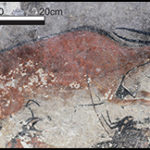
image description
Rock art worldwide has proved extremely difficult to date directly. Here, the first radiocarbon dates for rock paintings in Botswana and Lesotho are presented, along with additional dates for Later Stone Age rock art in South Africa. The samples selected for dating were identified as carbon-blacks from short-lived organic materials, meaning that the sampled pigments and the paintings that they were used to produce must be of similar age. The results reveal that southern African hunter-gatherers were creating paintings on rock shelter walls as long ago as 5723–4420 cal BP in south-eastern Botswana: the oldest such evidence yet found in southern Africa.