We believe that all cultural, historical and natural heritage, wherever they are should be preserved. LEARN MORE
News

Default Category

4,000-year-old funerary garden discovered

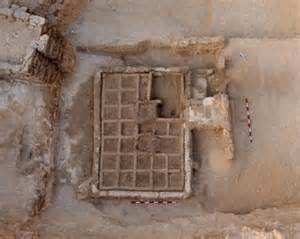
The Djehuty Project has discovered a 4,000 year-old Funerary Garden- The first such garden ever found on the Dra Abu El-Naga hill in Luxor, Egypt as reported by a number of news outlets. The discoveries made by this project also shed light on a key epoch when, for the first time, Thebes (now Luxor) became the capital of the unified kingdom of Upper and Lower Egypt about 4,000 years ago.

The archaeologists explain that they knew of the possible existence of these gardens since they appear in illustrations both at the entrances to tombs as well as on tomb walls, where Egyptians would depict how they wanted their funerals to be. This is the first time that a physical garden has ever been found, and it is therefore the first time that archaeology can confirm what had been deduced from iconography. The discovery will provide valuable information about both the botany and the environmental conditions of ancient Thebes, of Luxor 4,000 years ago”.

In addition, the experts state that the plants grown there would have had a symbolic meaning and may have played a role in funerary rituals. Therefore, the garden will also provide information about religious beliefs and practices as well as the culture and society at the time of the Twelfth Dynasty when Thebes became the capital of the unified kingdom of Upper and Lower Egypt for the first time. The archeologists also know that palm, sycamore and Persea trees were associated with the deceased’s power of resurrection. Similarly, plants such as the lettuce had connotations with fertility and therefore a return to life.

The garden, or funeral garden, was unearthed in an open courtyard at the entrance of a Middle Kingdom rock-cut tomb very probably from the Twelfth Dynasty, circa 2000 BCE. In one corner, the researchers recovered a still upright tamarisk shrub complete with its roots and 30cm-long trunk, beside which was a bowl containing dates and other fruit which may have been given as an offering.


Official Launch of New Database of ‘at risk’ Archaeological Sites

WCHV congratulates the launch of a new database housed at University of Oxford, Durham University and University of Leicester.  The database also emphasizes the awareness of the scale of the problems related to the cost of conflict on heritage sites.  The new database will provide information for each heritage site, including the level of risk. The database will be accessible to all heritage professionals and institutions with an interest in the archaeological heritage of the Middle East and North Africa.

The funding for the new database has been provided by Arcadia – a charitable fund of Peter Baldwin and Lisbet Rausing. EAMENA which stands for Endangered Archaeology in the Middle East and North Africa was established in January 2015 to respond to the increasing threats to archaeological sites in the Middle East and North Africa. The project uses satellite imagery to rapidly record and make available information about archaeological sites and landscapes which are under threat.
Dr Robert Bewley, from the School of Archaeology at the University of Oxford and Director of EAMENA project, said: ‘Not all damage and threats to the archaeology can be prevented, but they can be mitigated through the sharing of information and specialist skills.” As stated on Oxford University’s website.  The archaeology of the Middle East and North Africa is exceptionally rich and diverse, giving insight into some of the earliest and most significant cultures in human history.
http://eamena.arch.ox.ac.uk/

Addition of Ancient Jewish Cemetery on Iran’s heritage list

By Faryar Nikbakht

Following years of destruction, vandalism, encroachment and neglect of the ancient Gilliard cemetery, and after tireless efforts by cultural activists – in particular, the small remaining Iranian Jewish community – the Iranian Cultural Heritage Organization has finally agreed to register this site in the national cultural heritage list, designated as entry number 31691.

Jewish captives had been taken to different regions of Babylon and parts of the future Persia by Nebuchadnezzar, before King Cyrus the Great of Persia freed all the Babylonian captives, including the Jews who were then allowed to return to their motherland in Jerusalem, to remain within the Iranian territories or go to any place they preferred. Many Jews decided to stay in Iran and to start new lives in Persian cities as free and proud citizens.

In addition to Biblical texts, the existence of ancient Jewish grave sites and shrines such as those of Prophet Daniel in Shush, Esther and Mordechai in Hamedan, Sarah Beth Asher in Isfahan and Habakkuk in Tooiserkan and many other sites, attest to the Jewish presence in Iran for several millennia.

According to historical evidence and research, the presence of Jews in Gilliard near Damavand – as the original inhabitants of area – dates to the year 3,368 of the Hebrew calendar, during their diaspora, corresponding to 409 BCE.

The Jewish people named this area “Gil’ad” after one of their old cities in ancient Israel, which literally means “eternal pillar” or “memorial pillar”.

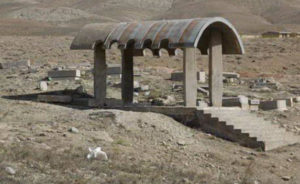
The Gilliard (AKA Gillard or Jilliard) cemetery is located next to the Gillavand Highway, on the way to the Damavand village in the foothills of the majestic Damavand dormant volcano. The large numbers of graves both in the old section and in the more modern one, demonstrate that the Jewish population in the area was quite large.

Unfortunately, due to the circumstances, Jewish Iranians moved to larger cities and eventually sought refuge in free and safe countries abroad, to the tune of 90% of their pre-1979 population.

It is said that a wall is going to be constructed around this historical site to protect it from vandalism.


More than 1M songbirds killed in Cyprus

Several news outlets have reported on the fact that British authorities in Cyprus have been criticized for failing to effectively tackle the poaching of songbirds on a military base. The estimated report is that almost 1.7 million birds were illegally killed across the Republic of Cyprus in 2016. It has also been reported that more than 800,000 were killed on the British military territory that extends for around 100 sq. km (100 sq. miles).

In response, the UK authorities in Cyprus said that their efforts had helped to halt what had been a rising trend. The report is the result of a study carried out by the RSPB and Birdlife Cyprus, during the autumn migration season between September and October in 2016. Once the songbirds are captured, they are then sold on the black market to be pickled, roasted or fried and eaten in secret as a local delicacy. In fact, according to the report, criminal gangs are thought to earn huge sums from the trade. A number of the sites where these birds are being sold to, include the popular holiday destination areas of Famagusta and Larnaca along with Ayios Theodorus – Maroni.

It has been reported that the poachers have found that the most efficient way of trapping birds is to use a “mist net” strung between acacia bushes. In addition, fake birdsong is played from MP3 players hidden in the branches which deceives the birds into thinking it’s a safe place. They then fly straight in to the near-invisible net. One net can trap 400 birds.

The recent report has criticized the British military authorities for not having taken steps in the past. An operation to remove the bushes was stopped after a protest last year when trucks were used to blockade the main road in and out of the base.

A spokesperson for the Sovereign Base Areas (SBAs) has stated that the UK is committed to tackling illegal bird crime and is pleased that the RSPB has recognized a significant increase in enforcement activity that has led to a record number of arrests, equipment seizures, prosecutions and fines.


Global Humanitarian Call: Invest in Girls’ Education

Within the framework of the Fourth World Forum on Intercultural Dialogue, UNESCO, in collaboration with the Government of Azerbaijan, organized a High-level meeting on the importance of girls’ education for peaceful and sustainable societies. The attendees agreed that investing in girls’ education is an urgent and important humanitarian objective and a priority for the global community today.
According to UNESCO’s Global Education Monitoring Report Gender review for 2016, “Conflict reinforces gender inequality. Girls are almost two and a half times more likely to be out of school if they live in conflict-affected countries. Refugee girls are less likely to finish primary education, transition into and complete secondary education.”
At the same time, educated girls and women are strong powerful agents of change.  Research has shown how empowering girls means a better future for societies as a whole and especially with major impact on such issues as reproductive health, improved family health, economic growth, for the family and for society, as well as lower rates of child mortality, malnutrition and child marriage.
The meeting, co-hosted by Ms Irina Bokova, Director-General of UNESCO, and a number of international dignitaries concluded with the launch of the Global Humanitarian Call to Invest in Girls’ Education. All speakers stressed the importance of girls’ education as a tool to counter violent extremism, and called for increased investments in quality education for all.

A historical palace was sold for a nominal price

Amongst the turmoil of the presidential election in the Islamic Republic of Iran, The Motazefan Foundation, a government-related entity, has recently sold the “Gach-sar Palace” to one of the regime’s insiders for a mere price of about $300,000. Experts put a much higher price on the property and believe that a historical landmark has been sold out by the Islamic functionaries.

The historic “Gach-sar Palace” belonged to Reza Shah Pahlavi and was registered under #6575, as a national monument and, thus, was owned by the Iranian nation and no one could sell it as a private property.

Gach-sar Palace,” with its fine and unique architecture and ornamented plaster work was built in 1938 together with the first important railroad Tunnel of Iran in Kandovan region and Reza Shah, spending ample time there, used it as a surveillance station, overseeing the construction of the tunnel.

African World Heritage Day May 5th

On 16 November 2015, the 38th Session of the General Conference of UNESCO adopted a resolution proclaiming May 5th as African World Heritage Day, in conjunction with the 10th anniversary of UNESCO’s decision to create the African World Heritage Fund (AWHF) (2006-2016).

This Resolution, in line with UNESCO’s Priority Africa programme, is aimed to increase international awareness of African heritage. It will foster cooperation on the local, regional, and global scale to allow for stronger involvement from many stakeholders in the conservation and promotion of African heritage.  The World Heritage Convention sets out the duties of States Parties in identifying potential sites and their role in protecting and preserving them. By signing the Convention, each country pledges to conserve not only the World Heritage properties situated on its territory, but also to protect its national heritage.

History of transformation and management of Amazonian rainforests

The new findings by a team of Brazilian and UK researchers provide new evidence for how indigenous people lived in the Amazon rainforest before European people arrived in the region.

The experts believe that the Amazonian rainforest was transformed over two thousand years ago by ancient people who built hundreds of large earthworks. In fact, the latest findings show that the ditched enclosures, in Acre state in the western Brazilian Amazon, were concealed for centuries by trees. And due to the recent deforestation more than 450 of these large geometrical geoglyphs have been discovered.

While archeologists are still not sure what the function of these sites were, they believe that the sites are unlikely to be villages, since archaeologists have recovered very few artifacts during excavations. In addition, the layout doesn’t suggest they were built for defensive reasons. The archeologists believe that the sites were used perhaps sporadically as ritual gathering places.

These new discoveries challenge assumptions that the rainforest ecosystem has been untouched by humans.

The team of researchers used state-of-the-art technology and methods, and they reconstructed 6000 years of vegetation and fire history around two geoglyph sites. They found that humans heavily altered bamboo forests for millennia and small, temporary clearings were made to build the geoglyphs. The results of the research by the researchers from the universities of Exeter, Reading and Swansea (UK), São Paulo, Belém and Acre (Brazil) was published in the proceedings of the National Academy of Sciences. The research was funded by the Arts and Humanities Research Council, National Geographic, and the Natural Environment Research Council Radiocarbon Facility.

World Day for Safety and Health at Work

Each year, the International Labor Organization (ILO) marks April 28th as the World Day for Safety and Health at Work.

The ILO states that each year more than 2.3 million people die from work-related injuries and illnesses globally. Today is a day to mourn those who lost their lives on the job and it’s also a day to implement and improve safe work practices.

With workplace safety top-of-mind this time of year, the theme of this year’s World Day for Safety and Health at Work is “Workplace Stress: A collective challenge.” This theme is intended to bring awareness to the impact stress can have at work and on the safety of your employees.

At Blackline Safety, we echo the message of this awareness-building campaign, which serves as a wake-up call, for employers and their employees, on the importance of occupational safety and the impact work-related injuries and fatalities have worldwide. Our priority is the safety of lone workers—those working out of sight or sound from others.

International Jazz Day 2017 to take place in Havana, Cuba

Earlier this month, UNESCO announced that the sixth annual International Jazz Day, which will be celebrated worldwide on April 30, 2017 will be held in Havana, Cuba. The day will culminate with an All-Star Global Concert presented at the Gran Teatro de La Habana Alicia Alonso, under the auspices of the Ministry of Culture of Cuba, the Cuban Institute of Music and the Cuban National Commission for UNESCO. The concert will be live streamed by UNESCO and will feature an extraordinary array of artists from around the world paying tribute to the international art form of jazz.

The musically vibrant and culturally rich city of Havana, Cuba, has been selected to serve as the 2017 Global Host City, presented each year on April 30th, in partnership with the Thelonious Monk Institute of Jazz. International Jazz Day highlights the power of jazz as a force for freedom and creativity, promotes intercultural dialogue through respect and understanding, and unites people from all corners of the globe. The day is recognized on the official calendars of both UNESCO and the United Nations. International Jazz Day programs are made possible by Toyota, the 2017 lead partner.

According to the UNESCO website, the All-Star Global Concert will have Herbie Hancock and Chucho Valdés serving as the artistic directors, and John Beasley and Emilio Vega as the evening’s musical co-directors. The Concert will feature stellar performances by a truly international roster of artists including Ambrose Akinmusire (United States), Carl Allen, (United States), Marc Antoine (France), Richard  Bona (United States), Till Brönner (Germany), A Bu (China), Igor Butman (Russian Federation), Bobby Carcassés (Cuba) Regina Carter (United States), Kurt Elling, (United States), Kenny Garrett, (United States) Herbie Hancock (United States), Antonio Hart, (United States), Takuya Kuroda (Japan), Ivan Lins (Brazil), Sixto Llorente (Cuba), Marcus Miller (United States), Youn Sun Nah (Republic of Korea), Julio Padrón (Cuba), Gianluca Petrella (Italy), Gonzalo Rubalcaba (Cuba), Antonio Sánchez (Mexico), Christian Sands (United States), Esperanza Spalding (United States), Chucho Valdés (Cuba), Ben Williams (United States), Tarek Yamani (Lebanon), Dhafer Youssef (Tunisia), Pancho Amat (Cuba), César López (Cuba) and others, with further details to be announced in the days to follow.

The celebration in Havana of the International Jazz Day in 2017 marks the seventieth anniversary of Cuba’s accession to UNESCO and the foundation of the National Commission for UNESCO.

For more information about the International Jazz Day 2017 live stream, and to register events on the official website, please visit www.jazzday.com(link is external) or www.unesco.org/jazzday.