We believe that all cultural, historical and natural heritage, wherever they are should be preserved. LEARN MORE
News

Default Category

US Supreme Court to decide on Iran artifact case

The US Supreme Court on Tuesday agreed to decide on a long-running legal battle over whether Persian artifacts in Chicago museums can be seized as compensation for victims of a terror attack in Israel.

The court will have the final word in the more than decade-long saga between Iran and five US citizens, who blame the Islamic republic for its support of militant group Hamas.

The case highlights the difficulty for victims in obtaining judgments in their favor against sovereign states accused of supporting organizations considered by Washington to be terror groups.

The last decision in the case favored Tehran: a federal appeals court in Chicago ruled that the artifacts being kept at the Field Museum and at the University of Chicago were immune to seizure.

The case stems from a 1997 suicide bombing in Jerusalem that was carried out by Hamas.

Five US citizens injured in the attack won a $71.5 million civil judgment against Iran because it provided material support and training to Hamas.

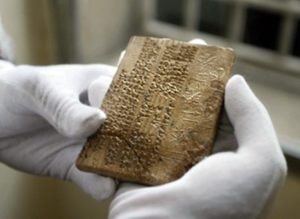
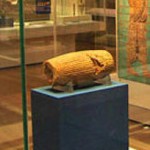
Among the artifacts were a collection of 2,500-year-old clay tablets bearing ancient cuneiform script which have been in the care of the University of Chicago since the 1930s.

The victims also sought to seize a collection of artifacts at the Field Museum which were purchased in 1945 from German archeologist Ernst Herzfeld.

Iran does not claim ownership of the collection, but the victims have argued that they do in fact belong to Iran because Herzfeld stole them and smuggled them out of the country.

The issue will be heard by the US Supreme Court in its next annual session beginning in October.

Ancient DNA Reveals Role of Near East and Egypt in Cat Domestication

DNA found at archaeological sites reveals that the origins of our domestic cat are in the Near East and ancient Egypt. Cats were domesticated by the first farmers some 10,000 years ago. They later spread across Europe and other parts of the world via trade hub Egypt. The DNA analysis also revealed that most of these ancient cats had stripes: spotted cats were uncommon until the Middle Ages.

Five subspecies of the wildcat Felis silvestris are known today. All skeletons look exactly alike and are indistinguishable from that of our domestic cat. As a result, it’s impossible to see with the naked eye which of these subspecies was domesticated in a distant past. Paleogeneticist Claudio Ottoni and his colleagues from KU Leuven (University of Leuven) and the Royal Belgian Institute of Natural Sciences set out to look for the answer in the genetic code. They used the DNA from bones, teeth, skin, and hair of over 200 cats found at archaeological sites in the Near East, Africa, and Europe. These remains were between 100 and 9,000 years old.

Read more at: https://phys.org/news/2017-06-ancient-dna-reveals-role-east.html#jCp

World Refugee Day

The United Nations’ (UN) World Refugee Day is observed on June 20 each year. This event honors the courage, strength and determination of women, men and children who are forced to flee their homeland under threat of persecution, conflict and violence.

World Refugee Day honors the spirit and courage of millions of refugees worldwide.©iStockphoto.com/David Snyder

What Do People Do?

People honor the spirit and courage of millions of refugees worldwide on World Refugee Day. It is a day to recognize the contributions of refugees in their communities. Organizations such as Amnesty International and the International Rescue Committee (IRC) often get involved in various activities for the day. They may include:

  • Activist protests against using former prisons to detain migrants and asylum seekers.

  • Screenings of films about the lives of asylum seekers living in a western country.

  • Organization members visiting asylum seekers in detention to offer moral support.

  • Letters or petitions to governments on the treatment of asylum seekers in detention.

Some communities dedicate an entire week that includes World Refugee Day to encourage people to think about the lives of refugees and the human right to a secure place to that one can see as “home”.

Public Life

World Refugee Day is a global observance and not a public holiday.

Background

For years, many countries and regions have been holding their own events similar to World Refugee Day. One of the most widespread events is Africa Refugee Day, which is celebrated on June 20 in many countries. the UN General Assembly adopted a resolution to express its solidarity with Africa on December 4, 2000.

The resolution noted that 2001 marked the 50th anniversary of the 1951 Convention relating to the status of refugees, and that the Organization of African Unity (OAU) agreed to have International Refugee Day coincide with Africa Refugee Day on June 20. The Assembly therefore decided that June 20 would be celebrated as World Refugee Day from 2001 onwards. This day was designated by the UN High Commissioner for Refugees to bring attention to the plight of approximately 14 million refugees around the world.

The Windmill and the Contribution of Persia

The Windmill and the Contribution of Persia

By Dr. Kaveh Farrokh

The article below is based on an excerpt from Kaveh Farrokh’s second text “Shadows in the Desert: Ancient Persia at War” (2007, Chapter 19: The Legacy of Persia after the Islamic Conquests, pages 280-281). For more on these topics, readers may consult the following link: Learning, Science, Knowledge, technology and Medicine

***

The first water pumps and grain mills powered by wind-sails originated in modern northwest Iran in (circa) 6th -7th centuries CE during the late Sassanian era.

Model of an Iranian windmill housed in the German Museum in Munich (Source: Saupreiß in Allaboutlean.com).

The origins of the first wind-powered machine concept is attributed to Heron (10-70 CE), a Greek inventor who first built this device in his workshop in Roman-ruled Egypt. Heron’s design of the shaft and rotating blades were placed at the horizontal position.

Portrait of Heron as he appears in a 1688 German book translation of Heron’s “Pneumatics” (Source: Public Domain).

The Heron machine however never advanced beyond the prototype he had designed, as the Romans never exploited this for generating power or for agriculture. The Iranians however knew of this technology, thanks in part to the Sassanian Empire’s efforts to protect and preserve Greek scholarship and knowledge (see Jundishapur University)

Short video of an ancient windmill in Iran that remains operational to this day (Source: Youtube).

By the late Sassanian era the first true windmill had appeared in the northeastern regions of the Sassanian Empire (modern Khorasan and west Afghanistan). Modern scholarship is in agreement that Iranian engineers had completely re-designed Heron’s original machine for applied purposes. They had achieved this by inverting the shaft that held the blades, toward an upright position. The re-designed shaft and rotating blades were installed inside a mud-brick encased tower. This structure in turn had “air ducts” allowing for the air to enter and rotate the blades housed inside of it. The “sails” or “blades” were built of a very strong fabric – there were up to twelve of these inside each of these “towers” or structures. This new technology had been initially designed as a corn-mill.

Drawing of a Chinese windmill based on technology imported from Persia (Source: Carl von Canstein in GNU.org).

The Arabian conquests of the Sassanian Empire soon led the Caliphates to adopt the new windmill technology from the Iranians. By the 9th century CE, this technology had spread throughout the Caliphate’s realms and also eastwards into India, reaching China by the 13th century CE.

The Bidston windmill in Great Britain (Source: Fractal Angel in Geograph.org).

The Iranian windmill design appears to have reached Arab-ruled Spain as well, and later the British Isles by 1137 CE. It was the British (not the Dutch as is conventionally assumed), who effected significant changes to the original Iranian design. The British genius was in their combination of both the Greek (Heron) and Iranian (late Sassanian) technologies. The British post-mill had two axes of rotation:

(1) A vertical shaft for horizontal rotation allowing for the entire structure to be now rotated for harnessing the wind

(2) A horizontal shaft for vertical rotation of the sails (based on Heron’s original concept)

A Dutch windmill overlooking tulips (Source: win4000.com).

The British adaptation of the Iranian windmill soon spread across continental Europe all the way to Greece and the Aegean Sea. Europeans made other designs such as the smock mill and tower mill. The famous modern-day Dutch windmill can trace its ancestry to English, Iranian and Greek origins.

Related posts:

  1. New Course: Forgotten Gifts of Persia

  2. Javier Sánchez Gracia: Roma y Persia Frente a Frente (Rome and Persia Face to Face)

  3. New Course: The Silk Route-Origins and History

  4. Italian AGON Journal article: Ties of Greco-Roman civilization with ancient Iran

  5. Mani: Forgotten Prophet of Ancient Persia

  6. Ehsan Yarshater Petition: Objection to Princeton’s selection of “Pourdavoud Chair in pre-modern Persia”

  7. New Course: Persia and World Civilization: A Silent Legacy

  8. Chaharshanbeh Soori ceremony of ancient Persia: Links with Spain?

  9. Lecture: Influence of Sassanian Architecture upon European and Wider Civilization

  10. The Viking Ulfberht Sword and Persian Steel

World Environment Day

World Environment Day (WED) is the United Nations’ principal vehicle for encouraging worldwide awareness and action for the environment

Background

Over the years it has grown to be a broad, global platform for public outreach that is widely celebrated by stakeholders in more than 100 countries. It also serves as the ‘people’s day’ for doing something positive for the environment, galvanizing individual actions into a collective power that generates an exponential positive impact on the planet.

WED is the opportunity for everyone to realize the responsibility to care for the Earth and to become agents of change. Through decades of WED celebrations, hundreds of thousands of people from countries all over the world and from all sectors of society have participated in individual and organized environmental action.

History

The UN General Assembly designated June 5 as World Environment Day in 1972, marking the first day of the landmark Stockholm Conference on the Human Environment. Another resolution adopted the same day led to the creation of the UN Environment Programme (UNEP). Two years later, WED was celebrated for the first time for two years in a row with the slogan “Only One Earth.”

In the 1970s and 1980s, WED helped the UNEP to raise awareness and generate political momentum around growing concerns such as the depletion of the ozone layer, toxic chemicals, desertification and global warming.

Earliest Evidence Found for Aboriginal People Living on the Australian Coast

A team of international archaeologists has confirmed evidence from a remote cave in Australia’s North West that pushes back human occupation of Australia to around 50,000 years ago.  The discovery is of international significance in providing one of the earliest age brackets for the settlement of Australia. It also has the longest record of dietary fauna providing unprecedented insights into the lifeways of the earliest Australians.

Lead archaeologist Professor Peter Veth, from The University of Western Australia, said the findings provided unique evidence for the early and successful adaptation of Aboriginal people to both coastal and desert landscapes of Australia.

“This site contains cultural materials clearly associated with dates in the order of 50,000 years,” Professor Veth said. “This pushes back the age of occupation from the previous and more conservative limit of 47,000 years ago. Even older dates are entirely plausible.”

The team focused on Barrow Island, which provides a unique window into the now-drowned North-West Shelf of Australia.  Barrow Island is a large limestone island located 60 km off the Pilbara coast of Western Australia.

University of Western Australia

International Day of United Nations Peacekeepers

The International Day of United Nations Peacekeepers is a day to remember those who served in United Nations (UN) peacekeeping operations. They also honor the memory of people who died in the name of peace.

Background

The UN Truce Supervision Organization (UNTSO) was founded on May 29, 1948. UNTSO’s task was to assist peacekeepers to observe and maintain a cease-fire. This cease-fire marked the end of the hostilities between Israel and the Arab League forces. The hostilities started after the end of the British Mandate of Palestine on May 14, 1948. On December 11, 2002, the UN General assembly designated May 29 as the International Day of United Nations Peacekeepers. The day was first observed on May 29, 2003.

The International Day of United Nations Peacekeepers is a tribute to people who serve or have served in UN peacekeeping operations. The peacekeepers are honored for their high level of professionalism, dedication and courage. People who died for peace are also remembered.


What Do People Do?

Many activities are organized on this day. Activities include:

  • Notes in official UN documents and schedules.
  • Presentations during UN meetings and events.
  • Memorial services and wreath laying events for those who died in peace keeping missions.
  • Presentation of the Dag Hammarskjöld Medal as a way to honor military, police and civilian personnel who lost their lives while working for UN peacekeeping operations.
  • Awarding peacekeeping medals to military and police officers who are peacekeepers.
  • The launch of photographic and multimedia exhibitions on the work of UN peacekeepers.

The events take place in places such as the UN headquarters in New York in the United States, as well as Vienna, Australia, and other locations worldwide.

On December 11, 2002, the UN General assembly designated May 29 as the International Day of United Nations Peacekeepers. The day was first observed on May 29, 2003.

The International Day of United Nations Peacekeepers is a tribute to people who serve or have served in UN peacekeeping operations. The peacekeepers are honored for their high level of professionalism, dedication and courage. People who died for peace are also remembered.

Swiss Archaeologist Examines Ancient Nabateans’ Water Technology

The infrastructure of Petra, the capital of the ancient Nabateans, still remains a mystery to most people who visit this heritage site. The focus of tourists when they arrive to Petra is to find splendid monuments, temples, shrines, churches and market places, but the water infrastructure and the way Nabateans preserved water for irrigation and drinking is relatively unknown, noted Ulrich Bellwald, a Swiss archaeologist, conservator and architect.

Surveys of Siq Al Mudhlim,Wadi Mataha, Khazne Plaza and the Outer Siq with hydraulic and archaeological research programmes gave further results regarding the water supply system and the flash flood prevention system, Bellwald said.

Based on these results, the survey of the entire Petra area was elaborated and all the visible remains of the city’s hydraulic system were recorded and documented, the scholar continued. 

Moreover, a first relative chronology could be established, showing how the entire system was developed over the centuries, how it declined and finally collapsed, he said, underlining that “for each single element of the system, its function in the entire network and its technical and constructive characteristics could be determined”. 

During early phases of the city development in the 1st century BC, Bellwald said, the Nabateans collected run-off water in cisterns located on roofs of buildings and surrounding areas. 

One of these early cisterns was excavated by a team from Basel University below the mansion at Zhantur IV, the scholar stated, noting that it dates to the first half of the 1st century BC and was then “overbuilt by the foundations of the walls belonging to the construction from the very beginning of the 1st century AD”. 

“The pottery found in the retention basin of the dam number 3 in Wadi Al Jarra corresponds perfectly with the results from all my other excavations connected with the hydraulic infrastructure, in the Siq and in Wadi Al Madrass,” said the expert and author of the book ” The Petra Siq: Nabatean hydrology uncovered”, adding that the oldest shards are from the mid 1st century BC, the main amount from the last quarter of the 1st century BC and the finds stopped around 80 AD. 

“Also, the French excavations in the Obodas chapel have given the same results, which proves that the entire hydraulic system, that is the aqueducts for the drinking water supply and the flash flood retention system, have been planned in the mid-1st century BC and then realised between 50 and 25 BC, and they were fully operational in the last quarter of the 1st century BC,” Bellwald noted. 

 The excavations in the Siq revealed sections of an underground gravity flow channel that followed the surface of the trampling path before the construction of the paved road, the expert said, explaining that “the channel was covered over its entire length and crossed wider faults on dams or even arched bridges”. 

The sections excavated in the Siq and in the vicinity of the Temenos Gate by Professor Stephan Schmid showed exactly the same type of construction and interior plaster, Bellwald underlined. 

“As due to the modern building activity in the town of Wadi Musa, no remains of this first channel have yet been discovered between Bab Al Siq area and the springs to the east of the city, so the original feeder of the aqueduct may not be determined.” 

“But, based on the wide cross section of the channel, it must have been a spring with a great capacity, hence it was most probably Ain Musa,” the expert speculated. 

The sections of this first gravity flow channel excavated in the Siq have shown that this first aqueduct must have been destroyed by a flash flood in the middle of the 1st century BC, Bellwald explained. 

Furthermore, the constructive characteristics of the first spring water channel, as revealed by the excavated sections in the Siq and near the Temenos Gate, and by the still visible remains in the Bab Al Siq area are clearly showing that this first aqueduct was built as a completely hidden, underground construction, which was a common way to do in Greece from archaic period and consequently implemented in the Hellenistic cities in Asia Minor like Pergamon, emphasised the Swiss scholar.  

On the other hand, the Khubtha north aqueduct represents the first spring water aqueduct to be completely visible above the ground, the architect said, replacing the older destroyed channel in the Siq. 

Petra has five aqueducts: Khubtha, Siq, Ain Braq, Ain Abu Olleqa and Ain Debdehbeh, with an  overall length of 55,263 metres.

After the earthquake of 363AD, most of these Hellenistic aqueducts were destroyed and never reconstructed, so the city installed other water systems in order to provide water to its population, according to Bellwald.

“Only the gravity flow channel in the Siq was repaired during the Byzantine rule and prolonged into the city centre,” he said, adding that it was “clearly related to the Byzantine level of the paved street, which was several metres above the Nabataean pavement”.

The significantly-reduced population of Petra returned to run-off water collection systems as “may be shown by the cistern in the courtyard in front of the Petra Church”, the scholar noted.

“At its final stage, the spring water supply system of Petra covered the entire area of the city basin, bringing spring water from the east, south and north into the city. The location of the end reservoirs shows that all four quarters of the city had their own aqueduct,” Bellwald concluded.

The Jordan Time

Ancient Decorated Stone Block Found in Egypt

A stone block decorated with a cartouche of the pharaoh Nectanebo II was discovered in a hole in the floor of a home in the Egyptian city of Abydos.

Egypt’s Ministry of Antiquities say they caught looters digging up an ancient stone block carved with an image of a pharaoh

Images of the discovery show that the block is decorated with the cartouche of Nectanebo II. (A cartouche is a symbol consisting of ovals that frame a set of hieroglyphs indicating a royal name). Nectanebo II ruled during Egypt’s 30th Dynasty, from 360 to 342 B.C., and was the last native Egyptian pharaoh before his defeat during the Persian conquest.

Abydos is in Upper Egypt about 6 miles (10 kilometers) from the Nile River. The earliest kings of Egypt were buried at the site, and it remained an important religious place for thousands of years.

World Day for Cultural Diversity

World Day for Cultural Diversity for Dialogue and Development is annually held on May 21 to help people learn about the importance of cultural diversity and harmony.

World Day for Cultural Diversity for Dialogue and Development is a chance for people to celebrate cultural diversity and harmony.©iStockphoto.com/skynesher

What Do People Do?

Various events are organized to increase the understanding of issues around cultural diversity and development among governments, non-governmental organizations and the public. Many of these include presentations on the progress of implementing the Universal Declaration on Cultural Diversity.

Events include:

  • Seminars for professionals.

  • Educational programs for children and young adolescents.

  • The launch of collaborations between official agencies and ethnic groups.

  • Exhibitions to help people understand the history of various cultural groups and the influence on their own identities.

  • Celebrations to create greater awareness of cultural values and the need to preserve them.

The World Day for Cultural Diversity for Dialogue and Development tends to be marked in countries that embraced their varied cultural history and acknowledged the importance of embracing it.

Background

The General Conference of the United Nations Educational, Scientific and Cultural Organization (UNESCO) adopted the Universal Declaration on Cultural Diversity in Paris, France, on November 2, 2001. It was the 249th resolution adopted at the 57th session of the United Nations General Conference. Although the declaration was the culmination of years of work, it was adopted in the wake of the terrorist attacks on September 11, 2001. This reaffirmed the need for intercultural dialogue to prevent segregation and fundamentalism.

The year 2002 was the United Nations Year for Cultural Heritage. At the end of that year, on December 20, 2002, the General Assembly of the United Nations declared May 21 to be the World Day for Cultural Diversity for Dialogue and Development. The General Assembly emphasized links between the protection of cultural diversity and the importance of dialogue between civilizations in the modern world. The World Day for Cultural Diversity for Dialogue and Development was first observed in 2003.