We believe that all cultural, historical and natural heritage, wherever they are should be preserved. LEARN MORE
News

Default Category

Happy Nowruz – March 20, 2017

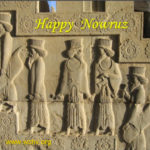
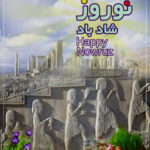
Nowruz is first day of Spring and the beginning of the Iranian year.  Nowruz is celebrated on the day of the vernal equinox, on 20th March or the previous / following day depending on where it is celebrated.  Nowruz is celebrated and observed by Iranian people as well as several other countries across Asia including Afghanistan, Turkey, Azerbaijan, Georgia, Tajikistan and many more.   The new year starts at the moment the Sun crosses the celestial equator and equalizes night and day or exactly when the Earth has completed one cycle around the Sun.

The celebration has its roots in Ancient Iran. Due to its antiquity, there exist various foundation myths for Nowruz in Iranian mythology.  The Shahnameh dates Nowruz as far back to the reign of Jamshid, who in Zoroastrian texts saved mankind from a killer winter that was destined to kill every living creature.  In the Shahnameh and Iranian mythology, Jamshid is credited with the foundation of Nowruz.  In the Shahnama,  Jamshid constructed a throne studded with gems. He had demons raise him above the earth into the heavens; there he sat on his throne like the sun shining in the sky. The world’s creatures gathered in wonder about him and scattered jewels around him, and called this day the New Day or Now-Ruz. This was the first day of the month of Farvardin (the first month of the Persian calendar).   On Nowruz, families gather together to observe the rituals and celebrate the beginning of the new year.

In addition, it is believed that originally the celebration was the holiest Zoroastrian festival, and Nowruz is believed to have been invented by Zoroaster himself, although there is no clear date of origin.  Since the Achaemenid era, the official year has begun with the New Day when the Sun leaves the zodiac of Pisces and enters the zodiacal sign of Aries, signifying the Spring Equinox.

International Nowruz Day was proclaimed by the United Nations General Assembly, in its resolution A/RES/64/253 of 2010, at the initiative of several countries that share this holiday (Afghanistan, Albania, Azerbaijan, the Former Yugoslav Republic of Macedonia, India, Iran (Islamic Republic of), Kazakhstan, Kyrgyzstan, Tajikistan, Turkey and Turkmenistan.


International Women’s Day (8 March)

International Women’s Day (March 8) is a global day celebrating the social, economic, cultural and political achievements of women. The day also marks a call to action for accelerating gender parity.

International Women’s Day (IWD) has been observed since in the early 1900’s – a time of great expansion and turbulence in the industrialized world that saw booming population growth and the rise of radical ideologies. International Women’s Day is a collective day of global celebration and a call for gender parity. No one government, NGO, charity, corporation, academic institution, women’s network or media hub is solely responsible for International Women’s Day. Many organizations declare an annual IWD theme that supports their specific agenda or cause, and some of these are adopted more widely with relevance than others.

“The story of women’s struggle for equality belongs to no single feminist nor to any one organization but to the collective efforts of all who care about human rights,” says world-renowned feminist, journalist and social and political activist Gloria Steinem. Thus International Women’s Day is all about unity, celebration, reflection, advocacy and action – whatever that looks like globally at a local level. But one thing is for sure, International Women’s Day has been occurring for well over a century – and continue’s to grow from strength to strength.

Zero Discrimination Day

March 1 is Zero Discrimination Day, an annual worldwide event that promotes diversity and recognizes that everyone counts.

Organizations like the United Nations (UN) actively promote the day with various activities to celebrate everyone’s right to live a full life with dignity regardless of age, gender, sexuality, nationality, ethnicity, skin color, height, weight, profession, education, and beliefs.

Many countries have laws against discrimination but it’s still a problem in all layers of society in every country in the world. Many countries have and still use discrimination as a way of governing.

The symbol for Zero Discrimination Day is the butterfly, widely used by people to share their stories and photos as a way to end discrimination and work towards positive transformation.

What’s Open or Closed?

Zero Discrimination Day is a global observance and not a public holiday so it’s business as usual.

About Zero Discrimination Day

The UN first celebrated Zero Discrimination Day on March 1, 2014, after UNAIDS, a UN program on human immunodeficiency virus (HIV) and Acquired Immune Deficiency Syndrome (AIDS), launched its Zero Discrimination Campaign on World AIDS Day in December 2013.

Ancient Treasures Recovered by Europol

Late last month (January 2017) it was announced that collaboration between police from 18 countries had led to recovery of 3,561 stolen ancient artifacts. The Europol or the European Police Agency also reported that they arrested more than 75 people in the process as reported by the Guardian newspaper and other news outlets.

The items recovered included a marble Ottoman tombstone, a post-Byzantine icon depicting Saint George and hundreds of coins. The operation which was named Pandora took place in October and November, 2016. A major part of the operation was led by Spanish and Cypriot police who carried out checks on more than 48,500 people, about 50 ships and more than 29,000 vehicles. It has been reported that approximately 500 objects were uncovered in Murcia, south-eastern Spain, including 19 coins that had been stolen from an Archaeological Museum in 2014. In Cyprus, 40 ancient objects were found at the post office in Larnaca, near the island’s main airport. It is believed that in addition to airports, post – offices and ships, police also searched internet sites, and art galleries for information and posts.

The officials have said that they are unable to put a total value on the total number of artifacts found, as experts are still going through the process of appraising everything. However, it is quite obvious that many of the retrieved artifacts are of great cultural importance to Syria where most of these items were stolen from. These artifacts were looted in Syria by the Islamist terrorists and many were going to be sold in London and other major cities and to private collectors. The police and experts believe that many relics and artifacts from the ruins of Palmyra and Nimrud as well as other heritage sites are still being smuggled and sold in private global markets and even in British shops.

Technology Brings Ancient Rome Back to Life

The Cutting-edge technology of Virtual Reality (VR) is helping to bring ancient Rome back to life as reported by the CBS news. The technology which is now being utilized is helping visitors in Rome to experience what the historical sites looked like thousands of years ago.  Digital artists are now using Renaissance-era artists’ depictions to help re-envision the relics. This is one great example of marriage of science and art and the new technology of VR is making all of this possible. The VR headsets are now being used by tourists and visitors to see what these great heritage sites once looked like.

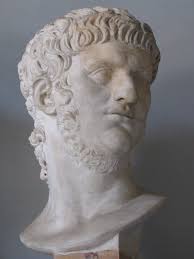
So what did Rome look like, for example 2000 years ago? Well, according to archeologists, two thousand years ago, this labyrinth, now underneath the city of Rome, was the sprawling home of Emperor Nero, stretching the size of three football fields. Today, tourists can explore it, but the colors, light and opulence of this ancient Roman villa were unimaginable until this great new technology allowed the visitors start seeing and imagining things as they were.  The archeologists believe that the cavernous space which is now being re-imagined and re-visualized was considered one of the most magnificent palaces ever built. Its name, “Domus Aurea,” means “golden house.”   And, Virtual reality brings to life this important piece of history.   

The archeologists also believe that the emperor’s massive compound was covered over. It was forgotten about for nearly 1,500 years until Renaissance artists tunneled down into what they believed was an ancient Roman cave. The marvelous frescos they saw influenced art for centuries, and their paintings of the site would become a roadmap for a much later generation of digital artists. The architecture and paintings found there by Renaissance artists influenced the likes of Michelangelo and Raphael and many other artists.

The city of Rome has used technology to re-imagine several tourist sites, including the forums of Caesar and Augustus, where history is illuminated through lasers and light shows projected on the ruins.


 Excavation work continues according to the archeologists working on the project, and there’s still another 30 percent of this palace to be unearthed in the next few years.

International Mother Language Day

The United Nations’ (UN) International Mother Language Day annually celebrates language diversity and variety worldwide on February 21. It also remembers events such as the killing of four students on February 21, 1952, because they campaigned to officially use their mother language, Bengali, in Bangladesh.

What Do People Do?

On International Mother Language Day the UN’s Educational, Scientific and Cultural Organization (UNESCO) and UN agencies participate in events that promote linguistic and cultural diversity. They also encourage people to maintain their knowledge of their mother language while learning and using more than one language. Governments and non-governmental organizations may use the day to announce policies to encourage language learning and support.

In Bangladesh, February 21 is the anniversary of a pivotal day in the country’s history. People lay flowers at a Shaheed Minar (martyr’s monument). They also: purchase glass bangles for themselves or female relatives; eat a festive meal and organize parties; and award prizes or host literary competitions. It is a time to celebrate Bangladesh’s culture and the Bengali language.

The Linguapax Institute, in Barcelona, Spain, aims to preserve and promote linguistic diversity globally. The institute presents the Linguapax Prize on International Mother Language Day each year. The prize is for those who have made outstanding work in linguistic diversity or multilingual education.

Public Life

International Mother Language Day is a public holiday in Bangladesh, where it is also known as Shohid Dibôsh, or Shaheed Day. It is a global observance but not a public holiday in other parts of the world.

Background

At the partition of India in 1947, the Bengal province was divided according to the predominant religions of the inhabitants. The western part became part of India and the eastern part became a province of Pakistan known as East Bengal and later East Pakistan. However, there was economic, cultural and lingual friction between East and West Pakistan.

These tensions were apparent in 1948 when Pakistan’s government declared that Urdu was the sole national language. This sparked protests amongst the Bengali-speaking majority in East Pakistan. The government outlawed the protests but on February 21, 1952, students at the University of Dhaka and other activists organized a protest. Later that day, the police opened fire at the demonstrators and killed four students. These students’ deaths in fighting for the right to use their mother language are now remembered on International Mother Language Day.

The unrest continued as Bengali speakers campaigned for the right to use their mother language. Bengali became an official language in Pakistan on February 29, 1956. Following the Bangladesh Liberation War in 1971, Bangladesh became an independent country with Bengali as its official language.

On November 17, 1999, UNESCO proclaimed February 21 to be International Mother Language Day and it was first observed on February 21, 2000. Each year the celebrations around International Mother Language Day concentrate on a particular theme.

Symbols

The Shaheed Minar (martyr’s monument) in Dhaka, Bangladesh, pays homage to the four demonstrators killed in 1952. There have been three versions of the monument. The first version was built on February 22-23 in 1952 but the police and army destroyed it within a few days. Construction on the second version started in November 1957, but the introduction of martial law stopped construction work and it was destroyed during the Bangladesh Liberation War in 1971.

The third version of the Shaheed Minar was built to similar plans as the second version. It consists of four standing marble frames and a larger double marble frame with a slanted top portion. The frames are constructed from marble and stand on a stage, which is raised about four meters (14 feet) above the ground. The four frames represent the four men who died on February 21, 1952, and the double frame represents their mothers and country. Replicas of the Shaheed Minar have been constructed worldwide where people from Bangladesh have settled, particularly in London and Oldham in the United Kingdom.

An International Mother Language Day monument was erected at Ashfield Park in Sydney, Australia, on February 19, 2006.  It consists of a slab of slate mounted vertically on a raised platform. There are stylized images of the Shaheed Minar and the globe on the face of the stone. There are also the words “we will remember the martyrs of 21st February” in English and Bengali and words in five alphabets to represent mother languages on five continents where people live.

International Day of Women and Girls in Science

Gender equality has always been a core issue for the United Nations. Gender equality and the empowerment of women and girls will make a crucial contribution not only to economic development of the world, but to progress across all the goals and targets of the 2030 Agenda for Sustainable Development as well.

On 14 March 2011, the Commission on the Status of Women adopted a report at its fifty-fifth session, with agreed conclusions on access and participation of women and girls in education, training and science and technology, and for the promotion of women’s equal access to full employment and decent work. On 20 December 2013, the General Assembly adopted a resolution on science, technology and innovation for development, in which it recognized that full and equal access to and participation in science, technology and innovation for women and girls of all ages is imperative for achieving gender equality and the empowerment of women and girls.

On 15 December 2015, the General Assembly adopted the resolution, deciding to proclaim 11 February of each year of the International Day of Women and Girls in Science. The United Nations invites all Member States, all organizations and bodies of the United Nations system and other international and regional organizations, the private sector and academia, as well as civil society, including non-governmental organizations and individuals, to observe the International Day of Women and Girls in Science in an appropriate manner, including through education and public awareness-raising activities, in order to promote the full and equal participation of women and girls in education, training, employment and decision-making processes in the sciences, eliminate all discrimination against women, including in the field of education and employment, and overcome legal, economic, social and cultural barriers thereto by, inter alia, encouraging the development of science education policies and programming, including school curricula, as appropriate, to encourage greater participation of women and girls, promote career development for women in science and recognize the achievements of women in science.

Stonehenge road tunnel plan

It has been a few weeks since the UK government announced a proposal to bury the A303 under Stonehenge. Since then there has been disagreements among the archaeologists and conservation groups on the impact of the tunnel underneath the World Heritage site. It has been widely reported by news outlets that some are regarding it as a historic victory, others as a disaster which will irreparably damage the world heritage site.

In fact, as the UK newspaper, Guardian has reported the English Heritage and the National Trust – the two organizations that are considered the owners of the site and the surrounding landscape have hailed the outcome and the announcement as a momentous victory for the historic environment, However many conservation experts have accused these organizations of abuse of guardianship for accepting a tunnel far too short to solve any problems. Several different organizations including Stonehenge Alliance – which represents conservation groups including Friends of the Earth, the archaeology campaign group Rescue, and Aslan, the sacred landscape network whose members include pagans and druids have now joined together and are expressing major concerns that the short short tunnel plan will create serious damage to the landscape on each side, within the world heritage site. The Alliance has launched a petition for a tunnel at least twice the length the government proposed.

According to the Guardian newspaper, Mike Heyworth, director of the Council for British Archaeology, said a tunnel with both entrance and exits within the world heritage site “would have major implications for the archaeology – we should be asking whether a major expansion of the roads network at Stonehenge just to meet traffic needs is the most appropriate way to deal with such a site”. However, English Heritage and the National Trust, remain positive about the announcement..

On January 13th, 2017, the UNESCO released the following statement- from the UNESCO’s website:

http://whc.unesco.org/en/news/1617

State of Conservation of the World Heritage Property Stonehenge, Avebury and Associated Sites

Over the last several months, the World Heritage Centre has received numerous messages from citizens and NGOs expressing their concerns regarding the A303 Amesbury to Berwick Down project including a proposed tunnel located within the boundaries of the World Heritage property “Stonehenge, Avebury and Associated Sites”, and the adverse impact it may have on the property.

It should be noted that the competent authorities of the State Party of the United Kingdom of Great Britain and Northern Ireland as well as the Advisory Bodies to the World Heritage Convention (ICOMOS) and the World Heritage Centre are fully informed of the concerns raised by the citizens’ campaign. The state of conservation of the property is being monitored by all parties in accordance with the Operational Guidelines for the Implementation of the World Heritage Convention.

The World Heritage Centre would like also to recall that a joint World Heritage Centre/ICOMOS advisory mission to the property took place in 2015 at the request of the Government of the United Kingdom of Great Britain and Northern Ireland. The mission report is available on the web-site for public consultation: http://whc.unesco.org/en/list/373/documents/  


Destruction of Tetrapylon, Roman Theatre in Palmyra

Only after a few short months and the major announcement that Palmyra had been freed from the control of Islamic terrorists, the group has returned to cause more destruction.

It was only in May 2016, when Russia marked the capture of Palmyra from Islamic terrorists by sending the Mariinsky Theatre to perform a surprise concert, highlighting the Kremlin’s role in winning back the city. The concert as reported by Russian news agencies was held just over a month after Russian air strikes helped push Islamic militants out of Palmyra. However, it is not clear how and why the Russian forces and the Syrian government has now lost the control of the city and the unique heritage site. According to Reuters, the Syrian Government lost control of Palmyra to Islamic State in December, the second time the jihadist group had overrun the UNESCO world heritage site in the six-year-long Syrian conflict. It is believed that Islamic Terrorists came back into Palmyra again in December when the Syrian army and its allies were focused on capturing the city of Aleppo from the rebel opposition groups against Assad government. It has been reported that the destruction took place sometime between December 26 and January 10 as reported by the Reuters and, according to the satellite imagery of the site.

Islamic Terrorists had previously captured Palmyra in 2015. They held the city for 10 months until Syrian Government forces backed by Russian air power managed to drive them out in March 2017. During its previous spell in control of Palmyra, Islamic State destroyed other monuments there, including its 1,800-year-old monumental arch.

UNESCO director general Irina Bokova said in a recent statement that the destruction constituted “a new war crime and an immense loss for the Syrian people and for humanity” as stated on the UNESCO site on January 20th, 2017.

Goddess Sculpture Discovered In Aegean Sea

The 2,700-year-old sculpture, which is said to be the biggest one in the history of Turkish underwater history, found during examinations in a ship wreckage, which was unearthed last year in November, belonged to a Cypriot goddess.

The works, carried out by Dokuz Eylül University (DEU) Marine Science and Technology Institute, unearthed the sculpture 43 meters under water, and is reported to date back to the archaic period.

According to Daily News The institute’s Aegean Research and Application Center (EBAMER) Deputy Director and the head of the excavations, Associate Professor Harun Özdaş, , said the  This unique artifact belongs to a bare-footed woman wearing a long dress. It most probably is a goddess. We believe its original size is 1.20 centimeters. We failed to find the upper part of the sculpture as we had to stop our searches due to weather conditions. But we plan to start excavations in the region again this year.