
We believe that all cultural, historical and natural heritage, wherever they are should be preserved. LEARN MORE
News

Default Category

International Holocaust Remembrance Day January 27

On January 27 each year, the United Nations (UN) remembers the Holocaust that affected many people of Jewish origin during World War II. This day is called the International Day of Commemoration in Memory of the Victims of the Holocaust. It also commemorates when the Soviet troops liberated the Nazi concentration and death camp Auschwitz-Birkenau in Poland on January 27, 1945.


What Do People Do?

Holocaust survivors and various leaders make their voices heard on the International Day of Commemoration in Memory of the Victims of the Holocaust. Many of them speak publicly about the Holocaust or their experiences around the event, its aftermath and why the world should never forget what happened in Europe in the 1930s and 1940s. Many statements emphasize the need for future generations to learn about and remember the Holocaust and for everyone to work towards preventing genocide.

The UN organizes and supports events such as: concerts by musicians who survived the Holocaust or are survivors’ descendants; art exhibitions influenced by the Holocaust; presentations of special stamps; the introduction of special educational programs; and film screening and book signing focused on the Holocaust.

Israel and many countries in Europe and North America mark the International Day of Commemoration in Memory of the Victims of the Holocaust. Many academics present discussion papers or hold seminars or round table discussions on the Holocaust and its legacy in the modern world. Schools or colleges may also have special lessons on the Holocaust. The Holocaust and how people commemorate it receive special attention on the Internet, television, radio, print media.

Public Life

The International Day of Commemoration in Memory of the Victims of the Holocaust is a global observance and not a public holiday.

Background

The Holocaust, or Shoah (Sho’ah, Shoa), is the term used to describe the deliberate murder and desecration of millions of people prior to and during World War II in Germany and German occupied areas in Europe. Many of them were Jewish but the Roma people, Soviet civilians and prisoners of war, ethnic Poles, people with disabilities, homosexuals and political and religious opponents were also killed. Many people died in concentration and death camps spread across Nazi-occupied Europe. One of the most notorious camps was Auschwitz-Birkenau, near Oświęcim, Poland. More than one million people died in Auschwitz-Birkenau before Soviet troops liberated it on January 27, 1945.

On January 24, 2005, the UN General Assembly commemorated the 60th anniversary of the liberation of the Nazi concentration camps. Following this session, a UN resolution was drafted to designate January 27 as the International Day of Commemoration in Memory of the Victims of the Holocaust. The resolution called for education programs on the Holocaust to help prevent genocide. It also rejected denials that the Holocaust occurred. On November 1, 2005, the assembly adopted this resolution so the day could be observed each year. It was first observed on January 27, 2006.

Many Jewish groups, particularly in Israel, also observe Yom HaShoah, which is a day of mourning for Holocaust victims on 27th day of the Hebrew month of Nisan, which falls in April or May of the Gregorian calendar.

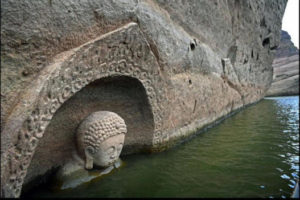
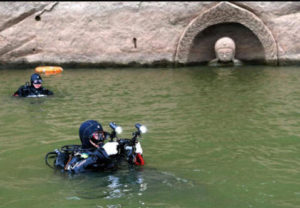
Ancient Buddha found as water level of reservoir lowers in E China

Archaeologists work near the Buddha’s head at the Hongmen reservoir in Fuzhou, Jiangxi province, Jan 8, 2017.

An archaeologist investigates in Hongmen Reservoir in Fuzhou, Jiangxi province, on Jan 8, 2017. The Buddha statue was first noticed at the end of last year when a hydropower gate renovation project lowered water levels in the reservoir by more than 10 meters. Judging from the design of the Buddha’s head, the statue was carved during the Ming Dynasty (1368-1644), according to china daily.

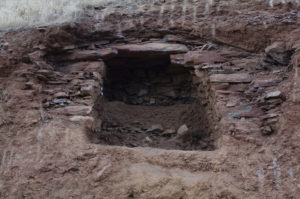
2,400-Year-Old Tomb discovered in Iraq

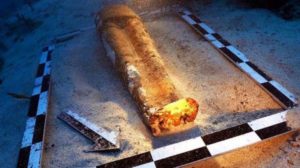
A 2,400-year-old tomb filled with skeletons – along with other artefacts including earrings and ceramic vessels – has been discovered in Iraq, scientists say. Among the artifacts found in the tomb, researchers found a bracelet decorated with images of two snake heads peering at each other.

The tomb was constructed toward the end of the Achaemenid Empire (550 to 330 BC), an empire in the Middle East that was conquered by Alexander the Great in a series of campaigns, researchers said.

The skeletons were found in a jumbled state making it difficult to determine exactly how many people were buried in the tomb. The disarray indicates that someone had entered, and possibly robbed, the tomb in ancient times, researchers said.

Led by Michael Danti from Boston University in the US, researchers also found a pair of bronze earrings and the remains of at least 48 pottery vessels, five of which were still intact.

“There were five complete vessels found in the tomb: one bridge-spouted jar, three pitchers and one miniature jar. They were all found near the heads of skeletons,” researchers told ‘Live Science’.

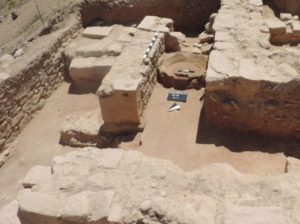
Archaeological dig in Kouklia reveals ancient rampart

Archaeological excavations taking part in the area of Ancient Paphos at Kouklia in 2016 have revealed, among others, an ancient rampart dating as far back as 6th century BC.

The Department of Antiquities of Cyprus has announced the completion of the University of Cyprus 2016 field project in the economic-administrative citadel of Ancient Paphos at Kouklia, under the direction of Professor Maria Iacovou.

The 2016 excavations were conducted in two phases between May and October on the plateau (citadel) of Hadjiabdoulla, which houses an extensive storage-plus-industrial complex of the Cypro-Classical period, and on the nearby impressive man-made mount of Laona, the press release says.

Both monuments were unknown prior to the initiation of the Palaepaphos landscape analysis project (2006-2016) by Professor Maria Iacovou.

It is thought that the plateau of Hadjiabdoulla, located east of the sanctuary of Aphrodite, functioned “as the centre of the royal dynasty that ruled the city-state of Paphos until the end of the 4th century BC.”

The stone-built complex under investigation extends over 65 m. along the plateau’s northern edge.

“It consists of stepped terraces built down the slope; it is subdivided into production and storage units by means of long cross-walls and parallel retaining walls,” the press release reads.

It is further explained that as of 2016, field methods were modified in order to ensure the collection and state-of-the-art analyses of sensitive palaeo-environment data from the workrooms and industrial units sealed under collapsed walls and roof materials in the middle wing.

“This new approach has been successfully initiated thanks to the effective collaboration developed with the specialized Wiener Laboratory of the American School of Classical Studies in Athens,” it says.

“Samples were taken for micro-morphological studies, and mud-brick, wall plasters, phytolith and starch analyses, while the students were trained in the selection process of bio-data by palaeo-botanist Anayia Sarpaki and anthracologist Maria Ntinou,” the press release adds.

Besides agricultural products such as olives, grapes and wheat, whose handling and storage in the complex is now confirmed, the excavation team has come across “a surprising discovery of primary significance for the economy of the ancient polity: a thick layer of crushed murex shells was found lying on the floor of one of the units.”

“It is the first time that archaeological data confirm the production of this precious and expensive purple dye, produced from murex shells, in Cyprus,” it is noted.

In 2012, geological and archaeological investigations conducted within the framework of the Palaepaphos project confirmed that the Laona mount, situated 75 m. north of the Hadjiabdoulla complex, is a man-made tumulus measuring 100 x 60 m.

“Its summit rises to 114.20 m. above sea level, almost 10 m. above the natural hillock,” the press release says.

The tumulus is a mortuary monument built in order to preserve the memory of renowned individuals, but it is extremely rare in ancient Cyprus.

“This and its unusual construction of thick horizontal layers of marl alternating with layers of red soil, make the Laona tumulus a special, if not unique, monument in the Cypriot landscape,” it adds.

Contrary to the red soil, which could be collected from the surrounding surfaces, marl had to be quarried from its geological environment, and then transported to where the mount was raised.

It has been estimated that the construction of the tumulus required 9.888 cubic m. of marl and red soil.

The ceramic material collected from the red soil layers allows us to suggest that the tumulus was erected in the 3rd century BC. It is, therefore, likely that this labour demanding monument, was related to the political program of the Ptolemies, the press release notes.

Ptolemy Soter had taken over Cyprus at the start of the 3rd century BC and had proceeded to eliminate the island’s autonomous city-kingdoms.

At the same time investigations carried out in the south-east quarter of the mount “revealed a much older monument that had been preserved under the layers of marl.”

“It is a rampart running north-south, so far excavated to a length of 42.5 m. Two staircases facing each other, whose state of preservation is so far unparalleled, must have been leading to towers,” the press release says.

The rampart was founded at 107,20 m. above sea level; its northern section, which rises to 112 m., is preserved to a height of 5 m.

It is explained however that “since the inner face is made of layer upon layer of mudbricks which, when exposed, deteriorate fast, the excavators decided to uncover only a small section.”

“The ceramic material isolated in the foundation trench between the two staircases suggests that the rampart was constructed late in the 6th century BC, probably towards the end of the Cypro-Archaic period,” it is added.

Due to the sensitive character of the excavated materials, the Department of Antiquities has applied preventive preservation and protection measures that have rendered the staircases and the mudbrick walls invisible.

Source: Balkan News


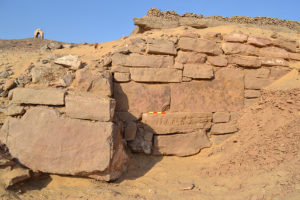
Discovery of new ancient tombs in Egypt

Archaeologists from the University of Birmingham have found “compelling evidence” of new pharaonic tombs at Qubbet el-Hawa in Aswan, Egypt’s Ministry of Antiquities has revealed.

A two-metre high ancient encroachment wall has been discovered below a visitors’ pathway in the northern part of the West Aswan cemetery at Qubbet el-Hawa.

It follows and archaeological mission by the University of Birmingham and the Egypt Exploration Society (EES) Qubbet el-Hawa Research Project Group (QHRP), directed by Dr Martin Bommas of the University of Birmingham.

The newly discovered wall is thought to indicate the architectural support for the known tombs of the first upper terrace, including those of Harkhuf and Heqaib, who were governors of Elephantine Island during the Old Kingdom.

Owing to the landscape of Qubbet el-Hawa, the support wall helped to secure the hillside, and thus lower lying tombs, which were accessible by a causeway leading to a second terrace.

Carl Graves, a PhD student who worked alongside Dr Bommas on the project, said: “The findings are dramatically altering our understanding of the funerary landscape in this area during the Old Kingdom and First Intermediate Period in 2278-2184BC. I don’t think anyone yet knows who the tombs might have belonged to.”

Nasr Salama, General Director of Aswan and Nubia Antiquities, describes the discovery as “stunning” telling the Egypt Independent that it is now only a matter of time until new tombs are uncovered within the important cemetery.

Eman Khalifa, director of the pottery project within the QHRP, told the paper that the stone wall was dated by the pottery shreds embedded within the mortar used to build it. She said that the crushed pieces include parts of carinated bowls, executed in a style typical of the reign of King Pepi II from the Sixth Dynasty (circa 2278-2184 BCE).

The find was part of the project’s successful first field season, which included the recent discovery of the long sought causeway of Sarenput I, thought to have been the first governor of the area at the beginning of the Middle Kingdom.

Story Source:

University of Birmingham

New excavations and new concerns

According to Farhad Zarei, the head of an archeological mission in Pasargadae (home of the Cyrus the Great mausoleum as well as Cyrus’ capital), recent archeological studies in the city have uncovered many artifacts and sites relevant to the Achaemenid and Sassanid periods, including a number of hills, dams, mines, graveyards, irrigation systems, and bridges.

Iranian and non-Iranian archeologists believe that there are numerous sections yet to be unveiled, especially near the mausoleum. Up until now, a large site of about 45 acres had been discovered, holding an irrigation system 50 kilometers long, an Achaemenid dam, a stone mine, a factory for processing grape juice to wine, a factory for melting metal ores, a few graveyards with precious tombstones, the remnants of a few castles, as well as some mills and bridges from the Achaemenid and Sassanid eras.

The head of the archaeological mission in Pasargadae has added that after studying Pasargad, other studies in adjacent regions like the Sa’adat Abad plain and the mountain ranges of Bolaghi Gorge would be carried out.

One should remember that in 2005 a vast number of ancient factories including those that made wine were destroyed in Bolaghi Gorge by the government of President Ahmadinejad, in order to pave the way for the construction of Sivand Dam, a structure which has been unused and which has simultaneously ruined agriculture fields and dried up the Bakhtegan Lake.

As a result of these incidents, there is a deep concern that studies in the region could result in the destruction of precious sites of pre-Islamic history in Iran.

For several years, non-Iranian archeologists have seldom been allowed to participate in excavations and all journalist are barred from being present in such studies. This has resulted in a complete lack of information regarding what is occurring in this ancient region of the country.

Top 10 archaeological discoveries of 2016

2016 has revealed an amazing array of archaeological discoveries, pushing the boundaries of scientific research and our understanding of the past. The following list represents 10 of the most exciting announcements across the year.

1 – Bronze Age stilt houses unearthed in East Anglian Fens

2 – Swedish Archaeologists Discover Unknown Ancient City in Greece

3 – Spectacular cargo of ancient shipwreck found in Caesarea

4 – Significant Bronze Age city discovered in Northern Iraq

5 – Archaeologists uncover massive 2500 year old Iron Age Mound

6 – Archaeologists in Norway discover church and altar of Viking King Olav Haraldsson

7 – Structures in French cave sheds new light on the Neanderthals

8 – Pharaonic boat burial uncovered in Abydos, Egypt

9 – The Roman shoe hoard of Vindolanda

10 – Mummified remains identified as Egyptian Queen Nefertari

http://www.heritagedaily.com/

Archaeologists Discover Unknown City in Greece

An international research team at the Department of Historical Studies, University of Gothenburg, is exploring the remains of an ancient city in central Greece. The results can change the view of an area that traditionally has been considered a backwater of the ancient world.

Archaeologists from the University of Gothenburg have begun exploring a previously unknown ancient city at a village called Vlochós, five hours north of Athens. The archaeological remains are scattered on and around the Strongilovoúni hill on the great Thessalian plains and can be dated to several historical periods.

‘What used to be considered remains of some irrelevant settlement on a hill can now be upgraded to remains of a city of higher significance than previously thought, and this after only one season,’ says Robin Rönnlund, PhD student in Classical Archaeology and Ancient History at the University of Gothenburg and leader of the fieldwork.

UNIVERSITY OF GOTHENBURG

Yalda, Persian’s Most Beautiful Song in Praise of Light and Love – 2016

For thousands of years, Iranians have celebrated the last night of winter.  They have stayed up through the evening, waiting for the dawn, to witness the birth of the Sun; the source of life which has also been named “Mehr”.

Praising the sun, on the night of the birth of Mithra, celebrating around a cedar tree, adorned with colorful fabrics and stones, which was one of the most important rituals of the ancient Persians. At the time, there were still mysteries of the sun and moon and other natural phenomena for human exploration, and the Persians, like many other people had self-made gods who ruled over all the elements of nature. Man therefore, escaping sadness, darkness, cold, and pain (whether physical or emotional) took refuge in the gods.

Discovering the secrets of nature, and the transition from the myths of the gods did not hurt people’s relationship with the natural elements. Because Persian culture, and even religious orders of Zoroaster (the Persian prophet), were based on love and respect for the land, water, trees, rivers, mountains and their preservation was considered good will.

However, most of our habits and traditions could be updated and modified with time as well as people’s desire and wishes. Therefore, praising the sun, light, love, and life has become a part of Iranian psyche and beliefs in spite of all the objections that historically, under the pretext of religion, has considered these Persian celebrations as blasphemy.

Unfortunately, in the past thirty-four years of clerical rule in Iran, they have not accepted these celebrations. They not only do not accept these traditional festivities as part of national celebration, they are not willing to report and request UNESCO for addition to World Heritage list. The government has simply tried to force innocent people to stop holding these celebrations.

As Persian/Iranian celebrations and festivities have risen from nature and the land, with kindness and love, engraved with anti-discrimination, and interest of/for all people, irrespective of their religion, belief and opinion.

“Yalda” is one such festivity which continues to be even now more than ever, at the center of interest of Iranian people because history has shown that during dark times people have shown interest with the hope and belief that victory can be sealed and reach the world community to end all wars, suffering, discrimination and denial.

This year like many previous years, Pasargad Heritage Foundation, has asked the Iranian public to celebrate the tradition of Yalda by decorating and adorning an evergreen cedar tree and celebrate this glorious Persian feast more and more beautifully and grandly and  welcome the everlasting sun of our land in order to conqueror all perpetual darkness.

Let us not forget that the festive night of Winter Solstice, “Yalda,” is one of the few festivals compatible with the tenants of human rights, with this message that “only expressions of joy and love are symbols of light in human life”.