We believe that all cultural, historical and natural heritage, wherever they are should be preserved. LEARN MORE
News

Default Category

5,000-year-old tomb in southeast Turkey

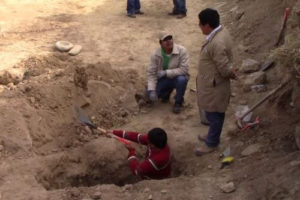
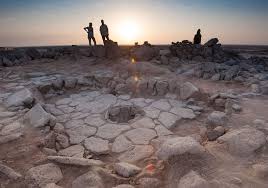
Excavation work at a Bronze Age burial site in southeast Turkey has unearthed the graves of several youth, in what archeologists believe may be the earliest child sacrifice site in the region.

Haluk Sağlamtimur of Turkey’s Ege Unversity and Brenna Hassett of the Natural History Museum in London oversaw the excavation of the 5,000-year-old site called Başur Höyük, in Turkey’s southeastern Siirt province.

In large, coffin-like tombs, the researchers identified the remains of 11 male and females ranging from age 11 to 20, including two 12-year-olds, and a young adult whose remains may have come from an earlier burial.

Sağlamtimur and Hassett believe the young people may have been sacrificed, due to evidence of sharp force trauma by stabbing or cutting on several skeletons and the horde of riches buried along with them. Textiles, beads, ceramics and hundreds of bronze spearheads were found in and around the tomb.

The sacrifices may have been “retainers,” people chosen to accompany and serve the dead in the afterlife.

“The burials are remarkable because of the youth of the individuals, the number that were buried and the large wealth of objects that were buried with them,” Hassett said. “Women and children in Mesopotamia were occasionally buried with grave goods, but they were normally personal belongings.”

“It is unlikely that these children and young people were killed in a massacre or conflict. The careful positioning of the bodies and the evidence of violent death suggest that these burials fit the same pattern of human sacrifice seen at other sites in the region,” Hassett said.

However, due to poor preservation of the burial chamber, Hassett and Sağlamtimur could only surmise the cause of death. They guessed some of the dead may have been killed by wounds to the fleshy parts of the body, which would not leave lasting marks on remains.

“As a grim example, stab wounds are normally aimed at the soft parts of the body, which do not preserve,” Hassett said.

Başur Höyük contains the remains of people buried between 3100 and 2800 BCE. The site is believed to be 500 years older than the Royal Cemetery of Ur, the elaborate tombs where Mesopotamian rulers were laid to rest.

“Previously, the most well-known example of human sacrifice from this area is the monumental discovery of the Royal Cemetery of Ur, where hundreds of burials were identified as sacrifices,” Hassett said, adding that the child graves at Başur Höyük resemble those of sacrifice sites at Ur.

Historians believe child sacrifice was used as a means of population control as ancient societies grew larger and more complex.

“It has been suggested that practicing human sacrifice was one of the ways that complex civilizations like the one that rose up in Mesopotamia consolidated their power,” she explained.

“This discovery moves the investigation 500 years earlier and more than 500 miles to the north,” Hassett added.

The excavation also unearthed a mysterious mass grave containing at least 50 bodies.

The history of the Near East region – including modern-day Iraq, parts of Turkey, Syria, Iran and Kuwait – begins from about 4,000 B.C. It is considered the cradle of western society.

https://www.dailysabah.com/history

Archaeology: Ancient Clovis hunters drawn to Ohio flint

Archaeologists disagree on when the first humans arrived in America, but we all pretty much agree that the Clovis culture represents the earliest large-scale occupation of North America. The culture is named for Clovis, New Mexico, where the highly distinctive Clovis spear point was first found in direct association with the bones of the extinct mammoth.

More than 1,000 Clovis points have been recorded in Ohio, many more than most other states, so this must have been a paradise for Ice Age hunters. Most of Ohio’s Clovis points are made of Upper Mercer flint, which can be found in abundance in Coshocton County, so it’s not surprising that more Clovis points have been found there than in any other Ohio county.

The Welling site, located along the Walhonding River about 12 miles west of Coshocton, was studied by the late Olaf Prufer of Kent State University back in the 1960s. From this single site, he documented 54 Clovis points in various stages of manufacture, along with numerous other flint tools.

Prufer believed that Welling was a workshop where small groups of Clovis people would periodically come to make flint tools before heading off to hunt mammoths and mastodons in the flatlands of central Ohio. A new study of the tools found at Welling suggests that Welling was much more than just a workshop.

Read more:

http://www.dispatch.com/news/20180701/archaeology-ancient-clovis-hunters-drawn-to-ohio-flint

Sassanid Archaeological Landscape of Fars Region

According The UNESCO Eight archaeological sites situated in three geographical parts in the southeast of Fars Province: Firuzabad, Bishapur and Sarvestan. These fortified structures, palaces, and city plans date back to the earliest and latest times of the Sassanian Empire, which stretched across the region from 224 to 658 CE. Among these sites is the capital built by the founder of the dynasty, Ardashir Papakan, as well as a city and architectural structures of his successor, Shapur I. The archaeologic landscape reflects the optimized utilization of natural topography and bears witness to the influence of Achaemenid and Parthian cultural traditions and of Roman art, which had a significant impact on the architecture and artistic styles of the Islamic era.

‘Visionary’ steps taken to save Belize Barrier Reef

It was just reported earlier today by BBC that UNESCO has removed the Belize Barrier Reef from its list of endangered World Heritage Sites after nine years.  It said that the government of the Central American country has taken “visionary” steps to preserve its coral Barrier Reef from further damage. The Belize Barrier Reef is the second largest in the world after Australia’s Great Barrier Reef and it is home to many threatened species including marine turtles, manatees and the American marine crocodile.

UNESCO added the reef to its list of world heritage sites in 1996 but it was in danger in 2009 following plans by the Belize government to allow oil exploration in nearby waters.  UNESCO has been urging Belize to put safeguards in place to protect what Charles Darwin described as “the most remarkable reef in the West Indies”.

In 2012, Environmentalists organized an informal referendum in which 96% of those who took part voted against offshore oil activity.  Just last year, in December 2017, lawmakers passed a landmark moratorium on oil exploration in Belizean waters, which makes it one of only a handful of countries in the world with such legislation.

At UNESCO’s meeting earlier this month, in Bahrain, UNESCO praised Belize’s “visionary plan to manage the coastline”, saying that “the level of conservation we hoped for has been achieved”. This is a remarkable step for Belize which hoped that the country’s oil revenue would greatly help the economy in a country where the standard of living among many people is still low. The decision came just under a year after UNESCO opted not to place the Great Barrier Reef on its “in danger” list, arguing that Australia had taken action to preserve it too.


Intentional destruction of 2500-year-old dam of Cyrus the Great

After several months of silence, officials at the Cultural Heritage Organization have finally revealed this week that a dam built 2500 years ago has been deliberately destroyed.

Achaemenid Dam, known as the “Bostan Khani,” is registered in the Iranian National Heritage List.

The dam was built during the reign of Cyrus the Great, and were preserved until the advent of the Islamic Republic. The remains are now destroyed due to policies of negligence towards non-Shia and non-religious monuments.

The dam was located on a branch of the Pulwar River, near Pasargad. Archaeologists believe that this unique work was designed to contain floods and store large amounts of water for public use as well as use in agriculture and horticulture. In fact, this historic barrier resembles modern engineering systems of water management, i.e. the same engineering and management endeavors that Iran has been lacking during the Islamic Republic due to inability, neglect, and profit-seeking attitudes of government officials.

The Achaemenid Dam, with its iron structures, was once damaged in the seventies by a local landowner, and the remnants of this damage were completely wiped out only recently.

This time, those who destroyed the dam were more equipped with tools such as bulldozers, tractors, loaders, and performed their work in a few days. Cultural Heritage officials say they have not been informed of these actions for a long time.

It is quite clear that, as always, the Cultural Heritage Organization is not ready to share the facts of such cases of the non-religious cultural and historical devastation with the people of Iran.

Discovery of Leonardo da Vinci’s earliest work

Earlier this month (June 2018) Italian scholars claim they have unearthed the first known piece by Renaissance genius Leonardo Da Vinci.  The piece which has been named  “The Archangel Gabriel,” a painted glazed tile, was signed and dated by an artist believed to be the 18-year-old Da Vinci.

The scholar’s claim is based on a signature and date painted in the angel’s jaw line, barely visible to the naked eye. It reads “Da Vinci Leonardo,” with the apparent date of authorship; “1471.”  Earlier this month, after three years of scientific and artistic investigations, Professor Ernesto Solari, an art historian and expert on the works of Da Vinci, along with Ivana Rosa Bonfantino, a handwriting expert, announced that this could be the first known work produced by Da Vinci.

As reported by CNN, the glazed tile was found by the descendants of the aristocratic Fenice family of Ravello, Italy. It is believed that the family did not know the origins of the piece or that it was even a Da Vinci, but, they realized it was something that shone a bit brighter than the other things they found when cleaning out the house, and that is when they called the experts to verify and find out who the artist might have been.

Bonfantino who has examined many historical handwriting samples, analyzed a number of Leonardo’s work, noting that his penmanship evolved from his youth, but claimed that the “match was very close” between different examples and the one found on the tile.

The scholars find this finding very exciting as they now have a glimpse into the work that Da Vinci did as a young man. It is thanks to the descendants of the family that found the artistic piece that the scholars can now attribute the work to Da Vinci.

“My hope is that it remains in Italy — it is part of our national heritage,” said Professor Solari, according to CNN.

2000 year old mummified ‘sleeping beauty’ dressed in silk emerges from Siberian reservoir

Archeologists hail extraordinary find of suspected ‘Hun woman’ with a jet gemstone buckle on her beaded belt.

The ancient woman was buried wearing a silk skirt with a funeral meal. Picture: Marina Kilunovskaya

After a fall in the water level, the well-preserved mummy was found this week on the shore of a giant reservoir on the Yenisei River upstream of the vast Sayano-Shushenskaya dam, which powers the largest power plant in Russia and ninth biggest hydroelectric plant in the world.

The ancient woman was buried wearing a silk skirt with a funeral meal – and she took a pouch of pine nuts with her to the afterlife. 

In her birch bark make-up box, she had a Chinese mirror.

Near her remains – accidentally mummified – was a Hun-style vase. 

‘The lower part of the body was especially well preserved.’ Pictures: Marina Kilunovskaya

A team of archeologists from St Petersburg’s Institute of History of Material Culture (Russian Academy of Sciences) working on the shoreline in Tyva Republic spotted a rectangle-shaped stone construction which looked like a burial. 

‘The mummy was in quite a good condition, with soft tissues, skin, clothing and belongings intact,’ said a scientist. 

Natalya Solovieva, the institute’s deputy director, said: ‘On the mummy are what we believe to be silk clothes, a beaded belt with a jet buckle, apparently with a pattern. 

Archeologist Dr Marina Kilunovskaya said: ‘During excavations, the mummy of a young woman was found on the shore of the reservoir.

‘The lower part of the body was especially well preserved … 

‘This is not a classic mummy – in this case, the burial was tightly closed with a stone lid, enabling a process of natural mummification.’

Astonishingly, the grave’s contents were preserved despite being underwater for long periods since the dam became operational in the 1980s. 

Scientists believe the woman was buried between 1,900 and 2,000 years ago though further tests are needed to date remains.

A Hun-style vase was found near her remains, leading archaeologists to speculate she was a member of the nomadic group, who dominated much of central Europe and Asia between the fourth and sixth centuries AD.

The Huns established their short-lived empire after spreading rapidly from China, and are believed to have contributed to the collapse of the western Roman Empire during the fifth century.

By The Siberian Times reporter

https://siberiantimes.com

Archaeologists discover villa and mosaic of Ancient Greek fisherman Phainos in Turkey

After a property developer in noticed ancient ruins some 3-meters deep during a groundbreaking procedure in Turkey’s southwestern city of Muğla, he called local property authorities to verify the findings.

Bodrum Underwater Archaeological Museum Director Tayfun Selçuk, accompanied by three other experts examined the site and confirmed that the ruins are the remains of the villa of the richest fisherman of the Roman period, a Greek named Phainos. The ruins date back to 2nd century AD.

Archaelogical work at the construction site has resumed since June 18 while the findings were removed to Bodrum museum

The site is located in what was once known as the ancient Greek city of Halicarnassus and the discovery of the villa has unearthed many ancient artifacts.

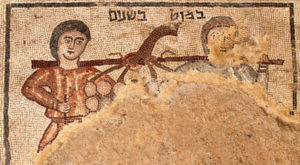
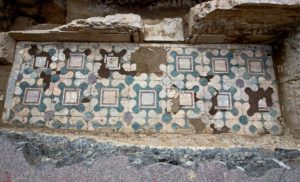
Along with the ruins of the actual structure, experts have also located  10 tombs with some human remains, a 20 square meter mosaic, a well, a Roman bath, and other luxury items such as pottery, perfume bottles, and fishing equipment.

Read more at hurriyetdailynews.com

US pulls out of UN Human Rights Council

Trump administration officials on Tuesday said the U.S. has pulled out of the United Nations Human Rights Council, saying that the international body is “not worthy of its name.”

U.N. Ambassador Nikki Haley announced the withdrawal alongside Secretary of State Mike Pompeo, following multiple news reports that the move was imminent.

Haley blasted the council as a “protector of human rights abusers and cesspool of political bias” and accused the body of “politicizing and scapegoating countries with positive human rights records.”

The withdrawal, which comes as the 47-member body begins a three-week session in Geneva, had been expected as a result of the Trump administration’s frequent criticism of the group’s treatment of Israel.

Haley repeatedly voted against U.N. measures that were critical of Israel, and she has rebuked the council for what she called a “chronic anti-Israel bias.”

The U.S., under former President George W. Bush, initially boycotted the council — established in 2006 — but rejoined in 2009 under former President Obama.

Haley has called for other reforms to the U.N. Human Rights Council, saying the group should make it easier to expel states with poor human rights records.

Ruins of ancient palace likely found beside river in Nara

By YUYA TANAKA

YOSHINO, Nara Prefecture–Building a palace near the water’s edge isn’t the safest location, as it could endanger the lives of its residents in the event of flooding and other natural disasters.

However, a mysterious ancient palace was likely situated just beside the beautiful Yoshinogawa river during the Nara Period (710-784), possibly for the waterfront view afforded, according to new findings.

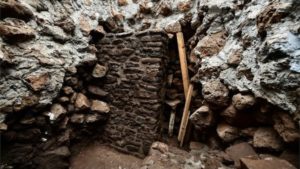
Ruins of a large building dating to the first half of the eighth century have recently been unearthed only 20 meters from the Yoshinogawa, which winds its way between mountains in southern Nara Prefecture.

The structure discovered at the Miyataki archaeological site here boasts special designs unique to emperors’ palaces, increasing the possibility that the find was the main building of the Yoshino no Miya detached palace, which records say Shomu (701-756) and other emperors frequented.

Archaeologists are currently making eager efforts to unlock the mystery of why the detached palace was built so close to the river.

Researchers of ancient history and the “Manyoshu” (Collection of Ten Thousand Leaves) poetry anthology have had aggressive discussions to identify the location of Yoshino no Miya since before World War II.

As the ruins of many buildings have been discovered in the Miyataki archaeological site along the Yoshinogawa in recent excavation surveys, Miyataki is deemed as an area where Yoshino no Miya was highly likely located.

But it was unclear where the central part of Yoshino no Miya was. Most experts estimated the “residence where the emperor stayed must be on the safer mountain side, from which magnificent views can be enjoyed.”

However, the ruins of a building whose intercolumniation measures 16.3 meters east to west and 9 meters north to south were unearthed at Miyataki in an excavation that was started in December last year by the Yoshino education board and the Archaeological Institute of Kashihara, Nara Prefecture.

While the huge building is believed to have had eaves on all its four sides, such an architecture was only allowed to be constructed for use as the Daigokuden hall, where the emperor administered political affairs, and the main building of the Dairi private residence of the emperor.

Michio Maezono, an archaeology professor at the Nara College of Arts, explained why the main structure of Yoshino no Miya was set up near Yoshinogawa based on the fact that various religious rites were held there since the Asuka Period (592-710).

“Core buildings were possibly installed near the river as religious services were held to honor the god of Yoshinogawa,” Maezono said.

Makoto Ueno, a professor of Manyoshu studies at Nara University, said Manyoshu poet Yamabe no Akahito, who is said to have lived around the same period as Emperor Shomu, described Yoshino no Miya as “land by a clean river” in his work.

“I previously thought the poem depicts the palace in an exaggerated way, but (the latest discovery of a large building near the river indicates) Yoshino no Miya was likely a detached palace to enjoy the beauty of the Yoshinogawa just as depicted in the poetry,” said Ueno.

According to “Nihon Shoki” (The Chronicles of Japan), Yoshino no Miya was commissioned in 656 during the Asuka Period by Emperor Saimei (594-661). Empress Jito, who reigned between 690 and 697 after succeeding her husband, Emperor Tenmu (unknown- 686), visited there on 31 occasions.

“Shoku Nihongi” (Chronicles of Japan, continued), Japan’s official book of history of the Nara Period, and other sources state the Yoshino no Gen administrative office was introduced to manage Yoshino no Miya during the period and given a special status.

While Shomu visited Yoshino no Miya soon after ascending to the throne in 724, he also went there in 736.

A “mokkan” wooden tablet associated with Shomu’s second visit to Yoshino no Miya has been discovered from a hole near the Heijo Imperial Palace in Nara city. Powerful aristocrat Fujiwara no Maro (695-737) is said to have helped send food and tableware to Yoshino no Miya and arranged personnel to accompany the emperor.

Akihiro Watanabe, deputy director-general of the Nara National Research Institute for Cultural Properties, who studies Japan’s ancient history and is familiar with mokkan, said the discovered wooden strip reveals how important the visit to Yoshino no Miya was.

“The mokkan clearly showed thorough preparations were made for the Yoshino trip,” he said. “The recently discovered building is highly likely part of Yoshino no Miya depicted in the mokkan, considering its building period and other characteristics.”

Watanabe also touched on the possible reason why the building was set up there.

“Putting priority on viewing magnificent views up close, it (the palace) was likely constructed by the river,” said Watanabe.

http://www.asahi.com/ajw/articles/AJ201806160004.html