 By Bruce Bower
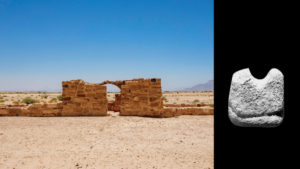
SAN DIEGO- A palm-sized sandstone object found in 1991 at an Early Islamic trading
outpost in what’s now southern Jordan appears to be the oldest known chess piece.
This roughly 1,300-year-old rectangular piece of rock with two hornlike projections on top resembles several rooks, also known as castles, that have been found at other Islamic sites in the region. But those other rooks date to a century or more later, John Oleson, an archaeologist at the University of Victoria in Canada, said. He presented his analysis of the carved rock on November 21 at the annual meeting of the American Schools of Oriental Research.
Simpler board games than chess go back roughly 4,000 years in Eurasia (SN: 11/16/18).
Surviving written accounts indicate that chess originated in India at least 1,400 years ago,
Oleson said. Merchants and diplomats probably carried the game westward. The
suspected chess piece, excavated at Humayma, located on what was once a major trade
route, dates to between 680 and 749, when an Islamic family owned and ran the site.
“Chess became very popular in the early Islamic world,” Oleson said. It also brought
together people with diverse backgrounds. Islamic texts from that time portray chess
matches between Muslims and Christians and between rich and poor players.
Rooks from southwestern Asia in the shape of two-horse chariots date to as early as the
late 700s. The two-pronged shape of early Islamic rooks may have been meant to
represent such chariots, Oleson said.
The possibly record-setting Humayma rook is now stored at the University of Victoria.
At his home nearby, Oleson noted ruefully, his 10-year-old grandson regularly beats him
at chess.
https://www.sciencenews.org/article/carved-rock-found-jordan-may-be-oldest-known-
News
Civilizational Contacts Between Ancient Iran and Europa During the Classical Era
 Kaveh Farrokh will be providing a comprehensive lecture on November 29, 2019 at the University of British Columbia, Civilizational Contacts Between Ancient Iran and Europa During the Classical Era,
29 November 2019, 6:30-8:30 pm, Room 120, CK Choi Building, University of British Columbia 2019.
This lecture provides a synoptic overview of the civilizational relations between Greater ancient Iran and Europa (Greco-Roman civilization as well continental Europe). The discussion is initiated with an examination of the conduits of exchange between Greater ancient Iran (the Achaemenid, Parthian and Sassanian dynasties of Iran as well as the role of Northern Iranian peoples), the Caucasus and Europa. The lecture then provides an overview of learning exchanges between east and west spanning the time era from the Achaemenids into the Post-Sassanian eras, followed by examples of artistic, architectural, and engineering exchanges between Greco-Roman and Iranian civilizations. Select examples of the ancient Iranian legacy influence upon the European continent are also discussed, followed (time permitting) by examples of the musical legacy of ancient Iran as well as Iranian-European exchanges in the culinary domain.
World Children’s Day
 UN Secretary-General António Guterres:
Around the world, children are showing us their strength and leadership advocating for a more sustainable world for all. Let’s build on advances and re-commit to putting children first. For every child, every right.
World Children’s Day was first established in 1954 as Universal Children’s Day and is celebrated on 20 November each year to promote international togetherness, awareness among children worldwide, and improving children’s welfare.
November 20th is an important date as it is the date in 1959 when the UN General
Assembly adopted the Declaration of the Rights of the Child . It is also the date in 1989
when the UN General Assembly adopted the Convention on the Rights of the Child .
Since 1990, World Children’s Day also marks the anniversary of the date that the UN
General Assembly adopted both the Declaration and the Convention on children’s rights.
Mothers and fathers, teachers, nurses and doctors, government leaders and civil society
activists, religious and community elders, corporate moguls and media professionals, as
well as young people and children themselves, can play an important part in making
World Children’s Day relevant for their societies, communities and nations.
Incredible Native American Settlement Uncovered in Florida with High Shell Walls
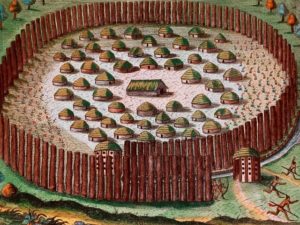 An incredible discovery in Florida of an ancient Native American tribal settlement has completely changed what was previously known about the timeline and sophistication of the tribes who lived in the modern day southeastern United States.
Thanks to research from two Florida-based academics studying the region, and the modern technology they’re using, including lasers and drones, these two men have found evidence of a past tribe that lived on the Raleigh Islands, Florida. Archaeologists had found evidence of past Native American tribes on the island back in 1990. However the technology at their disposal, almost three decades ago, was not sufficiently sophisticated to enable them to examine the ground deeply enough. That, along with the advent of lasers, drones and other gear, has changed archaeology considerably.
The researchers, Professor Ken Sassaman and anthropology PhD studentTerry Barbour,
both from the University of Florida, told the press last week that their findings are both
exciting and meaningful. “This technology is unbelievable,” Sassaman enthused to the
guardian. It “enabled penetration through the gaps” in the trees, Sassaman explained,
and that, ultimately, allowed them to create a 3D map of the region using state of the art
LIDAR technology.
There is “abundant evidence,” Sassaman continued, of a tribe of Native Americans who
lived in the area, on Raleigh Island, and flourished. They created an entire settlement
whose economy revolved around the making of beads from seashells, beads that were
then sent to other tribes in the America southeast. Almost 40 homes were revealed by the
map, another indicator that the settlement’s livelihood was thriving, as the homes’ walls
were as high as 12 feet in places — and they were made of shells. The community existed between 900 and 1200 A.D.
It has huge implications for scientific knowledge about life on America’s eastern
seaboard, Barbour told Newsweek recently. “The fact that we have evidence of bead
manufacturing at a site with equally impressive architecture to guide us in understanding
how production was organized socially, makes this place really special, and as of now the
only place like it we are aware of.” “In form, scale and purpose, the Raleigh settlement has no parallel in the archaeological record of the American southeast,” Sassaman concluded during the same interview with Newsweek. Explaining why the recovery of beads — and the stone tools that made them — was so vital, Sassaman said, “The discovery of possible bead production may provide information on past eastern societies in eastern North America — and how beads were integral to social capital.”
Objects at the sight were found during the 1999 dig, and during a subsequent excavation
in 2010. But it was the scanning ability of the drones that gave the team their first in-
depth pictures of the community. Furthermore, Sassaman and Barbour believe that the
beads were, in turn, passed to other tribes’ chiefs, for use in tribal rituals.
Hence, although the beads were not currency in the way we understand and use it today,
they were highly significant and profoundly important not only to the people who made
them, but to others across the southeastern United States.
https://www.thevintagenews.com/2019/11/14/florida-native-american-settlement/
Iron Age DNA sheds light on Finns’ genetic origin
 A new study suggests that during the Iron Age Finland was home to separate
and different populations.
Researchers at Helsinki and Turku universities mapping ancient Finno-Ugric ancestry say
modern-day Finns carry genes from diverse populations living in the region of Finland
during the Iron Age.
They said they were able to reconstruct 103 complete mitochondrial genomes from
archaeological bone samples, allowing them to trace maternal lineage. The samples were
collected from burial sites across Finland and the Republic of Karelia, Russia.
Scientists found that genes associated with ancient farmer populations were more
common in the east, whereas lineages inherited from hunter-gatherers were more
prevalent in the west.
The SUGRIGE Finno-Ugric genome project said its study is the most extensive
investigation to date focusing on the ancient DNA of people inhabiting the region of
Finland.
Read more:
https://yle.fi/uutiset/osasto/news/iron_age_dna_sheds_light_on_finns_genetic_origin/110
72769
World Science Day for Peace and Development
 The World Science Day for Peace and Development (WSDPD) is annually held on November 10 to raise awareness of the benefits of science worldwide. The WSDPD is
also known as World Science Day.
Background:
It was recommended at the World Conference on Science in Budapest in 1999 recognition was required for the need for a new compact between science and society. It was discussed at the conference that a World Science Day would help strengthen commitments to attain the Declaration on Science and the Use of Scientific Knowledge’s goals and to pursue the Science Agenda: Framework for Action’s recommendations.
Following the World Conference on Science, UNESCO established the WSDPD through
a proclamation at a general conference in 2001. The WSDPD was to be served a reminder of the organization’s mandate and commitment to science. The day was first celebrated on November 10, 2002 and has been held annually on November 10 since then.
Face of 1,000-year-old Viking warrior woman with gruesome battle wound across her skull revealed
 British scientists brought the Viking woman to life using facial reconstruction
technology.
They based their work on a skeleton found in a Viking graveyard in Solør, Norway,
which is now preserved in Oslo’s Museum of Cultural History.
The female warrior was buried surrounded by deadly weapons but was not initially
considered to be a warrior because of her gender.
She was buried with a hoard of weapons including arrows, a sword, a spear and an axe
but the dent in her head was a bigger clue about her past.
The dent in her skull was consistent with a sword wound and she was placed in her grave
with her head resting on a shield.
Experts are unsure whether the head injury is what caused the Viking woman’s death.
However, archaelogist Ella Al-Shamahi told The Guardian that this is “the first evidence ever found of a Viking woman with a battle injury”.
She added: “I’m so excited because this is a face that hasn’t been seen in 1,000 years…
She’s suddenly become really real.”
Read more:
https://www.dailymail.co.uk/news/article-7642565/Scientists-reconstruct-face-1-000-
year-old-Viking-warrior-woman.html ?
New Utah State Monument Candidates Emerge After 3-year Process
 Danger Cave, Old Iron Town may get new state designation
By Amy Joi O’Donoghue
SALT LAKE CITY — Utah Gov. Gary Herbert’s office wants state park officials to further refine the criteria for possible new state monument candidates, but did give its endorsement on the first two designations that will need approval by Utah lawmakers.
The two candidates — Danger Cave State Park Heritage Area near the Nevada border
and Old Iron Town in Iron County — received unanimous legislative endorsement by the
Natural Resources, Agriculture and Environment Committee last month. The committee
will draft a concurrent resolution that will need the support of the full Legislature.
Jeff Rasmussen, director of the Utah Division of Parks and Recreation, told the
committee the initial criteria for possible state monument candidates includes that it must
be the first, last, only, most important or best preserved site of its kind in the state, or
offer a major contribution to pre-history or history, or feature outstanding scenic value.
Candidates must be “extraordinary” in one of those ways, be self-sustaining and not add
more financial burden to the division and also must have the support of local and other
community stakeholders.
The criteria was developed after lawmakers spent three years developing a state law that
provides for monument designations on public property.
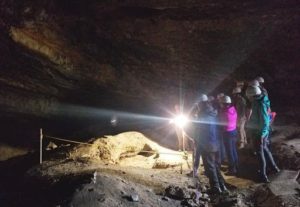
Danger Cave is one of North America’s most significant archaeological sites, once home
to artifacts and relics detailing the history of Native Americans as far back as 11,000
years ago. The site has been excavated and provided the first opportunity for
archaeologists to use radio carbon dating to trace the age of artifacts, Rasmussen said.
Just a bit off in the distance is Jukebox Cave, given its name because it still contains a
World War II era dance floor installed by military members stationed at the nearby
Wendover Airfield and test range so they had a cool cavern to host social gatherings out
of the summer heat. Rasmussen said reclassifying Danger Cave to monument status would actually help temper people’s expectations about the site, since the words “state park” often denotes the existence of campground facilities and amenities such as restrooms, and none of those features are currently there.
Old Iron Town in Iron County was home to several hundred residents in early statehood
history as pioneers tried to hold onto their independence from the federal government. In
its short existence from 1868 to 1876, the area played a critical role in iron ore supplies,
feeding the Utah Western Railroad and still includes an iconic charcoal kiln from its era
featuring iron works and a foundry. Old Iron Town also supplied the materials to sculpt the 12 oxen at the baptismal font of The Church of Jesus Christ of Latter-day Saints’ St. George Temple, Rasmussen said. Both sites are ideal candidates because they are already owned and managed by the state parks division and most critically, the possible new designations have support from local and county leaders, he told committee members. Sen. David Hinkins, R-Orangeville, and a cosponsor of the 2019 legislation that allows the possible designations, cautioned committee members that all sites under consideration must be self-sustaining because in an economic downturn, the state of Utah doesn’t want to be faced with the prospect of any park closures due to financial constraints. Rasmussen said both of these potential candidates would only require some updates in signage so the public is aware of their status.
Although these two candidates have the support of the governor’s office, parks
spokesman Eugene Swalberg said later that the executive branch informed park officials
the criteria’s language should be tightened to be more discerning of potential candidates.
https://www.deseret.com/utah/2019/11/2/20944290/new-utah-state-monument-
candidates-emerge-after-3-year-process
7,000-year-old fortress wall uncovered in southern Turkey
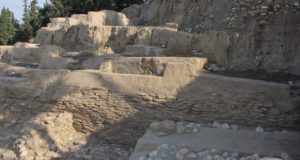 According DAILY SABAH a fortress wall dating 7,000 years back to the Chalcolithic Age has been unearthed at the Yumuktepe Mound in southern Turkey’s Mersin province. The Yumuktepe Mound is highly significant as a continuous settlement for 9,000 years since the Neolithic Age.
Two and a half months of excavations at the mound are coming to an end on Friday. This
year’s excavations, focused on the Neolithic and Chalcolithic periods, were carried out by
a 30-person team led by Isabella Caneva – a professor of archeology at the University of
Salento in Lecce, Italy. Caneva said that the 7-meter fortress wall discovered this season can now be shown to the public. While every year’s excavations have provided historical insights, this year’s dig produced especially “striking” Neolithic and Chalcolithic findings, Caneva said. Caneva said the layer in Yumuktepe Mound is special in that it contains very special architecture.
The fortress wall was made with a variety of materials, including a 1.5-meter-thick
support wall made of limestone at the bottom, 2 meters of well-cut stones and 3 meters of
mudbrick. Previous excavations had discovered the existence of the castle, dating back to 5,000 B.C., but the team did not uncover the wall until this season’s deeper dig in the area.
“We didn’t know that there was such a technology in that period in technical terms. Now
we see it and it’s a special structure. There was certainly a special product being made
there, because a normal village would not require such a thick and solid wall,” Caneva
said, explaining that the village is the oldest site in the world known to produce molten
copper.
“This is a very important product. Later on, there was a war for metal. It was an
important technology and a valuable substance. Tools, flashy objects and weapons were
all made with copper,” she said. The team also discovered that homes in the Neolithic period were built in a certain way, continuously constructed on top of one another, for 2,000 years. Caneva expressed hopes that the site will be developed into an open-air museum for visitors in the future.
Japan Shuri castle fire: blaze engulfs revered world heritage site
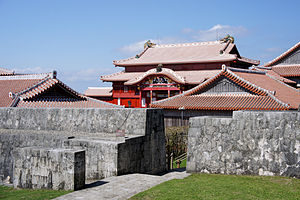 Fire spread quickly through 600-year-old site dating back to Ryukyu kingdom in Okinawa A fire has swept through a historic castle on the southern Japanese island of Okinawa, destroying much of a structure that had come to symbolise the ancient Ryukyu kingdom
and the island’s recovery from the second world war .
 Flames engulfed Shuri castle, a Unesco world heritage site located in the island’s capital Naha, at around 2:40 am and quickly spread to other buildings in the complex, local police said.
There were no initial reports of injuries, but nearby residents were evacuated while
firefighters spent several hours attempting to bring the fire under control.
The castle, a popular tourist spot, dates back to the days of the Ryukyu kingdom, which
began in 1429 and ended in the late 1800s when it was annexed by the government in
Tokyo.
More recently, the castle has come to symbolise Okinawa’s struggle to overcome the
devastation of war. More than 200,000 Americans and Japanese, including around a
quarter of Okinawa’s civilian population, died during a fierce 82-day battle from April to
June 1945. The island is still home to a large number of US military bases.
As the headquarters of the imperial Japanese army, Shuri castle was relentlessly shelled
by US forces, who occupied the island until it reverted to Japanese control in 1972, two
decades after the rest of Japan regained full independence. The castle was extensively
restored and reopened as a national park in 1992.