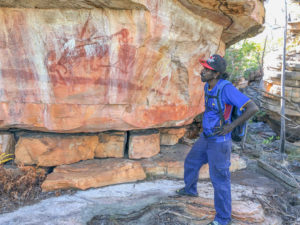
 Cosmos Magazine reports that Daryl Wesley of Flinders University and Mimal and
Marrku Traditional Owners of the Wilton River area used machine learning to analyze
changes in rock art styles in northern Australia’s Arnhem Land. The computer was
supplied with information of more than 1,000 types of objects and a mathematical model
to determine how similar two images are to one another. The model was then applied to
images of the rock art. “One amazing outcome is that the machine learning approach
ordered the styles in the same chronology that archaeologists have ordered them in by
inspecting which appear on top of which,” said team member Jarrad Kowlessar of
Flinders University. Styles of artwork that are closer to each other in age are also closer
to each other in appearance, he explained. The team members suggest that this approach takes tiny details easily missed by humans into account, and removes possible human bias from the evaluation of rock art sites
News
Study Examines Neolithic Animal Husbandry Practices
 MUNICH, GERMANY—According to a statement released by Ludwig Maximilian University , early Neolithic sheep herders in central Anatolia learned how to care for their livestock on the job over a period of about 1,000 years. Curator Nadja Pöllath of the State Collection for Anthropology and Palaeoanatomy in Munich, and zooarchaeologist Joris Peters and statistician Sevag Kevork of Ludwig Maximilian University, analyzed the bones of fetal and neonatal lambs unearthed at Aşikli Höyük, an early Neolithic site in central Anatolia where compacted layers of animal dung have been uncovered. The researchers then compared what they found with other collections of sheep bones to identify the stages of a young lamb’s life. They determined that between 8350 and 7300 B.C., the life expectancy of newborn lambs gradually improved as herders learned to reduce the number of infections and improve nutrition by moving the animals out to open grass from overcrowded conditions in the settlement. Read the original scholarly article about this research in the Journal of Archaeological Science
Rabbits Reveal Prehistoric Artifacts on Welsh Island
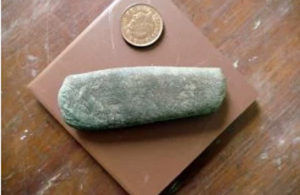 The Guardian reports that burrowing rabbits on Skokholm Island, which is located in the Celtic Sea off the coast of Wales, turned up stone tools and pieces of pottery.
Archaeologist Andrew David identified the stone tools as beveled pebbles that may have been used by hunter-gatherers to process shellfish or prepare seal hides between 6,000 and 9,000 years ago. “Although these types of tools are well known on coastal sites on mainland Pembrokeshire and Cornwall, as well as in Scotland and northern France, this is the first example from Skokholm, and the first firm evidence for late Mesolithic occupation on the island,” David said. A piece of thick-walled pottery is thought to be the rim of an Early Bronze Age urn thought to have been made some 3,750 years ago for a cremation burial, according to Jody Deacon of the National Museum Wales. This is also the first artifact of its kind to be found on any of the western Pembrokeshire islands, she explained. Further investigation of the area is being planned
Happy Nowruz March 20, 2021
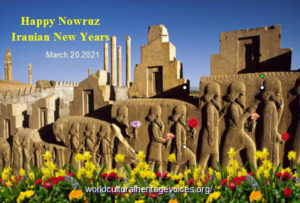 Nowruz is first day of Spring and the beginning of the Iranian year . Nowruz is celebrated on the day of the vernal equinox , on 20th March or the previous / following day depending on where it is celebrated. Nowruz is celebrated and observed by Iranian people as well as several other countries across Asia including Afghanistan, Turkey, Azerbaijan, Georgia, Tajikistan and many more. The new year starts at the moment the Sun crosses the celestial equator and equalizes night and day or exactly when the Earth has completed one cycle around the Sun.
The celebration has its roots in Ancient Iran. Due to its antiquity, there exist various
foundation myths for Nowruz in Iranian mythology. The Shahnameh dates Nowruz as
far back to the reign of Jamshid, who in Zoroastrian texts saved mankind from a killer
winter that was destined to kill every living creature. In the Shahnameh and Iranian
mythology, Jamshid is credited with the foundation of Nowruz. In the Shahnama,
Jamshid constructed a throne studded with gems. He had demons raise him above the
earth into the heavens; there he sat on his throne like the sun shining in the sky. The
world’s creatures gathered in wonder about him and scattered jewels around him, and
called this day the New Day or Now-Ruz. This was the first day of the month of
Farvardin (the first month of the Persian calendar). On Nowruz, families gather together
to observe the rituals and celebrate the beginning of the new year.
In addition, it is believed that originally the celebration was the holiest Zoroastrian
festival, and Nowruz is believed to have been invented by Zoroaster himself, although
there is no clear date of origin. Since the Achaemenid era, the official year has begun
with the New Day when the Sun leaves the zodiac of Pisces and enters the zodiacal sign of Aries, signifying the Spring Equinox.
International Nowruz Day was proclaimed by the United Nations General Assembly, in
its resolution A/RES/64/253 of 2010, at the initiative of several countries that share this
holiday (Afghanistan, Albania, Azerbaijan, the Former Yugoslav Republic of Macedonia,
India, Iran, Kazakhstan, Kyrgyzstan, Tajikistan, Turkey and Turkmenistan
Pasargad Foundation Awards “Personality of the Year 2021”
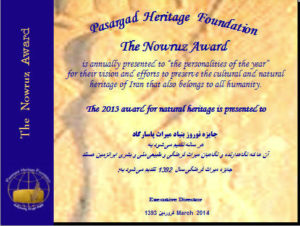
The Pasargad Heritage Foundation Presents:
The Nowruz Award March 20, 2021.
This press release has been published by the Pasargad Heritage Foundation to the Personalities of the Year for their vision and efforts to preserve the national, cultural, historical, and natural heritage of Iran that also belongs to all humanity.
 Dr. Mashallah Ajoudani, recipient of the Pasargad Heritage Foundation’s Nowruz Award
Dr. Mashallah Ajoudani is a historian, a literary Critic and the founder of the “Library of Iranian Studies” and is this year’s personality of the year in the category of Cultural and Historical Heritage for:
– A lifetime of courageous efforts towards increasing awareness of history and culture of Iran
– Utilizing modern methods of historiography, relying on authenticated documents while working academically without ideological or political prejudice
– Authoring the book “Iranian Constitution,” as the most authoritative book on the history of Iranian constitutionalism
– Prioritizing cultural values in building a modern society for Iran and presenting valuable theories in media writings and speeches
– Creating a new and exceptional critique of the literary works in the history of Iranian criticism in the book, “Guidance, the Blind Owl and Nationalism”
– Establishing an Iranian library in London and striving to keep alive the study of Iranian culture and history.
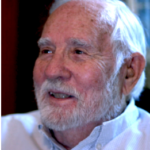 Dr. Fred Harrington, recipient of the Pasargad Heritage Foundation’s Nowruz Award
Dr. Fred Harrington is a biologist, ecologist, environmentalist, and chemical weapons
cleanup specialist and is this year’s personality of the year in the category of Natural Heritage and Environment, for:
– His invaluable role in the development of environmental protections in Iran
– Seven years (between 1970 and 1977) of efforts in different regions of Iran to better understand the natural and environmental conditions of Iran
– Preparation of the first “National Report on Human Environment” presented by the then Iranian government to the first World Environment Conference, Stockholm 1972
– Writing Iran’s environmental plan and program, as a roadmap for the establishment of Iran’s Environmental Agency
– Efforts to introduce local people to environmental and wildlife protection
– Publishing articles and scientific books and creating documentary films about the environment, in simple language, for public education and to inform local communities including villages and indigenous communities of Iran with the methodologies of environmental protection.
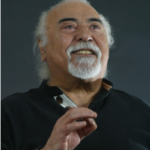 Esfandiar Monfaredzadeh, recipient of the Pasargad Heritage Foundation’s Nowruz Award.
Eefandiar Monfardzadeh is a musician and composer and is this year’s personality of the
year in the category of Cultural Heritage and Performing Arts, for:
– Life time contribution to creating unique modern Iranian music
– Creating a whole new Iranian musical genre, a new style of musical writing for film and songs263
– Innovative initiatives in making film soundtracks for Iranian cinema
– Choosing inspiring and stimulating lyrics in his songs
– Supporting human rights, especially in regards to the release of women and political
prisoners in Iran
– Composing the first music dedicated to “Cyrus Day,” immediately after the proposal of
“Cyrus the Great Day” by the Pasargad Heritage Foundation.
 Elahi Boghrat, recipient of the Pasargad Heritage Foundation’s Nowruz Award.
Elahe Boghrat is an author, journalist, editor of the London-based Kayhan newspaper, spokeswoman
for the Phoenix Iran Project, and this year’s personality of the year in the category of cultural heritage
and communication, for:
– Her services as a journalist and editor of a prominent political and news publication outside Iran
– Advocate for Iranian culture, history, and art
– Vocal supporter of human rights in her writings and statements
Dr. Mashallah Ajoudani, recipient of the Pasargad Heritage Foundation’s Nowruz Award.
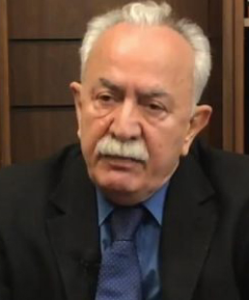 Dr. Mashallah Ajoudani
Dr. Mashallah Ajoudani was born in 1950 in Amol in northern Iran. He spent his elementary and high school years in Amol, and in 1972 was admitted by the Faculty of Literature at the University of Tehran to study Persian language and literature. He later also received a doctorate in Persian language and literature from the University of Tehran. His doctoral dissertation focused on the study of the styles of constitutional poetry.
For seven years, Ajoudani was an official member of the faculty at the University of Isfahan, Iran and an instructor at the Department of Persian Language and Literature in the Faculty of Literature and Humanities, where he taught texts of ancient Iranian literature and contemporary literature.
In January 1987, Ajoudani moved to London with his family and continued his cultural and literary work. Dr. Ajoudani’s first book, titled “The Iranian Constitution and the Background of the Theory of Velayat-e Faqih, a Critique and Study of the History of the Constitution and the Historiography of that Period,” was published in London in 1997. The book, which has also been titled “Iranian Constitution,” has thus far been reprinted twelve times.
His second book titled, “Either Death or Renewal,” is a book on constitutional poetry and literature, published in 2002 in London. This book has been reprinted five times.
His third book, “Guidance, The Blind Owl, and Nationalism, on Literary Criticism, The Blind Owl Critique, and Its Structure” was published in 2006 in London. This book has also been published three times.
Dr. Ajoudani is currently the Director of the Library of Iranian Studies and a member of its Board of Trustees in London. The library was founded by him in 1991.
d songs, most of which were among the most popular songs of the time. He also composed soundtracks for tens of films. His reputation as soundtrack composer greatly helped the popularity and sales of films.
Monfaredzadeh left Iran for the United States in one year after the Islamic Revolution, to protest the persecution of dissidents. He has not returned to Iran since then and during this time he has composed about 20 songs and soundtracks.
Dr. Fred Harrington, recipient of the Pasargad Heritage Foundation’s Nowruz Award
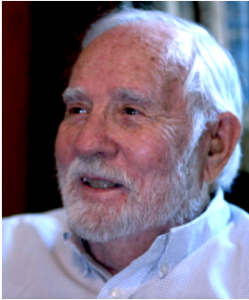 Brief Biography, Fred A. Harrington, Jr
Dr. Fred A. Harrington was born in Colorado, and at the age of 10 the family moved to Albuquerque, New Mexico, where his father worked as a construction engineer. He attended the University of New Mexico in pre-forestry and then transferred to Colorado State University, where he obtained a degree in Wildlife Biology in 1959. After graduation, he was employed as a big-game biologist by New Mexico Game and Fish Department. Three years later, faced with the military draft, he chose to enter the Aviation Cadets program, where after a year of training he became a 2nd Lieutenant with a flight navigator rating.
He served 5 years in Military Airlift Command during the Vietnam War era, attaining the rank of Captain and then returned to Graduate School at Colorado State University where he studied Bighorn Sheep in Rocky Mountain National Park for my PhD.
In 1970 Harrington was interviewed by Eskandar Firouz )head of the Hunting and Fishing Organization), for a position in Iran, where he served for 7 years in a wide range of natural resource activities. Among his chief accomplishments was completion of the National Report on the Environment for the Stockholm Conference and subsequently was asked to prepare a plan for creation of the Iran Department of the Environment. The plan was passed by Parliament in 1972, and he served as head of the Division of the Natural Environment, where he continued to conduct and supervise field activities, prepared a wide range of scientific and popular publications and worked with several film groups to document the activities of the Department.
Harrington returned to the United States in 1977 and worked as Western Regional Land Steward for the Nature Conservancy before setting up his own environmental consulting firm. He was hired by Ebasco Engineering to perform the Ecological Monitoring Program for the cleanup of Rocky Mountain Arsenal, allegedly the most polluted spot on the planet. Harrington was then engaged by the Department of Energy to perform the feasibility studies for cleanup of Rocky Flats Nuclear Facility near Denver. He subsequently served as head of the Ecology Division, monitoring the cleanup. Both Rocky Mountain Arsenal and Rocky Flats Nuclear Facility ultimately became National Wildlife Refuges.
Harrington and his wife then returned to our roots in the Pawnee Grasslands of northeast Colorado where thay restored an historic hotel and ran a “birder’s bed and breakfast” which thay named the Plover Inn.
Esfandiar Monfaredzadeh, recipient of the Pasargad Heritage Foundation’s Nowruz Award.
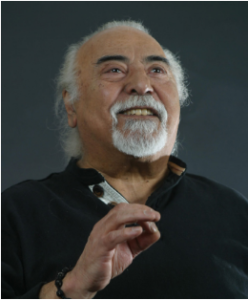 Esfandiar Monfaredzadeh, musician and composer
Esfandiar Monfardzadeh was born in 1941 in Tehran, Iran. From an early age, he learned playing various instruments, and from the age of thirteen, he played the tambourine, accordion, and dulcimer in school art programs. At fifteen he played with a group in the Children’s morning program of Iran’s national radio. From the age of sixteen, he worked and played instruments in cafes and theaters in Tehran.
Monfardzadeh was nineteen years old when he started composing songs and composed a song for the Radio Iran Youth Orchestra. He went on to compose more than ten songs in the next three years. Along with writing songs, one of Monfardzadeh’s major interests was writing soundtracks, and he regularly checked with Iran’s film studios at the time to pursue any possible opportunity.
In 1967, he started a degree in music at the Faculty of Fine Arts in the field of music, but after about two and a half years, he dropped out of the university program.
It was at the opening ceremony of the same college that he arranged and conducted the music of the “Great Student Orchestra of the University of Tehran” (sixty musicians and fifty choirs) for the opera “Conquest of Babylon” (composed by Reza Narvand). This opera was held in the presence of the King and Queen of Iran.
It was from 1969 onwards that he was commissioned by various studios to write and record soundtracks, arrange lip-syncing songs, compose melodies and perform various songs. It was at that time that composing and arranging the full soundtrack for a movie called “Ghaisar” made him famous.
In 1971, he received the award for best soundtrack for it, and a year later, he received the award for best soundtrack again for composing and arranging the soundtrack of another film called “Reza Motori”. In that film, for the first time, he used “song” for the soundtrack.
While in Iran, he composed more than hundred songs, most of which were among the most popular songs of the time. He also composed soundtracks for tens of films. His reputation as soundtrack composer greatly helped the popularity and sales of films.
Monfaredzadeh left Iran for the United States in one year after the Islamic Revolution, to protest the persecution of dissidents. He has not returned to Iran since then and during this time he has composed about 20 songs and soundtracks.
Elahi Boghrat, recipient of the Pasargad Heritage Foundation’s Nowruz Award.

Elahe Boghrat
Elahe Boghrat was born in 1957 in Sari (northern Iran) to a cultural family. She began her university studies at the National University of Iran (Tehran) in the field of jurisprudence and graduated in 1975, but did not pass the 14-units course in Islamic education (which was made compulsory after the revolution). As a result, the university refused to grant her a degree for years.
Boghrat became a member of the Communist Organization of the People’s Fedayeen in 1980 and had a political and semi-secret organizational life until 1989. In 1990, she intellectually and in practice left the Fadaiyan organization and secretly and illegally left Iran and fled to Germany. She received her refuge status (refuge asylum) in Germany, and in 1993 started studying at the University of Berlin, where she received a bachelor’s degree in political science. After graduation she started working full-time as a journalist.
Her first job was launching a website called “Journalist” and since 1995 she has been writing analytical-political articles for Kayhan London (an independent news magazine) and since 2013 she has been the editor in chief.
Elahe Boghrat also has two collections of short stories called “Feminine” and “Crazy House Notes” and a book called “Names and Looks” which is a collection of her conversations with literary and artistic figures.
Bronze Age Woman’s Silver Diadem Found in Spain
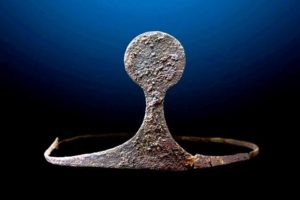 MURCIA, SPAIN—According to a New York Times report, a 3,700-year-old tomb holding the remains of a man and a woman has been found in southeastern Spain at the El Argar site of La Almoloya. Their bodies were placed in an ovoid jar under the floor of a large hall lined with benches that featured a podium before a hearth that provided warmth and light. Archaeologist Cristina Rihuete Herrada of the Autonomous University of Barcelona said that the man, who died in his 30s, wore flared gold ear plugs and a silver ring. A copper dagger with four silver rivets was found near his remains. The woman was in her 20s when she died. She had a shortened, fused spine, a stunted left thumb, and may have died of tuberculosis. She was buried wearing silver spirals in her hair, silver earlobe plugs with silver spirals, a silver bracelet, a silver ring, and on her head a silver diadem whose disc would have covered the tip of her nose. Rihuete Herrada suggests that the elite couple may have held power in different realms of their Bronze Age society. DNA testing of the remains of an infant discovered under another building at the site showed that the deceased were parents of this child, she added. Read the original scholarly article about this reearch in Antiquity .