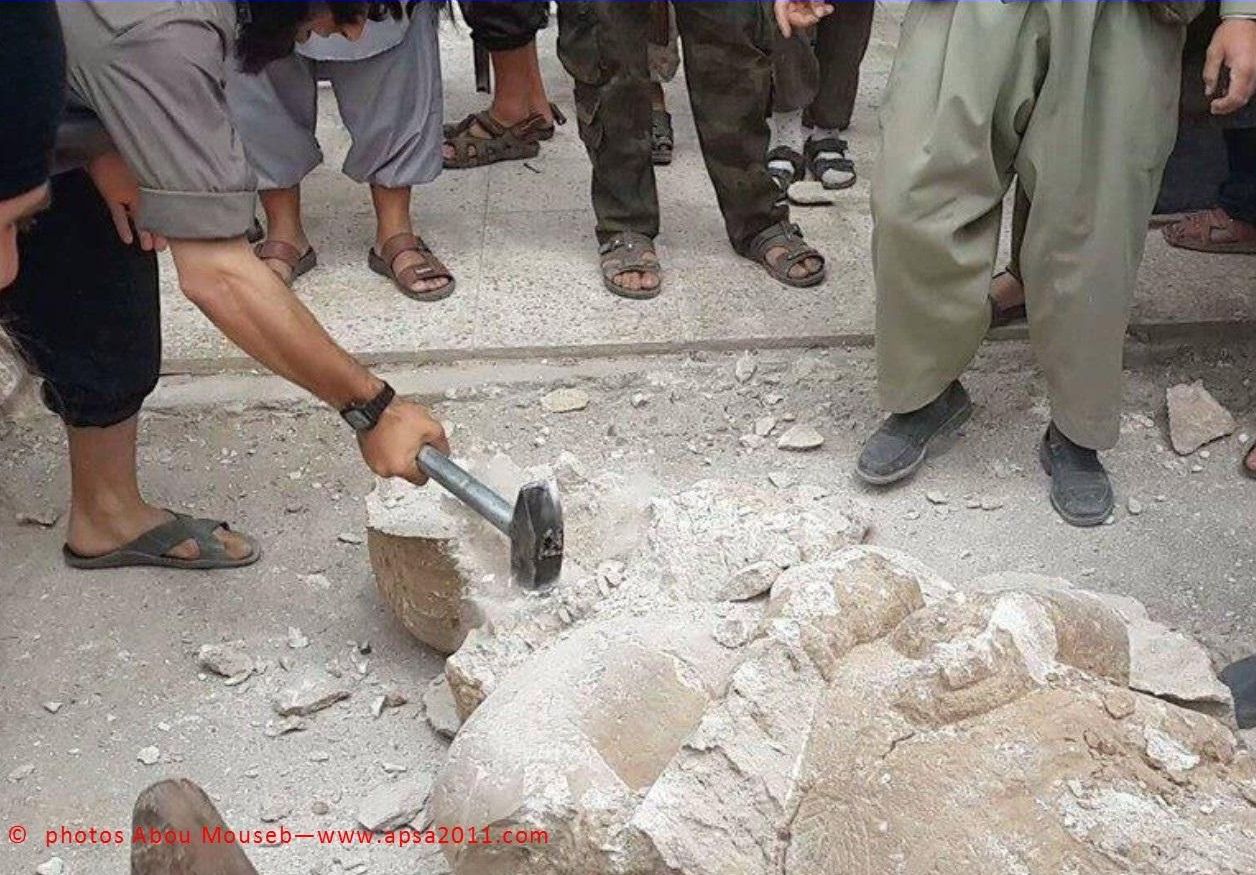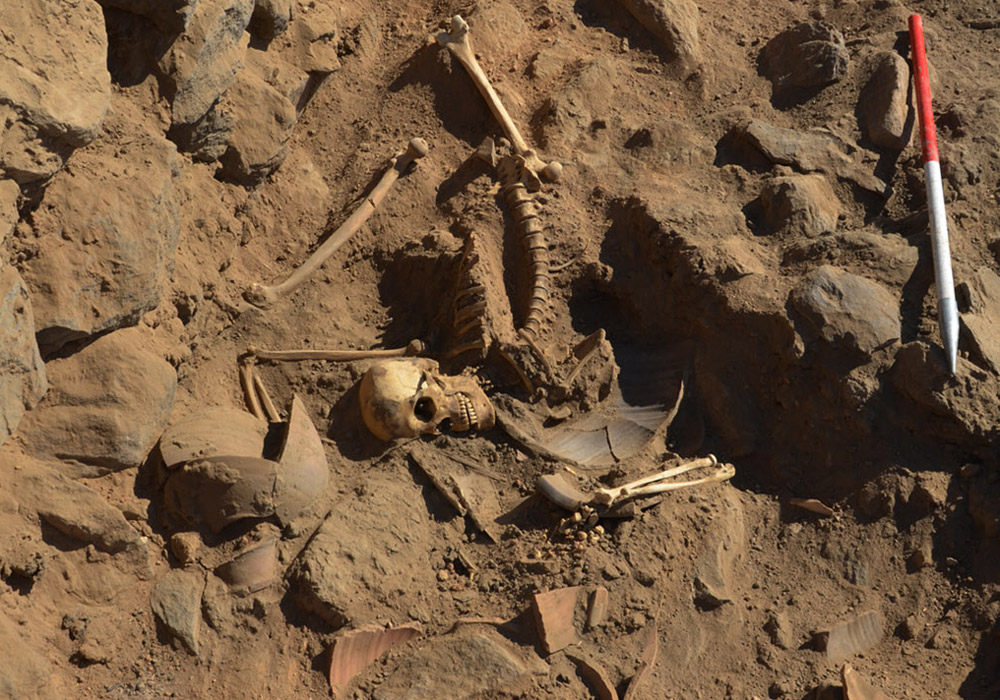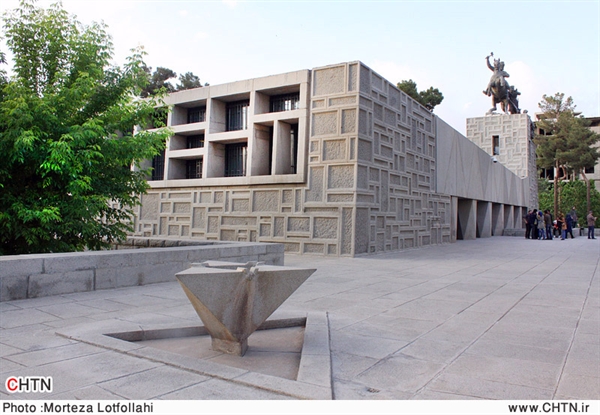
We believe that all cultural, historical and natural heritage, wherever they are should be preserved. LEARN MORE
News

Default Category

Destruction of Historic Baha’i Cemetery in Iran

headstoneLate last week, the news came from Iran that the historic Baha’i cemetery in Shiraz, Iran is being destroyed. The reports indicate that workers for the Revolutionary Guards had already completed an excavation in the old cemetery that is believed to have disturbed many graves as reported by several groups. There have been reports that several appeals have been made to the authorities in Shiraz but the city authorities have made plans for constructing a building on the site.

The cemetery is owned and used by the Baha’is in Shiraz since early 1900s. However, after the Iranian revolution, the site was confiscated in 1983. In that year, the government destroyed the main building at the site and all the grave markers. It has been reported that there were over 950 Baha’s buried in the cemetery including many who were killed in 1983 and a group of ten Baha’I women.

Since 1983, over 42 Baha’i –owned cemeteries have been destroyed in Iran and many Baha’is have been prosecuted and executed.

Director of National Park in the DRC, Ambushed and Shot

220px-Lava_Lake_Nyiragongo_2The Belgian director, Emmanuel de Merode of the famed national park, Virunga in the Democratic Republic of Congo (DRC) was shot and wounded in an ambush about two weeks ago. Mr. de Merode was taken to a hospital immediately and was operated on. A few days later, he was in stable but critical condition and was transferred to a hospital in Nairobi, Kenya.

It has been reported that Emmanuel de Merode’s vehicle came under fire by unidentified armed men as he was travelling from the eastern city of Goma to the town of Rumangabo. Mr. De Merode was shot in the stomach and legs four times as reported by BBC. Goma is about 50km (30 miles) from Rumangabo, the headquarters of Virunga National Park.

Some of eastern DRC’s numerous armed groups are based in the park and since 1996 more than 130 park rangers have been killed in Virunga. Virunga National Park is home to the mountain gorillas and has been listed a UNESCO World Heritage Site.

It is believed that Mr. De Merode’s work attracted him a lot of enemies. BBC also reported that Mr. De Merode had attended a meeting with a state prosecutor in Goma discussuing proposed oil explorations in Virunga before he was shot. It has been reported that he handed the prosecutor sensitive information about oil exploration at Virunga.

UK-based oil firm Soco International is exploring for oil at Virunga, despite strong criticism from environmental organizations. The firm however, has condemned the attack on Mr. De Merode and has also denied any involvement.

The Virunga Park is home to about 200 of the world’s 790 remaining mountain gorillagorillas and it is one of the most ecologically diverse places on Earth

Five Books Submitted by Iran for the UNESCO List

UNESCO’s Memory of the World Register is a list of library collections and archive holdings of world significance. This is an international initiative launched in 1992 to safeguard the documentary heritage of humanity against neglect, damage, the ravages of time and climatic conditions, and willful and deliberate destruction.

The five books were proposed recently by the Iranian National Commission for UNESCO, the National Library and Archives of Iran (NLAI).

The five books include The Bustan (The Orchard) and the Gulistan (The Rose Garden) of Persian poet Sadi (c. 1213-1291), inscribed by the 14th century calligrapher Ahmad Shirazi and preserved in the National Library and Archives of Iran.

MasvzniA copy of Masnavi-ye Manavi, the magnum opus of the Persian mystic and poet Molana Jalal ad-Din Rumi (1207-1273) is the second document/book.

The third document is Abu Is’haq Ibrahim ibn Muhammad al-Farisi al-Istakhri’s “Kitab al-masalik wa-al-mamalik” (Book of Roads and Kingdoms) dating back to the 10th century. The Persian translation of the book is being preserved in the National Museum of Iran. However, the original text is being kept in a library in Germany and the book has been jointly proposed by Iran and Germany to UNESCO.

A rare copy of “Al-abnia ‘an haqaeq al-adwia” written by the 12th century writer Abu Mansur Mowaffaq Heravi is the fourth book.

The fifth document is Safarnama (travelogue) by the 11th century Persian poet Nasir Khusraw, he concluded.

When creating the Memory of the World Register, UNESCO realized the need to protect such fragile yet important component of cultural heritage of the world. This list was established with the aim of preserving and digitizing humanity’s documentary heritage.

Voice of Latin America, Gabriel Garcia Marquez passed away

Gabriel_Garcia_MarquezLatin American author Gabriel Garcia Marquez passed away on Thursday April 17. Garcia Marquez was born in 1927 on the Colombian coast and was the master of a style known as magic realism, and his novels were filled with miraculous and enchanting events and characters; love and madness; wars, politics, dreams and death.

Marquez won the Nobel Prize in literature in 1982. In his acceptance speech he spoke about Latin America’s wars, military coups, dictatorships and ethnocide: “We, the inventors of tales, who will believe anything, feel entitled to believe that it is not yet too late to engage in the creation of … a new and sweeping utopia of life, where no one will be able to decide for others how they die, where love will prove true and happiness be possible, and where the races condemned to one hundred years of solitude will have, at last and forever, a second opportunity on earth.”

Chilean novelist Ariel Dorfman says the speech was one of the author’s most important messages to the world.”(in his speech) Garcia Marquez is speaking about all the people who are marginal to history, who have not had a voice.” Dorfman said.

Marquez was 87. He had learned that he had lymphatic cancer in 1999, and it is believed that he had been suffering from senile dementia since 2012.

Hardliners Oppose Frye’s burial in Iran

fryeOn the eleventh of April, some supporters of the Islamic government in a hostile demonstration objected to the request by Richard Frye to be buried in the historic city of Isfahan, Iran. These demonstrators claimed that Frye was a US spy and should not be allowed to buried in Iran.

As the demonstrations were happening in Isfahan, the government’s publications actually reflected on the protests and expressed support for them. These demonstrators who also have a publication named the “revolutionary youth” stated that they will attempt to demolish Pope’s tomb. In fact, it looks like that at the same time, his tomb was vandalized and paint was used to write all over his beautiful tomb.

Arthur Upham Pope(1881–1969) was best known as a pioneering American expert on Persian/Iranian art and the editor of the authoritative Survey of Persian Art. He was also a university professor of philosophy and aesthetics, archaeologist, photographer, political activist, museum director and planner, pianist, interior designer, and founder of an international scholarly organization. Both Pope and his wife Phyllis Ackerman are buried in Isfahan, Iran.

Many reports from Iran show the outrage by other Iranian youth groups who love Persian culture and history and in their own way have been protesting the action of these government supported protestors in Iran in weblogs, and Heritage Sites. They strictly and adamantly express their outrage in these actions and state that these protests in Isfahan do not represent the opinions and thoughts of millions of Iranians who have supported and preserved professor Pope’s tomb in Iran and also support eventual burial of professor Frye in Iran.

Here is a video of Dr. Frye discussing his wishes.

Reconstruction of World Heritage Mausoleums in Timbuktu

TimbuktuIn 2012, Mali experienced occupation by armed extremists in the north and centre of the country and during that period a number of World Heritage sites were either badly damaged or destroyed as we have reported here on WCHV website.

These historical sites and edifices were examples of history and the golden age of Timbuktu as an economic, intellectual and spiritual center in the 15th and 16th centuries. These buildings are also exceptional examples of unique architecture of that period which had been preserved by the citizens of Mali for centuries.

The reconstruction project which will focus on the sixteen of them are part of the World Heritage site has been financed by Mali and UNESCO with contributions from Andorra, the Kingdom of Bahrain, Croatia and Mauritius as well as logistical support from the United Nations Multidimensional Integrated Stabilization Mission in Mali (MINUSMA) as reported by UNESCO.

Earlier this month (April 2014), Mali’s Minister of Culture, Bruno Maiga, laid the first earthen brick on the mausoleums of Sheik Baber Baba Idjè and Sheik Mahamane Al Fullani, in the presence of UN and UNESCO officials. Diplomats from France, South Africa and Switzerland were also present at the ceremony.

Damavand: Not Yet World Heritage but in Danger

DamavandDamavand or Mount Damavand which is the highest peak in Iran, and has had long history and roots in Iranian mythology and a symbol of the nation’s history and identity, is in danger. According to Fararud News Agency, over a long period of time, private companies permitted by the government, have been active in daily transfer of 300 loaded trucks of mineral ore to different destinations. Major organizations and activists working in the field of preservation of cultural and natural heritage have objected but have received no response from the private companies while they have continued their activities. This has been happening in spite of the fact that there have been ongoing work on preparation of the application to  UNESCO for listing of the Damavand on the World Heritage.

takhrib-damavand-2 takhrib-damavand-1


Japan Cancels Whale Hunt

whaleYesterday, Japan officially canceled all plans to hunt whales in the Southern Ocean in 2014 just days after an international court ruled against the killings. This Japanese annual ritual which has drawn criticism from all over the world is now cancelled for the first time in over 25 years.

Prime Minister Shinzo Abe said his government would comply with the court order for this year, but he expressed his disappointment in the ruling during a meeting with members of the Japanese government’s legal delegation. As a result, it is very possible that that Japan will try to revive the program under different legal reasoning next year.

It is important to note that the hunt had taken advantage of a loophole in a 1986 international moratorium on commercial whaling that allowed killings for research purposes as reported by the New York Times. The ruling by the International Court of Justice in The Hague on Monday said the scientific output from Japan’s whaling program in Antarctica “appears limited” and suggested that the hunt was continued because of politics, rather than science.

Japanese government has confirmed that Japan would abide by international legal rulings as Japan may not have any other choices but to obey the court as reported by several news outlets. This is a critical time for Japan as the country is calling on China to adhere to international legal laws in the territorial dispute over East China Sea islands claimed by both countries.

Connection Between Genghis Khan and Climate Change

In a recent study by researchers from Columbia University and West Virginia University and published in the Proceedings of National Academy of Sciences, the team concluded with a theory, that the weather might have helped the Mongol army conquer the largest contiguous empire in history.

Ghenkis KhanAbout eight hundred years ago, Genghis Khan and his sons ruled most of modern-day Russia, China, Korea, southeast Asia, Persia, India, the Middle East and eastern Europe after Mongols ruthlessly conquered all these territories.

Historians for a long time have believed that the Mongols’ fast horses and brilliant cavalry tactics were two of their major advantage, but what other factor could have helped their rapid rise and overcoming so many other territories and countries? Well, the answer could have been climate change or good weather to be exact according to the team of scientists. 

Researchers have been working in Mongolia since 1995 and they have been looking at many ecological factors including tree-rings. Annual rings of many species reflect rainfall or temperature in predictable ways. These can be read like books; and trees in the driest, harshest sites like this are exquisitely sensitive to rain, live to extraordinary ages, and leave trunks that may stand for centuries after they die. In addition, researchers have been looking at grass production, while reasoning that the mild weather could have brought an unusual boom in grass production, and therefore affecting favorably livestock numbers including camels, yaks, cattle, and sheep. So, it looks like that the Mongolian army and Mongol cavalryman had many warhorses and animals for food that could have enabled fighters to travel fast and long.  Researchers are also looking at lake-bottom sediments, soil and all the date will eventually go into a computer modeling program at University of Alabama. 

Researchers also propose that the Mongols could have suffered a climatic setback, too: a cold snap in 1260-1266 and subsequent return to more normal weather in Mongolia appears to coincide with the decline of Karakorum, whose heyday lasted only 30 years. The empire soon fragmented. Today, barely anything of Karakorum remains but a giant stone turtle that once marked one of its corners.

Excerpts from PastHorizonspr.com by permission.  http://www.pasthorizonspr.com/index.php/archives/03/2014/rise-of-genghis-khan-linked-to-mongolian-climate-change

Italian Government Ask Businesses for Help

Earlier this year, here on WCHV website, we discussed in our blog about a new trend which could gradually become a new trend for funding restoration and preservation of heritage sites (Privatization of Restoration: http://worldculturalheritagevoices.org/?p=3486). This new trend which we called Privatization of Restoration could be a great solution where public funds are not available or are limited.  Just yesterday, Italy’s new Prime Minister, Matteo Renzi, called on private companies to fund repairs to the ancient city of Pompeii. The ancient city of Pompeii is a UNESCO World Heritage site and one of the world’s greatest archaeological treasures. It has been estimated that every year, over two million tourists visit the site in Southern Italy.

Pompeii_Garden_of_the_Fugitives_Pompeii has been suffering from neglect and inadequate restoration for a while. In fact, BBC and other news networks have reported that last year, 105mil-euro ($145m) was raised (including 41.8m euros from EU) allocated for a “Great Pompeii” rehabilitation project. However, it has been reported that only 588,000 euros had been spent so far. 

Due to heavy rain falls and flooding, several areas including walls and buildings have been damaged just in the last several days, therefore, new measures should be undertaken to reduce damage from flooding.  

Mr. Renzi who became Italy’s prime minister last month made the plea yesterday, to private companies and businesses to step in and help with restoring one of Italy’s greatest treasures.  In fact, the Italian government in the past had also requested private assistance for restoration of other ancient monuments, including the Colosseum in Rome and the Trevi fountain.