We believe that all cultural, historical and natural heritage, wherever they are should be preserved. LEARN MORE
News

Default Category

Ol Doinyo Lengai to be Considered for World Heritage Site

OldoinyolengaiEarlier this spring, WCHV learned that UNESCO has proposed to Tanzania that the area around Ol Doinyo Lengai, one of Tanzania’s active volcanoes and the country’s third highest mountain, be turned into a World Heritage Site. Ol Doinyo Lengai represents exceptional scenic and natural beauty of the country.

Tanzania is currently home to several UNESCO World Heritage Sites but a few years ago, the country withdrew an application for the recognition of the EasternArcMountains to actually pave the way for logging and mining in the ecologically sensitive water tower area of the sprawling East African country. Many questions regarding the circumstances surrounding the decision were asked. About the same time, many issues arose over plans to construct a highway across the main migration routes of the great herds in the Serengeti. In addition, plans to mine for uranium mining in the Selous Game Reserve, which is another prized World Heritage Site and the intended construction of a hydroelectric dam at Stiegler’s Gorge, have created major disagreements between Tanzania and the UNESCO over handling of cultural sites by the country.


Abu Dhabi’s Louvre Displays Treasures in Paris

1a7d4528The Louvre Museum is the world’s most visited museum, attracting up to 10 million visitors annually and it used to be just one in the world until the United Arab Emirates agreed to pay 400-million-euros ($553 million) over 30 years to house a branch in Abu Dhabi in a deal signed with the French government in 2007 according to Reuters.

Abu Dhabi hopes to eventually lure tourists to its own branch of the Louvre museum, once the doors are open to the public in December 2015. However, some of its treasures have gone on display at the Louvre in Paris until July 28, 2014.

“Birth of a Museum: Louvre Abu Dhabi” is a presentation of works from across the globe, which will eventually be part of the Abu Dhabi museum’s permanent collection which has been built up with the help of advisers from the Paris Louvre. These items include a gold bracelet decorated with lion heads crafted in Iran nearly 3,000 years ago, a Virgin and child painting by Giovanni Bellini and paintings by Pablo Picasso and Henri Matisse.

The museum which was designed by architect Jean Nouvel is a 64,000-square-meter (690,000-square-feet) structure, and one of three museums planned on an island near the center of Abu Dhabi.

The plans to open a Gulf branch of the Louvre originally sparked major concerns in France. However, such worries were brushed aside by the French government.

UAE is France’s largest trading partner in the Middle East, and Abu Dhabi also hosts France’s only military and naval base outside of Africa, and the only French-speaking university in the Gulf, a campus of Paris’s Sorbonne University. In 2010, the UAE also invested over 2 billion euros into France primarily in real estate acquisitions. The Louvre agreement includes sharing expertise in the acquisition of works of art and curatorship, as well as training and apprenticeships for future Emirati curators.

China to Demolish Fake Sphinx

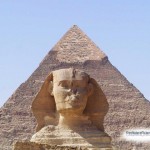
China’s Fake SphinxA Chinese replica of the iconic Sphinx will be dismantled and demolished after an Egyptian ministry complained about the structure as reported by the Sydney Morning Herald and other news outlets. The massive copy of the ancient statue in the northern province of Hebei has drawn a lot of criticisms from the Egypt’s ministry of antiquities which has complained to the United Nations Educational, Scientific and Cultural Organisation (UNESCO) about the imitation.

China has been known for copying Western goods ranging from running shoes to champagne, and also building up its replica reputation with a miniature Mount Rushmore, an Eiffel Tower and an entire Austrian village. In the case of sphinx replica, the officials of cultural park on the outskirts of the provincial capital Shijiazhuang have stated that the imitation has always meant to serve only as a temporary scene for shooting movies and television dramas and that they are very respectful to world cultural heritage and express our apologies for any misunderstanding.

It has been reported that the film reported by the Chinese was supported by an entertainment conglomerate based in southern China’s Hangzhou. The movie features a range of worldwide cultural heritages.

Egypt’s Ministry of Antiquities called on UNESCO to implement the convention it signed in 1972 concerning the protection of the world’s cultural and natural heritage. The 1972 UNESCO convention states that the right of identification, presentation and transmission of monuments to the future generation belongs only to the state that owns them. It emphasizes the importance of safeguarding and protecting unique monuments, as they are considered irreplaceable property to the people.

The Battle Over Crimea’s Cultural Heritage

crimeaFor the last two months the verbal battles over Crimea’s cultural heritage have been going on with no end in sight. Crimea’s heritage sites are many including the 16th-century Tatar Khans’ palace in Bakhchisaray to the former tsarist residence that hosted the World War Two Yalta conference. These sites and artifacts which have witnessed extraordinary times in history are once again in the midst of conflict and contention and this time they are the subject (of contentions).

For now Kiev has prepared itself for a long legal battle, as Ukraine does not recognize Moscow’s annexation of Crimea, and has considered Moscow’s presence in Crimea an illegal occupation. However, losing the cultural and historic legacy of the Black Sea peninsula is another major blow.

As reported by Reuters, Ukraine’s Culture Minister, Yevgen Nishchuk, said, Kiev was amending its laws to seek justice internationally should Russia start removing cultural goods from Crimea or take over formal supervision of the region’s heritage sites. One of the major concerns is an exhibition, which was put together by five museums including four in Crimea. The items which are currently on display in Amsterdam are now the subject of debate and contention as both Crimea’s pro-Russian authorities as well as Kiev claim ownership of the exhibition, titled “Crimea – Gold and secrets of the Black Sea”, which features golden artifacts and precious gems dating back to the fourth century BC.

The show which has been operated by the University of Amsterdam started in February 2014 and is supposed to end in August 2014 (however, the museum’s websites states June 2014 as the end date). The Allard Pierson Museum at the University of Amsterdam has stated that a legal investigation has started to determine to whom the collection should be returned after it closes.

Earlier this year (March 2014), Ukraine appealed to UNESCO  to protect cultural heritage sites in Crimea. In a statement by Ukraine’s Minister of Culture Yevhen Nyshchuk, he expressed concerns and stated that: “On the territory of Crimea is the Khersones Tavriysky (Ancient City of Tauric Chersonese), which is inscribed on UNESCO’s World Heritage List and which belongs to the Ukrainian state. We have been given the mission to protect it. However, since we no longer have physical access to the site in order to protect all the rarities and exhibits located there, which are priceless not only for Ukraine but also for the entire world, we appeal to UNESCO to help us”. According to Ukraine government, Ukrainian scientists have lost all access to cultural sites after the military occupation of Crimea by the Russian Federation. Chersonese became a UNESCO World Heritage Site in 2013.

Prominent Iranian Architect Dies in Exile

Seyhoon_Houshang_cropedMr. Houshang Seyhoun (b. August 22, 1920 in Tehran, Iran to May 26, 2014 in Vancouver, British Colombia, Canada) has passed away in exile. He was an Iranian architect, sculptor, painter and professor. He studied fine arts at the École nationale supérieure des Beaux-Arts in Paris, and earned a degree in architecture from University of Tehran.  Mr. Seyhoon became famous for his design work in the 1950s in Iran including Tehran’s Central Railway Station and tombs of scientific, literary and historical figures.

Examples of some of his work.

Kamal-al-molk-ghabr aramgah-nadershah2 aramgah-khayam

aramgah-khayam1aramgah=nadershah1

Disappearing Forests in Iran

park-13Two acres of forests and agricultural lands disappear per week in Iran.

The statistics published by NASA shows that every week two acres of forests and agricultural lands in Iran are removed from the face of the earth. The Environment Protection Authority, which is a governmental department in Iran, is reluctant to publish any statistics of its own or send any report on subject to International authorities.

Nevertheless, Mr. Kamaleddin Pir-Moazzen, the secretary of Environmental section of the Islamic parliament, has recently told the reporters that: “According to the present trend of erasing the forests in Iran, 1 Million acres of the Iranian forests could disappear within the next 5 years and if this trend continues at its present rate, Iran would not have any natural Forests.” Wood smuggling is a lucrative and expanded activity in Iran and contractors, who obtain permits for cutting trees from the government, usually exceed the legal limits. The practice even includes the young newly-planted trees.

Fighting Looters of Antiquities

lootersIt has been reported as published by the Washington Post (and the Denver Post), that the government of Egypt sees the fight against the illegal sales of antiquities and looting a major national emergency.

In March, Mohamed Ibrahim Ali, Egypt’s minister of state for antiquities was in WashingtonDC talking with Obama administration. He stated that the looting worries the experts. “The objects that are stolen from museums are easier to track because they are registered,” Ibrahim said, referring to the archaeological artifacts taken from Egypt’s MalawiNationalMuseum and EgyptianMuseum in Cairo, many of which have been identified and returned. However, a bigger problem now has become the illicit digging everywhere spanning acres of land, which is also the work of sophisticated traffickers.

As we have discussed here at WCHV, looting isn’t a new phenomenon, but as countries face conflict, looting adds to many more problems that the country face. Today, more than three years since the Egyptian revolution, looting antiquities is a major concern for a country that is so dependent on tourism. In the last decade, many factors including higher antiquities prices and easier transport across the world has made looting a profitable option for many smugglers and thieves.

Stranded Oil Tanker off the Coast of the Galapagos

oilspillLate last week, the news from Ecuador that a freight ship carrying 60,000 liters of oil has become stranded off the coast of the Galapagos Islands after running aground brought back painful memories of 2001 for environmentalists. The Ecuadoran vessel became stranded off the coast of the island San Cristobal last week, however an inspection by the authorities has been reported and shows that at this time the oil was not at risk of spilling from the tanker.

The reports also have stated that contingency plans were being made to mitigate the potential catastrophic impacts of a spill should that situation arise. The vessel is believed to be carrying around 16,000 gallons (60,000 liters) of diesel and crude oil.

The nearby Galapagos national park has made a statement that it is monitoring the situation and that the coastguard is coordinating efforts to offload some of the cargo of the ship in the hope that a high tide will lift it from the rocks. Situated in the Pacific Ocean some 1,000 km from the South American continent, the Galapagos islands and the surrounding marine reserve have been called a unique “living museum and showcase of evolution” as stated by the UNESCO.

In 2001, another oil tanker ran aground, but the resulting leak of around 180,000 gallons of oil was estimated to have killed around 62% of the marine iguana population on a neighboring island.

Japan’s Whale Hunt Continues

whalesAbout a week ago, a Japanese whaling fleet left port under tight security in the first hunt since the UN’s top court ordered Tokyo to stop killing whales in the Antarctic.

The international Court of Justice had ruled that Japan had misrepresented the hunting in Japan’s Southern Ocean expedition as a scientific research activity while it was actually a commercial one. Four ships departed from the fishing town of Ayukawa in the northeast, marking this season’s start to a coastal whaling programme not covered by the International Court of Justice’s landmark ruling.

In the last several weeks, Japanese politicians have criticized the ruling and the international public opinion as cultural imperialism by the West. There is also local pressure from inside Japan in favor of annual hunting, expressing fears that the court’s decision could ultimately ruin many peoples’ livelihoods in Japan. A recent poll also shows that 60 percent of Japanese people support the country’s whaling program, but only 14 percent eat whale meat.

When Tokyo called off the 2014-15 season for its Antarctic hunt, the country proposed to redesign the controversial whaling mission in order to make it more scientific. Japan has continuously battled for its right to hunt which has put the country face to face with anti-whaling nations like Australia, which brought the case to the international court, arguing that Tokyo’s research was aimed at skirting a ban on commercial whaling. At the same time, Japan has hunted whales under a loophole in a 1986 global moratorium that has allowed it to conduct lethal research on the mammals, but has openly admitted that their meat somehow made it to dinner tables.

Tokyo has always maintained that the whale population was large enough to sustain commercial hunting. In the 19th century, both Japan and the US hunted whales extensively as they were a source of fuel and food.