
We believe that all cultural, historical and natural heritage, wherever they are should be preserved. LEARN MORE
News

Default Category

New Discoveries in Esvres-sur-Indre

potteryArchaeologists have continued work on a Late Iron Age/Early Roman period necropolis, with a total of 74 graves uncovered, including 31 new inhumations in Central France. As modernization has rapidly changed the area with housing expansions, the outskirts of the historic town of Esvres-sur-Indre  has also been the site for the new findings and study.

The necropolis itself has been known since 1909 after the publication of a preliminary study carried out at the time of the planting of a vineyard. In fact, in 1999 a group of 29 burials were excavated at Vaugrignon.  The graves found at the time were clustered in discreet areas corresponding perhaps to social or family groups and organized around enclosures whose function is not yet clear but may relate to funeral rites.  Archeologists believe that the extent, number and diversity of burials found in the area, show the importance of the site during the late Gallic and Gallo-Roman periods, and the tombs must relate to a substantial settlement that lies beneath the current town and suggests a continuous occupation for over 2200 years.

A very interesting finding was that most of the tombs excavated have contained children. However, since the acidity of the subsoil often does not allow good preservation of organic matter including skeletal material and many of graves were found to be ‘empty’. Twenty four did however contain enough skeletal material to be able to identify 18 children and 6 adults.
The graves frequently contain wooden coffins, of which only the nails are preserved. The dead are accompanied by a rich selection of objects, sometimes mounted on wooden supports arranged within the grave including terracotta pottery including jugs, cups, plates and pots.

Excerpts by permission from original article published by www.pasthorizonspr.com
http://www.pasthorizonspr.com/index.php/archives/03/2014/new-discoveries-at-the-gallic-necropolis-of-esvres-sur-indre.

Spanish Team Finds Mummy

000_Nic62955503Just about a week ago a Spanish team of archeologists working in Egypt in collaboration with the Egyptian antiquities ministry unearthed a 3,600-year-old mummy in the ancient city of Luxor as reported by the Associated Press and Al-Ahram newspaper.

Archeologists believe that this rare find dates back to 1600 BC, when the Pharaonic 17th Dynasty reigned. The sarcophagus which still bears its original coloring and writings was well preserved in wooden sarcophagus. Archeologists also believe that the mummy most probably belong to a high official since the sarcophagus is engraved with titles of the official. The sarcophagus is engraved with hieroglyphs and decorated with inscriptions of birds’ feathers. However, the exact identity that official will have to be studied.

The Spanish-Egyptian team also found two other burials while digging at the Draa Abul-Naga necropolis on Luxor’s west bank, but they were both empty and believed to have been robbed by grave robbers.

Sequencing King Richard III’s Genome

Richard_III

About a year ago a team of archeologists from University of Leicester announced that they had discovered beneath an ordinary parking lot in the town of Leicester, bones that believed to belong to King Richard III. Now as reported by several news outlets, researchers at the University of Leicester, have announced that they are planning to sequence the King’s entire genome by using the DNA from his skeleton.

After finding the skeleton, the researchers used several evidences including the fact that the bones showed signs of scoliosis – the king had a hunched back as well as a raised right shoulder. In addition, carbon dating placed the bones somewhere between 1455 and 1540 (Richard died in 1485), and a DNA test showed that the skeleton’s DNA was a perfect match to that of two known descendants. The archeologists believe that King Richard III experienced a very traumatic death since the skeleton showed several wounds including to the head.

Archeologists and geneticist who will be working with the team are hoping that sequencing DNA from the skeleton can reveal more information about the monarch including facial features like eye colors. In addition, researchers can obtain more information about the genetics of the monarch.

African World Heritage Fund’s Pledge

AWHF

Late last month (January 2014), over 3 million USD was pledged to the African World Heritage Fund (AWHF) Endowment Fund by the Governments of Kenya (1.5 million USD), South Africa (1 million USD), Algeria (400,000 USD), Chad (100,000 USD), and Namibia (50,000 USD).

In a meeting and luncheon, where fifty four member States of the African Union were in attendance and was hosted by Dr Nkosazana Dlamini Zuma, Chairperson of the African Union Commission,  UNESCO joined forces with the African Union Commission to raise awareness and funds (as reported by UNECO). UNESCO highlighted it’s commitment to supporting the AWHF, while other speakers including representatives from the Private Sector acknowledged the central role the AWHF plays in safeguarding heritage in Africa. In addition, all speakers emphasized their wish for more natural and cultural sites in Africa to be inscribed on the UNESCO World Heritage List, and the potential and impact of tourism and the economic benefits.

It is important to note that the Endowment Fund still needs 25 million USD in order to render the AWHF independent and fully functional. Therefore, more fundraising is needed to raise the necessary funds. Beside the monetary contributions, Algeria announced the continuation of work by an Algerian specialist with AWHF, as well as the creation of a UNESCO Category II Center in Algeria for the safeguarding of Intangible Cultural Heritage.

AWHF was created in 2006 through a joint initiative by the Government of South Africa, the African Union and UNESCO. The organization is an intergovernmental organization based in South Africa whose mission is to assist African countries in many important tasks including: increasing the number of African sites on the UNESCO World Heritage List, conserving and managing natural and cultural heritage, rehabilitating sites on the List of World Heritage in Danger, training heritage experts and site managers, and ensuring the participation of local communities in decisions concerning their heritage and to ensure that they receive tangible benefits from World Heritage.

Cairo Islamic Art Museum Extensively Damaged

Cairo

Cairo’s Museum of Islamic Art which has been home to almost 100,000 artifacts and priceless key global collections was extensively damaged when a car bomb exploded early Friday (January 24th, 2014) morning. The blast which was outside the Police Security Directorate across the street from the main entrance to the Museum was the first of four that rocked Cairo according to several news agencies.

Irina Bokova, Director-General of the UN Educational, Scientific and Cultural Organization (UNESCO), has expressed grave concern over the damage caused to Museum.

“I firmly condemn this attack and the destruction it has caused to the world-renowned Museum of Islamic Art in Cairo, which hosts thousands of invaluable artifacts. This raises the danger of irreversible damage to the history and identity of the Egyptian people,” Bokova said.

“This heritage is part of the universal story of humanity, shared by all and we must all do everything to safeguard it,” the UNESCO director-general stressed.

Stonehenge Gets a Makeover

300px-Stonehenge2007_07_30

It took only 27 million pounds or $44 million to give Britain’s ancient Stonehenge a makeover and the visitors to the site are in for a modern treat.  The renovations include a new timber and glass visitor center building about 1.5 miles (2.4 kilometers) from the stones where over 1 million a year visitors can watch an exhibition about Neolithic life.
Late last year, in December 2013, journalists and English Heritage members were given a preview of the new center, which houses a 360-degree “virtual tour” of the monument, along with an extensive exhibition about how Stonehenge is believed to have been built about 5,000 years ago. So, what should the tourists and visitors expect when they arrive this year to see the site? The idea has been to return Stonehenge which is located 80 miles (130 kilometers) southwest of London, to its rural landscape. Visitors should expect to be transported to the stones on a special shuttle, or they can walk, exploring an ancient processional approach route that for years has been cut in half by asphalt. Inside, the exhibition will show that the monument’s prehistoric creators were sophisticated people, who raised pigs and hunted, gathered from far and wide for feasts and built this remarkable, mysterious monument.

The renovations which were funded partly through donations and partly through a levy on profits of Britain’s national lottery, has also almost doubled the entry ticket, from 8 pounds ($13) to 14.90 pounds ($24) for an adult. However, the visitors beside watching the virtual tour, will see a modern cafeteria and a large gift shop, where visitors can buy many souvenirs including jam, chocolate, baseball caps, mouse pads and fridge magnets, as well as “Stonehenge Rocks” T-shirts as Associated Press reports. It is believed that Stonehenge was built in three phases between 3000 B.C. and 1600 B.C.

Archaeologists and experts now agree that the site was a temple and a giant burial ground for elite families. Archaeologists have found the remains of dozens of cremated bodies from about 3000 B.C. whose location was marked by bluestones.  More evidence also suggests large crowds gathered at Stonehenge for the summer and winter solstices, a tradition that continues today.  More research and exactions will be done in years to come as more than half the site remains unexcavated.

Perspolis’ Deteriorating Condition

Photos by Farzad Aryanfarzadaryan2014-1

According to the reports coming out of Iran and received by WCHV, the Persepolis area is in very poor condition. This area is considered part of the Iran’s World Heritage site and for the last few years, important safeguarding and preservation have not been done for this historical site which is a few thousand years old. Unfortunately, warnings by the activists of Cultural heritage, as well as the Pasargad Heritage Foundation’s reports to the UNESCO have so far not produced any results.

Persepolis was founded by Darius I in 518 B.C., Persepolis was the capital of the Achaemenid Empire. It was built on an immense half-artificial, half-natural terrace, where the king of kings created an impressive palace complex inspired by Mesopotamian models. The importance and quality of the monumental ruins make it a unique archaeological site.

UNESCO declared the citadel of Persepolis a World Heritage Site in 1979.

Persepolis-Farzad-Arian-05 Persepolis-Farzad-Arian-04 Persepolis-Farzad-Arian-02 Persepolis-Farzad-Arian-01 Persepolis-Farzad-Arian-06Persepolis-Farzad-Arian-03


“Faces of Love”: Dick Davis Translates Hafez

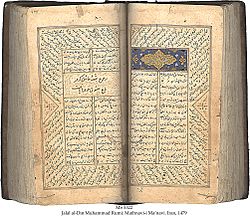
hafez3Dr. Dick Davis, a leading scholar of medieval Persian literature in the Western world, calls Hafez, the poetry world’s version of Bach and compares Shiraz, the city where Hafez lived at the time with Venice.

“People say that Bach sort of gathered together everything that had gone before him in music and brought it into a new kind of stage. Hafez did the same with the conventions of lyric poetry,” Davis said in an interview with PBS in December 2013.

Hafez is greatly featured in Davis’ new book (Published in 2013), “Faces of Love: Hafez and the Poets of Shiraz.” Davis translated poems by Hafez, Jahan Malek Khatun and Obayd-e Zakani, all poets from 14th century Shiraz.  Davis who is a poet himself, has translated other Persian poetry in the past.  He went to Iran as a young man, ended up staying for eight years, married an Iranian and then returned to England and obtained a Ph.D. from University of Manchester, in order to bring pieces of Iran to the West.
In the interview Davis explains that “Faces of Love” shows a side of Iran that we don’t often hear about, especially from news headlines. For him, it’s an important side of Iran that he thinks more people should understand. After all, poetry is integral to Iranian culture.

Khwāja Shamsu d-Dīn Muhammad Hāfez-e Shīrāzī known by his pen name Hāfez (1325/26 C.E.–1389/1390 C.E.) was a Persian poet. The work of Hāfez would leave a mark on such Western writers as Thoreau, Goethe, and Ralph Waldo Emerson—the latter referring to him as “a poet’s poet.” His work was first translated into English in 1771 by William Jones.

Check out a video from Dr. Dick Davis here


Destruction of Jamshidieh Park

park-12Jamshidieh Park, in the north of Tehran is being destroyed, paving the way for the construction of a few high-rises. The old and famous park has been registered as a national intangible heritage of Iran and is one of the important green areas of a city suffering from dangerous air pollution. The ownership of the park was recently transferred to a government-owned bank and the new owner has decided to build the high-rises and destroy the park, and this decision is approved by the Tehran mayor. Many people including environmental activists and even parliament delegates have protested this incredibly poor act.
Jamshidieh Park (or Jamshidieh Stone Garden) is located in the neighbourhood of Niavaran at the base of Kolakchal mountain. The Stone Garden became a public park in 1977, and was reconstructed and expanded to 16 hectares with the addition of Ferdowsi garden in 1995. The premises were established as a private garden by the Qajar prince and engineer Jamshid Davallu Qajar.  (http://en.wikipedia.org/w/index.php?title=Kolakchal&action=edit&redlink=1)

Before Destruction:

park-6 park-5 park-4 park-3 park-2 park-1 park-7

After Destruction:

park-16 park-11 park-12 park-13 park-14 park-15


Heritage Protection Efforts in the Philippines

Baroque ChurchAs we have reported, many times the world heritage sites are damaged or destroyed by natural and environmental factors such as earthquakes or hurricanes. The massive earthquake and powerful typhoon Haiyan (Yolanda) which successively struck central Philippines in October and early November 2013 caused catastrophic destruction and human loss. While, the humanitarian concerns were immediately and continuously being addressed, the damage to the country’s national heritage is slowly being analyzed.
TubbatahaEarlier this month, The UNESCO World Heritage Center together with the International Centre for the Study of the Preservation and Restoration of Cultural property (ICCROM), sent a joint expert mission from 2 to 12 December 2013 to Manila and Central Visaya to assist the Philippines in assessing the situation and damage caused by the two disasters, to identify immediate needs and emergency safeguarding measures, as well as medium term interventions that would be needed for rehabilitation and recovery. Three experts were included in the mission – one on immovable heritage with a special focus on structural consolidation, and one on intangible heritage and psycho-social impacts, while the ICCROM expert’s focus is on museums and collections. Phillipines RiverThe mission has given particular attention to assessing how to rebuild the historic churches of the area according to the traditional techniques. Since the churches have functioned as the center of the community, the plans will aim to involve the local populace in restoration or rebuilding of the churches (ICCROM).
rice_terracesIt has been reported, that two churches on the Tentative List of the Philippines (sites yet to be proposed for inscription on the World Heritage List) have been damaged. The Church Complex of San Pedro Apostol (Loboc, Bohol) of the Baroque Churches of the Philippines extension and the Church of Our Lady of Immaculate Conception (Baclayon, Bohol), were affected by the Bohol earthquake on 15 November 2013, and the Guiuan Church of La Purisima Concepcion, which is identified as one of the National Cultural Treasures of the Philippines, was severely damaged by the typhoon. No damage to existing World Heritage sites have been reported yet.

Five World Heritage Properties in the Philippines

  • Baroque Churches of the Philippines
  • Historic Town of Vigan
  • Puerto-Princesa Subterranean River National Park
  • Rice Terraces of the Philippine Cordilleras
  • Tubbataha Reefs Natural Park

VIGAN_CITYHistoric Town of Vigan was established in the 16th century, and is the best-preserved example of a planned Spanish colonial town in Asia. Its architecture reflects the coming together of cultural elements from elsewhere in the Philippines, from China and from Europe resulting in a culture and townscape that have no parallel anywhere in East and South-East Asia.