We believe that all cultural, historical and natural heritage, wherever they are should be preserved. LEARN MORE
News

Default Category

Chinese archaeologists unearth 2,800-year old tombs

china-old-tombsAs reported by several news outlets, a team of Chinese archeologists have discovered a tomb believed to date back 2,800 years ago. The set of elaborate tombs surrounded by 28 chariots and 98 horses in the province of Hubei in China is an incredible discovery dates back to a time when high-ranking nobles demonstrated their power and strength through the ownership and display of horse-led chariots.

The researchers unearthed 30 elite tombs of various sizes in the city of Zaoyang. Researchers believe that the tombs date back to what is known as the Summer and Autumn Period in Chinese history (770 – 476 BC), which corresponds roughly to the first half of the Eastern Zhou dynasty. This period in Chinese history was characterized by the creation of powerful states and the birth of a wealthy merchant class as reported by ancient-origins. Researchers know that during that period a noble’s power was demonstrated through the number of chariots he owned.

Destruction of Forests in Iran

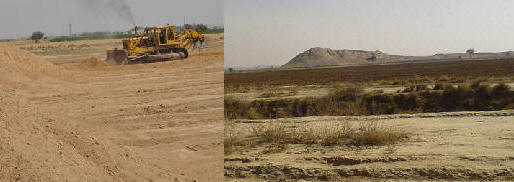
farsayesh-khak.1jpgIran continues to rank one of the highest in the world in terms of soil erosion and the destruction of forests. In a recent conference titled “Clean Air Day”, Mohsen Jafari, Deputy Director of Environmental Protection Agency (of Fars province) officially announced the drying of 10 wetlands in the Fars Province. He said that there is no longer opportunity and time for long-term planning and there is urgent need to take immediate actions.

Mr. Jafari talked about the need for land use planning, careful consideration in building dams and finally about his regret in Iran’s soil erosion and loss of forest areas.

For many years, the natural heritage and environmental activists and experts have repeatedly stated the same concerns. However, these concerns and statements have never been taken seriously by the governmental and local agencies.

MAPS OF PERSIA 1477 – 1925 A graphical journey through the history of Iran

23rd January – 21st March 2015.

mape-o1Opening in January 2015 will be an exhibition presenting a selection of Maps – urban plans, topographic maps, and sea charts – taken from the ‘Dr Cyrus Ala’i’s Map Collection of Persia’ of over 250 maps that was gifted to the Centre for Iranian Studies SOAS, University of London in 2013. The collection includes important printed general maps of Persia and more specialist items from the early editions of Ptolemy, at the end of the 15th century, up until the end of the Qajar dynasty in 1925.

Iran or Persia as it was known in the West for most of its long history has been mapped extensively for centuries and many of the maps included in the exhibition will be publically shown together for the first time. These maps illustrate how cartography and the mapping of the region advanced with scientific accuracy in detail, whilst not ignoring their often artistic and design elements.

The maps along with other supporting material are presented within the context of Persia as an important cultural cross-road in southwest and central Asia. Illustrating how the region was viewed, interpreted and recorded by both indigenous scholars and visitors from abroad.

Following 20 years of research the noted scholar, Dr. Cyrus Ala’i produced a monumental cartobibliography in two volumes: General Maps of Persia, 1477-1925 (2005), and Special Maps of Persia 1477 – 1925 (2010).
The exhibition is made possible by the generous support of the London Middle East Institute (LMEI) and Centre for Iranian Studies at LMEI, SOAS.

BRUNEI GALLERY, SOAS OPEN: Tuesday – Saturday 10.30 – 17.00 (Thurs late night opening until 20.00)
THORNHAUGH STREET CLOSED: Sunday, Monday, and Bank Holidays ADMISSION FREE
RUSSELL SQUARE T. 020 7898 4046 (recorded information)
LONDON, WC1H 0XG E. gallery@soas.ac.uk
For more information visit: www.soas.ac.uk/gallery
Or follow us on Facebook https://www.facebook.com/Soas.Brunei.Gallery

Thousands of ancient coins discovered in England

5000 coin-EnglandAs reported by B.B.C Paul Coleman from the Weekend Wanderers Detecting Club discovered more than 5,000 coins buried inside a lead bucket two feet under a field near Aylesbury.

The hoard contains specimens dating back to the 11th Century – the late Anglo Saxon, early Norman period.

The coins will now be examined by the British Museum.

The biggest archeological discovery of 2014

turkey.jpgA massive 5,000 year old underground city has been discovered in Turkey by the country’s Housing Development Administration (TOKI), according to reports Sunday.

Erdinç Çelikkan reports on what could potentially be the year’s largest architectural discovery, an underground city located in Turkey’s Central Anatolian province of Nevşehir.

The newly discovered city joins other such ancient cities found in the area, thought his one may end up being the largest of all the cities found so far.

Give the Gift of World Heritage

holida1Give the gift of World Heritage this holiday season.

Give your family and friends the gift of preservation and knowledge of World Cultural Heritage, so that they could also be part of the protection and conservation of beautiful and historic sites of their own countries as well as our planet.

By becoming a member of World Cultural Heritage Voices, you can also partner with us in our educational programs in order to preserve sites in countries suffering from wars, conflicts and poverty.

Remember that every donation makes a difference, regardless of size.

Hungary proposing to restrict shops in Heritage sites

shoppingA bill submitted to the Hungarian Parliament last month by the economy minister would prohibit big supermarkets and discount shops from opening in the area of Budapest’s World Heritage sites. The rules would apply to discount shops and supermarkets. Budapest has two World Heritage sites according to UNESCO: the Banks of the Danube and the Buda Castle Quarter (451 hectares), and the Andrássy Avenue and the Underground, with a property area of 58 hectares and a buffer zone of 240 hectares. The legislation is scheduled to go into effect starting next year and would force existing shops to close in 2018.
SPAR, One of the supermarket chains which has invested greatly in the Hungarian market has confirmed that it would postpone a significant part of the planned investments because of several food supervisory fees and proposed legislation related to retail trade affecting the company’s operations in Hungary and not just because of the latest bill. The company is not planning to leave the Hungarian market where it has invested over 500 million Euros over the last 23-years according to Hungary Today.
For many years now, major food companies have been setting up branches close to Heritage Sites around the world. Companies like Starbucks, McDonald and Pizza Hut have opened branches at the Louvre, Beijing’s Forbidden City, and Peru’s Cusco’s Plaza de Armas.

UNESCO Calls for Protecting Libya’s Cultural Heritage

Protecting Libya’s heritageThere have been many recent reports of acts of vandalism, illicit trafficking and attacks on Libyan cultural heritage. These reports have been amid increasing deterioration of the security situation in Libya. Therefore, UNESCO has called on all parties for protection of Libya’s Cultural Heritage. In a statement, Director-General of UNESCO, Irina Bokova stated that: “Libyan heritage is the expression of a shared memory of the country, and its respect represents a corner stone for long lasting national reconciliation”. She urged Libyan people to commit to and act for safeguarding of its national heritage and urged all parties to refrain from using cultural property and its immediate surroundings for military purposes as well as to abstain from any act of hostility directed at such property.

It has been reported that UNESCO is working with INTERPOL, the World Custom Organization (WCO) and specialized national police corps such as the Carabinieri (Italy), to order to increase vigilance on attempts of import, transit and sales of Libyan cultural property. UNESCO has also alerted Libyan neighboring countries on the threats of illicit trafficking of cultural property.

In addition, UNESCO is directly engaging with Libyan cultural professionals and NGOs to reinforce emergency measures for cultural heritage protection, and enable the rapid assessment, documentation and monitoring of heritage.