We believe that all cultural, historical and natural heritage, wherever they are should be preserved. LEARN MORE
News

Default Category

Thousands of ancient coins discovered in England

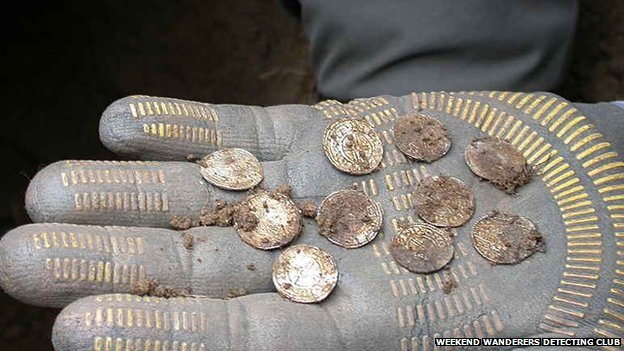
5000 coin-EnglandAs reported by B.B.C Paul Coleman from the Weekend Wanderers Detecting Club discovered more than 5,000 coins buried inside a lead bucket two feet under a field near Aylesbury.

The hoard contains specimens dating back to the 11th Century – the late Anglo Saxon, early Norman period.

The coins will now be examined by the British Museum.

The biggest archeological discovery of 2014

turkey.jpgA massive 5,000 year old underground city has been discovered in Turkey by the country’s Housing Development Administration (TOKI), according to reports Sunday.

Erdinç Çelikkan reports on what could potentially be the year’s largest architectural discovery, an underground city located in Turkey’s Central Anatolian province of Nevşehir.

The newly discovered city joins other such ancient cities found in the area, thought his one may end up being the largest of all the cities found so far.

Give the Gift of World Heritage

holida1Give the gift of World Heritage this holiday season.

Give your family and friends the gift of preservation and knowledge of World Cultural Heritage, so that they could also be part of the protection and conservation of beautiful and historic sites of their own countries as well as our planet.

By becoming a member of World Cultural Heritage Voices, you can also partner with us in our educational programs in order to preserve sites in countries suffering from wars, conflicts and poverty.

Remember that every donation makes a difference, regardless of size.

Hungary proposing to restrict shops in Heritage sites

shoppingA bill submitted to the Hungarian Parliament last month by the economy minister would prohibit big supermarkets and discount shops from opening in the area of Budapest’s World Heritage sites. The rules would apply to discount shops and supermarkets. Budapest has two World Heritage sites according to UNESCO: the Banks of the Danube and the Buda Castle Quarter (451 hectares), and the Andrássy Avenue and the Underground, with a property area of 58 hectares and a buffer zone of 240 hectares. The legislation is scheduled to go into effect starting next year and would force existing shops to close in 2018.
SPAR, One of the supermarket chains which has invested greatly in the Hungarian market has confirmed that it would postpone a significant part of the planned investments because of several food supervisory fees and proposed legislation related to retail trade affecting the company’s operations in Hungary and not just because of the latest bill. The company is not planning to leave the Hungarian market where it has invested over 500 million Euros over the last 23-years according to Hungary Today.
For many years now, major food companies have been setting up branches close to Heritage Sites around the world. Companies like Starbucks, McDonald and Pizza Hut have opened branches at the Louvre, Beijing’s Forbidden City, and Peru’s Cusco’s Plaza de Armas.

UNESCO Calls for Protecting Libya’s Cultural Heritage

Protecting Libya’s heritageThere have been many recent reports of acts of vandalism, illicit trafficking and attacks on Libyan cultural heritage. These reports have been amid increasing deterioration of the security situation in Libya. Therefore, UNESCO has called on all parties for protection of Libya’s Cultural Heritage. In a statement, Director-General of UNESCO, Irina Bokova stated that: “Libyan heritage is the expression of a shared memory of the country, and its respect represents a corner stone for long lasting national reconciliation”. She urged Libyan people to commit to and act for safeguarding of its national heritage and urged all parties to refrain from using cultural property and its immediate surroundings for military purposes as well as to abstain from any act of hostility directed at such property.

It has been reported that UNESCO is working with INTERPOL, the World Custom Organization (WCO) and specialized national police corps such as the Carabinieri (Italy), to order to increase vigilance on attempts of import, transit and sales of Libyan cultural property. UNESCO has also alerted Libyan neighboring countries on the threats of illicit trafficking of cultural property.

In addition, UNESCO is directly engaging with Libyan cultural professionals and NGOs to reinforce emergency measures for cultural heritage protection, and enable the rapid assessment, documentation and monitoring of heritage.

Agreement Between US and China on Climate Change, Greenhouse Gases

greenhouse-gasesThe United States and China pledged Wednesday, November 12, to take ambitious action to limit greenhouse gases*, aiming to inject fresh momentum into the global fight against climate change ahead of make-or-break climate talks next year.

President Barack Obama announced that the U.S. would move much faster in cutting pollution, with a goal to reduce it 26 percent to 28 percent by 2025 from 2005 levels. Earlier in his presidency, Obama set a goal to cut emissions by 17 percent by 2020.

Chinese President Xi Jinping, whose country’s emissions are still growing as it builds new coal plants, didn’t commit to cut emissions by a specific amount. Rather, he set a target for China’s emissions to peak by 2030 or earlier if possible. He also pledged to increase the share of energy that China will derive from sources other than fossil fuels, such as solar and wind.

Both leaders were attending the Asia-Pacific Economic Cooperation (APEC) summit, hosted this year by Beijing. Their two countries have long been at loggerheads over global targets, with each saying the other should bear more responsibility for cutting emissions of gases blamed for heating up the atmosphere. 

——

* A greenhouse gas is a gas in an atmosphere that absorbs and emits radiation within the thermal infrared range. This process is the fundamental cause of the greenhouse effect. The primary greenhouse gases in the Earth’s atmosphere are water vapor, carbon dioxide, methane, nitrous oxide, and ozone. Greenhouse gases greatly affect the temperature of the Earth; without them, Earth’s surface would average about 33 °C colder, which is about 59 °F below the present average of 14 °C (57 °F).


Protecting Australia’s Great Barrier Reef

reefAustralian government unveiled a 35-year plan to manage risks and protect the Great Barrier Reef (GBR) as well as from having GBR reclassified by the United Nations as “in danger”. However, conservationists have warned that the plan which was announced just a few weeks ago did not go far enough as reported by the New York Times. The experts believe that the plan does not deliver bold, concrete actions.

The United Nations Educational, Scientific and Cultural Organization listed GBR as a World Heritage site in 1981 but warned that it might put the reef on the List of World Heritage in Danger in 2015. Of Unesco’s 1,007 cultural and natural World Heritage properties, 46 are considered “in danger,” several of them in war-torn countries like Syria.

Great Barrier Reef stretches along most of the coastline of the state of Queensland and is about the size of Italy or Japan. However the Reef has been under increasing threat from climate change, poor water quality and the impact of coastal development that includes the controversial expansion of a major coal-loading port at Abbot Point. In fact, a government report in 2012 found that the reef had lost over half of its coral cover in 27 years.

The new plan which has been named Reef 2050 Long-Term Sustainability Plan, is supposed to provide a framework for managing the reef, which includes monitoring turtle, coral trout and dugong populations and breeding; improving water quality; and setting targets for substantial reductions in farm chemicals leaching into the waters of the Great Barrier Reef Marine Park.

However, according to NYT, WWF-Australia has said that the proposals were insufficient and that billions of dollars were needed to restore the health of the reef. It said that the report failed to set its targets high enough and allocate funds to help farmers cut fertilizer runoff, and that the government had failed to minimize dredging and dumping in the World Heritage area.

Erbil Citadel added to the World Heritage List

erbilThe United Nations Educational, Scientific and Cultural Organization (UNESCO) has officially recognized Erbil Citadel as a World Heritage Site during a ceremony held on Nov 2nd, 2014 and UNESCO will take part in the rehabilitation of the ancient site located in Iraqi Kurdistan. Erbil Citadel won a battle to get on the respected UNESCO World Heritage List on June 21st, 2014.

Archaeologists believe that the settlement on the site, which has risen by some 30 meters as successive settlers built on remains left by their predecessors, could be at least 6,000 years old. It has been claimed that the site is the oldest continuously inhabited town in the world.
The Citadel of Erbil is a rich historical repository holding evidence of many millennia of habitation; thousands of years old, it is the longest continuously inhabited site in the world. This longevity was made possible by the existence of abundant ground water, which has sustained the population throughout its long history. Based on the results of UNESCO expert missions, the Organization has developed a project proposal which is a very important preparatory component of a broader project, the Conservation Master Plan and Nomination file to subscribe the Erbil Citadel at the World Heritage List (WHL).

A memorandum of understanding was signed between Kurdistan Regional Government (KRG) and UNESCO on 2nd September 2007 to proceed with the first phase of the rehabilitation and restoration project of Erbil Citadel. Since 2007, several projects aimed at the conservation and revitalization of the Citadel have been initiated by the Kurdistan Regional Government and implemented through the High Commission for the Erbil Citadel Revitalization (HCECR) and UNESCO.