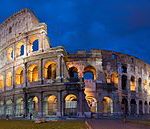
 The 18th General Assembly and Scientific Symposium of ICOMOS took place in Florence, Italy from Nov 9th to 14th, 2014. The conference is an opportunity to make contact with ministries, institutions, businesses, and local authorities interested in heritage matters, both in Italy and abroad. You can learn more by visiting ICOMOS General Assembly 2014
News
UNESCO Calls for Protecting Libya’s Cultural Heritage
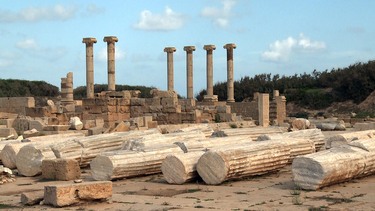 There have been many recent reports of acts of vandalism, illicit trafficking and attacks on Libyan cultural heritage. These reports have been amid increasing deterioration of the security situation in Libya. Therefore, UNESCO has called on all parties for protection of Libya’s Cultural Heritage. In a statement, Director-General of UNESCO, Irina Bokova stated that: “Libyan heritage is the expression of a shared memory of the country, and its respect represents a corner stone for long lasting national reconciliation”. She urged Libyan people to commit to and act for safeguarding of its national heritage and urged all parties to refrain from using cultural property and its immediate surroundings for military purposes as well as to abstain from any act of hostility directed at such property.
It has been reported that UNESCO is working with INTERPOL, the World Custom Organization (WCO) and specialized national police corps such as the Carabinieri (Italy), to order to increase vigilance on attempts of import, transit and sales of Libyan cultural property. UNESCO has also alerted Libyan neighboring countries on the threats of illicit trafficking of cultural property.
In addition, UNESCO is directly engaging with Libyan cultural professionals and NGOs to reinforce emergency measures for cultural heritage protection, and enable the rapid assessment, documentation and monitoring of heritage.
Agreement Between US and China on Climate Change, Greenhouse Gases
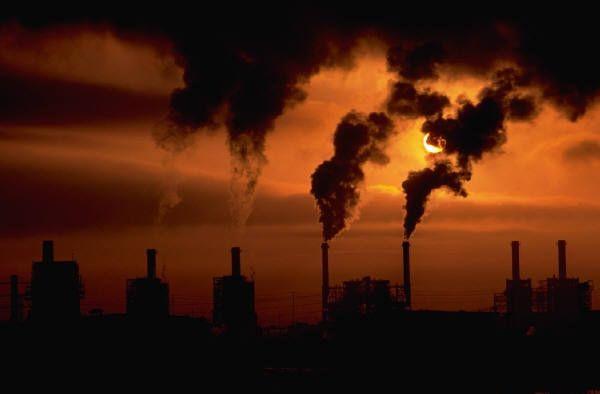 The United States and China pledged Wednesday, November 12, to take ambitious action to limit greenhouse gases*, aiming to inject fresh momentum into the global fight against climate change ahead of make-or-break climate talks next year.
President Barack Obama announced that the U.S. would move much faster in cutting pollution, with a goal to reduce it 26 percent to 28 percent by 2025 from 2005 levels. Earlier in his presidency, Obama set a goal to cut emissions by 17 percent by 2020.
Chinese President Xi Jinping, whose country’s emissions are still growing as it builds new coal plants, didn’t commit to cut emissions by a specific amount. Rather, he set a target for China’s emissions to peak by 2030 or earlier if possible. He also pledged to increase the share of energy that China will derive from sources other than fossil fuels, such as solar and wind.
Both leaders were attending the Asia-Pacific Economic Cooperation (APEC) summit, hosted this year by Beijing. Their two countries have long been at loggerheads over global targets, with each saying the other should bear more responsibility for cutting emissions of gases blamed for heating up the atmosphere.
——
* A greenhouse gas is a gas in an atmosphere that absorbs and emits radiation within the thermal infrared range. This process is the fundamental cause of the greenhouse effect. The primary greenhouse gases in the Earth’s atmosphere are water vapor, carbon dioxide, methane, nitrous oxide, and ozone. Greenhouse gases greatly affect the temperature of the Earth; without them, Earth’s surface would average about 33 °C colder, which is about 59 °F below the present average of 14 °C (57 °F).
Protecting Australia’s Great Barrier Reef
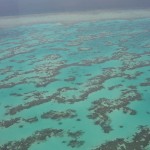
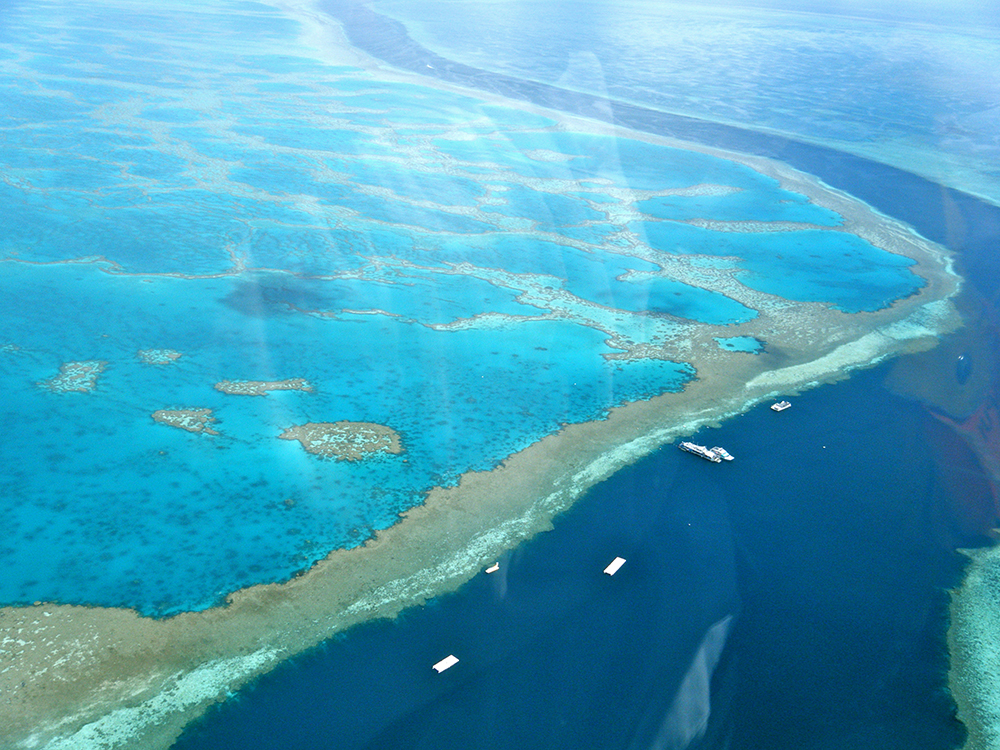 Australian government unveiled a 35-year plan to manage risks and protect the Great Barrier Reef (GBR) as well as from having GBR reclassified by the United Nations as “in danger”. However, conservationists have warned that the plan which was announced just a few weeks ago did not go far enough as reported by the New York Times. The experts believe that the plan does not deliver bold, concrete actions.
The United Nations Educational, Scientific and Cultural Organization listed GBR as a World Heritage site in 1981 but warned that it might put the reef on the List of World Heritage in Danger in 2015. Of Unesco’s 1,007 cultural and natural World Heritage properties, 46 are considered “in danger,” several of them in war-torn countries like Syria.
Great Barrier Reef stretches along most of the coastline of the state of Queensland and is about the size of Italy or Japan. However the Reef has been under increasing threat from climate change, poor water quality and the impact of coastal development that includes the controversial expansion of a major coal-loading port at Abbot Point. In fact, a government report in 2012 found that the reef had lost over half of its coral cover in 27 years.
The new plan which has been named Reef 2050 Long-Term Sustainability Plan, is supposed to provide a framework for managing the reef, which includes monitoring turtle, coral trout and dugong populations and breeding; improving water quality; and setting targets for substantial reductions in farm chemicals leaching into the waters of the Great Barrier Reef Marine Park.
However, according to NYT, WWF-Australia has said that the proposals were insufficient and that billions of dollars were needed to restore the health of the reef. It said that the report failed to set its targets high enough and allocate funds to help farmers cut fertilizer runoff, and that the government had failed to minimize dredging and dumping in the World Heritage area.
Erbil Citadel added to the World Heritage List
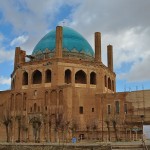
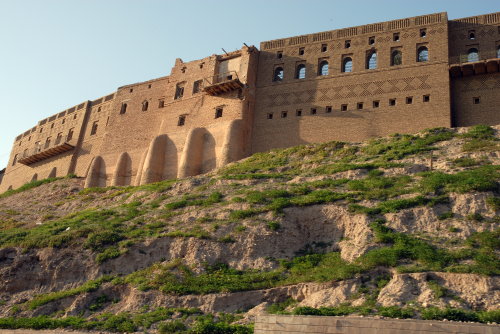 The United Nations Educational, Scientific and Cultural Organization (UNESCO) has officially recognized Erbil Citadel as a World Heritage Site during a ceremony held on Nov 2nd, 2014 and UNESCO will take part in the rehabilitation of the ancient site located in Iraqi Kurdistan. Erbil Citadel won a battle to get on the respected UNESCO World Heritage List on June 21st, 2014.
Archaeologists believe that the settlement on the site, which has risen by some 30 meters as successive settlers built on remains left by their predecessors, could be at least 6,000 years old. It has been claimed that the site is the oldest continuously inhabited town in the world.
The Citadel of Erbil is a rich historical repository holding evidence of many millennia of habitation; thousands of years old, it is the longest continuously inhabited site in the world. This longevity was made possible by the existence of abundant ground water, which has sustained the population throughout its long history. Based on the results of UNESCO expert missions, the Organization has developed a project proposal which is a very important preparatory component of a broader project, the Conservation Master Plan and Nomination file to subscribe the Erbil Citadel at the World Heritage List (WHL).
A memorandum of understanding was signed between Kurdistan Regional Government (KRG) and UNESCO on 2nd September 2007 to proceed with the first phase of the rehabilitation and restoration project of Erbil Citadel. Since 2007, several projects aimed at the conservation and revitalization of the Citadel have been initiated by the Kurdistan Regional Government and implemented through the High Commission for the Erbil Citadel Revitalization (HCECR) and UNESCO.
Mozart’s Piano Sonata Discovered in Budapest
 Late last month, it was reported that Mozart’s A major piano sonata K331 has been discovered in Budapest’s National Szechenyi Library. The priceless manuscript that had lain in the musty depths of the Library was rediscovered by a Haydn scholar.
The musicologist Balazs Mikusi found a substantive part of one of Mozart’s most famous instrumental pieces, the A major piano sonata K331, which was composed in 1783. The finale which is one of Wolfgang’s most instantly recognizable tunes, and whose opening movement, is a set of brilliantly fascinating variations he ever composed. The final page of the original manuscript has long been known to Mozart scholars, and is part of the legacy in Mozart’s hometown, Salzburg, but no original manuscript of the rest of the piece had ever been seen in modern times.
However, it is not known how the missing pages ended up in Hungary or at the Budapest’s National Szechenyi Library. Zoltan Kocsis’s actually performed the sonata at the Szechenyi Library but the library has not allowed anyone to see the actual discovered pages yet.
Austria-Hungary, also known as the Austro-Hungarian Empire and by other names, was a constitutional union of the Empire of Austria and the Apostolic Kingdom of Hungary that existed from 1867 to 1918, when it collapsed as a result of defeat in World War I. The union was a result of the Compromise of 1867.
Step Pyramid of Djoser damaged during restoration
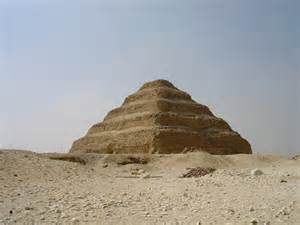 Egyptian media and other news outlets reported last month that the Djoser pyramid had been damaged during restoration work. The 4,600 year old monument which dominates necropolis of Saqqara, south-west of Cairo, is now the subject of investigation and request for answers by the UNESCO. In fact, after the media outlets published the report, the UNESCO sent a letter to the ministry of antiquities requesting a detailed report on the restoration work.
The UNESCO will wait for the report as well as the plans for future work at the site. Several Egyptian experts have already criticized the work and experts also have expressed concerns about the company that was hired to do the restoration work saying that the company does not have the necessary experience. However, the Egyptian officials have rejected the concern. The project which started in 2006 was interrupted in February 2013 due to lack of funding.
Djoser step pyramid was finished in 2611BC and was considered the largest building of its time. The pyramid reportedly was the burial place of pharaoh Djoser, the third king of Eqypt’s third dynasty and also it has been reported that the tomb was plundered in ancient times, leaving only Djoser’s mummified left foot. The pyramid’s architect, Imhotep, was deified 1,400 years after his lifetime. The tomb originally stood 62 meters tall and is considered the oldest building in the world built entirely of stone.
Satellite Images Show Heritage Destruction
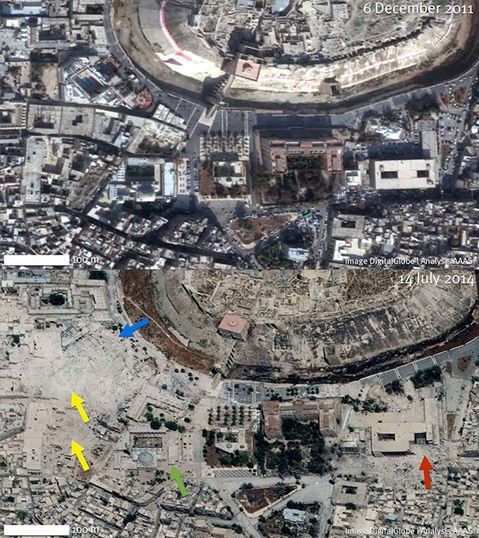 According to a recent report by the American Association for the Advancement of Science (AAAS), five out of six of Syria’s Unesco World Heritage sites have been significantly damaged by the country’s civil war. Based on analysis of satellite images by the researchers historic structures across the country, including ancient mosques, government buildings and castles show signs of destruction with some reduced to rubble. According to the report the only site that appears to remain relatively unscathed is the ancient city of Damascus.
The city of Allepo is perhaps one of the worst sites of destruction. The northern Syrian city, which dates back to 2,000BC, has seen some of the heaviest fighting of the civil war. By analysis of images captured in 2011 and then again in 2014, reveal damage to the city’s Great Mosque – one of Aleppo’s most famous cultural sites, researchers have reported the major destruction.The Masque’s 50m-tall Seljuk minaret, dating from 1095 which was considered one of the most important monuments of medieval Syria, collapsed as a result of shelling in March. There are also two large craters along the mosque’s eastern wall. In addition, there is also significant damage to the south of Aleppo’s citadel, the location of many historical government buildings. Between December 2011 and August 2014, the city’s Khusriwiye Mosque was demolished and the Grand Serail – the former seat of the Aleppo governor – was heavily damaged as reported by AAAS and BBC.
Other sites which have been destroyed include the dome of the 15th Century Hammam Yalbougha an-Nasry which was one of Syria’s finest bathhouses, as well as the the ancient city of Bosra, located in the southern Daara governorate which contains ruined buildings from the Roman, Byzantine, and early Islamic periods.
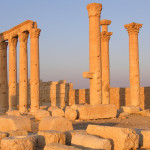
Palmyra’s Greco-Roman and Persian ruins, located in the middle of the Syrian desert, were one of Syria’s main tourist attractions before the conflict. Satellite image analysis has revealed how the site and its surrounding area including its Roman theatre have suffered from the effects of shelling, activity by snipers as well as the presence of rocket launchers and tanks. There are also persistent reports of looting as BBC reports. The ancient sites of northern Syria, comprising eight parks and a total of 40 villages, have suffered due to their close proximity to a key Turkish border crossing, used as the entry point for supplies.
For satellite images and analysis, visit the American Association for the Advancement of Science report page.
Construction Near Pasargade – UNESCO World Heritage Site
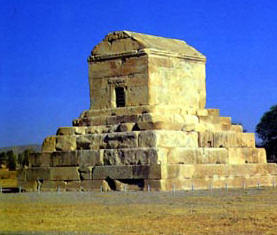 A very urgent and critical report from the experts in Iran has informed WCHV that a group has received permission from the legal authority of the country to build and establish a factory as well as an industrial park on the site adjacent to Pasargade Site. It looks like that Iran’s National Heritage Office has cleared this and is not objecting to building this factory on a site that is so invaluable to the people of Iran and the world as well as a designated World National Heritage site by the UNESCO.
Stolen Peruvian Paintings Are Returned
 Six years after nine 18th century paintings were stolen, they were finally returned earlier this month. The paintings by Mexican artist Miguel Cabrera were stolen from Peru and had been smuggled out of the country for trafficking on the international art market.
In 2009, several of the paintings had been discovered at an auction house in Cedar Falls, Iowa. They were reportedly consigned by an unnamed art dealer. One of the paintings, titled “Resurrection of Lazarus” – was discovered for sale at an unidentified auction house in New York City earlier this year. After confirming it was also a stolen Cabrera, the FBI took possession of the painting and returned it with the rest of the paintings. It is still not clear how the art dealer or the person who put the ninth painting up for sale at auction in New York had obtained the works. In both cases, the consignors relinquished all claims to the works after being shown evidence that the paintings were stolen according to released information, however, the investigation is continuing.
The nine paintings were returned earlier this month (Sep 2014) to the government of Peru in a ceremony at the United States Attorney’s Office in lower Manhattan that was attended by Harold Forsyth, Peru’s ambassador to the United States as reported by several media outlets.