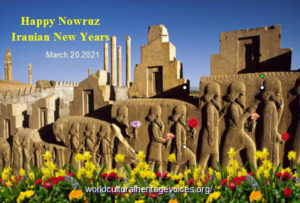
 Nowruz is first day of Spring and the beginning of the Iranian year . Nowruz is celebrated on the day of the vernal equinox , on 20th March or the previous / following day depending on where it is celebrated. Nowruz is celebrated and observed by Iranian people as well as several other countries across Asia including Afghanistan, Turkey, Azerbaijan, Georgia, Tajikistan and many more. The new year starts at the moment the Sun crosses the celestial equator and equalizes night and day or exactly when the Earth has completed one cycle around the Sun.
The celebration has its roots in Ancient Iran. Due to its antiquity, there exist various
foundation myths for Nowruz in Iranian mythology. The Shahnameh dates Nowruz as
far back to the reign of Jamshid, who in Zoroastrian texts saved mankind from a killer
winter that was destined to kill every living creature. In the Shahnameh and Iranian
mythology, Jamshid is credited with the foundation of Nowruz. In the Shahnama,
Jamshid constructed a throne studded with gems. He had demons raise him above the
earth into the heavens; there he sat on his throne like the sun shining in the sky. The
world’s creatures gathered in wonder about him and scattered jewels around him, and
called this day the New Day or Now-Ruz. This was the first day of the month of
Farvardin (the first month of the Persian calendar). On Nowruz, families gather together
to observe the rituals and celebrate the beginning of the new year.
In addition, it is believed that originally the celebration was the holiest Zoroastrian
festival, and Nowruz is believed to have been invented by Zoroaster himself, although
there is no clear date of origin. Since the Achaemenid era, the official year has begun
with the New Day when the Sun leaves the zodiac of Pisces and enters the zodiacal sign of Aries, signifying the Spring Equinox.
International Nowruz Day was proclaimed by the United Nations General Assembly, in
its resolution A/RES/64/253 of 2010, at the initiative of several countries that share this
holiday (Afghanistan, Albania, Azerbaijan, the Former Yugoslav Republic of Macedonia,
India, Iran, Kazakhstan, Kyrgyzstan, Tajikistan, Turkey and Turkmenistan
Festivals
Happy New Year 2021!
 Dear Friends, and Supporters of World Cultural Heritage Voices.
On behalf of our colleagues and volunteers at WCHV, and on the occasion of the Global New Year of 2021, we would like to extend our regards and best wishes for a Happy New Year. Thank you for your support of WCHV, which has been so instrumental in achieving our goals and mission.
On the occasion of the Yalda Festival
 Learn from evergreen trees
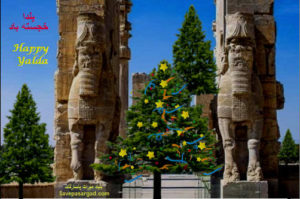
Yalda is one of the few celebrations in the world that is thousands of years old. This festive event has gone through many highs and lows. And more than any other Iranian festivity, it has been targeted by oppressors who detest joy, music, and celebration, those who cannot even stand the sight of the cypress tree that the pre-Islamic Iranians beautifully decorated every year.
The Persians loved plants, especially the evergreen cypress and pine trees, because of their extraordinary interest in nature (and the fact that in ancient Persia, political and religious leaders encouraged them to preserve nature). They could see that these trees were resilient, standing tall, green, and proud in the face of snow, storms, and cold as winter cold blew through the land, and that these magnificent trees welcome spring in short time with freshness and joy.
It is not a surprise that the cypress has played a prominent role in all of our history: in stories, in rituals, in poetry and literature and art, in architecture and reliefs and inscriptions, and on fabrics and carpets.
I believe it is quite clear that the custom of hanging colorful and cheerful cloths (fabrics and materials) on ancient trees, to which people still adhere to in corners of Iran, is a continuation of the same ancient ritual of decorating cedar and pine trees on the occasion of Yalda. All of these rituals have changed over the last few centuries because during different times, people have been fearful of religious zealots and fanatical leadership.
However, today people who decorate trees come from many different cultural and religious backgrounds. It is good that centuries before the Arab invasion, our evergreen tree and the ritual of decorating the tree was exported to Europe with the followers of Mehr, or Mithra. In Europe the practice and rituals of decorating an evergreen tree was adopted by the Christians and to this day, around the same time as Yalda, in the houses and streets of many countries around the world, this beautiful and glorious tradition is practiced and celebrated. Although as Iranians we have been deprived of the gift of Yalda cypresses in our homes and streets for centuries, we fortunately still celebrate Yalda. Despite the oppression, this beautiful festive date with its green cypress has been engraved in our hearts and mind.
Yalda’s tradition has been with us for a long time, with its enduring light, joy, and the thought of its evergreen, even when they changed the name to “Chelleh.” Even when we have been forced to gather in the corners of our houses for this celebration of sun and love, instead of celebrating it with dancing and singing in public streets and alleyways. Let’s celebrate with pride and joy and away from the eyes of oppression.
Unfortunately, this year, on the eve of the great Yalda, the people of Iran are experiencing immense suffering, pain, and darkness. Both the pandemic and the monster of darkness and tyranny of the Islamic government has fallen on our land. But it is at this time that Yalda reminds us to learn from the evergreens and t0 attain enlightenment. It is not solely our spring of love, but also our wish for future generations’ of happiness and freedom that our people truly deserve.
Next to the Yalda’s ornamented and adorned cypress tree, I wish everyone happiness and a spring of freedom illuminating our land to come.
Desember 20. 2020
A Day For Celebration of Nature April 1, 2020
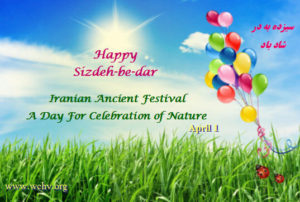 Sizde-be-dar is an Iranian festival, celebrated in the thirteenth day of Nowruz (Iranian New year and first of Spring).
Ancient Iranian believed Sizde-be-dar is a day for celebration of nature
Iranians have a tradition of spending and enjoyed the day outdoors.
Happy Nowruz March 21, 2020
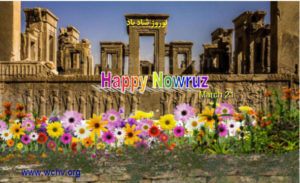 Nowruz is first day of Spring and the beginning of the Iranian year . Nowruz is celebrated on the day of the vernal equinox , on 20th March or the previous / following day depending on where it is celebrated. Nowruz is celebrated and observed by Iranian people as well as several other countries across Asia including Afghanistan, Turkey, Azerbaijan, Georgia, Tajikistan and many more. The new year starts at the moment the Sun crosses the celestial equator and equalizes night and day or exactly when the Earth has completed one cycle around the Sun.
The celebration has its roots in Ancient Iran. Due to its antiquity, there exist various
foundation myths for Nowruz in Iranian mythology. The Shahnameh dates Nowruz as
far back to the reign of Jamshid, who in Zoroastrian texts saved mankind from a killer
winter that was destined to kill every living creature. In the Shahnameh and Iranian
mythology, Jamshid is credited with the foundation of Nowruz. In the Shahnama,
Jamshid constructed a throne studded with gems. He had demons raise him above the
earth into the heavens; there he sat on his throne like the sun shining in the sky. The
world’s creatures gathered in wonder about him and scattered jewels around him, and
called this day the New Day or Now-Ruz. This was the first day of the month of
Farvardin (the first month of the Persian calendar). On Nowruz, families gather together
to observe the rituals and celebrate the beginning of the new year.
In addition, it is believed that originally the celebration was the holiest Zoroastrian
festival, and Nowruz is believed to have been invented by Zoroaster himself, although
there is no clear date of origin. Since the Achaemenid era, the official year has begun
with the New Day when the Sun leaves the zodiac of Pisces and enters the zodiacal sign of Aries, signifying the Spring Equinox.
International Nowruz Day was proclaimed by the United Nations General Assembly, in
its resolution A/RES/64/253 of 2010, at the initiative of several countries that share this
holiday (Afghanistan, Albania, Azerbaijan, the Former Yugoslav Republic of Macedonia,
India, Iran, Kazakhstan, Kyrgyzstan, Tajikistan, Turkey and Turkmenistan.