 The World Engineering Day for Sustainable Development was proclaimed by UNESCO at its 40th General Conference in 2019. It is celebrated worldwide on 4th March of each year since 2020. The day offers an opportunity to highlight engineers and engineering’s
achievements in our modern world and improve public understanding of how engineering and technology are central to modern life and for sustainable development.
The World Engineering Day 2021 (WED2021), with the theme “Engineering for A Healthy Planet- Celebrating the UNESCO Engineering Report”, will focus on celebrating the launch of the 2nd UNESCO Engineering Report “Engineering for
Sustainable Development: Delivering on the Sustainable Development Goals”. Ten years after the publication of the 1st UNESCO Engineering Report, “Engineering: Issues, Challenges and Opportunities for Development”, the new report highlights the crucial role of engineering in delivering the 2030 Agenda for sustainable development, shows how inclusive and gender equitable engineering profession can bring about new perspectives and thus respond to the shortage of engineers, showcases of engineering innovations for implementation of the SDGs, analyses the progresses in and challenges in engineering education and capacity building, and summarizes the regional trends of engineering development. Finally, it gives recommendations for developing engineering for the SDGs, and calls for global cooperation with multiple stakeholders to promote
development of engineering for the SDGs.
Education
International Day of Women and Girls in Science
Women Scientists at the forefront of the fight against COVID-19.
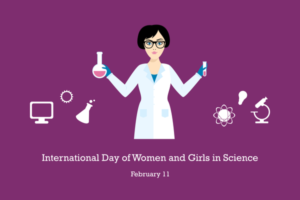 The outbreak of the COVID-19 pandemic has clearly demonstrated the critical role of women researchers in different stages of the fight against COVID-19, from advancing the knowledge on the virus, to developing techniques for testing, and finally to creating the vaccine against the virus.
At the same time, the COVID-19 pandemic also had a significant negative impact on women scientists, particularly affecting those at the early stages of their career, and thus contributing to widening the existing gender gap in science, and revealing the gender disparities in the scientific system, which need to be addressed by new policies, initiatives and mechanisms to support women and girls in science.
Against this backdrop, this year’s celebration of the Day will address the theme “ Women Scientists at the forefront of the fight against COVID-19 ” and will gather together experts working in fields related to the pandemic from different parts of the world.
The 2021 main event will take place online . A simultaneous interpretation of the debates will be provided in English and French.
On 11 February 2021, the 6th International Day of Women and Girls in Science
Assembly will be held at the United Nations Headquarters virtually. With great
momentum and interest to accelerate progress in achieving the 2030 Development
Agenda and its 17 Global Goals, the 6th International Day of Women and Girls in
Science Assembly theme will be Beyond the Borders: Equality in Science for Society,
with a special focus on the value of the social aspects and cultural dimensions in Science, Technology and Innovation to enhance sustainable development programmes.
Science and gender equality are both vital for the achievement of the internationally
agreed development goals, including the 2030 Agenda for Sustainable Development .
Over the past 15 years, the global community has made a lot of effort in inspiring and
engaging women and girls in science. Yet women and girls continue to be excluded from participating fully in science.
At present, less than 30 per cent of researchers worldwide are women. According
to UNESCO data (2014 – 2016), only around 30 per cent of all female students select
STEM-related fields in higher education. Globally, female students’ enrolment is
particularly low in ICT (3 per cent), natural science, mathematics and statistics (5 per
cent) and in engineering, manufacturing and construction (8 per cent).
Long-standing biases and gender stereotypes are steering girls and women away from
science related fields. As in the real world, the world on screen reflects similar
biases—the 2015 Gender Bias Without Borders study by the Geena Davis Institute showed that of the onscreen characters with an identifiable STEM job, only 12 per cent
were women.
In order to achieve full and equal access to and participation in science for women and
girls, and further achieve gender equality and the empowerment of women and girls, the United Nations General Assembly adopted resolution A/RES/70/212 declaring 11
February as the International Day of Women and Girls in Science .
International Holocaust Remembrance Day
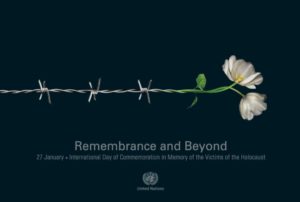 2021 Holocaust Remembrance Calendar of Events
“Facing the Aftermath: Recovery and Reconstitution after the Holocaust”
The theme guiding Holocaust remembrance and education in 2021 is “Facing the Aftermath: Recovery and Reconstitution after the Holocaust”. It focuses on the measures taken in the immediate aftermath of the Holocaust to begin the process of recovery and reconstitution of individuals, community, and systems of justice. Integral to the process of reconstitution was the accurate recording of the historical account of what happened before and during the Holocaust.
Challenging the denial and distortion of the historical events was interwoven in the processes of recovery and reconstitution. The theme examines the contribution of the responses to the victims of the Holocaust, and of the survivors, to addressing the needs of the contemporary world, and to the historical record of the Holocaust. Against a global context of rising antisemitism and increasing levels of disinformation and hate speech, Holocaust education and remembrance is even more urgent, as is the development of an historical literacy to counter repeated attempts to deny and distort the history of the Holocaust.
Panel Discussion “Women and Genocide”
10:00 a.m. – 11:30 a.m.
Register here, https://bit.ly/36yam3y
What has been the impact of genocide on women? How did women respond? To what
extent did it matter whether you were a woman? Experts consider these questions.
Dr. Sara Cushman, Director, Holocaust Educational Foundation, Northwestern
University, will speak about women during the Holocaust; and Dr. Sarah E. Brown,
Executive Director, Center for Holocaust, Human Rights and Genocide Education,
Brookdale Community College will speak about women during the 1994 genocide
against the Tutsi in Rwanda.
Ms. Simona Cruciani, Political Affairs Officer, United Nations Office on Genocide
Prevention and the Responsibility to Protect, will examine atrocity crimes and gender,
and consider this in the light of genocide prevention. Ms. Nanette Braun, Officer-in-
Charge, Strategic Communications Division, United Nations Department of Global
Communications will serve as moderator. This is Episode 4 of the live discussion series
Beyond the long shadow: engaging with difficult histories.
Monday, 25 January 2021
Park East Synagogue Holocaust Commemoration Service
7:00 p. m.
Watch the service here
Park East Synagogue will host a virtual Holocaust Commemoration Service marking the
76th Anniversary of the Liberation of Auschwitz. United Nations Secretary General
António Guterres and Rabbi Arthur Schneier will convene for a discussion under the
theme “Survivors’ Plea – Holocaust Education”. The event will include the participation
of the diplomatic corps and feature Chief Cantor Yitzchak Meir Helfgot, Park East
Synagogue Choir and Maestro Russell Ger, Conductor.
Wednesday, 27 January 2021
Discussion “Lessons of the Holocaust – A UN Perspective on Global Antisemitism”
9:15 a.m. – 10:30 a.m.
Register here, http://bit.ly/3alw3WW
An event with H.E. Mr. Miguel Ángel Moratinos, High Representative for the United
Nations Alliance of Civilizations and UN Focal Point to monitor antisemitism. The event
is organized by B’nai B’rith International.
Memorial Ceremony marking the International Day of Commemoration in memory of the victims of the Holocaust
11:00 a.m. – 12:00 p.m.
Register here, https://bit.ly/3g3tTw0
The Holocaust memorial ceremony is organized jointly by the United Nations
Department of Global Communications and UNESCO, in cooperation with the
International Holocaust Remembrance Alliance. The event will include remarks by the
United Nations Secretary-General and the Director-General of UNESCO, as well as statements by high-level guests, a Holocaust survivor testimony and the memorial
prayers. The detailed programme will be announced closer to the date.
Panel Discussion “Holocaust Denial and Distortion”
12:00 p.m. – 1:00 p.m.
Register here, https://bit.ly/3g3tTw0
The online commemoration will be followed by a panel discussion on Holocaust denial
and distortion, with contributions of diverse experts in the field. The panel discussion is
organized together with UNESCO, and the International Holocaust Remembrance
Alliance.
United Nations Chamber Music Society Virtual Concert 7:00 p.m.
Watch on UN Web TV
On 27 January 2021, the anniversary of the liberation of the Auschwitz death camp, the UN Chamber Music Society of the United Nations Staff Recreation Council, will perform a virtual concert in memory of the victims of the Holocaust. The classical music programme will feature Jewish composers, to instill the memory of the tragedy in future generations to prevent genocide from occurring again.
Thursday, 28 January 2021
Panel Discussion on Nazi Rise to Power and the Weimar Constitution10:00 a.m. – 11:30 a.m.
Register here, https://bit.ly/3ovYncX
The panel will consider the democracy that existed before the Nazis came to power, and the extent to which the legal framework in place contributed to the rise of the Nazis, and the collapse of the Weimar Republic. The discussion is organized in partnership with the International Association of Jewish Lawyers and Jurists (IJL).
Thursday, 4 February 2021
Civil Society Briefing “Childhood after Atrocity Crimes:
Where Lies Hope for Peace, Dignity and Equality?” 11:00-12:30 a.m.
Register here, https://bit.ly/39Kzaau
The briefing will examine the approaches taken to support children who survived the
Holocaust and will consider how these approaches contributed to models adopted for
contemporary practice for working with young people who have survived atrocity crimes.
Thursday, 11 February 2021
Film Discussion “The Windermere Children”
11:00-12:15 p.m.
Register here, https://bit.ly/2Jmd8QX
“The Windermere Children”, a biographical drama, tells the little-known stories of some
of the 300 orphaned Jewish refugees who began new lives in England’s Lake District in
the summer of 1945 after the end of the Second World War, and the pioneering project to rehabilitate these child survivors. The film screening will be followed by a panel
discussion with film director, a Holocaust survivor and an historian.
World Soil Day
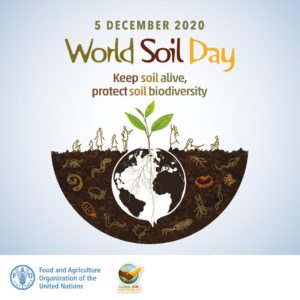 Keep soil alive, protect soil biodiversity
Plants nurture a whole world of creatures in the soil, that in return feed and protect the
plants. This diverse community of living organisms keeps the soil healthy and fertile.
This vast world constitutes soil biodiversity and determines the main biogeochemical
processes that make life possible on Earth.
This year, by addressing the increasing challenges of soil management, the Food and
Agriculture Organization (FAO) campaign ” Keep soil alive, protect soil biodiversity “
aims to raise awareness of the importance of sustaining healthy ecosystems and human well-being. By encouraging people around the world to engage in proactively improving soil health, the campaign also aims to fight soil biodiversity loss. If we do not act soon, the fertility of soil will continue to be adversely affected at an alarming rate, threatening global food supplies and food safety.
Encouraging all people to participate, FAO has created a thematic website full of
information, initiatives and material to spread the message through different multimedia
platforms.
Background
World Soil Day (WSD) is held annually on 5 December as a means to focus attention on
the importance of healthy soil and to advocate for the sustainable management of soil
resources.
An international day to celebrate Soil was recommended by the International Union of
Soil Sciences (IUSS) in 2002. Under the leadership of the Kingdom of Thailand and
within the framework of the Global Soil Partnership, FAO has supported the formal
establishment of WSD as a global awareness raising platform. The FAO Conference
unanimously endorsed World Soil Day in June 2013 and requested its official adoption at the 68th UN General Assembly. In December 2013, the UN General Assembly responded by designating 5 December 2014 as the first official World Soil Day.
World Philosophy Day
 In 2005 the UNESCO General Conference proclaimed that World Philosophy Day would be celebrated every third Thursday of November.
In establishing World Philosophy Day UNESCO strives to promote an international
culture of philosophical debate that respects human dignity and diversity. The Day encourages academic exchange and highlights the contribution of philosophical
knowledge in addressing global issues.
Why a Philosophy Day?
Many thinkers state that “astonishment” is the root of philosophy. Indeed, philosophy
stems from humans’ natural tendency to be astonished by themselves and the world in
which they live.
This field, which sees itself as a form of “wisdom”, teaches us to reflect on reflection
itself, to continually question well-established truths, to verify hypotheses and to find
conclusions.
For centuries, in every culture, philosophy has given birth to concepts, ideas and
analyses, and, through this, has set down the basis for critical, independent and creative thought.
World Philosophy Day celebrates the importance of philosophical reflection, and
encourages people all over the world to share their philosophical heritage with each other.
For UNESCO, philosophy provides the conceptual bases of principles and values on
which world peace depends: democracy, human rights, justice, and equality.
Philosophy helps consolidate these authentic foundations of peaceful coexistence.