
We believe that all cultural, historical and natural heritage, wherever they are should be preserved. LEARN MORE
Education

International Holocaust Remembrance Day

2021 Holocaust Remembrance Calendar of Events

“Facing the Aftermath:  Recovery and Reconstitution after the Holocaust”

The theme guiding Holocaust remembrance and education in 2021 is “Facing the Aftermath:  Recovery and Reconstitution after the Holocaust”. It focuses on the measures taken in the immediate aftermath of the Holocaust to begin the process of recovery and reconstitution of individuals, community, and systems of justice. Integral to the process of reconstitution was the accurate recording of the historical account of what happened before and during the Holocaust.
Challenging the denial and distortion of the historical events was interwoven in the processes of recovery and reconstitution. The theme examines the contribution of the responses to the victims of the Holocaust, and of the survivors, to addressing the needs of the contemporary world, and to the historical record of the Holocaust. Against a global context of rising antisemitism and increasing levels of disinformation and hate speech, Holocaust education and remembrance is even more urgent, as is the development of an historical literacy to counter repeated attempts to deny and distort the history of the Holocaust.

Panel Discussion “Women and Genocide”

10:00 a.m. – 11:30 a.m.
Register here, https://bit.ly/36yam3y
What has been the impact of genocide on women? How did women respond? To what
extent did it matter whether you were a woman? Experts consider these questions.
Dr. Sara Cushman, Director, Holocaust Educational Foundation, Northwestern
University, will speak about women during the Holocaust; and Dr. Sarah E. Brown,
Executive Director, Center for Holocaust, Human Rights and Genocide Education,
Brookdale Community College will speak about women during the 1994 genocide
against the Tutsi in Rwanda.
Ms. Simona Cruciani, Political Affairs Officer, United Nations Office on Genocide
Prevention and the Responsibility to Protect, will examine atrocity crimes and gender,
and consider this in the light of genocide prevention. Ms. Nanette Braun, Officer-in-
Charge, Strategic Communications Division, United Nations Department of Global
Communications will serve as moderator. This is Episode 4 of the live discussion series
Beyond the long shadow: engaging with difficult histories.

Monday, 25 January 2021
Park East Synagogue Holocaust Commemoration Service

7:00 p. m.
Watch the service here
Park East Synagogue will host a virtual Holocaust Commemoration Service marking the
76th Anniversary of the Liberation of Auschwitz. United Nations Secretary General
António Guterres and Rabbi Arthur Schneier will convene for a discussion under the
theme “Survivors’ Plea – Holocaust Education”. The event will include the participation
of the diplomatic corps and feature Chief Cantor Yitzchak Meir Helfgot, Park East
Synagogue Choir and Maestro Russell Ger, Conductor.

Wednesday, 27 January 2021
Discussion “Lessons of the Holocaust – A UN Perspective on Global Antisemitism”

9:15 a.m. – 10:30 a.m.
Register here, http://bit.ly/3alw3WW
An event with H.E. Mr. Miguel Ángel Moratinos, High Representative for the United
Nations Alliance of Civilizations and UN Focal Point to monitor antisemitism. The event
is organized by B’nai B’rith International.

Memorial Ceremony marking the International Day of Commemoration in memory of the victims of the Holocaust

11:00 a.m. – 12:00 p.m.
Register here, https://bit.ly/3g3tTw0
The Holocaust memorial ceremony is organized jointly by the United Nations
Department of Global Communications and UNESCO, in cooperation with the
International Holocaust Remembrance Alliance. The event will include remarks by the
United Nations Secretary-General and the Director-General of UNESCO, as well as statements by high-level guests, a Holocaust survivor testimony and the memorial
prayers. The detailed programme will be announced closer to the date.

Panel Discussion “Holocaust Denial and Distortion”
12:00 p.m. – 1:00 p.m.
Register here, https://bit.ly/3g3tTw0
The online commemoration will be followed by a panel discussion on Holocaust denial
and distortion, with contributions of diverse experts in the field. The panel discussion is
organized together with UNESCO, and the International Holocaust Remembrance
Alliance.

United Nations Chamber Music Society Virtual Concert 7:00 p.m.
Watch on UN Web TV
On 27 January 2021, the anniversary of the liberation of the Auschwitz death camp, the UN Chamber Music Society of the United Nations Staff Recreation Council, will perform a virtual concert in memory of the victims of the Holocaust. The classical music programme will feature Jewish composers, to instill the memory of the tragedy in future generations to prevent genocide from occurring again.

Thursday, 28 January 2021
Panel Discussion on Nazi Rise to Power and the Weimar Constitution10:00 a.m. – 11:30 a.m.
Register here, https://bit.ly/3ovYncX
The panel will consider the democracy that existed before the Nazis came to power, and the extent to which the legal framework in place contributed to the rise of the Nazis, and the collapse of the Weimar Republic. The discussion is organized in partnership with the International Association of Jewish Lawyers and Jurists (IJL).

Thursday, 4 February 2021
Civil Society Briefing “Childhood after Atrocity Crimes:
Where Lies Hope for Peace, Dignity and Equality?” 11:00-12:30 a.m.
Register here, https://bit.ly/39Kzaau
The briefing will examine the approaches taken to support children who survived the
Holocaust and will consider how these approaches contributed to models adopted for
contemporary practice for working with young people who have survived atrocity crimes.

Thursday, 11 February 2021
Film Discussion “The Windermere Children”
11:00-12:15 p.m.
Register here, https://bit.ly/2Jmd8QX
“The Windermere Children”, a biographical drama, tells the little-known stories of some
of the 300 orphaned Jewish refugees who began new lives in England’s Lake District in
the summer of 1945 after the end of the Second World War, and the pioneering project to rehabilitate these child survivors. The film screening will be followed by a panel
discussion with film director, a Holocaust survivor and an historian.

World Soil Day

Keep soil alive, protect soil biodiversity

Plants nurture a whole world of creatures in the soil, that in return feed and protect the
plants. This diverse community of living organisms keeps the soil healthy and fertile.
This vast world constitutes soil biodiversity and determines the main biogeochemical
processes that make life possible on Earth.

This year, by addressing the increasing challenges of soil management, the Food and
Agriculture Organization (FAO) campaign ” Keep soil alive, protect soil biodiversity “
aims to raise awareness of the importance of sustaining healthy ecosystems and human well-being. By encouraging people around the world to engage in proactively improving soil health, the campaign also aims to fight soil biodiversity loss. If we do not act soon, the fertility of soil will continue to be adversely affected at an alarming rate, threatening global food supplies and food safety.

Encouraging all people to participate, FAO has created a thematic website full of
information, initiatives and material to spread the message through different multimedia
platforms.

Background
World Soil Day (WSD) is held annually on 5 December as a means to focus attention on
the importance of healthy soil and to advocate for the sustainable management of soil
resources.

An international day to celebrate Soil was recommended by the International Union of
Soil Sciences (IUSS) in 2002. Under the leadership of the Kingdom of Thailand and
within the framework of the Global Soil Partnership, FAO has supported the formal
establishment of WSD as a global awareness raising platform. The FAO Conference
unanimously endorsed World Soil Day in June 2013 and requested its official adoption at the 68th UN General Assembly. In December 2013, the UN General Assembly responded by designating 5 December 2014 as the first official World Soil Day.

World Philosophy Day

In 2005 the UNESCO General Conference proclaimed that World Philosophy Day would be celebrated every third Thursday of November.

In establishing World Philosophy Day UNESCO strives to promote an international
culture of philosophical debate that respects human dignity and diversity. The Day encourages academic exchange and highlights the contribution of philosophical
knowledge in addressing global issues.

Why a Philosophy Day?

Many thinkers state that “astonishment” is the root of philosophy. Indeed, philosophy
stems from humans’ natural tendency to be astonished by themselves and the world in
which they live.

This field, which sees itself as a form of “wisdom”, teaches us to reflect on reflection
itself, to continually question well-established truths, to verify hypotheses and to find
conclusions.

For centuries, in every culture, philosophy has given birth to concepts, ideas and
analyses, and, through this, has set down the basis for critical, independent and creative thought.

World Philosophy Day celebrates the importance of philosophical reflection, and
encourages people all over the world to share their philosophical heritage with each other.

For UNESCO, philosophy provides the conceptual bases of principles and values on
which world peace depends: democracy, human rights, justice, and equality.
Philosophy helps consolidate these authentic foundations of peaceful coexistence.

International Day for Preventing the Exploitation of the Environment in War and Armed Conflict

On 5 November 2001, the UN General Assembly declared 6 November of each year as
the International Day for Preventing the Exploitation of the Environment in War and Armed Conflict (A/RES/56/4 ).
Though mankind has always counted its war casualties in terms of dead and wounded soldiers and civilians, destroyed cities and livelihoods, the environment has often remained the unpublicized victim of war.Water wells have been polluted, crops torched, forests cut down, soils poisoned, and animals killed to gain military advantage.
Furthermore, the United Nations Environment Programme (UNEP) has found that over
the last 60 years, at least 40 percent of all internal conflicts have been linked to the
exploitation of natural resources, whether high-value resources such as timber, diamonds, gold and oil, or scarce resources such as fertile land and water. Conflicts involving natural resources have also been found to be twice as likely to relapse.
The United Nations attaches great importance to ensuring that action on the environment is part of conflict prevention, peacekeeping and peacebuilding strategies – because there can be no durable peace if the natural resources that sustain livelihoods and ecosystems are destroyed.
On 27 May 2016, the United Nations Environment Assembly adopted
resolution UNEP/EA.2/Res.15 , which recognized the role of healthy ecosystems and
sustainably managed resources in reducing the risk of armed conflict, and reaffirmed its
strong commitment to the full implementation of the Sustainable Development
Goals listed in General Assembly resolution 70/1, entitled “Transforming our world: the
2030 Agenda for Sustainable Development ”.

Celebrating Cyrus day, even virtually

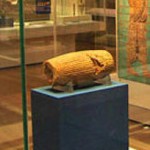
This year is the 16th year that the people of Iran, both within and outside of the country, celebrate October 29th (Aban 7th on the Iranian Calendar) as “Cyrus the Great Day.” The day coincides with the arrival of Cyrus in Babylon and the issuance of a charter within which, for the first time, human rights were stated.
In the early years of “Cyrus the Great Day,” many people from all over Iran went to Pasargadae and celebrated, marking the day with dancing and singing. (Pasargad is the Tomb of Cyrus, a UNESCO World Heritage Site).
However, the Islamic Republic of Iran, which only celebrate sadness, and at the same time cannot bear to honor a great leader who is the first flag-bearer of religious freedom in the world, has instead been using cannons, tanks, guns, and threats for several years. Recently, the threat of imprisonment has prevented people from going to Pasargadae.
In recent years, however, people have come to celebrate Cyrus’ Day on the roads leading to Pasargadae, or in schools, universities, private halls, or even in their own homes. And these celebrations have been getting bigger every year.
Fortunately, in the last three or four years, people in other countries in addition to the people of Iran have also started to celebrate the day of Cyrus. The people of Tajikistan, for example, have been more diligent than any other country, because, unlike the Islamic Republic of Iran, the Tajik government is vigilant and observant in encouraging the people to celebrate on this special occasion.
It is a perfectly timely and natural reaction for the people in the lands once ruled by Cyrus the Great to realize now, centuries later, the exceptional values ​​of his character, and to pay homage to him on different occasions. It is true that man today cannot live up to the standards of his past. Every sensible and rational human being can inevitably make a logical comparison between the orders and behaviors of Cyrus the Great (2550 years ago), and the brutal behavior and reactionary orders of the Islamic government in Iran in the 21 st century. Hundreds of years apart, the two are completely different
governments: one (Cyrus’s government) gave people the right to choose their faith and religion, transformed their citizens’ lives from unconscious beings to human beings with rights and decisions, and the other (today) deprives people of their simplest and most basic human rights.
It is clear that due to the pandemic and COVID-19 this year it is not possible to easily gather anywhere, without taking into account all mandated health precautions and restrictions. But fortunately we are in a time with the most advanced digital and media systems and we can use these to facilitate us wherever we are and to hold the day of Cyrus the Great in the most beautiful way, even if it is just done simply.
Today, while many people have lost loved ones and might have endured difficult times, we remember the great leadership Cyrus the Great showed to his citizens and the people of the world.
The Pasargad Heritage Foundation proposed years ago this day as the day to celebrate Cyrus the Great, and is once again asking everyone to celebrate today as a reminder of our common civil struggle against
oppression and tyranny.

Wishing you health and joy
Shokooh Mirzadegi
Pasargad Heritage Foundation
www.savepasargad.com