
We believe that all cultural, historical and natural heritage, wherever they are should be preserved. LEARN MORE
Education

The Critical Condition of Iranian Mangroves

mangrove

Mangrove forest, Qeshm (photo: V. Schick)

Global commitment towards the conservation of biodiversity is of critical importance. The accelerating rates of loss of floral and faunal species and the projected negative impacts of this loss on humankind have been greatly described by many scientists.  Marine ecosystems are continuously in danger of extinction.  A great example of these disappearing and in danger ecosystems is the “Hara forests”.

The “Hara forests” is the common name for mangrove forests on the southern coast of Iran, particularly on and near the island of Qeshm in the Persian Gulf. Dominated by the species Avicennia marina, known locally as the “hara” or “harra” tree, the forests represent an important ecological resource. The “Hara Protected Area” on Quesm is a biosphere reserve where commercial use is restricted to fishing (mainly shrimp), tourist boat trips, and limited mangrove cutting for animal feed.  Hara forests are major habitats for migratory birds, reptiles, fish, arthropods and bivalves.

This area was recognized by the Man and the Biosphere program (MAB) of UNESCO in 1977 and then listed on the UNESCO’s national environmental heritage list in 2007.  However, the condition of Hara forests and the mangroves have continuously worsened and this great natural heritage site is greatly in danger of devastation.

Factors threatening or adversely impacting mangroves include:  industrial and shipping pollution, dumping of chemicals into the sea, excess mangrove cutting for animal feed, climate change,  lack of education on environmental issues and awareness about reproductive ecology, poor regulatory standards and laws, lack of proper attention by the local and governmental authorities, and road construction within the Nayband forests (which created a seawater connection this region) resulting in destroying part of the mangrove forests.

WCHV Exhibit Booth for Nowruz Festival at CSU Sacramento

Sacramento-Nowruz-1

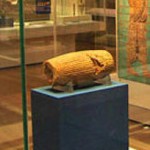
World Cultural Heritage Voices Organization held an exhibit booth at Nowrouz Festival event on March 17th at California State University Union in Sacramento. The booth featured a real-size replica of Cyrus Cylinder and pictures of several of Iranian Cultural and Historical Buildings.

Nowrouz Festival is an annual celebration event that is set up by various organizations at CSUS in Sacramento and is well attended by the Iranian American community of Sacramento.


Sacramento-Nowruz-3The event features traditional costumes, music, dance and food to celebrate Nowruz as well as communicatin of Nowruz Heritage and history to the community. The booth was visited by many attendees who were curious about the mission of the organization.


Sacramento-Nowruz-6

Ms. Lillee Mozaffari and Ms. Deniz Hazegh, two members of WCHV’s Board of Trustees, shown here greeting attendees at the event and displaying the replica of the Cyrus Cylinder.


A New Theory for the Origins of Stonehenge

Archaeologists have argued for centuries about what Stonehenge really meant and why it was built.  A team of British researchers from a number of universities including universities of Southampton, Manchester, Bournemouth, Sheffield, London, York and Durham presented new theories about the origins and purpose of Stonehenge earlier this month: It may have started as a giant burial ground for elite families around 3,000 B.C.  This group of academics who have done extensive research, propose that that Stonehenge should be seen less a temple of worship than a kind of building project that served to unite people from across Britain.  They also believe that the builders converged seasonally to build Stonehenge, a ritual that was likely done over several years.

Stonehenge_large

Researchers studied more than 50,000 cremated bone fragments excavated from the site and suggest that about 500 years before the Stonehenge we know today was built, a larger stone circle was erected at the same site as a community graveyard.  The archeologists studied the cremated bones of 63 individuals, and believe that they were buried around 3,000 B.C.  Analysis of the remains of a settlement near the monument indicated that thousands of people traveled from as far as Scotland to the site, bringing their livestock and then slaughtering them in nearby site during the winter and summer solstices celebrations.

According to the Guardian newspaper, this autumn visitors to Stonehenge will see more interpretation of its complex history when the new visitor center finally opens.

Soltanieh Dome’s Deteriorating Condition

Soltanieh Dome

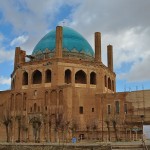
Zanjan’s Soltanieh Dome which is about 54 meters high and is about 700 years old has a very unique mosaic and brick design and architecture.  This dome is the third biggest dome in the world after Santa Maria Del Fiore church’s dome in Florence, Italy, and Hagia Sophia mosque’s dome in Turkey.  Soltanieh Dome was listed as a UNESCO national heritage site by UNESCO in 2005.  However, this heritage site is now facing a number of architectural problems including deep cracks, chipping of mosaic tiles, discoloration of frescos.  In addition, it looks like water has been getting into the building through the cracks in the structure.  This historical dome like many other historical sites in Iran is suffering from wrong repair methodology and upkeep as well as absence of technical expertise in preservation of these sites. This has resulted in the dome to become heavier in weight and has changed in shape and it now looks very different from the original design.  The latest problems that this site faces are the residential buildings which have been built in the vicinity and close proximity of this national heritage site.  This situation could soon result in UNESCO’s re-listing the site as an in-danger heritage site. 

Extinction of “Child of Fire” Newt

salamander1

Translated by WCHV.

Kaiser’s Spotted (KS) Newt (Neurergus kaiseri), also known as the Luristan Newt or Emperor Spotted Newt  is a species of very colorful salamander in the Salamandridae family. It is endemic to the southern Zagros Mountains in Iran.  The KS Newt and Salamander is one of the most beautiful species of salamander and is estimated that there are only about 1,000 to 10,000 left in the wild. However it has been reported widely that as of January 2013, the KS Newt or salamander only lives in captivity and is now considered to be highly endangered. 

The reasons for the almost extinction of the KS Newt are environmental pollution, drying rivers, streams and ponds which are their natural habitat and the most recent one; the illegal capture and trade in the black market by profiteers.  Lack of education and awareness about environmental issues and absence of preservation mandate has also led to trading of these KS Newt or salamander for the Norooz festival or the Persian New Year. 

KS Newt or Salamander’s name means the child of fire in the native Luristan language and it symbolizes bravery and kind spirit. 

salamander2