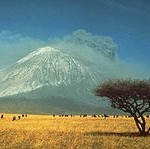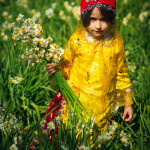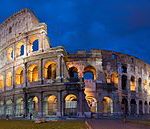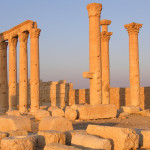
We believe that all cultural, historical and natural heritage, wherever they are should be preserved. LEARN MORE
Education

World Tourism Day

world-tourism-dayWorld Tourism Day (WTD) is commemorated each year on 27 September.

Its purpose is to foster awareness among the international community of the importance of tourism and its social, cultural, political and economic value. The event seeks to address global challenges outlined in the United Nations Millennium Development Goals and to highlight the contribution the tourism industry can make in reaching these goals.

Every year, UNWTO invites all interested parties to take part on 27 September each year in the special celebrations taking place in their respective country or holiday destination.

World Tourism Day theme and official celebrations

World Tourism Day is celebrated with appropriate events on themes selected by the UNWTO General Assembly, on the recommendation of the UNWTO Executive Council.

The UNWTO Secretary-General issues a message each year to mark the occasion and chairs the official celebrations.

44406Establishment of World Tourism Day

It was at its third session (Torremolinos, Spain, September 1979), that the UNWTO General Assembly decided to institute World Tourism Day, commencing in the year 1980. This date was chosen to coincide with an important milestone in world tourism: the anniversary of the adoption of the UNWTO Statutes on 27 September 1970.

The timing of World Tourism Day is particularly appropriate in that it comes at the end of the high season in the northern hemisphere and the beginning of the season in the southern hemisphere, when tourism is of topical interest to hundreds of thousands of people worldwide.

International Day against Nuclear Tests

nuclear-test-1_2The United Nations’ (UN) International Day against Nuclear Tests brings public awareness and education about the effects of global nuclear weapon tests. The day aims to end nuclear testing and to promote peace and security.

International Day Against Nuclear Tests aims to educate and bring awareness about the effects of nuclear testing.©iStockphoto.com/endopack
What do People Do?
The International Day against Nuclear Tests aims to raise people’s awareness on the need to prevent nuclear catastrophes to avert devastating effects on humankind, the environment and the planet. Many people use the day as an opportunity to share their perspective on the issue of nuclear weapons and testing.  Different organizations may host educational and public activities to bring awareness of the use of nuclear weapons and the dangers involved with nuclear weapons testing and usage.
Public Life
The International Day against Nuclear Tests is a global observance but it is not a public holiday.
Background
The history of nuclear testing began on July 16, 1945, when an atomic bomb was used at a desert test site in Alamogordo, New Mexico, in the United States. More than 2000 nuclear tests were carried out worldwide between 1945 and 1996. Nuclear weapons tests are generally broken into different categories reflecting the test’s medium or location:
Atmospheric tests.
Underwater tests.
Underground tests.
Over the years, there have been calls to ban nuclear test to ensure the protection of people’s lives and the environment around them. The UN approved a draft resolution in late 2009 for an international day against nuclear tests to raise public awareness about the threats and dangers of nuclear weapons.  It was also hoped that UN’s member states would move towards the idea of nuclear disarmament.
The International Day against Nuclear Tests was declared to be annually held on August 29, which marks the closing of one of the world’s largest nuclear test sites (in Kazakhstan) in 1991. The day is devoted to enhancing public awareness and education about the effects of nuclear weapon test explosions or any other nuclear explosions. It also promotes the need for a nuclear weapon-free world. The day’s first official observance was marked for August 29, 2010.

World Humanitarian Day

world-humanity-day1The United Nations’ (UN) World Humanitarian Day is held on August 19 each year. The day honors all humanitarians who have worked in the promotion of the humanitarian cause, and those who have lost their lives in the cause of duty. It aims to increase public awareness about humanitarian assistance activities worldwide and the importance of international cooperation.

What Do People Do?

World Humanitarian Day is a day dedicated to humanitarians worldwide, as well as to increase public understanding of humanitarian assistance activities. The day aims to honor humanitarian workers who have lost their lives or injured themselves in the course of their work, and to acknowledge the ongoing work of humanitarian staff around the world.

Many communities and organizations try to increase the importance of humanitarians by distributing publicity and information material. Additionally, some try to speak to the press to help spread these key messages of World Humanitarian Day, while other groups organize public events worldwide that feature humanitarian work.

For the year 2010 and beyond, it is anticipated that World Humanitarian Day will focus on particular humanitarian themes to help increase public awareness.

Background

Humanitarians provide life-saving assistance to millions of people worldwide. They place their own lives at risk to help others in conflict zones and areas of natural hazards. More than 700 humanitarian workers have died or experienced the most dangerous situations while trying to help those in need. Humanitarians provide support for different world challenges such as hunger, gender-based violence, refugees and displaced people, help for children, as well as clean water and access to sanitation.

World Humanitarian Day was established by the General Assembly of the UN in December 2008 and was first observed in August 2009. The date of August 19 is the anniversary date of the 2003 Canal Hotel bombing in Baghdad where twenty-two people lost their lives including, the UN’s High Commissioner for Human Rights and the Special Representative of the Secretary-General to Iraq, Sergio Vieira de Mello.

The total number of people affected by natural disasters has risen over the past decade, and about 211 million people are directly affected each year. Women and children are especially affected because of their ongoing struggles with poverty, insecurity, hunger, poor health and environmental decline. There are new and difficult challenges that arise each year that will require more flexible funding and adaptable humanitarian work. The increasing economic crisis and global challenges such as poverty, global health problems, increase prices and the rising number of people on the move, increases the need for humanitarians each year

Public Life

World Humanitarian Day is a global observance and not a public holiday.

International Day of the World’s Indigenous People

indigenous-2International Day of the World’s Indigenous People is observed on August 9 each year to promote and protect the rights of the world’s indigenous population. This event also recognizes the achievements and contributions that indigenous people make to improve world issues such as environmental protection.

What Do People Do?

People from different nations are encouraged to participate in observing the day to spread the UN’s message on indigenous peoples. Activities may include educational forums and classroom activities to gain an appreciation and a better understanding of indigenous peoples. Events may include messages from the UN secretary general and other key leaders, performances by indigenous artists, and panel discussions on reconciliation.

Public Life

The UN’s International Day of the World’s Indigenous People is a United Nations day of observance but it is not a public holiday.

Background

The International Day of the World’s Indigenous People is celebrated on August 9 each year to recognize the first UN Working Group on Indigenous Populations meeting in Geneva in 1982. On December 23, 1994, the UN General Assembly decided that the International Day of the World’s Indigenous People should be observed on August 9 annually during the International Decade of the World’s Indigenous People.

In 2004 the assembly proclaimed the Second International Decade of the World’s Indigenous People (2005-2014). The assembly also decided to continue observing the International Day of Indigenous People annually during the second decade. The decade’s goal was to further strengthen international cooperation for solving problems faced by indigenous peoples in areas such as culture, education, health, human rights, the environment, and social and economic development.

In April 2000, the Commission on Human Rights adopted a resolution to establish the UN Permanent Forum on Indigenous Issues that was endorsed by the Economic and Social Council. The forum’s mandate is to discuss indigenous issues related to culture, economic and social development, education, the environment, health and human rights.

International Day of Friendship

friend1

The International Day of Friendship is a United Nations (UN) day that promotes the role that friendship plays in promoting peace in many cultures. It is observed on July 30 each year.

Background

In 2011, the UN proclaimed the International Day of Friendship with the idea that friendship between peoples, countries, and cultures can inspire peace efforts and build bridges between communities. The UN wanted for the day to involve young people, as future leaders, in community activities that include different cultures and promote international understanding and respect for diversity.

What Do People Do?

To mark the International Day of Friendship, the UN encourages governments, organizations, and community groups to hold events, activities and initiatives that promote solidarity, mutual understanding and reconciliation.

Public Life

The International Day of Friendship is a UN observance and not a public holiday.