 On January 27 each year, the United Nations (UN) remembers the Holocaust that affected many people of Jewish origin during World War II. This day is called the International Day of Commemoration in Memory of the Victims of the Holocaust. It also commemorates when the Soviet troops liberated the Nazi concentration and death camp Auschwitz-Birkenau in Poland on January 27, 1945.
What Do People Do?
Holocaust survivors and various leaders make their voices heard on the International Day of Commemoration in Memory of the Victims of the Holocaust. Many of them speak publicly about the Holocaust or their experiences around the event, its aftermath and why the world should never forget what happened in Europe in the 1930s and 1940s. Many statements emphasize the need for future generations to learn about and remember the Holocaust and for everyone to work towards preventing genocide.
The UN organizes and supports events such as: concerts by musicians who survived the Holocaust or are survivors’ descendants; art exhibitions influenced by the Holocaust; presentations of special stamps; the introduction of special educational programs; and film screening and book signing focused on the Holocaust.
Israel and many countries in Europe and North America mark the International Day of Commemoration in Memory of the Victims of the Holocaust. Many academics present discussion papers or hold seminars or round table discussions on the Holocaust and its legacy in the modern world. Schools or colleges may also have special lessons on the Holocaust. The Holocaust and how people commemorate it receive special attention on the Internet, television, radio, print media.
Public Life
The International Day of Commemoration in Memory of the Victims of the Holocaust is a global observance and not a public holiday.
Background
The Holocaust, or Shoah (Sho’ah, Shoa), is the term used to describe the deliberate murder and desecration of millions of people prior to and during World War II in Germany and German occupied areas in Europe. Many of them were Jewish but the Roma people, Soviet civilians and prisoners of war, ethnic Poles, people with disabilities, homosexuals and political and religious opponents were also killed. Many people died in concentration and death camps spread across Nazi-occupied Europe. One of the most notorious camps was Auschwitz-Birkenau, near Oświęcim, Poland. More than one million people died in Auschwitz-Birkenau before Soviet troops liberated it on January 27, 1945.
On January 24, 2005, the UN General Assembly commemorated the 60th anniversary of the liberation of the Nazi concentration camps. Following this session, a UN resolution was drafted to designate January 27 as the International Day of Commemoration in Memory of the Victims of the Holocaust. The resolution called for education programs on the Holocaust to help prevent genocide. It also rejected denials that the Holocaust occurred. On November 1, 2005, the assembly adopted this resolution so the day could be observed each year. It was first observed on January 27, 2006.
Many Jewish groups, particularly in Israel, also observe Yom HaShoah, which is a day of mourning for Holocaust victims on 27th day of the Hebrew month of Nisan, which falls in April or May of the Gregorian calendar.

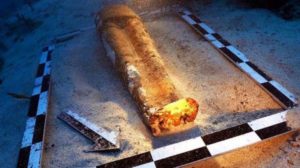 The 2,700-year-old sculpture, which is said to be the biggest one in the history of Turkish underwater history, found during examinations in a ship wreckage, which was unearthed last year in November, belonged to a Cypriot goddess.