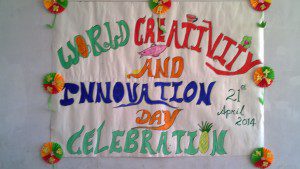
 Even though the WCID April 21 celebration is relatively new, it’s growing, and people are learning about it now that it is a United Nations Day of Observance.
History of World Creativity and Innovation Day
In 1452 a man was born who would set the standard for what it meant to be a renaissance man, excelling in both the arts and sciences. Invention, Mathematics, Music, Geology, Astronomy, Cartography, just to name a few, anything he turned his mind or hand to he made great advances. He was seen as the utterly perfect example of a universal genius, and his logical approach to the world was truly advanced and unusual for his time. World Creativity and Innovation Day was established to encourage everyone to dig deep and find their own inner da Vinci.
Creativity and innovation are beneficial in every walk of life, and every career. From those in customer service finding ways to improve their customer’s experience, scientists who’s every work day is filled with learning new things about the world and finding new ways to apply it, to politicians who could use their creativity to find new ways to solve problems and aid the public. World Creativity and Innovation Day encourages everyone to imagine a different world with different solutions.
How to Celebrate World Creativity and Innovation Day
Start the day out by brainstorming, sit down and think of all the things you do during the day and how you might change them for the better. Throughout your day keep a notepad handy for ideas that occur to you, whether they are for your own use, or ways that other people can do things better. Got an idea for your local municipality? Send it to them and let them know how you think it may benefit everyone. Got a new idea for your workplace? Inform your bosses and see what they have to say? Got a new plan for you? Set it in motion and see where your creativity gets you. World Creativity and Innovation Day could be the day that set your life on a whole new path!
Education
World Health Day April 7
 World Health Day is celebrated every year on the founding day of the World Health Organization. Established in 1950 this event has a theme each year to draw attention to a current world health issue. The WHO puts together regional, local, and international events on this day related to that theme. Local governments also tend to jump on this band-wagon, after all, global health means everyone! On this day you may take some extra steps to care for your health, consider getting a gym membership (and going!), starting a diet, or starting multi-vitamins!
Even better, get involved with the local events or organize one yourself! Spreading the news of health and threats to the same can be an excellent way to celebrate this holiday, and inform others of the important issue of global health. Themes throughout the years have varied, but always covered important issues of the day, covering everything from the Global Polio Eradication, staying active while aging, even road safety. All of these issues were deemed to be important enough to global health that they merited an occasion of their very own on this date.
The World Health Organization is an agency of the United Nations that focuses on the public health of the world at large. The WHO has a constitution that countries involved in the United Nations had an opportunity to sign, and unanimously did, agreeing to the tenets laid out within to promote the general health of the globe. Through its efforts we have seen the eradication of small pox, and its focus then turned to communicable diseases, with a particular focus on tuberculosis and HIV/AIDS.
Everyone needs to be concerned about the health of themselves and their community, and as such it’s a good time to turn your attention to this year’s theme. By checking in at their website at http://www.who.int/campaigns/world-health-day/ you can find out what the current theme is, and find all sorts of plans and activities that will help you raise awareness about this important issue. You can keep up with it every year, and play a big part in helping to promote global health all around.
The World Health Organization has been involved in mobilizing many health efforts the world over. Describing what medicines are essential for public health, and which diseases to give a particular focus to. The movement to eradicate smallpox started in 1958, initiated by pressure from Viktor Zhdanov, the Deputy Minister of Health for the then USSR. In 1979, the WHO declared that smallpox had in fact been eradicated, making it the first disease in history to be eliminated by the dedicated efforts of humans.
As you can see, celebrating World Health Day is very important, and you can use it to organize fund-raisers to support local free clinics and other public health sources. Everyone can take a hand in improving the overall health of the world, just by starting with yourself, your family, and your community. Blood banks are often taking volunteers to help out with their efforts, and the ability to have healthy, fresh blood on hand is central to saving many lives.
You can also take the task at home, by getting to know your environment and property, and eliminate all possible sources of standing water. Standing water is a breeding ground for insects such as mosquitos, who spread disease by consuming the blood of its hosts, and moving from victim to victim, spreading it as it goes. So this year, take some time to spread the word about how you and your neighbors can improve the world’s health, on World Health Day!
History of the International Women’s Day
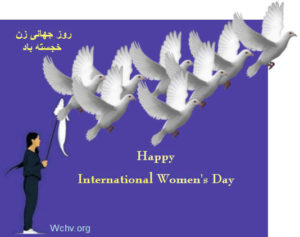 International Women’s Day is celebrated in many countries around the world. It is a day when women are recognized for their achievements without regard to divisions, whether national, ethnic, linguistic, cultural, economic or political. International Women’s Day first emerged from the activities of labour movements at the turn of the twentieth century in North America and across Europe.
Since those early years, International Women’s Day has assumed a new global dimension for women in developed and developing countries alike. The growing international women’s movement, which has been strengthened by four global United Nations women’s conferences, has helped make the commemoration a rallying point to build support for women’s rights and participation in the political and economic arenas.
Chronology
-
1909 The first National Woman’s Day was observed in the United States on 28 February. The Socialist Party of America designated this day in honour of the 1908 garment workers’ strike in New York, where women protested against working conditions.
-
1910 The Socialist International, meeting in Copenhagen, established a Women’s Day, international in character, to honour the movement for women’s rights and to build support for achieving universal suffrage for women. The proposal was greeted with unanimous approval by the conference of over 100 women from 17 countries, which included the first three women elected to the Finnish Parliament. No fixed date was selected for the observance.
-
1911 As a result of the Copenhagen initiative, International Women’s Day was marked for the first time (19 March) in Austria, Denmark, Germany and Switzerland, where more than one million women and men attended rallies. In addition to the right to vote and to hold public office, they demanded women’s rights to work, to vocational training and to an end to discrimination on the job.
-
1913-1914 International Women’s Day also became a mechanism for protesting World War I. As part of the peace movement, Russian women observed their first International Women’s Day on the last Sunday in February. Elsewhere in Europe, on or around 8 March of the following year, women held rallies either to protest the war or to express solidarity with other activists.
-
1917 Against the backdrop of the war, women in Russia again chose to protest and strike for “Bread and Peace” on the last Sunday in February (which fell on 8 March on the Gregorian calendar). Four days later, the Czar abdicated and the provisional Government granted women the right to vote.
-
1975 During International Women’s Year, the United Nations began celebrating International Women’s Day on 8 March.
-
1995 The Beijing Declaration and Platform for Action, a historic roadmap signed by 189 governments, focused on 12 critical areas of concern, and envisioned a world where each woman and girl can exercise her choices, such as participating in politics, getting an education, having an income, and living in societies free from violence and discrimination.
-
2014 The 58th session of the Commission on the Status of Women (CSW58) – the annual gathering of States to address critical issues related to gender equality and women’s rights — focused on “Challenges and achievements in the implementation of the Millennium Development Goals for women and girls”. UN entities and accredited NGOs from around the world took stock of progress and remaining challenges towards meeting the eight Millennium Development Goals (MDGs). The MDGs have played an important role in galvanizing attention on and resources for gender equality and women’s empowerment.
The UN and Gender Equality
The Charter of the United Nations, signed in 1945, was the first international agreement to affirm the principle of equality between women and men. Since then, the UN has helped create a historic legacy of internationally-agreed strategies, standards, programmes and goals to advance the status of women worldwide.
Over the years, the UN and its technical agencies have promoted the participation of women as equal partners with men in achieving sustainable development, peace, security, and full respect for human rights. The empowerment of women continues to be a central feature of the UN’s efforts to address social, economic and political challenges across the globe.
Ancient DNA tells tales of people’ migrant history
 Scientists as soon as may reconstruct humanity’s distant previous solely from the mute testimony of historic settlements, bones, and artifacts.
Not. Now there is a highly effective new method for illuminating the world earlier than the daybreak of written history — studying the precise genetic code of our historic ancestors. Two papers printed within the journal Nature on February 21, 2018, greater than double the quantity of historic people whose DNA has been analyzed and printed to 1,336 people — up from simply 10 in 2014.
The brand new flood of genetic info represents a “coming of age” for the nascent discipline of historic DNA, says lead creator David Reich, a Howard Hughes Medical Institute investigator at Harvard Medical College — and it upends cherished archeological orthodoxy. “Once we have a look at the info, we see surprises time and again and once more,” says Reich.
Collectively together with his lab’s earlier work and that of different pioneers of historic DNA, the Huge Image message is that our prehistoric ancestors weren’t almost as homebound as as soon as thought. “There was a view that migration is a really uncommon course of in human evolution,” Reich explains. Not so, says the traditional DNA. Truly, Reich says, “the orthodoxy — the belief that present-day persons are straight descended from the individuals who all the time lived in that very same space — is fallacious nearly all over the place.”
As a substitute, “the view that is rising — for which David is an eloquent advocate — is that human populations are transferring and mixing on a regular basis,” says John Novembre, a computational biologist on the College of Chicago.
Stonehenge’s Builders Largely Vanish
In a single of the brand new papers, Reich and a solid of dozens of collaborators chart the unfold of an historic tradition recognized by its stylized bell-shaped pots, the so-called Bell Beaker phenomenon. This tradition first unfold between Iberia and central Europe starting about four,700 years in the past. By analyzing DNA from a number of hundred samples of human bones, Reich’s crew exhibits that solely the concepts — not the individuals who originated them — made the transfer initially. That is as a result of the genes of the Iberian inhabitants stay distinct from these of the central Europeans who adopted the attribute pots and different artifacts.
However the story adjustments when the Bell Beaker tradition expanded to Britain after four,500 years in the past. Then, it was introduced by migrants who nearly fully supplanted the island’s present inhabitants — the mysterious individuals who had constructed Stonehenge — inside a couple of hundred years. “There was a sudden change within the inhabitants of Britain,” says Reich. “It was an nearly full alternative.”
For archeologists, these and different findings from the examine of historic DNA are “completely type of mind-blowing,” says archaeologist Barry Cunliffe, a professor emeritus on the College of Oxford. “They’re going to upset individuals, however that’s half of the thrill of it.”
Huge Migration from the Steppe
Think about the surprising motion of individuals who initially lived on the steppes of Central Asia, north of the Black and Caspian seas. About 5,300 years in the past, the native hunter-gatherer cultures have been changed in lots of locations by nomadic herders, dubbed the Yamnaya, who have been capable of broaden quickly by exploiting horses and the brand new invention of the cart, and who left behind large, wealthy burial websites.
Archeologists have lengthy recognized that some of the applied sciences utilized by the Yamnaya later unfold to Europe. However the startling revelation from the traditional DNA was that the individuals moved, too — all the best way to the Atlantic coast of Europe within the west to Mongolia within the east and India within the south. This huge migration helps clarify the unfold of Indo-European languages. And it considerably changed the native hunter-gatherer genes throughout Europe with the indelible stamp of steppe DNA, as occurred in Britain with the migration of the Bell Beaker individuals to the island.
“This complete phenomenon of the steppe growth is a tremendous instance of what historic DNA can present,” says Reich. And, provides Cunliffe, “nobody, not even archeologists of their wildest goals, had anticipated such a excessive steppe genetic content material within the populations of northern Europe within the third millennium B.C.”
This historic DNA discovering additionally explains the “unusual end result” of a genetic connection that had been hinted at within the genomes of modern-day Europeans and Native Individuals, provides Chicago’s Novembre. The hyperlink is proof from individuals who lived in Siberia 24,000 years in the past, whose telltale DNA is discovered each in Native Individuals, and within the Yamnaya steppe populations and their European descendants.
New Insights from Southeastern Europe
Reich’s second new Nature paper, on the genomic history of southeastern Europe, reveals a further migration as farming unfold throughout Europe, based mostly on knowledge from 255 people who lived between 14,000 and a pair of,500 years in the past. It additionally provides a captivating new nugget — the primary compelling proof that the genetic mixing of populations in Europe was biased towards one intercourse.
Hunter-gatherer genes remaining in northern Europeans after the inflow of migrating farmers got here extra from males than females, Reich’s crew discovered. “Archaeological proof exhibits that when farmers first unfold into northern Europe, they stopped at a latitude the place their crops did not develop effectively,” he says. “In consequence, there have been persistent boundaries between the farmers and the hunter-gatherers for a pair of thousand years.” This gave the hunter-gatherers and farmers a very long time to work together. In accordance with Reich, one speculative state of affairs is that in this lengthy, drawn-out interplay, there was a social or energy dynamic during which farmer girls tended to be built-in into hunter-gatherer communities.
To this point that is solely a guess, however the truth that historic DNA supplies clues concerning the completely different social roles and fates of women and men in historic society “is one other method, I believe, that these knowledge are so extraordinary,” says Reich.
Superior Machines
These scientific leaps ahead have been fueled by three key developments. One is the dramatic price discount (and pace improve) in gene sequencing made attainable by superior machines from Illumina and different firms. The second is a discovery spearheaded by Ron Pinhasi, an archaeologist at College Faculty Dublin. His group confirmed that the petrous bone, containing the tiny internal ear, harbors 100 instances extra DNA than different historic human stays, providing an enormous improve within the quantity of genetic materials out there for evaluation. The third is a technique applied by Reich for studying the genetic codes of 1.2 million fastidiously chosen variable elements of DNA (often known as single nucleotide polymorphisms) quite than having to sequence total genomes. That speeds the evaluation and reduces its price even additional.
The brand new discipline made a splash when Svante Pääbo of the Max Planck Institute for Evolutionary Anthropology, working with Reich and plenty of different colleagues, used historic DNA to show that Neanderthals and people interbred. Since then, the quantity of historic people whose DNA Reich has analyzed has risen exponentially. His lab has generated about three-quarters of the world’s printed knowledge and, included unpublished knowledge, has now reached three,700 genomes. “Each time we bounce an order of magnitude within the quantity of people, we are able to reply questions that we could not even have requested earlier than,” says Reich.
Now, with a whole bunch of hundreds of historic skeletons (and their petrous bones) nonetheless to be analyzed, the sphere of historic DNA is poised to each pin down present questions and sort out new ones. For instance, Reich’s crew is working with Cunliffe and others to review greater than 1,000 samples from Britain to extra precisely measure the alternative of the island’s present gene pool by the steppe-related DNA from the Bell Beaker individuals. “The proof we have now for a 90 % alternative may be very, very suggestive, however we have to check it a bit extra to see how a lot of the pre-Beaker inhabitants actually survived,” explains Cunliffe.
Past that, historic DNA provides the promise of finding out not solely the actions of our distant ancestors, but in addition the evolution of traits and susceptibilities to ailments. “This can be a new scientific instrument that, just like the microscope when it was invented within the seventeenth century, makes it attainable to review points of biology that merely weren’t attainable to look at earlier than,” explains Reich. In a single instance, scientists on the College of Copenhagen discovered DNA from plague within the steppe populations. If the teams that migrated to Britain after four,500 years in the past introduced the illness with them, that might assist clarify why the present inhabitants shrank so rapidly.
With the likelihood of many such discoveries nonetheless forward, “it’s a very thrilling time,” says Cunliffe. “Ancient DNA goes to revitalize archeology in a method that few of us may have guessed even ten years in the past.”
As reported on— ScienceDaily
World Day of Social Injustice
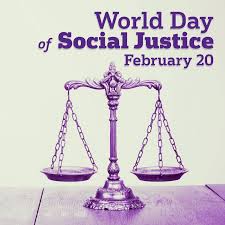 The United Nations’ (UN) World Day of Social Justice is annually observed on February 20 to encourage people to look at how social justice affects poverty eradication. It also focuses on the goal of achieving full employment and support for social integration.
The World Summit for Social Development, which promoted social justice, was held in Copenhagen.
What Do People Do?
Many organizations, including the UN and the International Labour Office, make statements on the importance of social justice for people. Many organizations also present plans for greater social justice by tackling poverty, social and economic exclusion and unemployment. Trade unions and campaign groups are invited to call on their members and supporters to mark the day. The Russian General Confederation of Trade Unions declared that the common slogan would be “Social Justice and Decent Life for All!”.
Schools, colleges and universities may prepare special activities for the day or plan a week of events around a theme related to poverty, social and economic exclusion or unemployment. Different media, including radio and television stations, newspapers and Internet sites, may give attention to the issues around the World Day of Social Justice.
It is hoped that particular coverage is given to the links between the illicit trade in diamonds and armed conflicts, particularly in Africa, and the importance of the International Criminal Court. This is an independent court that conducts trials of people accused of genocide, crimes against humanity and war crimes.
Background
The World Summit for Social Development was held in Copenhagen, Denmark, in 1995 and resulted in the Copenhagen Declaration and Programme of Action. At this summit, more than 100 political leaders pledged to make the conquest of poverty and full employment, as well as stable, safe and just societies, their overriding objectives. They also agreed on the need to put people at the center of development plans.
Nearly 10 years later, the UN’s member states reviewed the Copenhagen Declaration and Programme of Action when they gathered at a session of the Commission for Social Development in New York in February 2005. They also agreed to commit to advance social development. On November 26, 2007, the UN General Assembly named February 20 as the annual World Day of Social Justice. The day was scheduled to be first observed in 2009.