We believe that all cultural, historical and natural heritage, wherever they are should be preserved. LEARN MORE
Education

United Nations Day

United Nations Day

United Nations Day highlights, celebrates and reflects on the work of the United Nations (UN) and its family of specialized agencies.

United Nations offices around the world join in to observe United Nations Day.©iStockphoto.com/Michael Palis

Background

The foundations for a “League of Nations” were laid in the Treaty of Versailles, which was one of the treaties to formally end World War I. The treaty was signed in Versailles, France, on June 28, 1919. The league aimed to encourage disarmament, prevent outbreaks of war, encourage negotiations and diplomatic measures to settle international disputes and to improve the quality of life around the world. However, the outbreak of World War II suggested that the League of Nations needed to take on a different form.

The ideas around the United Nations were developed in the last years of World War II, particularly during the UN Conference on International Organization in San Francisco, the United States, beginning on April 25, 1945. The UN was officially created when a UN charter was ratified on October 24 that year.

United Nations Day was first observed on October 24, 1948. The UN recommended that United Nations Day should be a public holiday in member states since 1971. There were also calls for United Nations Day to be an international public holiday to bring attention to the work, role and achievements of the UN and its family of specialized agencies. These have been spectacular, particularly in the fields of human rights, support in areas of famine, eradication of disease, promotion of health and settlement of refugees.

The UN does not work alone but together with many specialized agencies, including: the World Health Organization (WHO); the Food and Agriculture Organization (FAO); the United Nations Educational, Scientific and Cultural Organization (UNESCO); the United Nations Children’s Fund (UNICEF); International Labour Organization (ILO); United Nations High Commissioner for Refugees (UNHCR); and United Nations Human Rights Council (UNHRC).

What Do People Do?

On and around October 24, many activities are organized by all parts of the UN, particularly in the main offices in New York, the Hague (Netherlands), Geneva (Switzerland), Vienna (Austria) and Nairobi (Kenya). These include: concerts; flying the UN flag on important buildings; debates on the relevance of the work of the UN in modern times; and proclamations by state heads and other leaders.

International Day for the Eradication of Poverty – 17 Oct. 2018

The 2030 Agenda for Sustainable Development promises to leave no one behind, and calls for eradicating poverty by 2030. For this, we need swift action by Governments to translate the Sustainable Development Goals (SDGs) into effective policies that are supported with appropriate resources. The 2030 Agenda is ambitious — we need ambitious measures to take it forward.

The 2030 Agenda emphasizes the integration of the social, economic and environmental dimensions of poverty eradication, so we need integrated action across different policy spheres, making the most of capabilities and resources through targeted policies designed to accelerate progress across the board. This is the importance of UNESCO’s leadership in advancing cooperation through education, the sciences, culture, communication and information. Along with the Organisation’s Global Priorities, Gender Equality and Africa, these are areas with catalytic impact across the 2030 Agenda, acting as development multipliers for a wide range of goals and targets.

Capabilities must be combined with ownership. National plans to eradicate poverty will be stronger if they are inclusive, integrating the voices of all parts of society. Access to basic services is essential, as is the required knowledge capabilities — but eradicating poverty calls also for greater participation by all women and men, starting with young people, whose empowerment is key to success.

Eradicating poverty is a human rights imperative — it is also a development imperative and a peace imperative. This is why we need action now to translate promises into reality. This is UNESCO’s message on this International Day for the Eradication of Poverty.

International Day of Democracy

The United Nations’ (UN) International Day of Democracy is annually held on September 15 to raise public awareness about democracy. Various activities and events are held around the world to promote democracy on this date.

The International Day of Democracy aims to raise public awareness about democracy – its meaning and importance.

Background

The UN strives to achieve its goals of peace, human rights and development. It believes that human rights and the rule of law are best protected in democratic societies. The UN also recognizes a fundamental truth about democracy everywhere – that democracy is the product of a strong, active and vocal civil society.

The UN general assembly decided on November 8, 2007, to make September 15 as the annual date to observe the International Day of Democracy. The assembly invited people and organizations, both government and non-government, to commemorate the International Day of Democracy. It also called for all governments to strengthen their national programs devoted to promoting and consolidating democracy. The assembly encouraged regional and other intergovernmental organizations to share their experiences in promoting democracy.

The International Day of Democracy was first celebrated in 2008. The UN general assembly recognized that the year 2008 marked the 20th anniversary of the first International Conference of New or Restored Democracies, which gave people a chance to focus on promoting and consolidating democracy worldwide.

What Do People Do?

Many people and organizations worldwide, including government agencies and non-government organizations, hold various initiatives to promote democracy on the International Day of Democracy. Events and activities include discussions, conferences and press conferences involving keynote speakers, often those who are leaders or educators heavily involved in supporting and endorsing democratic governments and communities.

Leaflets, posters and flyers are placed in universities, public buildings, and places where people can learn more about how democracy is linked with factors such as freedom of expression and a tolerant culture. Organizations, such as the Inter-Parliamentary Union (IPU), organize activities such as public opinion surveys about democracy and political tolerance.

There has been a campaign, known as the Global Democracy Day Initiative, which involves a petition being made to the UN and heads of states to officially adopt October 18 as Global Democracy Day to support International Day of Democracy.

Smithsonian Institution screens TAQ KASRA documentary in Washington DC

Smithsonian Institution screens TAQ KASRA documentary in Washington DC

Ctesiphon day at Freer Gallery

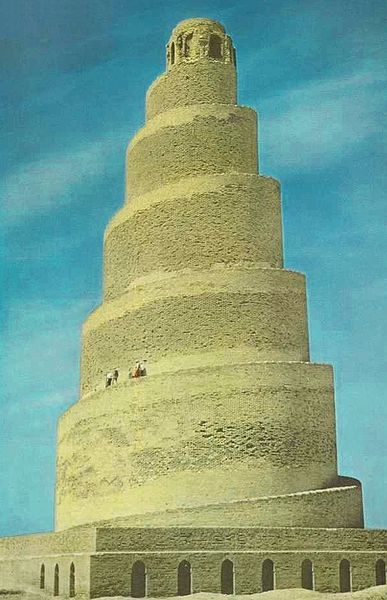
SI (Press Release) – Located on the eastern bank of the Tigris River near present-day Baghdad, Iraq, the city of Ctesiphon served as a royal capital of the Persian Empire in the Parthian and Sasanian eras for over eight hundred years. The city’s most iconic structure was the Taq Kasra (Throne of Khosrow) palace, one of the wonders of the ancient world. The palace’s vaulted brick throne room measures eighty-four feet across, making it the largest of its kind.

To celebrate this exceptional monument, Touraj Daryaee, Matthew Canepa, Katharyn Hanson, and Richard Kurin discuss the site’s importance and recent preservation efforts. Then, watch the first documentary on this unique monument, Taq Kasra: Wonder of Architecture, directed by Pejman Akbarzadeh, produced by Persian Dutch Network, and funded by the Soudavar Memorial and Toos Foundations. Watch the trailer.
The screening will be followed by a Q&A session with Pejman Akbarzadeh.

Date & Place:
Saturday, September 15, 2018, 2 pm

Freer Gallery of Art (Meyer Auditorium), Washington DC
Cost: Free

The International Day of Friendship

Our world face many challenges, crises and forces of division — such as poverty, violence, and human rights abuses — among many others — that undermine peace, security, development and social harmony among the world’s peoples.
To confront those crises and challenges, their root causes must be addressed by promoting and defending a shared spirit of human solidarity that takes many forms — the simplest of which is friendship.
Through friendship — by accumulating bonds of camaraderie and developing strong ties of trust — we can contribute to the fundamental shifts that are urgently needed to achieve lasting stability, weave a safety net that will protect us all, and generate passion for a better world where all are united for the greater good. .UN

Background
The International Day of Friendship is an initiative that follows on the proposal made by UNESCO and taken up by the UN General Assembly in 1997 (A/RES/52/13), which defined the Culture of Peace as a set of values, attitudes and behaviours that reject violence and endeavour to prevent conflicts by addressing their root causes with a view to solving problems.
In its resolution of 1998, proclaiming the International Decade for a Culture of Peace and Non-Violence for the Children of the World (2001–2010) (A/RES/53/25), the General Assembly recognized that enormous harm and suffering are caused to children through different forms of violence. It emphasized that the promotion of a culture of peace and non-violence should be instilled in children through education. If children learn to live together in peace and harmony that will contribute to the strengthening of international peace and cooperation.
The Declaration and Programme of Action on a Culture of Peace (A/RES/53/243) adopted in 1999 set 8 areas of action for nations, organizations and individuals to undertake in order for a culture of peace to prevail:
• foster a culture of peace through education;
• promote sustainable economic and social development;
• promote respect for all human rights;
• ensure equality between women and men;
• foster democratic participation;
• advance understanding, tolerance and solidarity;
• support participatory communication and the free flow of information and knowledge;
• promote international peace and security.
The International Day of Friendship is also based on the recognition of the relevance and importance of friendship as a noble and valuable sentiment in the lives of human beings around the world.
The International Day of Friendship was proclaimed in 2011 by the UN General Assembly with the idea that friendship between peoples, countries, cultures and individuals can inspire peace efforts and build bridges between communities.
The resolution (A/RES/65/275) places particular emphasis on involving young people, as future leaders, in community activities that include different cultures and promote international understanding and respect for diversity.
The Day is also intended to support the goals and objectives of the Declaration and Programme of Action on a Culture of Peace and the International Decade for a Culture of Peace and Non-Violence for the Children of the World (2001-2010).
To mark the International Day of Friendship the UN encourages governments, international organizations and civil society groups to hold events, activities and initiatives that contribute to the efforts of the international community towards promoting a dialogue among civilizations, solidarity, mutual understanding and reconciliation.