We believe that all cultural, historical and natural heritage, wherever they are should be preserved. LEARN MORE
News

Default Category

Roman Coins Found in Japan’s Heritage Site

coinsRecent discovery of Roman coins in Japan has baffled archaeologists as reported by several news outlets. The four Roman copper coins were retrieved from soil beneath Katsuren Castle on Okinawa Island. Even though the designs on the coins are difficult to decipher as they have been eroded over time, the x-ray analysis done later revealed several of the relics bore the image of Emperor Constantine I. It has also been reported that since excavation on the site began in 2013, researchers have also found six more coins which may date back to the Ottoman Empire in the late 17th century. The Roman coins appear to be much older, dating back to at least 400AD according to estimates.

The board of education in the Japanese city of Uruma announced the discovery, and said the story of how the coins came to arrive in Japan still remain a mystery. Katsuren Castle was known to have been the focal point of trading partnerships with China and other Asian countries, but ties to Europe were not evident until the recovery of the coins. The archeologists and experts are asking if there were more extensive trading relationships with Europe in that region or if the coins were brought there by merchants. The experts do not believe that there was any direct link between the Roman Empire and Katsuren Castle, but the discovery confirms how that region had trade relations with the rest of Asia.

The ruins of the castle were registered in 2000 on the UNESCO World Heritage list as part of the Gusuku Sites and Related Properties of the Kingdom of Ryukyu.
The coins will be analyzed further and displayed at Uruma City museum on Okinawa until the end of November 2016.

Honoring the Heritage Heroes

iucnOn September 4, 2016, International Union for Conservation of Nature (IUCN) World Conservation Congress on honored Heritage Heroes in Hawaii, USA in a ceremony. The Director of World Heritage Centre,  Dr. Mechtild Rössler congratulated all three World Heritage Hero nominees from Virunga National Park (DRC), Western Caucasus (Russian Federation) and Manas Wildlife Sanctuary (India). Mr. Bibhuti Lakhar was the people’s choice Heritage Hero, for his dedication to the conservation of India’s Manas Wildlife Sanctuary.
The Heritage Heroes Awards also recognize Bantu Lukambo and Josué Kambasu Mukura jointly for their work in protecting Virunga National Park in DRC, as well as Yulia Naberezhnaya and Andrey Rudomakha for their joint actions in the Western Caucasus in Russia.

The result of the online voting was announced at the 2016 IUCN World Conservation Congress. Dr. Rössler welcomed the immense commitment and dedication of young people around the globe for World Heritage conservation.
Supported by the MAVA Foundation and Star Alliance’s Biosphere Connection, the Heritage Heroes project was implemented by IUCN’s World Heritage Programme in collaboration with the IUCN World Commission on Protected Areas.


World Heritage Sites in Canada threatened by oil, gas and mining

parkOne of the recent reports outlines the impact of oil and gas extraction and mining in various areas of Canada which accounts for 31% of threats against natural and cultural sites since 1985. It is very alarming that Mining and oil and gas extraction account for nearly a third of threats to UNESCO World Heritage Sites in Canada over the last 30 years, according to the international organization.  In fact,  it has been reported that a total of 75 threats against nine designated natural and cultural sites have been documented by the United Nations Educational, Scientific and Cultural Organization’s State of Conservation database since 1985.  The next most common threat types are management and institutional factors (13), service infrastructure (10), transportation infrastructure (8) and buildings and development (7). It has been reported that most of the threats occurred between 2000 and 2013.  The threats against Canadian heritage sites were identified in a series of 41 UNESCO reports since 1985.
Wood Buffalo National Park in northern Alberta was the subject of the greatest number those reports, with nine in total, followed by the Historic District of Old Québec and Canadian Rocky Mountain Parks, which each had eight.
Number of threat reports:
Wood Buffalo National Park: 9
Historic District of Old Québec: 8
Canadian Rocky Mountain Parks: 8
Gros Morne National Park: 5
Nahanni National Park: 5
Waterton Glacier International Peace Park: 2
Dinosaur Provincial Park: 2
Kluane / Wrangell-St. Elias / Glacier Bay / Tatshenshini-Alsek: 1
Miguasha National Park: 1

In 2015, UNESCO reported on the Wood Buffalo and expressed concern for the environmental impacts on the Peace-Athabasca Delta from hydro-electric dams, oil sands development, and proposed open-pit mining in the vicinity of the property, which could negatively impact its outstanding universal value.

Preserving Egypt’s Cultural Heritage

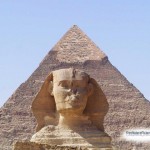
pyramidandsphinx2In 1992, a serious earthquake damaged historic buildings around Egypt. In response, the United States for International Development (USAID) provided funding for the first-of-its-kind historic program for preservation and conservation to address the needs of damaged antiquities. The American Research Center in Egypt was chosen to administer the program and began work on the first projects in 1995 under the leadership of the late Robert “Chip” Vincent, Project Director for the ARCE Egyptian Antiquities Project (EAP). Over the next ten years, ARCE in collaboration with Egypt’s Supreme Council of Antiquities, oversaw more than 50 projects that helped to preserve Egypt’s rich and world renowned legacy of cultural heritage. Both Egyptian and foreign experts worked side by side on projects from pre-history to the Ottoman period.

In 2010, ARCE announced the publication of a new book, “Preserving Egypt’s Cultural Heritage: Conservation Work by the American Research Center in Egypt 1995-2005,” edited by Randi Danforth.

In the last five years, forty five fellows and Research Associates have been hosted and supported by ARCE. These American pre and post-doctoral scholars and professionals are affiliated with universities, museum and research institutions worldwide. These scholars return to their home institutions and meet again in April 2017, at the ARCE’s annual meeting in Kansas City, Missouri.

Registration of Afghanistan’s National Heritage

afghanestanIn August 2016 the registration process of preserved artifacts of National museum of Afghanistan in the central bank vaults of Presidential palace started.

According to the news, a Team of professional members of National Museum with the cooperation of Oriental Institute of Chicago University has been appointed to register and repack some of the artifacts of National museum, which are preserved in the central bank vaults of presidential palace.

According to the Acting Director of National museum of Afghanistan Muhammad Fahim Rahimi, the main purpose of this registration is to document artifacts of national museum of Afghanistan based on recognized professional standards and better preservation of these artifacts as they will be conserved and repacked with accepted packing materials and processes to ensure long term preservation.

World Tourism Day

world-tourism-dayWorld Tourism Day (WTD) is commemorated each year on 27 September.

Its purpose is to foster awareness among the international community of the importance of tourism and its social, cultural, political and economic value. The event seeks to address global challenges outlined in the United Nations Millennium Development Goals and to highlight the contribution the tourism industry can make in reaching these goals.

Every year, UNWTO invites all interested parties to take part on 27 September each year in the special celebrations taking place in their respective country or holiday destination.

World Tourism Day theme and official celebrations

World Tourism Day is celebrated with appropriate events on themes selected by the UNWTO General Assembly, on the recommendation of the UNWTO Executive Council.

The UNWTO Secretary-General issues a message each year to mark the occasion and chairs the official celebrations.

44406Establishment of World Tourism Day

It was at its third session (Torremolinos, Spain, September 1979), that the UNWTO General Assembly decided to institute World Tourism Day, commencing in the year 1980. This date was chosen to coincide with an important milestone in world tourism: the anniversary of the adoption of the UNWTO Statutes on 27 September 1970.

The timing of World Tourism Day is particularly appropriate in that it comes at the end of the high season in the northern hemisphere and the beginning of the season in the southern hemisphere, when tourism is of topical interest to hundreds of thousands of people worldwide.

Saving Venice from the Tourists

veniceIf you have ever visited Venice, Italy, you have come back home with stunning images and memories of that beautiful city. Most people simply fall in love with that beautiful city. However, it has been the impact of tourism and drastic increase in the number of people visiting the city which has worried the heritage officials and the UNESCO.

In a very interesting recent New York Times article by Salvatore Settis who is the chairman of the Louvre Museum’s scientific advisory council and the author of the forthcoming book “If Venice Dies”, Mr. Settis talks about the threat of tourism “decimating the historic city and turning the Queen of the Adriatic into a Disneyfied shopping mall”.

According to Mr. Settis, the millions of tourists pouring into Venice’s streets and canals are profoundly altering the population and the economy. Tourism is tearing apart Venice’s social fabric, cohesion and civic culture, and is growing ever more predatory according to the article.

It is not surprising that Venice and many other tourists’ sites are reporting higher number of visitors. This in part is due to the fact that the international travelers are avoiding destinations like Turkey, North Africa and some parts of Asia, because of fears of terrorism and unrest.

It has been widely reported that the population of the city has dramatically changed as many native citizens are banished from the island city and those who remain have no choice but to serve in hotels, restaurants and shops selling glass souvenirs and carnival masks. In fact, according to the article, there is an increasing imbalance between the number of the city’s inhabitants (which plummeted from 174,808 in 1951 to 56,311 in 2014, the most recent year for which numbers are available) and the tourists. In addition, proposed large-scale development, including new deepwater navigation channels and a subway running under the lagoon, could further increase erosion and create more strain on the fragile ecological-urban system that surrounds Venice.

According to Mr. Settis, the city is now facing shortage of hotel rooms and overnight accommodations. The damage to the life and structure of the city could be seen in the closure of state institutions, judicial offices, banks, the German Consulate, medical practices which have happened in the last 15 years.

All of this is what has made UNESCO worried and why Venice has now been placed on its World Heritage in Danger list requiring Italian government to establish measures in order to halt the degradation of the city and its ecosystem.

In its July report, Unesco’s committee on heritage sites expressed “extreme concern” about “the combination of ongoing transformations and proposed projects threatening irreversible changes to the overall relationship between the City and its Lagoon,” which would, in its thinking, erode the integrity of Venice, as reported by the New York Times.

And of course, for all of us who are proclaimed Venice lovers, we continue to advocate measures for preservation and conservation of this beautiful city so that tourists and visitors could enjoy it for centuries to come.

To read Mr. Settis’ full article, visit:

http://www.nytimes.com/2016/08/30/opinion/can-we-save-venice-before-its-too-late.html?_r=0

Ancient Temples Damaged in Myanmar Earthquake

earthquakeA 6.8-magnitude earthquake last week in Myanmar Killed 3 people and damaged over 170 Temples. One of the major sites of destruction was the historic city of Bagan as reported by a number of news outlets. The epicenter was however almost 400 miles north of Yangon according to the United States Geological Survey. Yangon is the country’s largest city.

Bagan is at the heart of Central Myanmar’s growing tourism industry, which has been growing rapidly since 2011. Bangan’s rich history goes back to between the 11th and 13th centuries, when the city was the capital and over 2,000 structures demonstrate the rich history of the city.

Earthquakes have also been part of the history of Bagan. Bagan has survived a number of earthquake just this past century, like one in 1975, which was just as powerful as last week’s earthquake. In that that earthquake a number of structures including the Sulamani Temple were damaged. The Sulamani Temple was rebuilt in the 1990s, along with many other structures.

According to the New York Times, last month, Myanmar’s tourism officials had announced plans to welcome more than five million tourists this year.

While loss of life and helping survivors are of utmost importance after earthquakes, the officials are beginning to assess the damage to the country’s heritage sites in Bagan and surrounding cities.

International Day against Nuclear Tests

nuclear-test-1_2The United Nations’ (UN) International Day against Nuclear Tests brings public awareness and education about the effects of global nuclear weapon tests. The day aims to end nuclear testing and to promote peace and security.

International Day Against Nuclear Tests aims to educate and bring awareness about the effects of nuclear testing.©iStockphoto.com/endopack
What do People Do?
The International Day against Nuclear Tests aims to raise people’s awareness on the need to prevent nuclear catastrophes to avert devastating effects on humankind, the environment and the planet. Many people use the day as an opportunity to share their perspective on the issue of nuclear weapons and testing.  Different organizations may host educational and public activities to bring awareness of the use of nuclear weapons and the dangers involved with nuclear weapons testing and usage.
Public Life
The International Day against Nuclear Tests is a global observance but it is not a public holiday.
Background
The history of nuclear testing began on July 16, 1945, when an atomic bomb was used at a desert test site in Alamogordo, New Mexico, in the United States. More than 2000 nuclear tests were carried out worldwide between 1945 and 1996. Nuclear weapons tests are generally broken into different categories reflecting the test’s medium or location:
Atmospheric tests.
Underwater tests.
Underground tests.
Over the years, there have been calls to ban nuclear test to ensure the protection of people’s lives and the environment around them. The UN approved a draft resolution in late 2009 for an international day against nuclear tests to raise public awareness about the threats and dangers of nuclear weapons.  It was also hoped that UN’s member states would move towards the idea of nuclear disarmament.
The International Day against Nuclear Tests was declared to be annually held on August 29, which marks the closing of one of the world’s largest nuclear test sites (in Kazakhstan) in 1991. The day is devoted to enhancing public awareness and education about the effects of nuclear weapon test explosions or any other nuclear explosions. It also promotes the need for a nuclear weapon-free world. The day’s first official observance was marked for August 29, 2010.

Earthquake Damage to Italian Heritage Sites

norcia_01 norcia_02The most important thing to remember after an earthquake is saving lives and helping the survivors. At the same time, experts are now evaluating the damage to some of Italy’s heritage sites. World heritage experts now fear that many historic buildings and their contents were damaged in the earthquake that hit Italy very early this morning. The earthquake happened across a region where almost every hilltop town and village has beautiful churches and monuments.

As reported, there has been major damage to many churches, monuments and museums. Some of the greatest destruction was in Amatrice, which was voted one of Italy’s most beautiful towns last year and is celebrated for its Cento Chiese, 100 churches filled with frescoes, mosaics and sculptures. Half the facade of the 15th-century church of Sant’Agostino has also collapsed as reported by the several news outlets. The courtyard of one of the town’s Renaissance palaces has been turned into a temporary morgue.

Many historic buildings are also feared lost or damaged in Norcia, the birthplace of St Benedict as reported by the Guardian newspaper earlier today. The 12th-century basilica, which is said to have been built on the foundations of his house, had been damaged too.

Other historic buildings feared at risk include a museum housed in a medieval fort, and 14th-century frescoes in the church of St Augustine as well as the Roman walls, survivors of many earthquakes, which still partly encircle the town.

Cracks were reported in buildings as far from the epicentre as Rome, including in the spectacular baths of Caracalla. And there have been reports of over 120 people have lost their lives. It is most important to make sure that all survivors are rescued and are given shelter and food.