We believe that all cultural, historical and natural heritage, wherever they are should be preserved. LEARN MORE
News

Default Category

Nimrud: Ancient Assyrian City is Freed

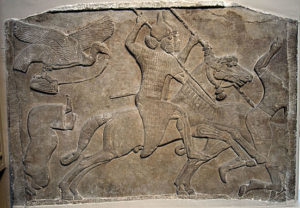
nimrudAs reported by a number of news agencies, Iraqi government forces have now recaptured Nimrud, the site of an ancient Assyrian city which was taken over by Islamic Terrorists (IS) two years ago.

In March 2015, officials and historians condemned IS for the destruction of the archaeological site, which reportedly dates back to the 13th Century BC.  In fact, UNESCO has described the act as a war crime. IS terrorists say shrines and statues are “false idols” that have to be destroyed.

Nimrud is an ancient Assyrian city on the River Tigris which lies about 30km (20 miles) south-east of the major city of Mosul, and the site of the ongoing military actions by the Iraqi government forces who are attempting to recapture Mosul and the areas around it.

According to BBC, troops from the Ninth Armored Division liberated Nimrud town completely and raised the Iraqi flag above its buildings after inflicting loss of life and equipment on the so-called Islamic State.

Nimrud is believed to have been the capital city of Assyria for about 150 years.  The first excavations in modern times were undertaken by Europeans archeologists starting in the 1840s. It has been reported that the treasures and archeological artifacts discovered included sections of royal palaces, individual statues and smaller artifacts.  The excavations stopped for decades because of the two world wars but in 1949 Sir Max Mallowan (husband of writer Agatha Christie) began fresh excavations according to BBC.

International Day for Tolerance

international-tolerance-dayThe United Nations’ (UN) International Day for Tolerance is annually observed on November 16 to educate people about the need for tolerance in society and to help them understand the negative effects of intolerance.

The International Day for Tolerance educates people about the importance of global tolerance.©iStockphoto.com/Julie de Leseleuc

What Do People Do?

The International Day for Tolerance is a time for people to learn about respecting and recognizing the rights and beliefs of others. It is also a time of reflection and debate on the negative effects of intolerance. Live discussions and debates take place across the world on this day, focusing on how various forms of injustice, oppression, racism and unfair discrimination have a negative impact on society.

Many educators use the theme of this day to help students in classrooms or in lecture theatres understand issues centered on tolerance, human rights and non-violence. These issues are also found in text books, lesson material and other educational resources used for this event. The UN Chronicle Online Education also features articles about tolerance.  Information on the day is disseminated through flyers, posters, news articles and broadcasts, and other promotional material to raise people’s awareness about the importance of tolerance. Other activities include essays, dialogues and story-telling of people’s personal accounts of intolerance and how it affects their lives.

Human rights activists also use this day as an opportunity to speak out on human rights laws, especially with regard to banning and punishing hate crimes and discrimination against minorities. In the workplace, special training programs, talks, or messages from workplace leaders about the importance of tolerance are utilized on this day.

Background

In 1996 the UN General Assembly invited member states to observe the International Day for Tolerance on November 16, with activities directed towards both educational establishments and the wider public (resolution 51/95 of 12 December). This action came in the wake of the United Nations Year for Tolerance, 1995, proclaimed by the assembly in 1993 (resolution 48/126). The year was declared on the General Conference of UNESCO’s initiative. On November 16, 1995, the UNESCO member states adopted the Declaration of Principles on Tolerance and Follow-up Plan of Action for the year.

The 2005 World Summit Outcome document outlines the commitment of Heads of State and Government to advance human welfare, freedom and progress everywhere, as well as to encourage tolerance, respect, dialogue and cooperation among different cultures, civilizations and peoples.


Public Life

The UN’s International Day for Tolerance is a global observance and not a public holiday.
 

UNESCO Director General visits Venice

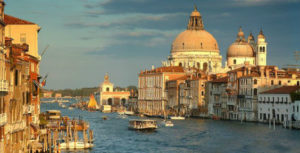
veniceOn November 3 and 4 , fifty years after the 1966 Venice flood and the International Safeguarding Campaign launched by UNESCO, the Director-General, Irina Bokova, undertook a visit to Venice, Italy.
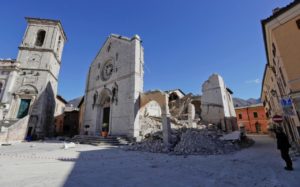
This visit was an opportunity to mark the longstanding cooperation with Italy and to express UNESCO’s support to its government and people after the country was struck by a series of powerful earthquakes – causing human casualties and considerable damage to heritage, notably in Amatrice and Norcia.
In Venice, the Director-General opened an international conference at the Fondazione Cini on the future of the lagoon city and the sustainable management of its heritage, entitled “Sustainability of local commons with a global value: the case of Venice and its lagoon”.
The Director-General reiterated UNESCO’s determination to support the Italian authorities in the safeguarding of the World Heritage site of Venice today, in response to the rise of sea level and tourist pressure, which is expected to grow dramatically

Artifact Registration, National Museum of Afghanestan

afghanistanOn August, 2016 the registration process of preserved artifacts of National museum of Afghanistan in the central bank vaults of Presidential palace started.

A Team of professional members of National museum with the cooperation of Oriental Institute of Chicago University has been appointed to register and repack, some of the artifacts of National museum, which are preserved in the central bank vaults of presidential palace.

According to the Acting Director of National museum of Afghanistan Muhammad Fahim Rahimi, the main purpose of this registration is to document artifacts of national museum of Afghanistan based on recognized professional standards and better preservation of these artifacts as they will be conserved and repack with accepted packing materials.

World Science Day for Peace and Development

world_science_day

The World Science Day for Peace and Development (WSDPD) is annually held on November 10 to raise awareness of the benefits of science worldwide. The WSDPD is also known as World Science Day.

What Do People Do?

The United Nations Educational, Scientific and Cultural Organization (UNESCO) works with people, government agencies and organizations to promote the WSDPD each year. The WSDPD celebrations include:

  • Open days to highlight science’s important role in peace and development.
  • Classroom discussions to emphasize how science and technology affect daily life.
  • Distributing the WSDPD posters throughout tertiary institutions, school campuses, and public venues.
  • Arranged science museum visits to commemorate the day.
  • Visits to local schools on careers in science or scientific presentations.

Some governments have, in the past, used World Science Day to publicly affirm their commitment to increased support for scientific initiatives that help society, as well as launch new science policy programs together with scientific institutions, civil society, universities and schools.

Metal Thefts at Historic Buildings in England

metalAs reported by BBC, Police in England has teamed up with heritage experts to crack down on gangs stealing valuable metal from churches and historic buildings.  The Local Government Association estimates metal thefts – of materials including electricity cables, railway lines, war memorials, road signs, children’s playground equipment and church roofs – cost the country as much as £770m a year.  In the case of historic buildings and churches, the thieves are stealing years of history and destroying English cultural heritage. 

Officers are working with Historic England to inspect scrap yards where thieves might try to sell lucrative metals such as lead and copper as reported by BBC. The police say that some dealerships are failing to carry out checks when they are offered metal for sale.  In the partnership between the police and experts, officers from Operation Crucible are taking members of Historic England along when they investigate scrapyards to help them understand how thieves operate.

The Scrap Metal Dealers Act 2013 requires all scrap dealers and motor salvage operators in England and Wales to apply for a license from their local authority and keep records on whom they buy from.  The council also has the power to assess whether each license applicant is a “suitable person” – including examining criminal convictions – and increased powers to carry out inspections.

Stolen Van Gogh Paintings Recovered in Italy

van_goghLast month (September 2016),  the Italian anti-mob Police recovered paintings from a house in stronghold of Camorra crime syndicate near Naples.  Two Vincent van Gogh paintings that were stolen 14 years ago from a museum in Amsterdam more have been recovered by Italian authorities in Naples following a sting operation that targeted organized crime.

The paintings, View of the Sea at Scheveningen, painted in 1882, and Congregation Leaving the Reformed Church in Nuenen, painted in 1884, were the two paintings recently discovered after allegedly being hidden away in one of the houses of an international drug trafficker based in Castellammare di Stabia, near Naples.

The authenticity of the paintings has already been confirmed by an expert from the Van Gogh Museum in Amsterdam, from where they were stolen in 2002.  The experts from the museum have stated that they are not sure when the paintings were supposed to be returned to the museum and that one of the paintings has a small patch of damage in the bottom corner. Otherwise the paintings appeared to be in good condition.

The theft was considered one of the most infamous heists to rock the art world in recent times. The thieves entered the Van Gogh museum from the roof of the building, which allowed them to get past security and cameras undetected, even though their entry did trigger alarms. They had used a ladder to climb up to a window and then smashed through it using a cloth to protect their hands.

As reported by a number of news outlets, the two men, Octave Durham, an art thief who earned the nickname The Monkey for his ability to evade police, and his accomplice Henk Bieslijn, were eventually convicted of the theft in 2004 after police discovered their DNA at the scene of the crime. They were handed four year sentences, but authorities were never able to track down the stolen works.

View of the Sea at Scheveningen is one of Van Gogh’s early paintings and depicts the beach resort close to The Hague. It was the only work in the museum’s collection from Van Gogh’s two years in The Hague and one of just two Dutch seascapes the artist made.

Congregation Leaving the Reformed Church in Nuenen is a smaller work that Van Gogh painted for his mother in 1884, and depicts a church in Brabant where his father Theodorus was a preacher. After his father’s death in 1885 Van Gogh revised the painting, adding figures of women wearing black shawls used in mourning.

Cyrus The Great Day, October 29

Niel Macgregor Video on Ted Talks: 2600 Years of History in One Object (Click Here)

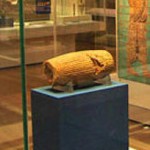
freedom-7jpgThis year, the twenty-ninth day of October 2016 coincides with the annual celebration of “Cyrus the Great Day” by Iranian people and many friends of culture across the globe. In 2005, the Pasargad Heritage Foundation – the first international NGO for preservation of the cultural heritage of Iran- that introduced the idea. At the time, Cyrus’ mausoleum in Iran- a monument registered on the UNESCO’s world heritage list – was in danger of being inundated and eventually destroyed. However, the hard work of this Foundation and timely intervention of UNESCO, human rights activists and organizations removed the danger and led to a world-wide recognition of Cyrus’ seminal contribution to the survival of our common human civilization. Such recognition has been further evidenced by the exhibition of Cyrus cylinder in a number of museums in major cities in United States of America. 

October 29, the “Cyrus the Great Day” and the anniversary of the first declaration of human rights. Twenty six centuries ago, when savagery was the dominant factor in human societies, a civilized and compassionate declaration was written on clay and issued to the “four corners of the world”, addressing important issues relevant to human rights; the very same issues that today we face and could also inspire and mobilize those who believe in human dignity and rights. 

This document, known as “The Declaration of Cyrus the Great,” emphasized the removal of all racial discrimination and slavery, and bestowing to all people, freedom to choose their places of residence, and practice their own chosen faith and religion, therefore, attempting to create peace amongst all nations. This Declaration could actually be considered a present from the Iranian people to all humanity, expressed through the words of Cyrus, the founder of the first empire in the Iran. In 1971, the general assembly of the United Nations recognized this declaration as the first Declaration of Human Rights.

www.savepasargad.com

Serious Threat to the Sundarbans

sundarbansThe Sundarbans in Bangladesh is part of the world’s largest mangrove forests, home to the famous Bengal Tiger and a hotspot for dolphins, turtles, and birds. Millions of people depend on this beautiful part of the world for food, homes, and flood protection.  

The Sundarbans were inscribed on the UNESCO World Heritage List in 1997, and will celebrate its 20th anniversary next year. As reported by UNESCO, In March 2016, the World Heritage Centre and International Union for the Conservation of Nature (IUCN) conducted a monitoring mission to review the conservation of this iconic area. The mission was requested by the World Heritage Committee during its 2015 session in Bonn.

The goal of the mission was to look at the potential impacts from the construction of the Rampal power plant, assessing risks from climate change, and evaluating the overall management system of the Sundarbans, including provisions around shipping safety. As reported by UNESCO, the mission visited the site of the proposed Rampal power plant, as well as the locations of a 2015 cargo vessel accident and 2016 oil spill. The team also met with with key ministries, industry representatives, port authorities, a small number of researchers and local community members.


Earlier this month, the World Heritage Centre and IUCN released a report on the mission. The report concludes that the proposed Rampal power plant, a 1320 megawatt super thermal power plant located just 65 kilometers from the World Heritage property, poses a serious threat to the site. The mission team identified four key concerns related to the plant’s construction. These concerns include: pollution from coal ash by air, pollution from wastewater and waste ash, increased shipping and dredging, and the cumulative impact of industrial and related development infrastructure. The mission recommends that the Rampal power plant project be cancelled and relocated to a more suitable location.


The report also concluded that the freshwater flow into the Sundarbans has been drastically reduced, resulting in substantial increases in siltation and salinity that are threatening the overall balance of the ecosystem. It further found that the site lacks a clear and comprehensive assessment of the combined effects from increasing coastal development.

The report recommends immediate action to secure adequate freshwater flow to the site, and calls for a new integrated management plan taking into account the carrying capacity of this fragile ecosystem that can secure a sustainable balance between socio-economic development and conservation.

The State Party of Bangladesh has been requested to provide a progress report to the World Heritage Centre by 1 December 2016, including a 1-page executive summary on the state of conservation of the property. The progress report will then be examined by the World Heritage Committee at its 41st session in 2017, in view of possible inscription on the List of World Heritage in Danger.

United Nation Day October 24

united-nations-day1The 24th October, each year is the International United Nations Day. This followed a declaration by the United Nations General Assembly in 1947 which designated 24th of October, the anniversary of the Charter of the United Nations, as United Nations Day, by proclaiming that the day would be instrumental in making people aware and it shall be devoted in making known to the people of the world the aims and achievements of the United Nations and to gain their support for its work. By a further resolution that of the United Nations Resolution 2782 adopted in 1971 by the United Nations General Assembly, it was declared that the United Nations Day would henceforth be celebrated as an international holiday and it was recommended that it will be maintained as a public holiday by all United Nations member states. The event is instituted primarily to disseminate to people worldwide the aims and accomplishment of the United Nations Organization. The United Nations Day is in-fact part of a longer United Nations Week which spans from the 20th to the 26th of October.

united-nations-day3The United Nations Day involves celebratory events such as food festivals showcasing food from around the world and cultural concerts. In-fact the United Nations Day concert is an important part of the day’s celebrations at the United Nations Headquarters. The concert for the year 2011 was sponsored by the Permanent Mission of Mongolia. It featured the traditional “long song” and “throat-singing”. The previously mentioned oral music forms have henceforth been included in the UNESOC’s list of the Intangible Cultural Heritage of Humanity. Cultural diversity is the drive-force behind greater development, a step towards leading a more enriching and wholesome intellectual, emotional, moral and spiritual life. It is an important economic growth. Cultural diversity is thus a huge asset and a grand alleviator of poverty and a potent precursor of sustainable development. Moreover a larger and more receptive acceptance and recognition of cultural diversity particularly through innovative use of media are conducive to a better understanding, cooperation and dialogue between nations and varying civilizations and culture.

UNESCO Universal Declaration on Cultural Diversity, 2001 and its following dialogues has become the core mandate of the UNESCO. And in celebrating the United Nations Day, the world is encouraged to celebrate these core principles of inter-cultural understanding and synthesis and a larger and more acute sense of being in the world, of belonging to a family, the largest family, the universe.

The aim of celebrating such a day, the United Nations Day, is the essential celebration of the values which this organization spells forth-the principles of humanity, unity, and world peace. Coming into effect after the two world wars and the cold war the United Nations was an attempt to salvage humanity from the scourge of war and the wrath of destruction-most importantly to ensure that the human world would never be subject to such instances of horror again. The promise has since been shouldered by the organization and many efforts to alleviate the human condition have been attempted.