 Scientists as soon as may reconstruct humanity’s distant previous solely from the mute testimony of historic settlements, bones, and artifacts.
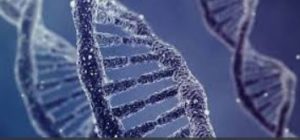
Not. Now there is a highly effective new method for illuminating the world earlier than the daybreak of written history — studying the precise genetic code of our historic ancestors. Two papers printed within the journal Nature on February 21, 2018, greater than double the quantity of historic people whose DNA has been analyzed and printed to 1,336 people — up from simply 10 in 2014.
The brand new flood of genetic info represents a “coming of age” for the nascent discipline of historic DNA, says lead creator David Reich, a Howard Hughes Medical Institute investigator at Harvard Medical College — and it upends cherished archeological orthodoxy. “Once we have a look at the info, we see surprises time and again and once more,” says Reich.
Collectively together with his lab’s earlier work and that of different pioneers of historic DNA, the Huge Image message is that our prehistoric ancestors weren’t almost as homebound as as soon as thought. “There was a view that migration is a really uncommon course of in human evolution,” Reich explains. Not so, says the traditional DNA. Truly, Reich says, “the orthodoxy — the belief that present-day persons are straight descended from the individuals who all the time lived in that very same space — is fallacious nearly all over the place.”
As a substitute, “the view that is rising — for which David is an eloquent advocate — is that human populations are transferring and mixing on a regular basis,” says John Novembre, a computational biologist on the College of Chicago.
Stonehenge’s Builders Largely Vanish
In a single of the brand new papers, Reich and a solid of dozens of collaborators chart the unfold of an historic tradition recognized by its stylized bell-shaped pots, the so-called Bell Beaker phenomenon. This tradition first unfold between Iberia and central Europe starting about four,700 years in the past. By analyzing DNA from a number of hundred samples of human bones, Reich’s crew exhibits that solely the concepts — not the individuals who originated them — made the transfer initially. That is as a result of the genes of the Iberian inhabitants stay distinct from these of the central Europeans who adopted the attribute pots and different artifacts.
However the story adjustments when the Bell Beaker tradition expanded to Britain after four,500 years in the past. Then, it was introduced by migrants who nearly fully supplanted the island’s present inhabitants — the mysterious individuals who had constructed Stonehenge — inside a couple of hundred years. “There was a sudden change within the inhabitants of Britain,” says Reich. “It was an nearly full alternative.”
For archeologists, these and different findings from the examine of historic DNA are “completely type of mind-blowing,” says archaeologist Barry Cunliffe, a professor emeritus on the College of Oxford. “They’re going to upset individuals, however that’s half of the thrill of it.”
Huge Migration from the Steppe
Think about the surprising motion of individuals who initially lived on the steppes of Central Asia, north of the Black and Caspian seas. About 5,300 years in the past, the native hunter-gatherer cultures have been changed in lots of locations by nomadic herders, dubbed the Yamnaya, who have been capable of broaden quickly by exploiting horses and the brand new invention of the cart, and who left behind large, wealthy burial websites.
Archeologists have lengthy recognized that some of the applied sciences utilized by the Yamnaya later unfold to Europe. However the startling revelation from the traditional DNA was that the individuals moved, too — all the best way to the Atlantic coast of Europe within the west to Mongolia within the east and India within the south. This huge migration helps clarify the unfold of Indo-European languages. And it considerably changed the native hunter-gatherer genes throughout Europe with the indelible stamp of steppe DNA, as occurred in Britain with the migration of the Bell Beaker individuals to the island.
“This complete phenomenon of the steppe growth is a tremendous instance of what historic DNA can present,” says Reich. And, provides Cunliffe, “nobody, not even archeologists of their wildest goals, had anticipated such a excessive steppe genetic content material within the populations of northern Europe within the third millennium B.C.”
This historic DNA discovering additionally explains the “unusual end result” of a genetic connection that had been hinted at within the genomes of modern-day Europeans and Native Individuals, provides Chicago’s Novembre. The hyperlink is proof from individuals who lived in Siberia 24,000 years in the past, whose telltale DNA is discovered each in Native Individuals, and within the Yamnaya steppe populations and their European descendants.
New Insights from Southeastern Europe
Reich’s second new Nature paper, on the genomic history of southeastern Europe, reveals a further migration as farming unfold throughout Europe, based mostly on knowledge from 255 people who lived between 14,000 and a pair of,500 years in the past. It additionally provides a captivating new nugget — the primary compelling proof that the genetic mixing of populations in Europe was biased towards one intercourse.
Hunter-gatherer genes remaining in northern Europeans after the inflow of migrating farmers got here extra from males than females, Reich’s crew discovered. “Archaeological proof exhibits that when farmers first unfold into northern Europe, they stopped at a latitude the place their crops did not develop effectively,” he says. “In consequence, there have been persistent boundaries between the farmers and the hunter-gatherers for a pair of thousand years.” This gave the hunter-gatherers and farmers a very long time to work together. In accordance with Reich, one speculative state of affairs is that in this lengthy, drawn-out interplay, there was a social or energy dynamic during which farmer girls tended to be built-in into hunter-gatherer communities.
To this point that is solely a guess, however the truth that historic DNA supplies clues concerning the completely different social roles and fates of women and men in historic society “is one other method, I believe, that these knowledge are so extraordinary,” says Reich.
Superior Machines
These scientific leaps ahead have been fueled by three key developments. One is the dramatic price discount (and pace improve) in gene sequencing made attainable by superior machines from Illumina and different firms. The second is a discovery spearheaded by Ron Pinhasi, an archaeologist at College Faculty Dublin. His group confirmed that the petrous bone, containing the tiny internal ear, harbors 100 instances extra DNA than different historic human stays, providing an enormous improve within the quantity of genetic materials out there for evaluation. The third is a technique applied by Reich for studying the genetic codes of 1.2 million fastidiously chosen variable elements of DNA (often known as single nucleotide polymorphisms) quite than having to sequence total genomes. That speeds the evaluation and reduces its price even additional.
The brand new discipline made a splash when Svante Pääbo of the Max Planck Institute for Evolutionary Anthropology, working with Reich and plenty of different colleagues, used historic DNA to show that Neanderthals and people interbred. Since then, the quantity of historic people whose DNA Reich has analyzed has risen exponentially. His lab has generated about three-quarters of the world’s printed knowledge and, included unpublished knowledge, has now reached three,700 genomes. “Each time we bounce an order of magnitude within the quantity of people, we are able to reply questions that we could not even have requested earlier than,” says Reich.
Now, with a whole bunch of hundreds of historic skeletons (and their petrous bones) nonetheless to be analyzed, the sphere of historic DNA is poised to each pin down present questions and sort out new ones. For instance, Reich’s crew is working with Cunliffe and others to review greater than 1,000 samples from Britain to extra precisely measure the alternative of the island’s present gene pool by the steppe-related DNA from the Bell Beaker individuals. “The proof we have now for a 90 % alternative may be very, very suggestive, however we have to check it a bit extra to see how a lot of the pre-Beaker inhabitants actually survived,” explains Cunliffe.
Past that, historic DNA provides the promise of finding out not solely the actions of our distant ancestors, but in addition the evolution of traits and susceptibilities to ailments. “This can be a new scientific instrument that, just like the microscope when it was invented within the seventeenth century, makes it attainable to review points of biology that merely weren’t attainable to look at earlier than,” explains Reich. In a single instance, scientists on the College of Copenhagen discovered DNA from plague within the steppe populations. If the teams that migrated to Britain after four,500 years in the past introduced the illness with them, that might assist clarify why the present inhabitants shrank so rapidly.
With the likelihood of many such discoveries nonetheless forward, “it’s a very thrilling time,” says Cunliffe. “Ancient DNA goes to revitalize archeology in a method that few of us may have guessed even ten years in the past.”
As reported on— ScienceDaily

 Top Rome archaeology official Francesco Prosperetti says Friday the domus is adjacent to a previously excavated ancient Roman military barracks.