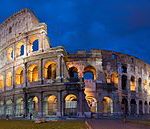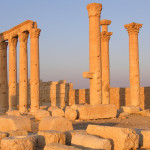
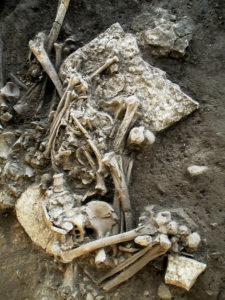
We believe that all cultural, historical and natural heritage, wherever they are should be preserved. LEARN MORE
News

Default Category

We Welcome Your Support on Giving Tuesday

World Cultural Heritage Voices” (WCHV) is a non-profit, non-governmental, non-political and non-religious international organization (NGO) focusing on preservation of historical, cultural and natural heritage of the countries experiencing war, poverty and/or oppressive governments.

WCHV was incorporated according to the Federal Laws of the United States
of America and became recognized as a non-profit entity under the Section 501(c) (3) of IRS.

WCHV focuses its activities on several different efforts, initiatives and projects. These include:
1) Creating petitions, and sending letters to call on UNESCO and authorities in different countries to pay attention to In Danger sites in war zones and areas of conflicts around the world which are being ignored and not protected.

2) Educational briefs, articles and newsletters to inform interested individuals and organizations on our activities and projects as well as in support of efforts around the world.

3) Creation of videos on destruction of natural and historical heritage sites in order to inform peoples around the world.
4) Creation of videos and educational programs to educate and inform the future generations about preservation and conservation of World Heritage Sites

5) Partnership with organizations around the world and working on conservation and preservation projects.

We continue to strive to be the voice of world cultural and natural heritage.

We welcome your support and donations on this “GivingTuesday” to:

#wchv.org


Jesus’ Face Uncovered at Ancient Church in the Israel Desert

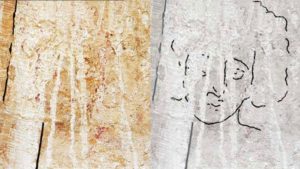
As reported by CBN news a previously unknown painting depicting what archaeologists and researchers believe is the face of a young Jesus has been exposed at the site of an ancient Byzantine church in Israel’s Negev desert.

The find was made in the Byzantine-era village of Shivta, which also included three churches. The discovery of the painting has excited archaeologists working on the site. 

Although the painting is very weathered, experts from Israel’s University of Haifa were able to reconstruct a partial facial outline, which dates to the Sixth Century A.D.  The painting portrays Jesus as a short-haired youth, but it’s hard to know what the original painting looked like since only an outline has been depicted. 

The research on the site was recently published in the Cambridge journal Antiquity.

The archaeologists explained in their paper that Christ’s face in the painting is an important discovery due to the fact that the icon of the short-haired Christ was widespread in Egypt and Syro Palestine, but was gone from later Byzantine art.

The painting was noted in the early 1920s but now has undergone further examination.

“The figure has short curly hair, a prolonged face, large eyes, and an elongated nose,” the study’s authors explained in their paper. “The neck and upper portion are also observable.”

They continued, “To the left of the figure, another, much larger face surrounded by a halo is visible. Paint traces throughout the apse suggest that these faces were part of a wider scene, which could contain additional figures. The location of the scene—above the crucifix-shaped Baptist font—suggests its identification as the baptism of Christ. Thus, this face portrays the youthful Christ, while the face on the left is most probably of John the Baptist.”

“The baptism-of-Christ scene is found frequently in Early Christian and Byzantine art, providing multiple iconographic and artistic comparisons for the Shivta scene,” the paper notes.

The authors explain “Christ’s face in this painting is an important discovery in itself. Early sixth-century texts include polemics concerning the authenticity of Christ’s visual appearance, including his hairstyle.”

“It is the only in situ baptism-of-Christ scene to date confidently to the pre-iconoclastic Holy Land. Therefore, it can illuminate Byzantine Shivta’s Christian community and Early Christian art across the region,” the study continued. 

The authors also note that there may be more to come from this 1,500-year-old painting. 

“Additional details of the painting at the scene’s centre, surrounding Christ’s face, are hidden beneath an accumulation of dust and mud, which protects the underlying paint layers from further deterioration. We aim to continue studying the painting to ensure its future preservation,” they wrote. 

https://www1.cbn.com


Research, Protection and Preservation of Nepal’s Cultural Heritage after the earthquake

On the 22 and 23 October, 2018, an international symposium brought together academics and heritage practitioners from Nepal, Austria, Germany, US and the UK from a variety of disciplines, including archaeologists, philologists, anthropologists, epigraphers and conservators to discuss research methods and approaches being developed for protecting and preserving the cultural heritage of Nepal in the aftermath of the 2015 Gorkha Earthquake.

The earthquake was a humanitarian disaster, devastating communities throughout Nepal through loss of lives, homes and livelihoods, the earthquake was also a cultural catastrophe with heritage sites across Nepal destroyed or seriously damaged.

A lot of international media attention was focused on the immediate aftermath of the earthquake, showing the loss and destruction of monuments, particularly in the Kathmandu Valley. This symposium brought together individuals and projects whose post-disaster research have been examining the on-going threats to tangible and intangible heritage during the post-emergency phases and the first reconstruction efforts. The speakers at the symposium presented new research approaches to Nepal’s past, as well as information about current steps being taken to protect its cultural heritage together with stake-holder communities, particularly in the face of future earthquakes in this seismically active region.

The organizations attending included the Institute for the Cultural and Intellectual History of Asia (IKGA) of the Austrian Academy of Sciences, Center for Interdisciplinary Research and Documentation of Inner and South Asian Cultural History (CIRDIS), University of Vienna, and the Institute of Medieval and Early Modern Studies (IMEMS) at Durham University.


World Heritage Sites Threatened By ClimateChange

A recent study published in the journal of Nature has warned that many UNESCO World Heritage sites are under severe threat of coastal erosion and flooding due to rising sea levels within the next 100 years. The study presents a risk index that ranks the sites according to the threat they face from today until the end of the century. 

The sites featuring highest on this index in current conditions include Venice and its Lagoon, Ferrara, City of the Renaissance, and its Po Delta and the Patriarchal Basilica of Aquileia, according to researchers from Kiel University in Germany. Other sites include, the Leaning Tower of Pisa and the Medieval City of Rhodes and sites located along the northern Adriatic Sea in Italy where extreme sea levels are the highest because high storm surges coincide with high regional sea-level rises. 

The study is very interesting as it combines model computer simulations with world heritage site data to assess the risk of both coastal flooding and erosion due to sea level rise at 49 UNESCO coastal Heritage sites by the end of the century.  The researchers reported that of the sites, 37 are at risk from a 100-year flood event (a flooding event which has a one per cent chance of happening in any given year) and 42 from coastal erosion today. 

By the next century flood risk may increase by 50 per cent and erosion risk by 13 per cent across the region. The Mediterranean region has a high concentration of UNESCO World Heritage Sites because of the historical reasons, and many of these sites in coastal locations. Rising sea levels pose a great threat to these sites as the steep landscape and small tidal range in the area has meant settlements and towns were built often located close to the waterfront. 

At this time, the researchers believe that more information on the risk at a local level is needed and the approaches to adaption and protection could vary across the region due to large social and economic differences between Mediterranean countries. 

Archaeologists In Egypt Have Discovered Rare Scarab Beetles

A mummified scarab inside the tomb of Khufu-Imhat on display, at the Saqqara area near its necropolis, in Giza, Egypt November 10, 2018. REUTERS/Mohamed Abd El Ghany

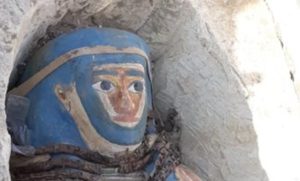
Archaeologists in Egypt say they have discovered a rare collection of mummified scarab beetles, as well as an apparently pristine Fifth Dynasty tomb that they plan to open in the coming weeks.

The mummified beetles were among artifacts found in seven tombs discovered over the past six months on the edge of the King Userkaf pyramid complex at the ancient necropolis of Saqqara, south of Cairo.

As they were preparing the site to present the latest discoveries, archaeologists found the door of another tomb that remains sealed, Mostafa Waziri, secretary general of Egypt’s Supreme Council of Antiquities, told reporters.

Two large scarabs wrapped in linen and in very good condition were found inside a limestone sarcophagus with a vaulted, decorated lid, the antiquities ministry said in a statement. Another collection of scarab mummies was found inside a smaller sarcophagus.

Dozens of cat mummies and gilded statues of cats were also unearthed, including a bronze statue dedicated to the cat goddess Bastet. Saqqara served as the necropolis for Memphis, the capital of ancient Egypt for more than two millennia

http://www.omanobserver.om/ancient-egyptian-tombs-yield-rare-scarab-beetles/

International Day for Tolerance

This day was created to encourage mindfulness and faith in human rights – in order to encourage equality and diversity across the world, the UN introduced The International Day for Tolerance in 1996. It followed the United Nations Year for Tolerance, which was 1995, in order to observe its teachings annually.

There’s no doubt that a world free of tolerance would not be a good place to be. It is the belief of those supporting this day that such a world should never exist – and that everyone has a right to their expression, religion, and their conscience without fear of bias or ridicule. In addition, it teaches that a persons racial or religious background is inconsequential to the potential for tolerance and friendship between them.

The UN defines tolerance as respect, appreciate and acceptance of the diversity of the world’s cultures and all the ways that we are human. It is a human right to receive, and should be expected to be practiced by not just individuals, but groups and states. Human rights is the core of this thought – as such, it supports the notion that humanity has the right to live in peace.

The International Day for Tolerance supports the notion that education is a key factor in preventing intolerance across the human race.  On this day, we are encouraged to educate and learn how to practice solidarity between ethnic, social and cultural groups.

Potatoes Were Not Just A Symbol Of The Elite In Ancient Peru, Archaeologists Find

We may think of potatoes as the most basic of foods, given their modern ubiquity and low cost, but in the Moche culture in ancient Peru, archaeologists had assumed they were highly charged symbols of the elite because they were found only in artifacts. New research, however, has shown that our understanding of New World potato consumption is biased by the fact the starchy vegetable is nearly always consumed in its entirety.

In a forthcoming article in the Journal of Archaeological Science, researchers Guy Duke of the University of Texas Rio Grande Valley and Victor Vásquez-Sanchez and Teresa Rosales-Tham of Arqueobios in Peru outline their method of starch grain analysis from ceramic and stone artifacts to investigate the use of potatoes in the Moche diet.

Puno, Peru: Portrait of a young woman sitting among potatoes at her stall.

Their archaeological investigation focused on the site of Wasi Huachuma, located in the lower Jequetepeque valley of Peru, dating to 600-850 AD or the later years of the Moche culture. This site featured a platform mound, associated out buildings, burials, and a large residential area. The Moche civilization is well known for massive ritual structures like the pyramidal Huaca del Sol and Huaca de la Luna, as well as for their extensively varied ceramic tradition that includes depictions of sex acts. Some Moche religious practices even involved ritual human sacrifice.

Given the rich history of impressive material culture, less research has been focused over the last century of archaeological investigation of the Moche into domestic contexts, including what food people were eating. But a recent turn in anthropological archaeology away from elite-only contexts to the remains of common people has greatly enriched the prehistory of cultures around the world.

https://www.forbes.com/sites/kristinakillgrove/2018/11/02/potatoes-were-not-just-a-symbol-of-the-elite-in-ancient-peru-archaeologists-find/#47705fcc1877

World Science Day for Peace and Development

Science, a Human Right, Celebrated every 10 November the World Science Day highlights the important role of science in society and the need to engage the public broadly in debates on emerging scientific issues. It also further underlines the importance and relevance of science in our daily lives.
By linking science more closely with society, World Science Day for Peace and Development
aims to ensure that citizens are kept informed of developments in science. It also underscores the
role scientists play in broadening our understanding of the remarkable, fragile planet we call home and in making our societies more sustainable, UNESCO declared.
The statement from Audrey Azoulay, Director-General of UNESCO, adds that “this World Science Day for Peace and Development 2018, UNESCO urges everyone to exercise their human right to participate in and benefit from science. This right is enshrined in the Universal Declaration of Human Rights, which celebrates its 70th anniversary this year, but it is only when we use this right to join and support scientific endeavors that we can transition to stronger science and reinforce scientific culture in our societies. UNESCO also calls on governments, businesses, civil society and scientists to fully embrace the values of responsible and ethical science, by fully implementing the 2017 UNESCO Recommendation on Science and Scientific
Researchers. Together, we should strive for greater access to science education – particularly for girls – as well as support Open Science and innovative ways for advancing research.”
The theme for 2018 is “Science, a Human Right”, in celebration of the 70th anniversary of the Universal Declaration of Human Rights (art. 27), and of the Recommendation on Science and Scientific Researchers. Recalling that everyone has a right to participate in and benefit from science, it will serve to spark a global discussion on ways to improve access to science and to the benefits of science for sustainable development.
The Assistant Director-General for the Natural Sciences, Flavia Schlegel, also added that, everyone has a right to participate in and benefit from science, and science centers and museums play an important role in making science accessible to all. The centers and organizations believe in UNESCO’s objectives of linking science more closely with society, sharing scientific knowledge and fostering the engagement of young people in science, technology and innovation.
In the year that the world celebrates the 70th anniversary of the Universal Declaration of Human Rights, UNESCO puts the Human Rights at the heart of the World Science Day for Peace and Development and reaffirms its support to science centers, science museums and regional networks partnering with the Association for Science and Technology Centers.
Join the conversation with the hashtags #ScienceDay and #Right2Science

Weekend of Celebration of Stonehenge

This past weekend marked 100 years of Stonehenge belonging to the nation, and it was
highlighted by celebrations. English Heritage and the artist Jeremy Deller marked 100 years since Stonehenge was donated to the nation with a day of celebrations at the ancient stones.
Curated by Deller, Friday 26 October was full of music and art, an inflatable Stonehenge, an anniversary tea party, as well as a few surprises.
It has been hundred years since on 26 October 1918, local couple Cecil and Mary Chubb gifted Stonehenge to the nation. It is thanks to their generosity that Stonehenge was saved, as prior to 1918 the monument was propped up with wooden poles and some of the stones were in danger of collapse. English Heritage’s predecessors, The Office of Works, restored many of the fallen stones and undertook a major program of care and conservation which continues today under English Heritage.
As part of the centenary celebrations, Friday 26 October 2018 was the premiere of a new piece of music performed within the stone circle. Commissioned by English Heritage, the piece is a collaboration between Jeremy Deller, composer Matt Rogers, and the contemporary music ensemble, the London Sinfonietta. The piece for brass and percussion was performed at intervals throughout the day.
Another highlight was the debut at Stonehenge of Sacrilege, Deller’s inflatable replica of
Stonehenge. The artist describes Sacrilege as a light-hearted and playful way of visitors to “get reacquainted with ancient Britain with your shoes off”. Sacrilege has been loaned to English Heritage by The Store X Vinyl Factory, and was outside the Stonehenge visitor center from Friday 26 to Sunday 28 October.
The celebrations on Friday 26 October also included an afternoon tea party at Stonehenge while every visitor that day received a special ticket designed by Deller. On the Friday evening, Deller gave a talk on art, archaeology and the ancient world at the Stonehenge visitor center.
To help support the conservation of Stonehenge and the other 400 plus historic sites in the care of the charity English Heritage (the majority of which are free to visit), Deller has produced a limited edition series of 100 Stonehenge-inspired prints. These signed and numbered prints will be available to buy at Stonehenge as stated by several news outlets.
Kate Mavor, English Heritage’s Chief Executive, stated that Stonehenge may be 4,500 years old but all this month and all this year, we are celebrating the monument’s last 100 years.
In partnership with the British Museum, Making Connections: Stonehenge in its Prehistoric World will feature stunning precious artifacts made between 4000BC and 800BC, from a jade axe to an elaborate gold neckpiece. Visitors can explore the changing relationships between the British Isles and Europe over the Neolithic and Bronze Ages.
Making Connections: Stonehenge in its Prehistoric World opened to the public on 12 October 2018 and will run until 21 April 2019.  For further information, visit our Stonehenge 100 webpage.

2,500-year-old Persian Palace Found in Northern Turkey

As reported by Archaeology News Network last month, a reception chamber with columns and a throne chamber, which belong to a 2,500-year old Persian palace, were found during excavation at the Oluz Mound in the Göynücek district of Amasya province, Turkey.

Amasya Governor Osman Varol visited the Oluz Mound to examine the excavations and to receive information about the technical and structural features of the excavation site. He announced that a new structure was discovered during the excavation.
Istanbul University Archaeology Department faculty member and professor, Dr. Şevket Dönmez, is leading the excavation works and he stated that movable cultural material ruins showed that a group of Persian-origin Akhamenids might have lived at the Oluz Mound in the year 450 B.C.

The mound is located at 25 kilometeters southwest of the Amasya city center. The team of archeologists have reported that new units of this Persian city have been excavated. The team knows that there is a path, a mansion and a fire temple and it is believed that this is the first report of such finding in the world. A reception chamber with columns and a throne chamber have also started to emerge for the first time. The team of archeologists are beginning phase of the excavation work for these chambers and are very excited about the findings from the Persian Empire.

The archeologists did not know that they could find such a Persian city in that site. There are currently 12 academics, 10 archaeologists and 15 archaeology students working on the excavation site. The team had only expected to excavate a mid-Anatolian mound and find answers to their questions regarding the Iron Age culture. However, they came across an entirely different situation.