We believe that all cultural, historical and natural heritage, wherever they are should be preserved. LEARN MORE
News

Default Category

International Day of the Tropics

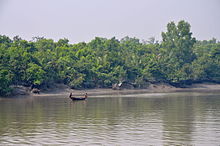
The Tropics are a region of the Earth, roughly defined as the area between the tropic of Cancer and the tropic of Capricorn. Although topography and other factors contribute to
climatic variation, tropical locations are typically warm and experience little seasonal change in day-to-day temperature. An important feature of the Tropics is the prevalence of rain in the moist inner regions near the equator, and that the seasonality of rainfall increases with the distance from the equator. The Tropics account for 40 per cent of the world’s total surface area and are host to approximately 80 per cent of the world’s biodiversity and much of its language and cultural diversity. The tropical region faces a number of challenges such as climate change, deforestation, logging, urbanisation and demographic changes.
Background
The United Nations General Assembly adopted resolution A/RES/70/267 on 14 June
2016, which declared that 29 June of each year is to be observed as the International Day
of the Tropics. Tropical nations have made significant progress, but face a variety of challenges that demand focused attention across a range of development indicators and data in order to achieve sustainable development.
The international Day of the Tropics was designated to raise awareness to the specific
challenges faced by tropical areas, the far-reaching implications of the issues affecting
the world’s tropical zone and the need, at all levels, to raise awareness and to underline
the important role that countries in the tropics will play in achieving the Sustainable
Development Goals .

The Singer, not the Singing

For the past forty years, the Muslim revolutionaries ruling Iran have been imposing and enforcing rulings that resemble medieval laws. In addition, they have written and issued thousands of bizarre and astonishing decrees and declarations that cannot be found anywhere except in surreal stories.
One of the most recent examples is the letter that Mohammad Reza Alirezaee, chairman of the Islamic Council of Abyaneh, wrote last Wednesday (May 2019), to the head of the Natanz Cultural Heritage Bureau. In the letter, Alirezaee expresses serious dissatisfaction with the “unholy and abnormal behavior outside the (Islamic) social norm and the disrespectful acts” as he observed during visits by tourists to the country. The Islamic Council as a result has ordered the cultural heritage authorities to “not allow any tourist, especially those who are in groups, to visit cities without a reliable and knowledgeable guide.” It is clear that the “well-informed and trusted guide” will most likely be a government officer rather than a tourist guide.
While this order from the chairman of the Islamic Council might seem inconceivable to tourists from different countries visiting Iran, these types of letters and orders are quite normal to officials in Iran who receive other similar letters every day. The letter, without any additional explanation, also says that “a damaging singing act has taken place in Abyaneh.” Of course, anybody who is familiar with Iran knows that singing in Iran is not illegal as male members of the Islamic state frequently sing on different occasions. In addition, the state run TV and radio programs also at times broadcast singing of men. In fact, male singers are allowed to travel abroad and perform. But this “damaging act of singing in Abyaneh” has been called a destructive and damaging act when women take part in the singing. According to these Islamic authorities, the activity is fine if the purpose of singing is to generate sadness or tears, but if it causes dancing and happiness in people then it becomes a destructive and damaging act.
These days, not only has Abyaneh been experiencing these so called “damaging acts,” but the other cities as well have seen similar responses from the Islamic Council. Fereidoun Allahyari, General Director of the Cultural Heritage, Handicrafts and Tourism Organization of the Isfahan province, stated after this reported incident that their tour had no connection with the licensed tourist destinations and that he and his organization are completely innocent. In addition, the governor of the city of Natanz has released a series of statements saying that “these tourists have undermined the social customs and historical identity of Abyaneh” and as a result they have been identified and dealt with by Natanz’s prosecutor’s office. Based on these statements and reports, the law enforcement authorities also ordered the arrest of the “Singing Woman” along with her companions and other tourists riding two tourist buses.
It seems that this story is not yet over and may reach the capital, Tehran. Perhaps soon enough Zarif and Rouhani may react to this incident, as well as to the impact of the sanctions on the destruction of the identity of the Muslim people of Iran, in particular that of women.

World Refugee Day

The United Nations’ (UN) World Refugee Day is observed on June 20 each year. This event honors the courage, strength and determination of women, men and children who
are forced to flee their homeland under threat of persecution, conflict and violence. World Refugee Day honors the spirit and courage of millions of refugees worldwide.
World Refugee Day is a global observance and not a public holiday.
Background
For years, many countries and regions have been holding their own events similar to
World Refugee Day. One of the most widespread events is Africa Refugee Day, which is
celebrated on June 20 in many countries. the UN General Assembly adopted a resolution
to express its solidarity with Africa on December 4, 2000.
The resolution noted that 2001 marked the 50th anniversary of the 1951 Convention
relating to the status of refugees, and that the Organization of African Unity (OAU)
agreed to have International Refugee Day coincide with Africa Refugee Day on June 20.
The Assembly therefore decided that June 20 would be celebrated as World Refugee Day
from 2001 onwards. This day was designated by the UN High Commissioner for
Refugees to bring attention to the plight of approximately 14 million refugees around the
world.

***

2019 Theme: #StepWithRefugees — Take A Step on
World Refugee Day
Around the world, communities, schools, businesses, faith groups and people from all
walks of life are taking big and small steps in solidarity with refugees. This World
Refugee Day, we challenge everyone to join together and take a step with refugees. Join
the movement.
Unaided Nation

Underground “shell” to showcase ancient mass grave of shackled skeletons

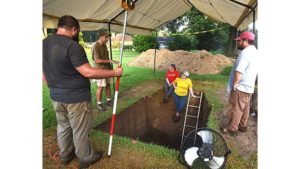
According TornosNews In a session devoted to the ancient mass grave containing some 80 shackled skeletons, found at Stavros Niarchos Foundation Cultural Centre (SNFCC) in the coastal Athens suburb of Paleo Faliro, Greece’s Central Archaeological Council on Tuesday agreed on the specifications of an underground “shell” that will permanently protect and display the archaeological discovery, as well as approving a study on protecting the remains from the rise of brackish water, ANA reports.
The ultimate goal is that this sensational and extremely important archaeological find, discovered in 2016 during works to build the SNFCC, should become a visitable site.
The idea is that, once conditions are right, the three groups of graves will be covered by the construction of a simple and plain underground shell that will blend tastefully with the surrounding landscape of the SNFCC Esplanade and provide the right microclimate, in accordance with environmental requirements.
The project will be extremely architecturally simple and plain and will seek to instill a sense that visitors are descending downward into a resting place for the dead, not entering another “tourist attraction”.
The mass burial of the 80 skeletons, some of which are in chains and bear signs of a violent death, is a rare and extraordinary find that was hailed as one of the 10 most significant archaeological discoveries of 2016 by the U.S. periodical “Archaeology”. The skeletons date back to the turbulent 7th century B.C. – a time of revolutions, uprisings and violence between supporters of the aristocracy and those seeking to overthrow them – while they may be connected with the Cylonian affair.
Photo Source: Greek Ministry of Culture


World Day to Combat Desertification and Drought

Desertification is the degradation of land in arid, semi-arid and dry sub-humid areas. It is caused primarily by human activities and climatic variations. Desertification does not refer to the expansion of existing deserts. It occurs because dryland ecosystems, which cover over one third of the world‘s land area, are extremely vulnerable to overexploitation and inappropriate land use. Poverty, political instability, deforestation, overgrazing and bad irrigation practices can all undermine the productivity of the land.

The World Day to Combat Desertification and Drought is observed every year to promote public awareness of international efforts to combat desertification. The day is a unique moment to remind everyone that land degradation neutrality is achievable through problem-solving, strong community involvement and co-operation at all levels

Background

In December 1994, the United Nations General Assembly declared June 17 the World Day to Combat Desertification and Drought. The assembly acknowledged that desertification and drought were global problems because they affected all regions of the world. The assembly also realized that joint action by the international community was needed to combat desertification and drought, particularly in Africa.

States were invited to devote the World Day to promoting awareness of the need for international cooperation to combat desertification and the effects of drought, and on the implementation of the Convention to Combat Desertification.  Since then, country parties to the United Nations Convention to Combat Desertification (UNCCD), non-governmental organizations and other interested stakeholders celebrate this particular day with outreach activities worldwide on June 17 each year.

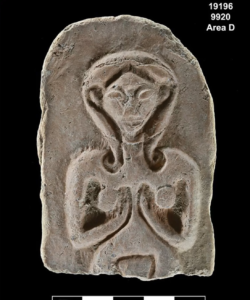
Blood Antiquities Looted from War-torn Yemen Bring in $1 Million at Auction

At least 100 artifacts from Yemen have been successfully sold at auction for an estimated
$1 million in the U.S., Europe and the United Arab Emirates since 2011, according to a Live Science investigation into the country’s so-called “blood antiquities.”

The artifacts include ancient inscriptions, statues, coins and manuscripts from the Middle
Ages, Live Science found after analyzing auction records.

Yemen has a rich history with numerous archaeological remains dating back many
millennia. Museums and some archaeological sites have been looted during the ongoing
civil war. A Live Science investigation recently revealed the trade in Yemen's artifacts.
https://www.livescience.com/

Exploring the Hidden Depths of Corfu: The Ancient Secrets of the Greek Island’s Caves Unlocked

A journey down into the underground depths of the Greek island of Corfu that lasted 15 days and explored 25 caves was completed a few days ago by Dutch speleologist Rene
van Vliet and a team of both local and notable European speleologists and spelunkers.

“ Corfu has more caves than one would expect. Up until now I have collected information on 186 caves and chasms but there are many more on land and in the sea.” Rene van Vliet said to the ANA, noting that another 78 caves remained to be explored.

The team included speleologist Gertjan van Pelt as well as Corfu speleologists and
forestry experts Yiannis Gasteratos and Theodoros Skalitis. Among the caves they visited were those of Platesgourna, Grava, Gravolithia, Pitiri’s Grava, Charos’ Grava,
Bouzavieri’s Grava and Pelaus’ Hole at Ai Mathias.

Filled with stalactites and stalagmites, which reflect the individual ‘history’ of each cave
as they build up over the years, these caves all have their own myths that are associated
with them, van Vliet noted.
TornosNews.gr

Happy World Oceans Day – June 8th

Why Celebrate World Oceans Day?

We celebrate World Oceans Day to remind everyone of the major role the oceans have in
everyday life. They are the lungs of our planet, providing most of the oxygen we breathe.
The purpose of the Day is to inform the public of the impact of human actions on the
ocean, develop a worldwide movement of citizens for the ocean, and mobilize and unite
the world’s population on a project for the sustainable management of the world’s oceans.

They are a major source of food and medicines and a critical part of the biosphere. In the
end, it is a day to celebrate together the beauty, the wealth and the promise of the ocean.
Focus for 2019: Gender and the Ocean. We have an opportunity to explore the gender dimension of humankind’s relationship with the ocean.

This year, we strive to build greater ocean and gender literacy, and to discover possible
ways to promote gender equality in ocean-related activities such as marine scientific
research, fisheries, labour at sea, migration by sea and human trafficking, as well as
policy-making and management.

The importance of gender equality — in particular for the effective conservation and
sustainable use of oceans, seas and marine resources — is increasingly recognized.
However, there is very little data and research on these issues, and a concerted action
towards gender equality and the empowerment of women and girls is still needed in all
ocean-related sectors to achieve Sustainable Development Goal 5.

The UN is hosting a conference in celebration of World Oceans Day . Storytellers and
speakers from around the world will join to share perspectives to build greater ocean and
gender literacy and discover possible ways to promote gender equality in ocean-related
activities.

The Battle Against Plastic Pollution

This year, the President of the General Assembly launched 'Play It Out', a global campaign against plastic pollution. Decades of overuse and a surge in single-use plastics has led to a global environmental catastrophe. Today, 13,000,000 tonnes of plastic leak into the ocean every year, what among other damage, kill 100,000 marine animals
annually. While most plastics are expected to remain intact for decades or centuries after use, those that do erode end up as micro-plastics, consumed by fish and other marine
wildlife, quickly making their way into the global food chain. From plastic straws to plastic bags, we all are at the frontline of efforts to #BeatPlasticPollution.

Coordinated By the UN Office of Legal Affairs, the Division for Ocean Affairs and the
Law of the Sea, the 2019 finalists of the UN WOD Photo Competition will be announced
at the UN celebration on Friday, June 7 th . More information on the competition, previous
finalists and this year's panel of judges is available on the World Oceans Day Photo
Competition website .

#WorldOceansDay #SaveOurOcean

Beer Archaeologists Are Reviving Ancient Ales — With Some Strange Results

The closest that Travis Rupp came to getting fired from Avery Brewing Co. in Boulder, Colo., he says, was the time he tried to make chicha. The recipe for the Peruvian corn-based beer, cobbled together from bits of pre-Incan archaeological evidence, called for chewed corn partially fermented in spit. So, Rupp’s first task had been to persuade his colleagues to gather round a bucket and offer up their chompers for the cause.

Once he got to brewing, the corn-quinoa-spit mixture gelatinized in a stainless steel tank,
creating a dense blob equivalent in volume and texture to about seven bathtubs of
polenta. Oops. In another go, Rupp managed to avoid the brew’s gelatinous fate, but encountered a new problem when it came time to drain the tank. “It literally turned into cement in the pipes because the corn was so finely ground," says Rupp. “People were a little cranky.”

These are the kinds of sticky situations that come with trying to bring ancient flavors into
modern times. A self-proclaimed beer archaeologist, Rupp has traveled the world in search of clues as to how ancient civilizations made and consumed beer. With Avery Brewing Co., he has concocted eight of them in a series called “Ales of Antiquity.” The brews are served in Avery’s restaurant and tasting room.
https://www.npr.org

Polish Archeologists Claim Discovery of Oldest Church in Egypt

According Egypt Independent A church dating back to the fourth century has been unearthed near Alexandria by polish archeologists who claim that it might be oldest church discovered in Egypt, The First News reported .
The discovery is based on research conducted by a team from the University of Warsaw’s Center of Mediterranean Archaeology since 2000, alongside intensive fieldwork.
The mission’s discoveries in Alexandria also include a burial chapel and the largest collection of ceramics excavated in Egypt yet, according to The First News.
The polish team had been excavating a Basilica, which they believed had operated from the fifth century well until the eighth century, when they uncovered the ancient church buried beneath it.
“At the end of the last research season, under the floor of the basilica, we encountered a
wall’s remains, which turned out to be the outer walls of an even older church,” Krzysztof Babraj, who headed research work on the basilica told The First News. Babraj explained that there are no other church remains have been found in the area so far, making this a significant discovery.
Thousands of fragments of the old church have been excavated underneath the discovered Basilica. The church had been devastated by an earthquake, leaving behind nothing but scattered glass, ceramic and limestone wall ruins, according to The First News.
Babraj said that they will resume their research, with the discovery of this church as a just
the beginning.
Photo Credit: Archebooks