According to a report in The Guardian , fluorescent X-ray chemical analysis conducted by scientists at the National Autonomous University of Mexico has revealed that a four-
pound gold bar, unearthed in downtown Mexico City during a 1981 construction project,
was cast between 1519 and 1520. At that time, historical records indicate that Spanish
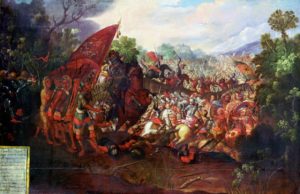
conquistador Hernán Cortés melted down gold objects taken from the Aztec treasury and formed them into gold bars for transport to Europe. The conquistadors are thought to have dropped this gold bar in what had been a canal in the Aztec capital city of
Tenochtitlan while fleeing a battle that began after Moctezuma, the Aztec emperor, was
assassinated. A year later, in 1521, Cortés returned and laid siege to and captured
Tenochtitlan, whose residents had been weakened by smallpox
New Thoughts on the Colonization of the Caribbean
Live Science reports that William Keegan of the Florida Museum of Natural History and Ann Ross of North Carolina State University analyzed the structure of 103 skulls unearthed in the Caribbean, Florida, and Panama, and concluded that the Carib people may have traveled to the Bahamas from South America as early as A.D. 800. When Christopher Columbus arrived in the Bahamas in 1492, he recorded conflicts between the indigenous Arawak and Caribs, whom he described as marauding cannibals. But researchers lacked evidence showing that the Caribs had actually migrated so far north, and therefore doubted the accuracy of the explorer’s account. The new test results and archaeological evidence suggest that Carib settlers from the Yucatán Peninsula reached the Caribbean around 5000 B.C., and they then traveled to Cuba
and the northern Antilles, while Arawaks from Colombia and Venezuela arrived in Puerto Rico between 800 and 200 B.C. The study also indicates that Caribs from the northwest Amazon were the first to arrive in the Bahamas and the island of Hispaniola. Keegan said this migration pattern fits with the spread of a unique pottery type as well. He and Ross now think Columbus may have actually encountered the Caribs, but they said that there is still no real evidence that the Caribs practiced cannibalism..”
A new kind of research is blossoming at Historic Jamestown
After decades of research, a new project with Jamestown Rediscovery is highlighting a little-known aspect of 17th century life. Cathrine Davis, a PhD student in anthropology at William & Mary and extern at Historic Jamestown, has undertaken a project to organize and classify hundreds of lead seals that have been found on the site.
The seals have been discovered on the site since Jamestown Rediscovery started in 1994, said Leah Stricker, associate curator at Historic Jamestown. They help understand and identify the shipping and creation of textiles in Jamestown.
“Lead seals are like clothing tags,” Davis said. “They’re attached to goods and give
information about their origins, merchants that sold them and dyers. They track the
movement of textiles throughout the production system.”
Stricker said each lead seal is different and unique, providing a look into different stamps from various locations and most times even having imprints of the material on them. Davis said there aren’t that many scholars researching the topic, making her one of the only specialists of lead seals in North America. She said she first became interested in lead seals as a student in Michigan where she was learning how goods were packaged in the fur trade. A professor told her about lead seals and she realized that no one was researching the topic. “It’s a very small world, so there’s little known about them,” she said. “That’s what makes them so rewarding, I’m doing all my own original research for the most part andit’s like a giant jigsaw puzzle. It’s a whole different world.” At Historic Jamestown, Davis started a project this semester to identify, organize and catalog the more than 300 lead seals in the collection.
Stricker said the project is important to the organization’s research because it makes it
easier for local and surrounding archaeologists to better access the information. Once
Davis is done, a researcher can come to Historic Jamestown and find, identify and match new lead seals with ones already in the collection. She said the goal is to have the collection accessible to researchers online as well. But more importantly, organizing and understanding the lead seals gives historians a greater insight to life in the Jamestown Colony.
“These help us look at bigger questions, like international trade and what was going on in the world,” Stricker said. “It seems like now our world is more globalized than ever, but even in 1607 there was a huge movement of trade.” Davis said it helps the interpreters at Historic Jamestown to better understand their clothing, which is an aspect of historical research that is missed because textiles don’t preserve well over time. “We know a lot about how people were living but not a lot about what they were
wearing,” she said. Davis expects to have the project completed by May, at which point archaeologists from all over can utilize her work. But until then, she is content to continue putting together the pieces of this historical puzzle.
https://wydaily.com/local-news/2019/12/26/a-new-kind-of-research-is-blossoming-at-
historic-jamestown/
Archaeologists Have Discovered the World’s Oldest Illustrated Book in an Ancient Egyptian Burial Site
By Sarah Cascone
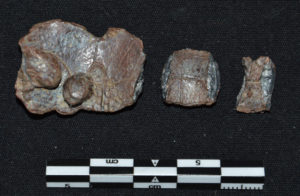
Egyptologists have discovered the oldest copy of what is being called the world’s first illustrated book, a 4,000-year-old edition of the “Book of Two Ways,” an ancient Egyptian guide to the afterlife considered to be a forerunner to the “Book of the Dead.” The text predates previously known versions by some 40 years. The find was first published in the Journal of Egyptian Archaeology in September by Harco Willems, a professor at the University of Leuven in Belgium. Unlike modern books, these historic writings weren’t inscribed on bound pages, but on the walls of sarcophagi. They were meant to aid the deceased through the perilous journey to the underworld, during which they might be beset by demons or raging fires. If one were to cast the correct spells, he or she might achieve immortality. Though the plank’s inscriptions reference a governor named Djehutynakht, Willems’s research has revealed that the coffin originally held the remains of a woman named Ankh, referred to throughout the text as “he.” That is in keeping with Egyptian mythology, where rebirth was the purview of male deities, and dead women adopted male pronouns to be more like Osiris, god of death.
Coffin fragments bearing the earliest known version of the “Book of Two Ways,” an
ancient Egyptian text considered the world’s first illustrated book. Photo courtesy of
Harco Willems. “To me, what’s funny is the idea that how you survive in the netherworld is expressed in male terms,” Willems told the New York Times .
The Egyptologist has overseen digs at the Coptic necropolis of Dayr al-Barshā, used as a cemetery during the Middle Kingdom period, from about 2055 to 1650 B.C, since 2001. He excavated the ancient coffin fragments about 20 feet down a burial shaft at the complex of an ancient Egyptian provincial governor, or nomarch, named Ahanakhtin, in 2012. The fragile state of the artifacts, repeatedly ransacked by looters long ago, prevented them from being studied until now.
The planks of wood bear carved ink inscriptions and painted illustrations meant to ensure successful passage through the netherworld to Rostau, the realm of Osiris. (The text is called the “Book of Two Ways” because it offers instructions on how to travel either by land or by water.)
The pigments, however, have faded with time, and the faint markings are visible largely
thanks to high resolution imagery processed with DStretch software. Based on inscriptions on other tomb artifacts referencing Pharaoh Mentuhotep II, who reigned until 2010 B.C., Willems believes this newly identified “Book of Two Ways” is at least four decades older than any of the two dozen previously known versions of the text.
https://news.artnet.com/art-world/ancient-egyptian-oldest-book-1744110
An Open Letter to President Trump, the President of the United States of America
Targeting our cultural heritage is complicit with the ruling regime in Iran.
Dear President Trump,
You are the only U.S. president who has explicitly opposed the Iranian regime for the past 40 years. You have repeatedly stated your support for the people of Iran and the unique culture of Iran. You and your important government figures have repeatedly stated that the United States of America stands with the Iranian people in these difficult and critical times in which the Iranian regime has imposed upon the Iranian people.
Even the Iranian-Americans living in the U.S, who did not vote for you three years ago, appreciate the U.S. support for the Iranian people who have suffered so much under this oppressive Iranian regime.
Unfortunately, however, your recent remarks about “targeting 52 sites in Iran which also include Iranian cultural heritage sites” is shocking to all Iranians who care deeply about that country yet oppose the regime.
Mr. President, Iranians have been witnessing the destruction of their unique and great cultural and historical heritage for 40 years by the Islamic Republic’s oppressive culture and regime. For over 40 years, we—the lovers of Iran’s cultural and historical heritage—have reported and asked for the assistance of all the cultural centers of different countries, including the United States, the United Nations, and UNESCO, for assistance in stopping the destruction of beautiful historical and cultural sites and monuments by the ruling Iranian regime. These heritage sites not only belong to the people of Iran but also belong to humanity and the global community. Now, would you want to destroy these invaluable, priceless historical and cultural heritage sites to retaliate for the actions of the ruling regime in Iran?
President Trump, while your recent remarks have been of great concern for all the lovers of world cultural heritage, they have unfortunately made the heads of the Iranian regime very happy. They have tried their best to destroy Iran’s cultural, environmental, and historical heritage over the last 40 years and any destruction of these sites by anyone, for any reason, will be of complete complicity with the ruling regime in Iran.
Sincerely yours
Shokooh Mirzadegi
Executive Officer of Pasargad Heritage Foundation
January 5, 2020
Tourists sentenced for damaging world heritage site in China
It has been reported by the Chinese news outlets, three tourists were sentenced to prison and have been fined 6 million yuan (about 859,900 U.S. dollars) in total for causing damage to a world heritage site in east. China’s Jiangxi Province.
The three tourists from neighboring Zhejiang Province drilled 26 holes in a 128-meter-tall rock on Sanqing Mountain, a world natural heritage site, and used ropes to climb to the top of the rock on April 15, 2017, according to the site’s administration committee and the local authorities.
The rock, known as the “Giant Python of the Mountain,” is of scientific and aesthetic significance which archeologists believe has evolved over the last 300 million years. The rock however has been reported to have poor stability and is only seven meters in diameter at the thinnest part.
Geological experts said the rock had sustained damage from the tourists’ drilling.
One tourist surnamed Zhang was sentenced to one year and a tourist surnamed Mao was sentenced to six months. The total fine will be used to protect and restore ecological environment.
The Sanqingshan UNESCO Global Geopark in Jiangxi Province was added to the World Heritage List in April 2019, and is famous for the juxtaposition of granite stones and vegetation.
Iran’s dire environmental crisis
As far back as a decade ago, the Iranian and international newspapers were reporting on the drought and desertification in Iran. In 2015, the New York Times reported on the problem in an article titled: “The Empty River of Life”
https://www.nytimes.com/2015/05/06/world/middleeast/iran-our-man-in-tehran.html. Now almost at the beginning of the second decade of the 21 st century the desertification across Iran has worsened so much that the consequences could have dire and irreparable consequences for the country. In a new report by Iran International, titled, “Desert Invasion across Iran”, that reality has been witnessed.
It has been reported that Khosrow Shahbazi, the head of Iranian Forest, Rangeland and
Watershed, at a meeting with the Governor of Gilan (a province in the north of Iran by the Caspian Sea) on December 1 st , 2019, stated that about one hundred million hectares of the country’s lands are subject to desertification.
Desertification is a process whereby the biological productivity or ability of the environment to support life such as vegetation is greatly diminished. The scientists have stated that this gradual and drastic decrease in productivity may be due to several factors such as climate change, deforestation, unhealthy grazing, poverty, political instability, unstable irrigation, and inadequate management of water resources (surface and groundwater) or a combination of these factors.
This has happened in many areas of the world including in some countries in Africa. What is for certain based on many reports as well as evidence the environmental policies of Iranian agencies have had major impact on these catastrophic environmental changes.
Iran is a country with varied natural landscapes composed of arid and dry desert ecosystems, as well as plains, grasslands, and forests. However, even the northern forests have been drastically changing. According to Mohammad Darwish, a member of the faculty of forests and rangelands, the forests have been changing due to forest tree disease, man-made deforestation under the pretext of development, increased soil erosion, flooding and land subsidence. Other factors include wood harvesting, the establishment of industrial and mining units, animal husbandry.
De-forestation is more severe in Golestan province, and northern forests follow the path that Zagros began decades ago, despite warnings given by the scientists and environmentalists.
Acoording to Isa Callanti, the head of the Environmental Protection Agency, between 2 to 5 hectares of Zagros forests are drying out annually, but the situation is much worse in rangelands, prairies and drier areas.
The environmentalists believe that dams (built in recent years) are the main culprit in many parts of Iran. For example, the dam built on Zohreh River has been the cause of drying of Hendijan plain. In Sistan and Baluchistan, the sandstorms and the influx of sand have greatly increased due to desertification and the dam on the Helmand River in Afghanistan has been drying up the lakes Sistan and Baluchistan. In another part of the country, excessive grazing and drought has caused the gradual death of semi-green rangelands in Isfahan province. According to statistics available, over 6,000 villages in Iran have been affected by this phenomenon since the past 5 years, reflecting the severity of desertification in Iran.
The rapidly advancing desertification phenomenon has received little attention or consideration from the Iranian governmental agencies while they still continue with poor environmental management decisions which are now negatively and drastically impacting the country with dire environmental consequences.
Happy New Year 2020
Happy New Year
Dear friends, supporters, and members of World Cultural Heritage Voices. On behalf of our colleagues and volunteers at WCHV and on the occasion of the New Year, I would like to thank you for your generous support in 2019, which has been so
instrumental in achieving our goals and mission.
We hope that you, as a valued supporter, friend and member of our organization,
continue to play an active role in supporting us to meet our goals in the coming year.
Sincerely,
Shokooh Mirzadegi
Executive Director
12.27.2019
www.wchv.org
Archaeologists accidentally break eggs that had been going off for 1,700 years
Archaeologists accidentally broke three Roman eggs that had been going off for 1,700 years.
The excavators unearthed a basket of four chickens’ eggs in a waterlogged pit during a dig in Aylesbury, Buckinghamshire.
Three of the eggs cracked, releasing an overpowering “potent stench”, however the team managed to preserve the fourth one – making it the only complete Roman chicken’s egg found in Britain. Experts from Oxford Archaeology think the waterlogged pit may have been used as a sort of Roman wishing well. Stuart Foreman, dig project manager, said: “There’s a very good reason it’s the first and only find in the UK.”
He added: “In a pit that has been waterlogged for thousands of years you get things that would never survive in a dry environment.
“But it’s incredible we even got one out. They were so fragile.” Alongside the eggs were dozens of coins, shoes, wooden tools and a “very rare” basket.
© Provided by The Independent Edward Biddulph, who spent three years analysing the
find, added: “Passers-by would have perhaps stopped to throw in offerings to make a
wish for the gods of the underworld to fulfil.
“The Romans associated eggs with rebirth and fertility, for obvious reasons.
Read more: https://www.msn.com/en-au/news/techandscience/archaeologists-
accidentally-break-eggs-that-had-been-going-off-for-1700-years/ar-BBXTaJM
Ancient monkey painting suggests Bronze Age Greeks travelled widely
By Michael Marshall
A Bronze Age painting on a Greek island shows a monkey from thousands of kilometres away in Asia. The finding suggests that ancient cultures separated by great distances were trading and exchanging ideas.
The artwork is one of several wall paintings in a building at Akrotiri on the Greek island of Thera (Santorini) in the Aegean Sea. Akrotiri was a settlement of the Minoan civilisation in Bronze Age Greece that was buried by ash from a volcanic eruption in around 1600 BC.
Many of the paintings show monkeys, yet there were no monkeys in Greece at the time.
Most of the monkeys have been identified as Egyptian species like olive baboons. This
makes sense because Egypt was in contact with the Minoan civilisation, which was
spread across several Aegean islands. However, others were harder to identify.
Marie Nicole Pareja at the University of Pennsylvania in Philadelphia teamed up with
primatologists to re-examine the mystery monkey paintings. One stood out. “When they
looked at this wall painting, they all straight away unambiguously said ‘that’s a langur’,”
says Pareja.
The real utopia: This ancient civilisation thrived without war
The team has identified the monkey as a grey langur ( Semnopithecus ). As well as its
distinctive fur, the monkey was depicted holding its tail in a characteristic S shape.
Grey langurs live in southern Asia in what is now Nepal, Bhutan and India – and
particularly in the Indus Valley. During the Bronze Age, the region was home to the
Indus Valley Civilisation, one of the most important societies of that time. Although it
was past its peak, the Indus Valley Civilisation was still advanced for its time, with large
cities and elaborate water supply systems.
Somehow, the artist who painted the monkey picture must have seen a grey langur. But
how? Did Minoan Greeks visit the Indus? “I wouldn’t be surprised if someday in the future we found evidence for that kind of direct contact,” says Pareja, but right now there is none. It is also possible the visit was the other way round, but again there is no evidence. Instead, it may be that Greece and Indus were connected via Mesopotamia, another Bronze Age civilisation centred on what is now Iraq. Langurs may have been imported to Mesopotamia for menageries, where visiting Greeks saw them.
“It’s evidence of this far-reaching trade, these relationships with these far-flung areas,”
says Pareja. Even in the Bronze Age, it seems there was a lot of exchange between
seemingly separate civilisations.
https://www.newscientist.com/article/2227146-ancient-monkey-painting-suggests-
bronze-age-greeks-travelled-widely/#ixzz69cVmypv8