We believe that all cultural, historical and natural heritage, wherever they are should be preserved. LEARN MORE
News

Default Category

Statement from the Pasargad Heritage Foundation Mehregan: a message of love and enlightenment

Statement from the Pasargad Heritage Foundation
Mehregan: a message of love and enlightenment
(10th – 16th Mehr – 1st – 7 h October)

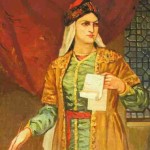
Mehrgaan : Painting by Nestor Rakhshani

We are now on the eve of one of the largest celebrations in the world, the Mehregan celebration, which dates back thousands of years.
Mehregan is a nonreligious and apolitical celebration which to this day remains a symbol of beauty and new beginnings, as it carries a compassionate and cherished message.
Mehregan fosters a message of love and enlightenment, and for this reason it is known as “the Day of Love” in Iranian culture. It is also a day of commemoration for “fulfillment of the covenant,” because in our ancient culture, breaking the promise or pledge was considered deceitful and destructive as one of the worst sins.
Another important aspect of Mehregan, like other Iranian celebrations, is its secularity. During Mehregan, all people, regardless of gender, faith, religion, or race can be together, celebrating and sharing their joy.
Unfortunately for the last forty-two years, due to the dominance of an anti-Iranian culture and religious government, Iranians have not been able to hold and celebrate their national and non-religious celebrations easily, yet these festivities deserve to be celebrated in Iran.
This year, in particular because of challenges and problems from the pandemic and COVID-19, people have had more difficulty holding celebrations, even for Iranians abroad, therefore severely reducing and limiting the celebration of Mehregan and other annual events.
The Pasargad Heritage Foundation, like every year, asks the friends of Iranian culture to participate in the Mehregan celebration and to help preserve and spread its invaluable messages however possible.
This year our advice to lovers of Iranian culture, especially young people, is to use the internet and social media and to celebrate Mehregan with new initiatives and in a virtual way.
And let us not forget, in every Iranian celebration and ritual, to honor the memories of the martyrs and prisoners in Iran who have been fighting for freedom, so as to give more meaning and honor to our celebrations by remembering them and their names.
With kindness and joy,

Shokooh Mirzadegi
Pasargad Heritage Foundation
September 24, 2020
www.savepasargad.com

Wild birds as offerings to the Egyptian gods

Millions of ibis and birds of prey mummies, sacrificed to the Egyptian gods Horus, Ra or Thoth, have been discovered in the necropolises of the Nile Valley. Such a quantity of mummified birds raises the question of their origin: Were they bred, like cats, or were they hunted? Scientists from the CNRS, the Université Claude Bernard Lyon 1 and the C2RMF have carried out extensive geochemical analyses on mummies from the Musée des Confluences, Lyon. According to their results, published on 22nd September 2020 in the journal Scientific Reports, they were wild birds.

Mammals, reptiles, birds: The tens of millions of animal mummies deposited as offerings in the necropolises of the Nile Valley bear witness to an intense religious fervor, and to the practices of collecting and preparing animals that undoubtedly contributed significantly to the economy from the Old Kingdom (3rd millennium BC) to Roman Egypt (1st-3rd centuries AD). However, the origin of these animals and the methods of supply remain unknown. For some tamed species, such as the cat, breeding was probably the most efficient way of supplying large numbers of animals for mummification. But unlike cats, bird mummies cover all stages of development, from egg to adult, which may indicate more opportunistic sourcing practices.

In order to determine the origin—breeding or hunting—of the mummified birds, tiny fragments of feathers, bones and embalming strips were taken from 20 ibis and birds of prey mummies from the collections of the Musée des Confluences, Lyon. If these birds, which migrate in the wild, had been bred, their diet would have been homogeneous, of local origin and reflected in the uniform isotopic composition of the animal remains, regardless as to whether that diet had been produced specifically or derived from that of coexisting humans.

The various tissues were therefore dated using the carbon-14 method and the isotopic compositions of oxygen, carbon, nitrogen, sulfur and strontium were measured, interpreted in terms of food sources and compared with those of contemporaneous human mummies. However, far from being homogeneous, these isotopic compositions showed a high variability and ‘exotic’ signatures compared to those of ancient Egyptian humans: the birds were wild, migrating seasonally out of the Nile Valley.

These results, combined with that of a genetic study carried out by another team, suggest the mass hunting and capture of birds as documented on certain tomb frescoes (for example, on the wall of Nakht’s tomb in the Theban Necropolis). Indeed, the Egyptians probably exerted a significant ecological pressure on wild bird populations long before the decline in avifauna observed today.

https://phys.org/news/2020-09-wild-birds-egyptian-gods.html

Oxford Museum Removes Controversial Shrunken Heads Display Which ‘Reinforced Racist Thinking’

The University of Oxford’s Pitt Rivers Museum has removed a collection of shrunken heads on display over concerns that they “reinforced racist and stereotypical thinking.”
On Monday, the acclaimed museum shared in a statement that visitors will see a number of “contentious displays” removed from its exhibits when its doors reopen to the public on Sept. 22.
The museum — which is one of the leading museums of anthropology, ethnography, and archaeology in the world — has removed 1230 human remains from its display as part of a museum-wide effort to “decolonize” the institution.
According to The Washington Post, decolonizing is described as “a process that institutions undergo to expand the perspectives they portray beyond those of the dominant cultural group, particularly white colonizers.”
RELATED: Spy Museum Plans to Change Torture Exhibit After Outcry from Lawmakers
Among the remains removed are the South American tsantas, also known as the “shrunken heads,” which were acquired by the museum between 1884 and 1936.
While the heads have been one of the museum’s most popular attractions since the 1940s, museum director Laura Van Broekhoven said that many visitors found the remains as “a testament to other cultures being ‘savage’, ‘primitive’ or ‘gruesome’.”
According to the museum, during the 19th and 20th centuries, the shrunken heads were collector’s items and were often traded by colonialists. These exchanges led “to a steep increase in violent warfare” at the time.
“Rather than enabling our visitors to reach a deeper understanding of each other’s ways of being, the displays reinforced racist and stereotypical thinking that goes against the Museum’s values today,” she continued. “The removal of the human remains also brings us in line with sector guidelines and code of ethics.”
The Shuar and Achuar communities — who created the tsantas — have long argued the removal of the heads from museums.
“We don’t want to be thought of as dead people to be exhibited in a museum, described in a book, or recorded on film… Our ancestors handed over these sacred objects without fully realizing the implications,” Shuar indigenous leaders, Miguel Puwáinchir and Felipe Tsenkush, explained in the statement.
RELATED: Auschwitz Museum Calls TikTok Trend of Teens Role-Playing as Holocaust Victims ‘Offensive’
The museum began an ethical review of its artifacts in 2017 in order to identify and prioritize displays that “required urgent attention because of the derogatory language used in the historic case labels or because they played into stereotypical thinking about cultures across the globe.”
Marenka Thompson-Odlum, a research associate who helped to curate the new displays, explained that removing the artifacts should not be considered a loss.
“What we are trying to show is that we aren’t losing anything but creating space for more expansive stories,” she said. “That is at the heart of decolonisation. We are allowing new avenues of story-telling and ways of being to be highlighted.”
According to the museum statement, Pitt Rivers still houses more than 2,800 human remains and is continuing to reach out to descendant communities to “find the most appropriate way to care for these complex items.”
When the museum reopens later this month, informational signs will be displayed in place of the artifacts to explain their removal.

International Day for the Preservation of the Ozone Layer

In 1994, the UN General Assembly proclaimed 16 September the International Day for the Preservation of the Ozone Layer, commemorating the date of the signing, in 1987, of the Montreal Protocol on Substances that Deplete the Ozone Layer (resolution 49/114).
The principal aim of the Montreal Protocol is to protect the ozone layer by taking measures to control total global production and consumption of substances that deplete it, with the ultimate objective of their elimination on the basis of developments in scientific knowledge and technological information.
The ozone layer, a fragile shield of gas, protects the Earth from the harmful portion of the rays of the sun, thus helping preserve life on the planet.
The phaseout of controlled uses of ozone depleting substances and the related reductions have not only helped protect the ozone layer for this and future generations, but have also contributed significantly to global efforts to address climate change; furthermore, it has protected human health and ecosystems by limiting the harmful ultraviolet radiation from reaching the Earth.

Iron Age Winepress Unearthed in Lebanon

TÜBINGEN,GERMANY—According to a statement released by the University of
Tübingen , an Iron Age winepress has been unearthed in Lebanon at the Phoenician site of Tell el-Burak, a small settlement inhabited from the late eighth to the middle of the fourth century B.C. The seventh-century B.C. winepress was built into the slope of a hill with plaster made of lime and crushed ceramics. Such lime plaster, made with a technique also used by the Romans, was hardwearing and water-resistant. Adriano Orsingher, Jens Kamlah, Silvia Amicone, and Christoph Berthold of the University of Tübingen and Hélène Sader of the American University in Beirut suggest the settlement was founded to supply the nearby trading town of Sidon with agricultural products. Earlier research at the site uncovered evidence of large-scale grape cultivation and a large number of amphoras that may have been used to transport wine.

Did Early Humans Cook Their Meals in Hot Springs?

BOSTON, MASSACHUSETTS—According to a statement released by the Massachusetts Institute of Technology (MIT), an international team of researchers suggests that early humans living in East Africa may have cooked their food in hot
springs. Team member Ainara Sistiaga of MIT and the University of Copenhagen was looking for traces of leaf waxes in 1.7 million-year-old sediments found near stone tools and animal bones at a site in Tanzania’s Olduvai Gorge in order to study the ancient climate when she found lipids similar to those produced by bacteria living in the very hot springs at Yellowstone National Park. Sistiaga said the tectonic activity in the Great Rift Valley could have brought boiling groundwater to the surface. And, she explained, if an animal fell into the water and cooked, the early humans may have eaten it, although Sistiaga noted that detecting direct evidence of such behavior will be difficult. The team members will look for evidence of hot springs at other early human archaeological sites.

International Day of Democracy

The United Nations’ (UN) International Day of Democracy is annually held on September 15 to raise public awareness about democracy. Various activities and events are held around the world to promote democracy on this date.
Background
The UN strives to achieve its goals of peace, human rights and development. It believes that human rights and the rule of law are best protected in democratic societies. The UN also recognizes a fundamental truth about democracy everywhere – that democracy is the product of a strong, active and vocal civil society.
The UN general assembly decided on November 8, 2007, to make September 15 as the annual date to observe the International Day of Democracy. The assembly invited people and organizations, both government and non-government, to commemorate the International Day of Democracy. It also called for all governments to strengthen their national programs devoted to promoting and consolidating democracy. The assembly encouraged regional and other intergovernmental organizations to share their experiences in promoting democracy.
The International Day of Democracy was first celebrated in 2008. The UN general assembly recognized that the year 2008 marked the 20th anniversary of the first International Conference of New or Restored Democracies, which gave people a chance to focus on promoting and consolidating democracy worldwide.

International Day of Clean Air for Blue skies

The Day aims to:
1. Raise public awareness at all levels—individual, community, corporate and government—that clean air is important for health, productivity, the economy and
the environment.
2. Demonstrate the close link of air quality to other environmental/ developmental challenges such as – most and foremost – climate change and the global Sustainable Development Goals.
3. Promote and facilitate solutions that improve air quality by sharing actionable
knowledge best practices, innovations, and success stories.
4. Bring together diverse international actors working on this topic to form a
strategic alliance to gain momentum for concerted national, regional and
international approaches for effective air quality management.
The United Nations General Assembly adopted the resolution to hold an International
Day of Clean Air for blue skies on December 19, 2019, during its 74th session and
invited the United Nations Environment Programme ( UNEP ) to facilitate the observance of the International Day, in collaboration with other relevant organizations. The Climate and Clean Air Coalition ( CCAC ) worked with UNEP and the Republic of Korea to advocate for the day in the lead up to the decision.

Radiocarbon dating and CT scans reveal Bronze Age tradition of keeping human remains

Using radiocarbon dating and CT scanning to study ancient bones, researchers have uncovered for the first time a Bronze Age tradition of retaining and curating human
remains as relics over several generations.

While the findings, led by the University of Bristol and published in the journal Antiquity, may seem eerie or even gruesome by today’s convention, they indicate a tangible way of honouring and remembering known individuals between close communities and generations some 4,500 years ago.

“Even in modern secular societies, human remains are seen as particularly powerful
objects, and this seems to hold true for people of the Bronze Age. However, they treated and interacted with the dead in ways which are inconceivably macabre to us today,” said lead author, Dr Thomas Booth, who carried out the radiocarbon dating work at the university’s School of Chemistry.

“After radiocarbon dating Bronze Age human remains alongside other materials buried
with them, we found many of the partial remains had been buried a significant time after
the person had died, suggesting a tradition of retaining and curating human remains.”

“People seem to have curated the remains of people who had lived within living or
cultural memory, and who likely played an important role in their life or their communities, or with whom they had a well-defined relationship, whether that was direct
family, a tradesperson, a friend or even an enemy, so they had a relic to remember and
perhaps tell stories about them,” said Dr Booth.

In one extraordinary case from Wiltshire, a human thigh bone had been crafted to make a musical instrument and included as a grave good with the burial of a man found close to Stonehenge. The carefully carved and polished artefact, found with other items, including stone and bronze axes, a bone plate, a tusk, and a unique ceremonial pronged object, are displayed in the Wiltshire Museum. Radiocarbon dating of this musical instrument suggests it belonged to someone this person knew during their lifetime.

“Although fragments of human bone were included as grave goods with the dead, they
were also kept in the homes of the living, buried under house floors and even placed on
display,” said Professor Joanna Brück, principal investigator on the project, and Visiting
Professor at the University of Bristol’s Department of Anthropology and Archaeology.

“This suggests that Bronze Age people did not view human remains with the sense of
horror or disgust that we might feel today.”

The team also used microcomputed tomography (micro-CT) at the Natural History
Museum to look at microscopic changes to the bone produced by bacteria, to get an
indication of how the body was treated while it was decomposing.

“The micro-CT scanning suggested these bones had come from bodies that had been
treated in similar ways to what we see for Bronze Age human remains more generally.
Some had been cremated before being split up, some bones were exhumed after burial, and some had been de-fleshed by being left to decompose on the ground,” Dr Booth said.

“This suggests that there was no established protocol for the treatment of bodies whose
remains were destined to be curated, and the decisions and rites leading to the curation of their remains took place afterwards.”

There is already evidence people living in Britain during the Bronze Age practiced a
range of funerary rites, including primary burial, excarnation, cremation and
mummification. However, this research reveals the dead were encountered not just in a
funerary context, but that human remains were regularly kept and circulated amongst the living.

These findings may tell us something about how Bronze Age communities in Britain
drew upon memory and the past to create their own social identities. Unlike our regard
for saintly relics today, they do not seem to have focused on very old human remains and the distant past of ancestors, rather they were concerned with the remains of those within living memory.

“This study really highlights the strangeness and perhaps the unknowable nature of the
distant past from a present-day perspective. It seems the power of these human remains lay in the way they referenced tangible relationships between people in these
communities and not as a way of connecting people with a distant mythical past,” said Dr. Booth.
https://phys.org/news/2020-08-radiocarbon-dating-ct-scans-reveal.html

Archaeologists Find Unique 1,400-Year-Old Christian Artifact

A total of 14 fragments from the ancient vessel were found hidden in the remains of a 6th century Christian church, inside the previously occupied Roman fort of Vindolanda.

“This is a really exciting find from a poorly understood period in the history of Britain,” said lead author Dr. David Petts , a researcher in the Department of Archaeology at Durham University.

“Its apparent connections with the early Christian church are incredibly important, and
this curious vessel is unique in a British context.”

“It is clear that further work on this discovery will tell us much about the development of
early Christianity in beginning of the medieval period.”

Each fragment of the ancient chalice was found to be covered by lightly etched symbols, each representing different forms of Christian iconography from the time.

The marks appear to have been added, both to the outside and the inside of this cup, by the same hand or artist and although they are now difficult to see with the naked eye, with the aid of specialist photography, the symbols have been carefully recorded and work has started on a new journey of discovery to unlock their meanings.

The etchings include some well-known symbols from the early church including ships,
crosses and chi-rho, fish, a whale, a happy bishop, angels, members of a congregation,
letters in Latin, Greek and potentially Ogam.

Fragments of the 1,400-year-old Christian chalice found at Vindolanda in
Northumberland, northern England. Image credit: Vindolanda Trust.

“We are used to first’s and the wow factor from our impressive Roman remains at
Vindolanda with artifacts such as the ink tablets, boxing gloves, boots and shoes, but to
have an object like the chalice survive into the post-Roman landscape is just as
significant,” said Dr. Andrew Birley , director of excavations and CEO of the Vindolanda
Trust.

“Its discovery helps us appreciate how the site of Vindolanda and its community survived beyond the fall of Rome and yet remained connected to a spiritual successor in the form of Christianity which in many ways was just as wide reaching and transformative as what had come before it.”

“I am delighted that we can now start to share our news about this discovery and shed
some light on an often-overlooked period of our heritage and past.”
http://www.sci-news.com/archaeology/christian-chalice-vindolanda-08803.html