 Learn from evergreen trees
Yalda is one of the few celebrations in the world that is thousands of years old. This festive event has gone through many highs and lows. And more than any other Iranian festivity, it has been targeted by oppressors who detest joy, music, and celebration, those who cannot even stand the sight of the cypress tree that the pre-Islamic Iranians beautifully decorated every year.
The Persians loved plants, especially the evergreen cypress and pine trees, because of their extraordinary interest in nature (and the fact that in ancient Persia, political and religious leaders encouraged them to preserve nature). They could see that these trees were resilient, standing tall, green, and proud in the face of snow, storms, and cold as winter cold blew through the land, and that these magnificent trees welcome spring in short time with freshness and joy.
It is not a surprise that the cypress has played a prominent role in all of our history: in stories, in rituals, in poetry and literature and art, in architecture and reliefs and inscriptions, and on fabrics and carpets.
I believe it is quite clear that the custom of hanging colorful and cheerful cloths (fabrics and materials) on ancient trees, to which people still adhere to in corners of Iran, is a continuation of the same ancient ritual of decorating cedar and pine trees on the occasion of Yalda. All of these rituals have changed over the last few centuries because during different times, people have been fearful of religious zealots and fanatical leadership.
However, today people who decorate trees come from many different cultural and religious backgrounds. It is good that centuries before the Arab invasion, our evergreen tree and the ritual of decorating the tree was exported to Europe with the followers of Mehr, or Mithra. In Europe the practice and rituals of decorating an evergreen tree was adopted by the Christians and to this day, around the same time as Yalda, in the houses and streets of many countries around the world, this beautiful and glorious tradition is practiced and celebrated. Although as Iranians we have been deprived of the gift of Yalda cypresses in our homes and streets for centuries, we fortunately still celebrate Yalda. Despite the oppression, this beautiful festive date with its green cypress has been engraved in our hearts and mind.
Yalda’s tradition has been with us for a long time, with its enduring light, joy, and the thought of its evergreen, even when they changed the name to “Chelleh.” Even when we have been forced to gather in the corners of our houses for this celebration of sun and love, instead of celebrating it with dancing and singing in public streets and alleyways. Let’s celebrate with pride and joy and away from the eyes of oppression.
Unfortunately, this year, on the eve of the great Yalda, the people of Iran are experiencing immense suffering, pain, and darkness. Both the pandemic and the monster of darkness and tyranny of the Islamic government has fallen on our land. But it is at this time that Yalda reminds us to learn from the evergreens and t0 attain enlightenment. It is not solely our spring of love, but also our wish for future generations’ of happiness and freedom that our people truly deserve.
Next to the Yalda’s ornamented and adorned cypress tree, I wish everyone happiness and a spring of freedom illuminating our land to come.
Desember 20. 2020
News
Scientists Evaluate Effect of Volcanic Ash on Pompeii’s Murals
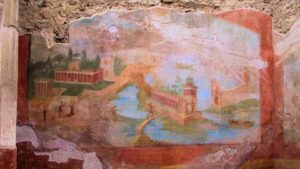 According to a statement released by the University of the Basque Country , a team of archaeologists and chemists analyzed wall paintings at Pompeii’s House of Marcus Lucretius, the House of Ariadne, and the House of the Golden Cupids. The murals in these structures were covered with pyroclastic materials when Mount Vesuvius erupted in A.D. 79 and buried the Roman city. Although the layer of ash has preserved the artwork for the past 2,000 years, the researchers found that ions in the pyroclastic materials combine with underground water and promote the crystallization of damaging salts on the artworks when they are uncovered and exposed to air and humidity. Team leader Maite Maguregui concluded that it is important to understand the salt load of the volcanic material in a particular area of Pompeii in order to reduce or even prevent salt damage to the ancient murals.
800-Year-Old Inscription Discovered in Southern India
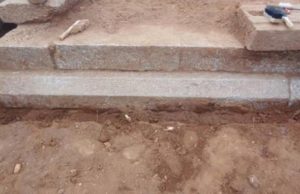 According to a New Indian Express report, archaeologists have found a Chola-period inscription dated to A.D. 1260 in India’s southern state of Tamil Nadu. The inscription, written by King Vanenja Perumalana Vanakovarayan, refers to a canal and connecting lakes. “During his rule, a canal was built at the south side of Arni lake, and the canal was linked to a lake in Moorkanur,” explained D. Ramesh of the Villupuram Government
Arts College. “Another canal, dug up at the south side of the lake in Moorkanur, was
linked with a lake in Kaduvanur,” he added.
World Soil Day
 Keep soil alive, protect soil biodiversity
Plants nurture a whole world of creatures in the soil, that in return feed and protect the
plants. This diverse community of living organisms keeps the soil healthy and fertile.
This vast world constitutes soil biodiversity and determines the main biogeochemical
processes that make life possible on Earth.
This year, by addressing the increasing challenges of soil management, the Food and
Agriculture Organization (FAO) campaign ” Keep soil alive, protect soil biodiversity “
aims to raise awareness of the importance of sustaining healthy ecosystems and human well-being. By encouraging people around the world to engage in proactively improving soil health, the campaign also aims to fight soil biodiversity loss. If we do not act soon, the fertility of soil will continue to be adversely affected at an alarming rate, threatening global food supplies and food safety.
Encouraging all people to participate, FAO has created a thematic website full of
information, initiatives and material to spread the message through different multimedia
platforms.
Background
World Soil Day (WSD) is held annually on 5 December as a means to focus attention on
the importance of healthy soil and to advocate for the sustainable management of soil
resources.
An international day to celebrate Soil was recommended by the International Union of
Soil Sciences (IUSS) in 2002. Under the leadership of the Kingdom of Thailand and
within the framework of the Global Soil Partnership, FAO has supported the formal
establishment of WSD as a global awareness raising platform. The FAO Conference
unanimously endorsed World Soil Day in June 2013 and requested its official adoption at the 68th UN General Assembly. In December 2013, the UN General Assembly responded by designating 5 December 2014 as the first official World Soil Day.
Medieval Christian Grave “Pillow” Unearthed in Bulgaria
 Archaeology in Bulgaria reports that researchers have found a thirteenth-century grave in the wall of a monastery church in the Frankish quarter of Tarnovgrad, the capital of the Second Bulgarian Empire. A block engraved with Christian scripture verses written in Old Bulgarian and a two-barred cross was found under the head of the grave’s occupant.
“Such ‘underhead’ [or pillow] bricks were placed beneath the heads of members of the
senior clergy in their graves,” said archaeologist Hitko Vachev. “At this point, there is no
way to say with absolute certainty who the buried man was but it can be assumed that he was at least Father Superior of the monastery. There is a hypothesis that he was one of the Bulgarian Patriarchs. It is possible that he was a senior clergyman named Yoan [Ivan, John] who had requested that a quote from the Holy Gospel of John be placed beneath his head in his grave.” The verses on the block were translated by Kazimir Popkonstantinov of Veliko Tarnovo University, who cautioned that a study of the man’s clothing and crozier, or staff, would be necessary to determine his status in the church hierarchy.
Californian cave artists may have used hallucinogens, find reveals
 By David Shultz
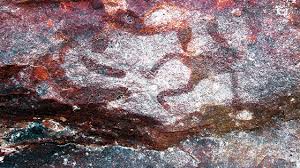
With recurring zigzags, spirals, and other simple geometric patterns, ancient rock art is sometimes surprisingly similar across the globe. One hypothesis is that the artists were all using psychoactive compounds, which nudged the brain toward certain patterns. Now, a new find from a roughly 500-year-old cave used by Native Americans suggests such compounds may indeed have been an important component of their rock art. But the art itself may not have depicted the experience of tripping.
“They have broken away from the ludicrous school of thought … which saw all rock art
as trance imagery produced by shamans,” says Paul Bahn, an archaeologist at
Archaeological Institute of America who was not involved in the research.
The site of the discovery is Pinwheel Cave in Southern California, about 80 kilometers
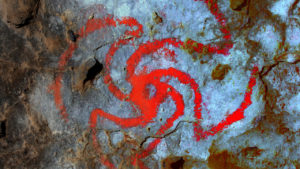
northeast of Santa Barbara. The cave gets its name for a large, red, pinwheel-shaped
drawing on its ceiling; some archaeologists have hypothesized it represents a genus of the psychoactive flower Datura. The flower contains the alkaloids scopolamine and atropine, which are considered an entheogen—a psychoactive compound used in a spiritual context. The Chumash people of Southern California called the experiences triggered by ingesting Datura “sacred dreams,” according to Jim Adams, a pharmacologist at the University of Southern California who spent 14 years studying sacred Chumash Datura ceremonies.
When David Robinson, an archaeologist at the University of Central Lancashire, and his
colleagues began to excavate the site in 2007, they found chewed remnants of plant
materials—also known as quids—pushed into cracks in the ceiling of the cave. Initial
attempts to extract DNA from the quids came up short. But now, a combination of new
chemical analyses and electron microscopy has positively identified the plant as Datura,
the team reports today in the Proceedings of the National Academy of Sciences. “I was
like, ‘Wow, we found the smoking gun of hallucinogens at a rock art site,’” Robinson
says.
Sandra Hernandez, a Tejon tribal member who helped coordinate research for the new
paper, agrees with the interpretation that the art represents the Datura flower. “I kind of
marveled at the shapes that they captured in the rock art compared to the actual flower
unfurling,” she says.
The excavation also uncovered a plethora or arrowheads, tools, and food scraps at the
site, contradicting a once-classic model of a lone shaman hallucinating in isolation and using rock art to record his experience, as had been suggested for ancient rock art around the world.
The study argues the art may not be a depiction of the user’s experience of the Datura,
but rather a message to the community regarding the plant’s importance. “The painting
… is them representing the plant that causes the hallucinogenic experience—not the
vision that is caused by the plant,” Robinson explains. “They’re venerating the plant,
saying, ‘That plant’s cool!’”
The idea that anyone could create rock art while under the influence of Datura is
questionable, says Adams, who was not involved with the work. “I’ve never tried
painting under the influence, but personally I think I would find it difficult.”
https://www.livescience.com/rock-art-hallucinogen-california.html
Early Bronze Age Goddess Statue Uncovered in Central Turkey
 ANKARA, TURKEY— Yeni Şafak reports that more goddess statues have been
discovered in central Anatolia, at the site of Kültepe, the capital of the ancient kingdom
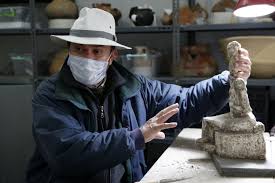
of Kanesh. Fikri Kulakoğlu of Ankara University said that the largest of the 4,200-year-
old statues unearthed this excavation season stands about 17 inches tall. “No idols of men have been found so far,” he added. “The women statues are naked and have a decorated throne, and there are braids on their back.” The statues are likely to be connected to religious beliefs in the region, Kulakoğlu explained.”
World Philosophy Day
 In 2005 the UNESCO General Conference proclaimed that World Philosophy Day would be celebrated every third Thursday of November.
In establishing World Philosophy Day UNESCO strives to promote an international
culture of philosophical debate that respects human dignity and diversity. The Day encourages academic exchange and highlights the contribution of philosophical
knowledge in addressing global issues.
Why a Philosophy Day?
Many thinkers state that “astonishment” is the root of philosophy. Indeed, philosophy
stems from humans’ natural tendency to be astonished by themselves and the world in
which they live.
This field, which sees itself as a form of “wisdom”, teaches us to reflect on reflection
itself, to continually question well-established truths, to verify hypotheses and to find
conclusions.
For centuries, in every culture, philosophy has given birth to concepts, ideas and
analyses, and, through this, has set down the basis for critical, independent and creative thought.
World Philosophy Day celebrates the importance of philosophical reflection, and
encourages people all over the world to share their philosophical heritage with each other.
For UNESCO, philosophy provides the conceptual bases of principles and values on
which world peace depends: democracy, human rights, justice, and equality.
Philosophy helps consolidate these authentic foundations of peaceful coexistence.
Mosaic Portrait Uncovered in Southern Turkey
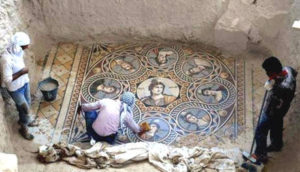 According to a report in the Hurriyet Daily News , a floor mosaic featuring a woman’s portrait has been unearthed in southern Turkey by a team of researchers led by Ümit
Kayişoğlu of the Osmaniye Museum Directorate. He said that the woman’s pose resembles that of Leonardo da Vinci’s Mona Lisa. “This mosaic area is the only known mosaic area with human figures in Osmaniye,” he added. “This is the remains of a villa built in the first and second centuries A.D.” Kayişoğlu suggests that the woman featured in the mosaic may have owned the villa.
2,500-Year-Old Coffins Recovered in Egypt
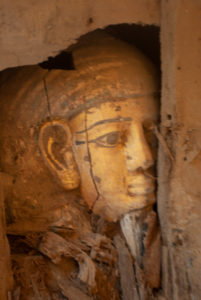 According to an Ahram Online report, Khaled el-Anany, Egypt’s Tourism and Antiquities Minister, announced the discovery of more than 100 sealed, painted coffins; some 40 gilded statues of the funerary goddess Ptah Soker; and golden funerary masks in the Saqqara necropolis, which is located about 20 miles south of Cairo. Most of the
coffins have been dated to the 26th Dynasty (688–525 B.C.), but coffins dated to the
Ptolemaic period (304–30 B.C.) were also found. The well-preserved coffins were recovered from three deep burial shafts, where they had been protected from decay. A CT scan of one of the mummies revealed the remains of a man who had died at about 40 years of age. Team member Bassem Gehad added that the body had been mummified with its arms crossed over its chest, in what was known as the Osiris shape, after the god of the dead and resurrection who was often depicted holding the crook and flail with his legs in mummy wrappings. The coffins and artifacts will be distributed between the Cairo Museum in Tahrir Square; the Grand Egyptian Museum, which is scheduled to open next year; and the National Museum of Egyptian Civilization