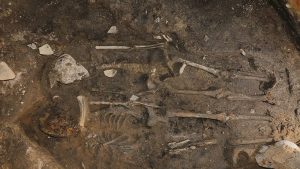
 GYEONGJU, SOUTH KOREA—Korea JoongAng Daily reports that a young woman’s remains have been unearthed at the site of Wolseong, a Silla Dynasty (57 B.C.–A.D. 935) palace complex in eastern South Korea. The remains of a man and a woman in their 50s were discovered less than two feet away from her grave in 2017. All three sets of remains, which show no signs of injury, had been placed in the bottom layer of the west wall of the fortress, according to Choi Byung-heon of Soongsil University. This suggests that the individuals may have been sacrificed during the construction of the building, explained Jang Ki-myeong of Gyeongju National Research Institute of Cultural Heritage. Animal bones and other objects thought to have been used in rituals were also uncovered at the site. An intact pot was found near the young woman’s head. “When we did an X-ray of the pottery, we found a smaller bowl inside the jar. It looks like the larger pottery carried alcohol or some kind of liquid,” Jang said. Pottery was been found at the feet of the older couple, he added. The research also shows that construction of the palace complex began in the fourth century A.D. and took about 50 years to complete
News
International Day of Democracy
 The International Day of Democracy is celebrated around the world on 15 September each year. It was established through a resolution passed by the UN General Assembly in 2007, encouraging governments to strengthen and consolidate democracy.
Background
The International Day of Democracy provides an opportunity to review the state of democracy in the world. Democracy is as much a process as a goal, and only with the full participation of and support by the international community, national governing bodies, civil society and individuals, can the ideal of democracy be made into a reality to be enjoyed by everyone, everywhere.
The values of freedom, respect for human rights and the principle of holding periodic and genuine elections by universal suffrage are essential elements of democracy. In turn, democracy provides the natural environment for the protection and effective realization of human rights. These values are embodied in the Universal Declaration of Human Rights and further developed in the International Covenant on Civil and Political Rights, which enshrines a host of political rights and civil liberties underpinning meaningful democracies.
The link between democracy and human rights is captured in article 21(3) of the Universal Declaration of Human Rights, which states:
“The will of the people shall be the basis of the authority of government; this will shall be expressed in periodic and genuine elections which shall be by universal and equal suffrage and shall be held by secret vote or by equivalent free voting procedures.”
The rights enshrined in the International Covenant on Economic, Social and Cultural Rights and subsequent human rights instruments covering group rights (e.g.indigenous peoples, minorities, people with disabilities) are equally essential for democracy as they ensure an equitable distribution of wealth, and equality and equity in respect of access to civil and political rights.
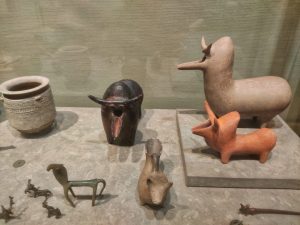
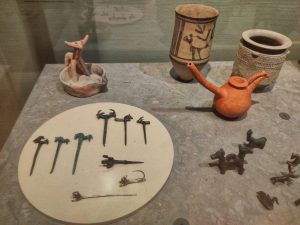
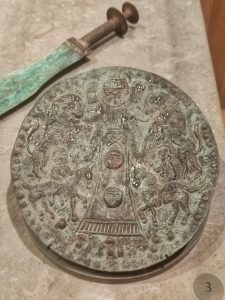
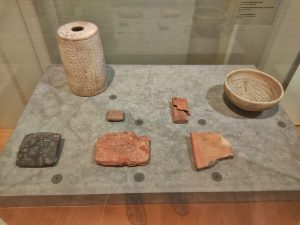
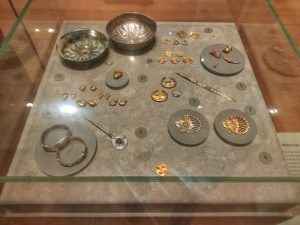
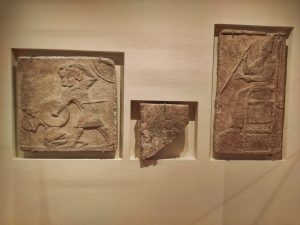
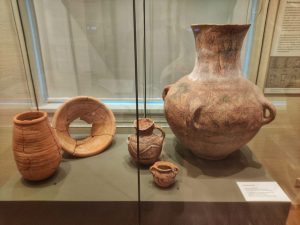
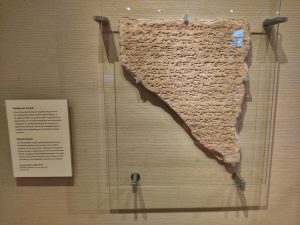
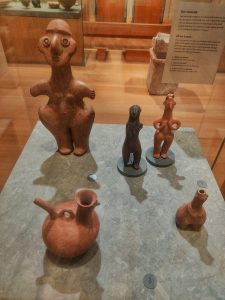
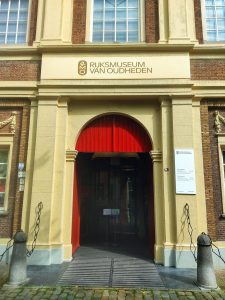
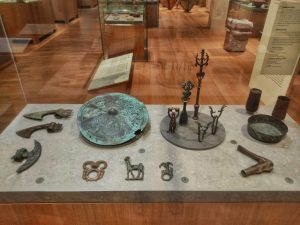
Ancient Iranian historical artifacts at the Rijks Museum in Leiden, the Netherlands
Ancient Iranian historical artifacts at the Rijks Museum in Leiden, the Netherlands
 Photos by: Farzad Arian.
Archaeologists have uncovered the source of King Solomon’s wealth
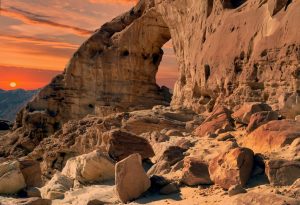 An archeological team working in Israel’s Timna Valley believes they have discovered the reason behind King Solomon’s legendary wealth.
The Timna Valley is located in the Israeli desert, further south than Qumran. Since 1964, archaeologists have been excavating there.
Researchers who have been working there since the mid-1960s “have discovered a network of mines, believed to have been worked by slaves under King Solomon, explored in the Smithsonian Channel’s documentary, ‘Secrets: King Solomon’s Mines,” the Express writes.
Archaeologists “may have uncovered” the source of King Solomon’s mythical wealth, according to the Smithsonian Channel documentary.
Professor Erez Ben-Yosef of Tel Aviv University figüred that production at the site was at its thriving 3,000 years ago, during Solomon’s reign.
In an article published in Plos One, a team of scientists led by Tel Aviv University’s Prof. Erez Ben-Yosef of the Central Timna Valley Project and Prof. Tom Levy of the Edom Lowlands Regional Archaeology Project demonstrates how the vast mining network experienced change.
The researchers examined hundreds of pieces of slag, and copper smelting leftovers, from old copper mines dating back 500 years. The majority of the samples came from southern Israel’s Timna mining complex — possibly the location of the legendary King Solomon’s Mines — and Faynan, north of Timna in Jordan’s Arava Valley.
From the 13th to the 10th century BCE, the researchers saw a progressive technical advancement in smelting skills and efficiency methods.
Contrary to popular belief, the mines are not filled with gold or silver, but with copper. Ben-Yosef points to signs of extensive copper manufacturing surrounding the location.
Copper, which was used to create tools, ornaments, and weapons, was a valuable metal in ancient times. Copper was the most lucrative industry.
According to Dr. Mohammad Najjar of Friends of Archaeology of Jordan, copper was 3,000 years ago what crude oil is now: an irreplaceable and priceless commodity.
Najjar calls Humanity’s beginning to manufacture its own materials a “quantum leap.” According to Thought Co., copper was the first metal used by mankind.
According to the Express, Najjar has studied ancient copper processes and showed to a Smithsonian documentary how King Solomon’s men would have worked the natural copper found in the caves.
The 17th anniversary of the establishment of the Pasargad Heritage Foundation
 This year on August 29, we will mark the beginning of the seventeenth year since the establishment of the Pasargad Heritage Foundation and the launch of the Save Pasargad website (1). The foundation first started as a committee to prevent the reckless water intake into the Sivand Dam, and to save the tomb of Cyrus the Great and the historical monuments of Pasargad plain from what could have been significant environmental damage from moisture and dampness.
Pasargad Heritage Foundation’s actions were loudly supported by thousands of people including Iranians who love Persian culture inside and outside the country. Many people from other countries of the world have also outspokenly supported us, which has helped us to initiate a cultural movement in the contemporary history of Iran.
The importance of our foundation lies in the fact that it stands up to one of the harshest forms of cultural discrimination, as we stand to defend and preserve the cultural heritage of Iran, a land known for its wise, secular, and human culture in the history of mankind.
It is an honor for the members and associates of the Pasargad Heritage Foundation that sixteen years ago the foundation was able to collect nearly one hundred and fifty thousand signatures, with the full names and addresses of the people of Iran and of the world, and with the help of culture-friendly audio and video media. The cooperation of private and public cultural organizations outside Iran also helped us to save cultural heritage sites of the Pasargad plains from destruction by forcing the government of Iran at the time to lower the water level behind the Lake Sivand Dam by 25 meters.
In the last 16 years, the Pasargad Heritage Foundation has not only been able to inform interested people about cultural heritage events throughout Iran through a website dedicated exclusively to cultural and natural heritage, but in 2012 it also established another organization. The World Cultural Heritage Voices (WCHV) has become a voice for the cultural heritage of Iran, and other countries that are caught in the hands of careless governments, or suffer from war or poverty (2).
During this time we have been able to publish more than eight thousand documented news and reports on the findings, excavations, and destruction of Iran’s cultural and natural heritage to inform people and organizations such as The United Nations Educational, Scientific and Cultural Organization (UNESCO). In addition to reporting the above issues, we have continued writing and reporting on many other important subjects including education, Iranian celebrations, the relationship between culture and human rights, and exposing cultural discrimination, especially in the field of cultural heritage.
Of course, we have done all this with the support of people who love culture and are aware of the importance of the role of culture in creating a healthy society.
Thus, at the beginning of the seventeenth anniversary of the establishment of the Pasargad Heritage Foundation, we still actively work to prevent the destruction of Iran’s national heritage sites by the Islamic government. We continue our activities because we believe and love the wise and compassionate culture of Iran. We therefore ask for your continued support in these efforts.
With love and respect,
Shokooh Mirzadegi
Pasargad Heritage Foundation
1. savepasargad.com
2. http://worldculturalheritagevoices.org/
How effective will UNESCO’s commitment to the preservation of historical and cultural monuments of Islamic countries be?
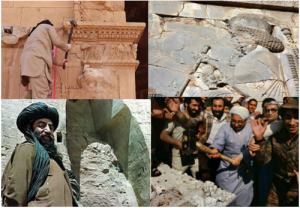 Following the unfortunate victory of the Taliban, the United Nations Scientific and Cultural Organization (UNESCO), issued a statement calling for the protection of Afghanistan’s cultural heritage and the provision of a safe environment for Afghan artists.
“Afghanistan’s diverse historical heritage is not only an integral part of Afghanistan’s identity, but also important for all of humanity and their preservation for the future of Afghanistan,” the statement which was published this week refers to the destruction of Afghanistan’s national heritage by the Taliban, 20 years ago.
The statement concluded by stating that the UNESCO is committed to making every effort to preserve Afghanistan’s precious cultural heritage.
These words may mean something to the people of Europe and the United States and to those countries with legitimate and democratic governments. However, to the people of Afghanistan or Iran who have lived under dictatorial governments and in countries plagued by anti-culturalism and the destruction of heritage sites (by governments) for years, simple commitments to preserve cultural and historical heritage have not been very effective. Especially since the dominant governments of these countries do not value the cultural and historical components of non-Islam, but consider it their duty to destroy them as real Muslims.
Of course, the efforts of UNESCO are commendable, as well as the efforts of all culture lovers who are aware of the importance of the value of cultural and historical heritage. However, given the devastation that the Islamic Republic of Iran, the Taliban, and ISIS have done so far in relation to non-Shiite and non-Islamic history and culture, the efforts by UNESCO must be extensive, continuous, and organized to be effective.
Serious threat to historical and cultural monuments in Afghanistan
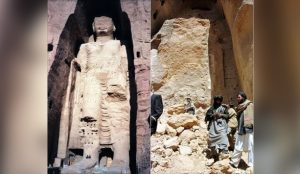 With the return of Taliban to Afghanistan and with the country now under their control, supporters of cultural heritage are concerned for Afghanistan’s valuable historical monuments and sites.
Afghanistan is a land of valued historical monuments, as it has hosted various civilizations and religions from Buddhism, Zoroastrianism, Christianity and Judaism to Hinduism both before and after the rise of Islam.
“We did not expect this to happen so quickly,” said Noor Agha Noori, head of the Afghan Institute of Archaeology in Kabul. Authorities wanted to move the monuments from cities such as Herat and Kandahar to safety, but the sudden fall of the Afghan government prevented them from doing so.
Mohammad Fahim Rahimi, director of the National Museum of Afghanistan, explains: “With the Taliban taking control of Kabul, 80,000 monuments in the Afghan National Museum are now in danger, and we are also very concerned about the safety of staff and artifacts.”
The Taliban’s past actions have shown that they do not value cultural and historical heritage. In 2001, the Taliban destroyed the famous Bamiyan Buddha statues, on orders from their leader Mullah Mohammed Omar, after the Taliban government declared them to be idols. The destruction of the Buddhas met disapproval by both international and local opinion.
International Youth day August 12, 2021
 The United Nations’ (UN) International Youth Day is celebrated on August 12 each year to recognize efforts of the world’s youth in enhancing global society. It also aims to promote ways to engage them in becoming more actively involved in making positive contributions to their communities.
Background
The UN defines the worlds’ youth as the age group between 15 and 24 years old, making up one-sixth of the human population. Many of these young men and women live in developing countries and their numbers are expected to rise steeply. The idea for International Youth Day was proposed in 1991 by young people who were gathered in Vienna, Austria, for the first session of the UN’s World Youth Forum. The forum recommended that an International Youth Day be declared, especially for fundraising and promotional purposes, to support the United Nations Youth Fund in partnership with youth organizations.
In 1998 a resolution proclaiming August 12 as International Youth Day was adopted during the World Conference of Ministers Responsible for Youth. That recommendation was later endorsed by the UN General Assembly in 1999. International Youth Day was first observed in 2000. One of the year’s highlights was when eight Latin American and Caribbean youth and youth-related organizations received United Nations World Youth Awards in Panama City, Panama.
Australian mathematician discovers applied geometry engraved on 3,700-year-old tablet
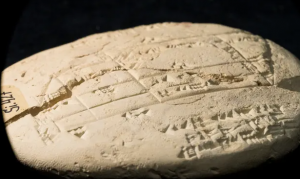 An Australian mathematician has discovered what may be the oldest known example of applied geometry, on a 3,700-year-old Babylonian clay tablet.
Known as Si.427, the tablet bears a field plan measuring the boundaries of some land.
The tablet dates from the Old Babylonian period between 1900 and 1600 BCE and was discovered in the late 19th century in what is now Iraq. It had been housed in the Istanbul Archaeological Museum before Dr Daniel Mansfield from the University of New South Wales tracked it down.
Mansfield and Norman Wildberger, an associate professor at UNSW, had previously identified another Babylonian tablet as containing the world’s oldest and most accurate trigonometric table. At the time, they speculated the tablet was likely to have had some practical use, possibly in surveying or construction.
The ancient clay tablet was engraved with a stylus to describe a field containing marshy areas, as well as a threshing floor and nearby tower. Photograph: UNSW Sydney
That tablet, Plimpton 322, described right-angle triangles using Pythagorean triples: three whole numbers in which the sum of the squares of the first two equals the square of the third – for example, 32 + 42 = 52.
“You don’t just accidentally come up with trigonometry, you’re usually doing something practical,” Mansfield said. Plimpton 322 set him on a quest to find other tablets from the same period that contained Pythagorean triples, eventually leading him to Si.427.
“Si.427 is about a piece of land that’s being sold,” Mansfield said. In the cuneiform script, with its characteristic wedge-shaped indentations, the tablet describes a field containing marshy areas, as well as a threshing floor and nearby tower.
The rectangles depicting the field have opposite sides of equal length, suggesting surveyors of that time period had devised a way to create perpendicular lines more accurately than before, according to Mansfield.
“Much like we would today, you’ve got private individuals trying to figure out where their land boundaries are, and the surveyor comes out but instead of using a piece of GPS equipment, they use Pythagorean triples.”
Though Plimpton 322 and Si.427 both use Pythagorean triples, they predate the Greek mathematician Pythagoras by more than 1,000 years.
“Once you understand what Pythagorean triples are, your society has reached a particular level of mathematical sophistication,” Mansfield said.
Si.427 contains three Pythagorean triples: 3, 4, 5; 8, 15, 17; and 5, 12, 13.
Melbourne Museum acquires world’s most complete triceratops skeleton in ‘immense’ dinosaur deal
The Babylonians used a base 60 number system – similar to how we keep time today – which made working with prime numbers larger than five difficult.
Si.427, described in a study in the journal Foundations of Science, dates from a period of increasing private land ownership. “Now that we know what problem the Babylonians were solving, that recolours all the mathematical tablets from this period,” Mansfield said. “You see mathematics being developed to address the needs of the time.”
One thing that puzzles Mansfield about Si.427 is the sexagesimal number “25:29” – similar to 25 minutes and 29 seconds – that is etched in large font on the back of the tablet.
“Is it part of a calculation that they performed? Is it an area that I haven’t come across yet? Is it a measurement of something?” he said. “It’s really annoying to me because there’s so much about the tablet that I understand. I’ve given up trying to figure out what that one is.”
… we have a small favour to ask. Tens of millions have placed their trust in the Guardian’s high-impact journalism since we started publishing 200 years ago, turning to us in moments of crisis, uncertainty, solidarity and hope. More than 1.5 million readers, from 180 countries, have recently taken the step to support us financially – keeping us open to all, and fiercely independent.
With no shareholders or billionaire owner, we can set our own agenda and provide trustworthy journalism that’s free from commercial and political influence, offering a counterweight to the spread of misinformation. When it’s never mattered more, we can investigate and challenge without fear or favour.
Unlike many others, Guardian journalism is available for everyone to read, regardless of what they can afford to pay. We do this because we believe in information equality. Greater numbers of people can keep track of global events, understand their impact on people and communities, and become inspired to take meaningful action.
We aim to offer readers a comprehensive, international perspective on critical events shaping our world – from the Black Lives Matter movement, to the new American administration, Brexit, and the world’s slow emergence from a global pandemic. We are committed to upholding our reputation for urgent, powerful reporting on the climate emergency, and made the decision to reject advertising from fossil fuel companies, divest from the oil and gas industries, and set a course to achieve net zero emissions by 2030.
If there were ever a time to join us, it is now. Every contribution, however big or small, powers our journalism and sustains our future.
Today’s IPCC Working Group 1 Report is a code red for humanity
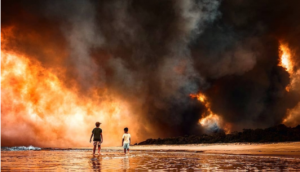 Today’s IPCC Working Group 1 Report is a code red for humanity. The alarm bells are deafening, and the evidence is irrefutable: greenhouse gas emissions from fossil fuel burning and deforestation are choking our planet and putting billions of people at immediate risk. Global heating is affecting every region on Earth, with many of the changes becoming irreversible.
The internationally agreed threshold of 1.5 degrees Celsius is perilously close.
We are at imminent risk of hitting 1.5 degrees in the near term. The only way to prevent exceeding this threshold is by urgently stepping up our efforts, and pursuing the most ambitious path.
We must act decisively now to keep 1.5 alive.
We are already at 1.2 degrees and rising. Warming has accelerated in recent decades. Every fraction of a degree counts. Greenhouse gas concentrations are at record levels. Extreme weather and climate disasters are increasing in frequency and intensity. That is why this year’s United Nations climate conference in Glasgow is so important.
The viability of our societies depends on leaders from government, business and civil society uniting behind policies, actions and investments that will limit temperature rise to 1.5 degrees Celsius. We owe this to the entire human family, especially the poorest and most vulnerable communities and nations that are the hardest hit despite being least responsible for today’s climate emergency.
The solutions are clear. Inclusive and green economies, prosperity, cleaner air and better health are possible for all if we respond to this crisis with solidarity and courage. All nations, especially the G20 and other major emitters, need to join the net zero emissions coalition and reinforce their commitments with credible, concrete and enhanced Nationally Determined Contributions and policies before COP26 in Glasgow.
We need immediate action on energy. Without deep carbon pollution cuts now, the 1.5-degree goal will fall quickly out of reach. This report must sound a death knell for coal and fossil fuels, before they destroy our planet. There must be no new coal plants built after 2021. OECD countries must phase out existing coal by 2030, with all others following suit by 2040. Countries should also end all new fossil fuel exploration and production, and shift fossil fuel subsidies into renewable energy. By 2030, solar and wind capacity should quadruple and renewable energy investments should triple to maintain a net zero trajectory by mid-century.
Climate impacts will undoubtedly worsen. There is a clear moral and economic imperative to protect the lives and livelihoods of those on the front lines of the climate crisis. Adaptation and resilience finance must cease being the neglected half of the climate equation. Only 21 per cent of climate support is directed towards adaptation. I again call on donors and the multilateral development banks to allocate at least 50 per cent of all public climate finance to protecting people, especially women and vulnerable groups. COVID-19 recovery spending must be aligned with the goals of the Paris Agreement. And the decade-old promise to mobilize $100 billion annually to support mitigation and adaptation in developing countries must be met.
The climate crisis poses enormous financial risk to investment managers, asset owners, and businesses. These risks should be measured, disclosed and mitigated. I am asking corporate leaders to support a minimum international carbon price and align their portfolios with the Paris Agreement. The public and private sector must work together to ensure a just and rapid transformation to a net zero global economy.
If we combine forces now, we can avert climate catastrophe. But, as today’s report makes clear, there is no time for delay and no room for excuses. I count on government leaders and all stakeholders to ensure COP26 is a success.
09 August 2021