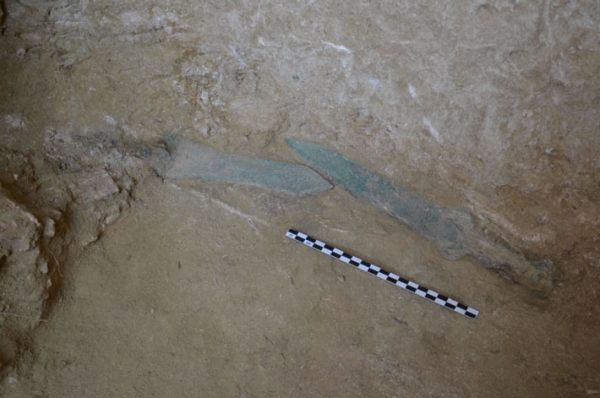
 TRAPEZA, GREECE. According to a statement released by the Greek Ministry of Culture and Sports, Andreas G. Vordos of the Ephorate of Antiquities of Achaea, Elisabetta Borgna of the University of Udine, and their colleagues uncovered several chambered burials in a Mycenaean necropolis dating back to the fourteenth century B.C. The graves, set along the path of an ancient road in northern Achaea, were reused repeatedly into the eleventh century B.C. Grave goods in the necropolis include three well-preserved bronze swords; a clay horse figurine; vases; seal stones; and beads made of glass, faience, gold, and crystal thought to have been obtained through trade with people from the eastern Aegean and Cyprus. The researchers suggest that the swords were made in a palace workshop, perhaps at Mycenae.
News
2,000-Year-Old Battle Site Uncovered in Switzerland
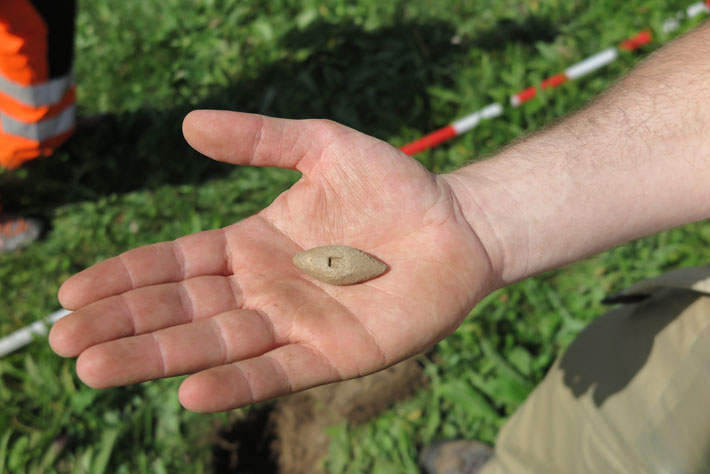 BASEL, SWITZERLAND. Swissinfo reports that a possible Roman battle site has been discovered in southeastern Switzerland by a metal detectorist, who recovered a dagger, slingshot stones, coins, nails, and part of a shield. Archaeologists from the University of Basel subsequently explored the site, which is located near the Crap-Ses gorge, and found several hundred additional objects such as shoe nails, slingshot leads, and coins. They think the Romans fought a local Rhaetian tribe at the site around 15 B.C. “It looks like the locals were holed up and were shot at by the Romans with slingshot and catapults,” said archaeologist Peter-Andrew Schwarz.
International Day for Preventing the Exploitation of the Environment in War and Armed Conflict
The United Nations’ (UN) International Day for Preventing the Exploitation of the Environment in War and Armed Conflict is annually held on November 6. It aims to educate people about the damaging effects of war and armed conflict on the environment.
[The International Day for Preventing the Exploitation of the Environment in War and Armed Conflict helps people understand more about war’s effects on the environment.]
The International Day for Preventing the Exploitation of the Environment in War and Armed Conflict helps people understand more about war’s effects on the environment.
 ©bigstockphoto.com/lilkar
What Do People Do?
Many people around the world, including government officials, scientists, journalists, educators, and business people, observe the UN’s International Day for Preventing the Exploitation of the Environment in War and Armed Conflict. Those who take part in the day spend time discussing about how the effects of war are damaging to the natural environment. They also work together to find ways to limit environmental destruction caused by armed conflict and war.
Seminars, speeches, lectures, news articles, radio talks, and classroom activities in schools that focus on the topic are some of the events that take place on this day. People learn and share information about the dangers of new technologies in war such as depleted uranium ammunition, which poses unknown threats to the environment. People around the world are also made aware that all efforts must be taken to limit environmental destruction caused by conflict.
Public Life
The United Nations’ (UN) International Day for Preventing the Exploitation of the Environment in War and Armed Conflict is not a public holiday so public life is not affected.
Background
War and armed conflict has many damaging effects on the natural environment. For example, crops are destroyed, water supplies are poisoned and forests are burnt. New technology that is used for war means that the destruction and damage of the environment is more serious and the long-term consequences can be worse.
On November 5, 2001, the UN General Assembly declared November 6 of each year as the International Day for Preventing the Exploitation of the Environment in War and Armed Conflict (resolution 56/4). The assembly considered that that any environmental damage in times of armed conflict impairs ecosystems and natural resources long after the period of conflict. This damage can often extend beyond the limits of national territories and today’s generation. The assembly also recalled the United Nations Millennium Declaration, which emphasized the necessity of working to protect the environment.
Symbols
The UN emblem is often found in online and print material used to promote events such as the United Nations’ (UN) International Day for Preventing the Exploitation of the Environment in War and Armed Conflict. The emblem consists of a projection of the globe centered on the North Pole. It depicts all continents except Antarctica and four concentric circles representing degrees of latitude. The projection is surrounded by images of olive branches, representing peace. The emblem is often blue, although it is printed in white on a blue background on the UN flag.
World Day to Protect the Environment in War Observances
Showing:
Year Weekday Date Name Holiday Type
2016 Sun Nov 6 World Day to Protect the Environment in War United Nations observance
2017 Mon Nov 6 World Day to Protect the Environment in War United Nations observance
2018 Tue Nov 6 World Day to Protect the Environment in War United Nations observance
2019 Wed Nov 6 World Day to Protect the Environment in War United Nations observance
2020 Fri Nov 6 World Day to Protect the Environment in War United Nations observance
2021 Sat Nov 6 World Day to Protect the Environment in War United Nations observance
2022 Sun Nov 6 World Day to Protect the Environment in War United Nations observance
2023 Mon Nov 6 World Day to Protect the Environment in War United Nations observance
2024 Wed Nov 6 World Day to Protect the Environment in War United Nations observance
2025 Thu Nov 6 World Day to Protect the Environment in War United Nations observance
2026 Fri Nov 6 World Day to Protect the Environment in War United Nations observance
While we diligently research and update our holiday dates, some of the information in the table above may be preliminary. If you find an error, please let us know.
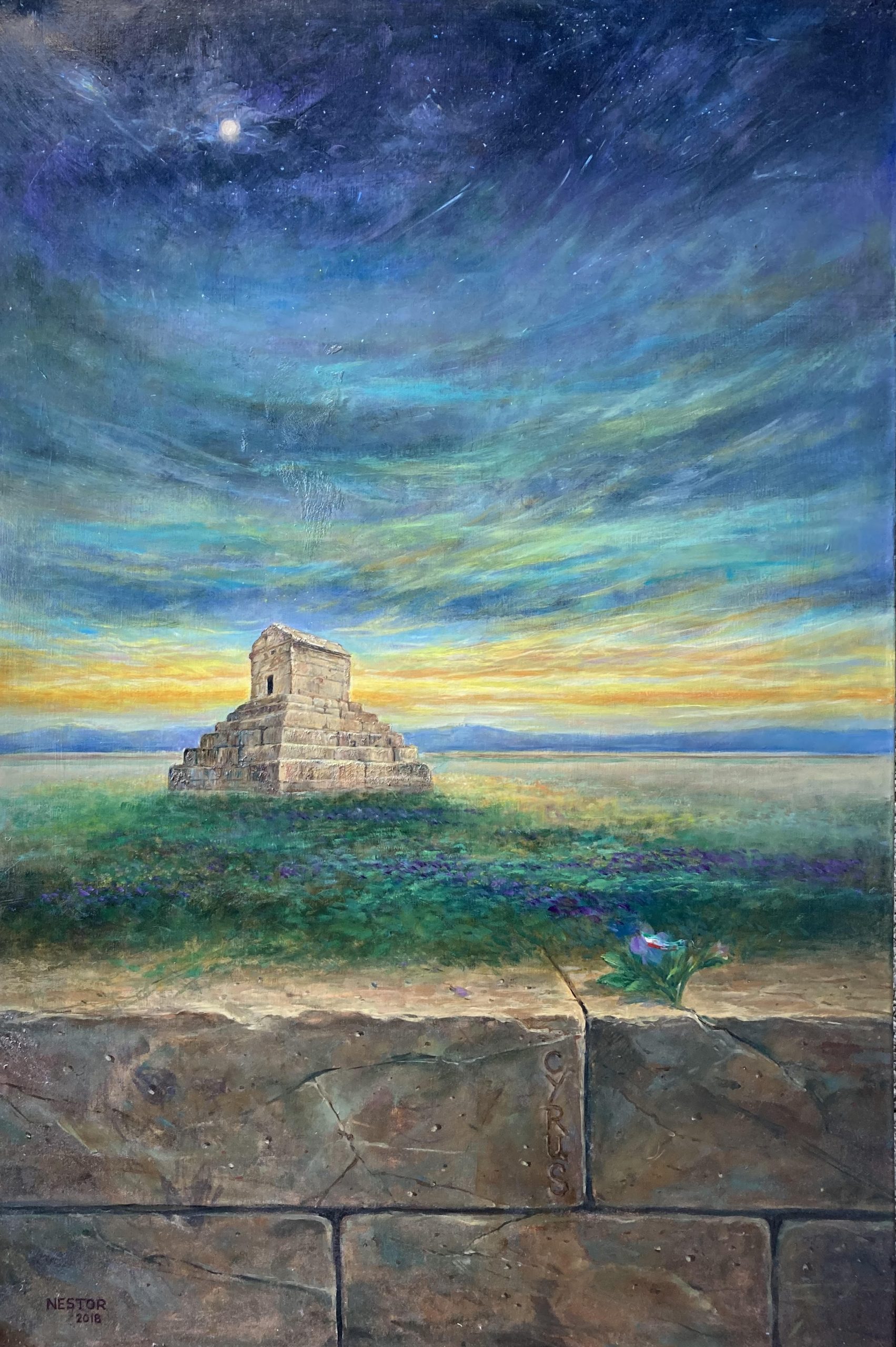
Happy Cyrus the Great Day!
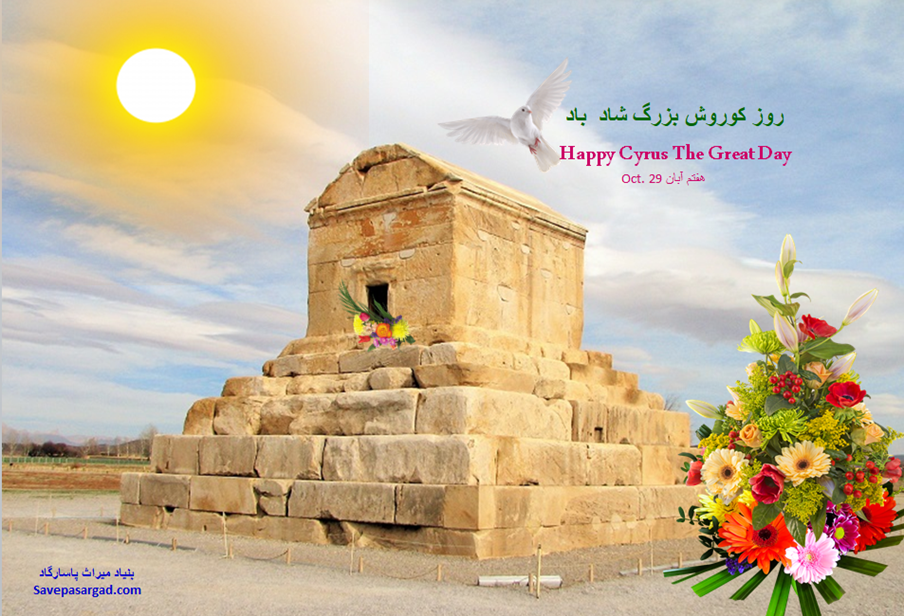
Pasargad Painting, work of Nestor Rakhshani
A painting of the historical site Pasargad
The work of Nestor Rakhshani, Iranian-French artist
New videos by Cyrus Kar
 Two new videos by Cyrus Kar, a scholar and researcher who has produced the first documentary series about the life of Cyrus the Great
Concerns as we approach Cyrus the Great Day
 As we approach the day of Cyrus the Great on October 29th, it is unfortunate that some disturbing news has arrived from Iran’s cultural heritage supporters.
The Iranian Minister of Cultural Heritage and Tourism of the Islamic Government, Zarghami, told reporters a few days ago that in order to help farmers, he wants to receive permission from authorities to dig wells and rigs, and to build two-story buildings that are completely banned in the Pasargad area. Zarghami was strongly opposed by cultural heritage supporters. However, there are still major concerns as some individuals have noticed activities around the tomb of Cyrus.
According to a statement by the Pasargad Heritage Foundation (PHF), an organization dedicated to the preservation of Iranian historical and heritage sites and monuments, Zarghami now has the intention of causing damage to the tomb of Cyrus, which is greatly popular with the Iranian people.
Sixteen years ago, the PHF proposed celebrating the designation of October 29th as the day of Cyrus the Great, and in addition urges people in Iran to report any activities around the tomb of Cyrus the Great which might be damaging to the structure and to inform UNESCO and other international organizations.
savepasargad.com
A Brief History of the “Day of Cyrus the Great,” or the anniversary of the issuance of his Charter of Human Rights
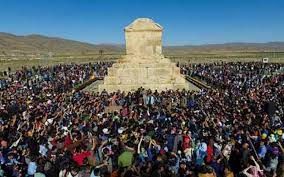 In 2005, the International Committee for the Rescue of Pasargadae was formed to prevent the flooding of the Sivand Dam and to save the Tomb of Cyrus the Great from the dangers of humidity (as caused by bodies of water in the area) and destruction. Additionally the Committee also called on everyone to announce October 29th, which coincides with the day of the issuance of Cyrus’ charter, to be called the “Day of Cyrus the Great.” This was proposed to bring public attention to the importance of Cyrus’ great actions and meaningful work. Fortunately, this announcement was quickly welcomed by the media and people inside and outside Iran.
In 2007 the Pasargad Heritage Foundation (PHF) became the first international non-governmental organization (NGO) for the Preservation of Iran’s Cultural Heritage, officially established in the United States. As a result of the efforts of the PHF, and with the support and efforts of culture-loving people around the world and the timely intervention of UNESCO, the Iranian government at the time (the Ahmadinejad government) was forced to lower the water level of the Sivand Dam.
In fact, the naming of the day of Cyrus the Great, in addition to preventing the danger that threatened the great Persian historical site Pasargadae, made more people aware of Cyrus’ initial efforts for the survival of human civilization.
The significance of naming Cyrus the Great’s day is also due to the fact that this major undertaking was achieved with no assistance from any governmental or religious entity and only by a non-governmental cultural organization bringing together important cultural and social figures, including the Iranian and international media, and thousands of Iranian and international women and men to support the cause.
Therefore, on the day of Cyrus the Great, many people both in Iran and internationally commemorate the 7th of Aban (the 29th of October), and celebrate the life of a man who twenty five centuries ago announced the Universal Declaration of Human Rights. As stated in his charter: “He entered Babylon peacefully, his many soldiers were friendly in Babylon, and he did not allow anyone to be intimidated in all the lands of Sumer and Akkad.” He rescued the oppressed people from helplessness, returned the displaced to their homes, rescued slaves from slavery, and commanded that everyone be free to choose their religion and place of residence.
Pasargad Heritage Foundation
Elimination of non-religious disciplines from Iranian universities
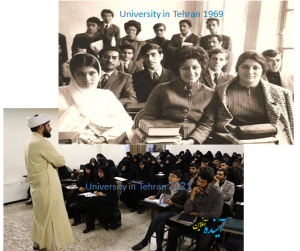 According to local news agencies, from this year on, many fields of study will be eliminated from Iranian universities degree programs, or the admission capacity of students in those fields will be reduced by 30 to 40 percent. These disciplines include: Persian language and literature, foreign languages, archaeology, restoration of historical monuments, museology, art, writing, painting, fiction writing and literature, teaching English, painting, handicrafts, television directing, and visual communication.
In addition, the government has announced major changes to the contents of textbooks, and to curricula that will cover more than 100 disciplines. Officials at the Ministry of Science of the Islamic Republic of Iran cited one of the reasons for these important changes to be the students’ lack of interest in the removed fields, or the departure of hundreds of thousands of professors from Iran, many of high expertise and academic standing. The government has cited the reason for the brain drain as “economic,” whereas the real reason is that many of these professors have had their writings and statements censored. The domination of a religious space over scientific fields, and at times the restrictive control over academic disciplines and sometimes unnecessary detentions of many university professors are the real reasons for their escape from their homeland.
According to local news agencies, from this year on, many fields of study will be eliminated from Iranian universities degree programs, or the admission capacity of students in those fields will be reduced by 30 to 40 percent. These disciplines include: Persian language and literature, foreign languages, archaeology, restoration of historical monuments, museology, art, writing, painting, fiction writing and literature, teaching English, painting, handicrafts, television directing, and visual communication.
In addition, the government has announced major changes to the contents of textbooks, and to curricula that will cover more than 100 disciplines. Officials at the Ministry of Science of the Islamic Republic of Iran cited one of the reasons for these important changes to be the students’ lack of interest in the removed fields, or the departure of hundreds of thousands of professors from Iran, many of high expertise and academic standing. The government has cited the reason for the brain drain as “economic,” whereas the real reason is that many of these professors have had their writings and statements censored. The domination of a religious space over scientific fields, and at times the restrictive control over academic disciplines and sometimes unnecessary detentions of many university professors are the real reasons for their escape from their homeland.
It is clear that what the Islamic government is doing now is the implementation of parts of the plan that the Islamic revolutionaries had prepared for Iran from the beginning: to worsen the scientific content of Iranian universities from international standards and to turn the universities into seminaries. We therefore see a long list of Islamic courses that are offered in universities instead of other courses in humanities, political sciences, and other important fields of study.
It is clear that what the Islamic government is doing now is the implementation of parts of the plan that the Islamic revolutionaries had prepared for Iran from the beginning: to worsen the scientific content of Iranian universities from international standards and to turn the universities into seminaries. We therefore see a long list of Islamic courses that are offered in universities instead of other courses in humanities, political sciences, and other important fields of study.
Study Estimates Life Expectancy in Bronze Age Turkey
 ESKIŞEHIR, TURKEY—Analysis of the remains of more than 40 people suggests that 35 to 40 years of age was the average life span in central Anatolia some 5,000 years ago, according to a Hurriyet Daily News report. The cemetery where the remains were unearthed is located at the Küllüoba Mound, which is known for its Early Bronze Age urban settlement. Most of the remains in the study belonged to women and children. “Infant and child mortality is very high,” said Yilmaz Selim Erdal of Hacettepe University. “The limited food sources and the infectious diseases were imported factors,” he added. Seals, hair ornaments, and jewelry were also recovered from the burials, which varied in style, suggesting that different cultures or ethnic groups shared the settlement. DNA analysis could reveal kinship relationships between the dead, Erdal explained