We believe that all cultural, historical and natural heritage, wherever they are should be preserved. LEARN MORE
News

Default Category

Lidar Survey at Machu Picchu Reveals Ceremonial Structures

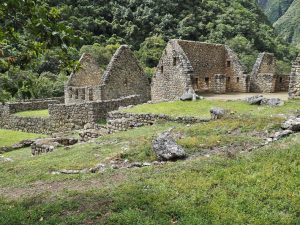
WROCŁAW, POLAND reports that a team of Polish researchers and specialists from Peru’s National Archaeological Park of Machu Picchu led by Bartłomiej Ćmielewski of Wrocław University of Science and Technology has conducted a lidar survey of the Chachabamba ceremonial complex within Machu Picchu. Several buildings set on a small square, small ritual baths, and a large stone with carved altars, stairs, and a channel for sacrificial liquids are situated in the center of the ceremonial complex. Obtained with a lidar scanning device attached to a drone, the new images of the land surface beneath the cover of tropical forest show several previously unknown structures, according to team member Dominika Sieczkowska of the University of Warsaw. These structures include channels that carried water into the complex from a nearby river and several buildings on the outskirts of the ceremonial complex. “We have a dozen or so small structures erected on the plan of a rectangle and a circle,” Sieczkowska said. “We believe that they were staff residences.” The images suggest these structures had been built with less care than the structures in the center of the complex, she added. Projected water flow through a model of the channels indicates that the supply of water was small and therefore probably for ritual use, Sieczkowska explained. 

https://www.archaeology.org/news/10267-220105-machu-picchu-lidar

Happy New Year 2022!

Dear Friends, and Supporters of World Cultural Heritage Voices.

On behalf of our colleagues and volunteers at WCHV, and on the occasion of the Global New Year of 2022, we would like to extend our regards and best wishes for a Happy New Year.  Thank you for your support of WCHV, which has been so instrumental in achieving our goals and mission.

Three priests visit the birthplace of Christ

By Dr Amir Khalili , historian

Translation by WCHV

The story of the three astrologers (three magi) from the East quoted in Matthew’s Gospel is familiar to most readers, but here is a very brief account:

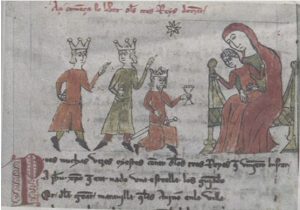
The Gospel of Matthew states that three astronomers (three magi) from the east met King Herod, who had been appointed king of Palestine by the Romans. These three magi inform Herod of the appearance of a star. This star, according to Zoroastrians, symbolized the birth of a king, Christ. After meeting Herod, the Zoroastrians go to the birthplace of Christ with the guidance of the star. After hearing about the birth of a baby who could become the future king, Herod orders the killing of all babies up to the age of two.

This story of the Zoroastrian priests in the Gospel of Matthew, like most religious stories, is not completely based on historical facts, but nevertheless there is a historical truth in the Gospel story of the three priests visiting the birthplace of Christ. The fictional story in the Gospel of Matthew of the Three Magi, written between 80 and 100 AD, may be related to the actual journey of Tiridates I, king of Armenia (Tiridates I, son of the Parthian king Blash I, ruler of Armenia) to Rome. Historians have reported that Tiridates I left for Rome with an army of 3,000 men in 66 AD to swear allegiance to Nero, the Roman emperor. In Rome, Tiridates I swears allegiance to Nero: “My God, I came to you to worship you like Mitra.” After hearing this admirable speech, Nero ties a royal ribbon adorned with many jewels to the forehead of the King of Armenia. It is also said that Tiridates I introduced the Roman emperor to Mithraism. After meeting with the Roman emperor Tiridates I, he returns to Armenia not from the route he had already chosen, but from Asia Minor.

The Gospel of Matthew mentions the return of the three Magi. Tiridates I was known as a magician, and Pliny, a Roman writer of the first century AD, also gave the title of magician to this Parthian king. One may deduce from reading the Gospel of Matthew, that the intention of the three Magi to visit Christ, could have also been to show that Mithraism was a serious rival to the new religion of Christianity, and to understand the great influence of Mithraism on the development and shaping Christianity.


This picture depicts three astronomers or priests visiting the birthplace of Christ

A message from Pasargad Heritage Foundation on the occasion of the annual celebration of Yalda

The absence of the national celebration of Yalda on the World Heritage List
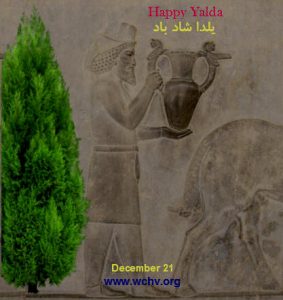
Once again we are on the eve of beautiful Yalda, another Iranian national holiday celebration. Thousands of years ago on such a night, the longest night of the year, the people of Persia celebrated and gathered around a cedar tree, which was adorned with colorful fabrics and shiny stones.

In those days, the values and secrets of nature were not yet known, and Persians like other peoples of the world saw nature as powerful elements or gods with a tremendous impact on their lives and existence. Some people in the world were terrified of these natural powers, however Persians loved all the elements of nature and worshiped the sun as the greatest and most “loving” God, because light and heat energy were considered to be the savior of their lives.

Our ancestors thought that the sun was born at the end of the longest night of the year, to announce the victory of light and heat over darkness and cold. With discovering the secrets of nature, the status of a god was taken from the elements of nature. But the Persians kept their celebrations as an earthly gift—a real, tangible, happy and universal gift. And so it is that most Iranian celebrations have remained thriving, happy and modern to this day.

For the past few decades, while the Islamic government has prevented national celebrations from being held in public places, it has tried its best to replace them with religious events. However, the people of Iran, all over the world and within Iran, despite all the challenges they are facing, celebrate these beloved Persian festivities to an even great extent.

At the Pasargad Heritage Foundation, we believe that even though it is still not recognized on the list of intangible world heritage, Yalda, as one of the most beautiful world celebrations, should be celebrated greatly and fully. That is why we in 2007 submitted a petition to UNESCO for its consideration.

Unfortunately, based on UNESCO’s rules, governments are legally responsible for submitting national celebrations for UNESCO’s consideration, and due to the religious bigotry of the Islamic government and its opposition to our Iranian culture, it has only submitted other religious events and concepts. These have included “Ta’zieh,” “Ashura,” “carpet weavers,””Arba’een” and “aqeeqah,” which the Iranian government has considered as ceremonies worthy of globalization. The Islamic government not only refuses to send Yalda, Mehregan, Sadeh and other Iranian humanistic celebrations and rituals for UNESCO’s consideration, but also suppresses them under various titles and measures.

We believe that the victory of the armies of love and enlightenment over armies of sorrow and cruelty is still unquestionable, as we know that Yalda and our other Iranian celebrations will be victorious through efforts of people who love our culture and the symbol of humanity and love they represent.

Let us celebrate the birth of the beautiful sun of our land next to the evergreen Yalda tree this year as well, while the sun that rises every day in our world exemplifies its victory over eternal darkness.

May your life be bright and your Yalda a happy one.

Shokooh Mirzadegi

Pasargad Heritage Foundation

Yalda 2021

 

Happy Human Rights Day

Human Rights Day is observed every year on 10 December — the day the United Nations General Assembly adopted, in 1948, the Universal Declaration of Human Rights (UDHR). The UDHR is a milestone document, which proclaims the inalienable rights that everyone is entitled to as a human being – regardless of race, colour, religion, sex, language, political or other opinion, national or social origin, property, birth or other status. Available in more than 500 languages, it is the most translated document in the world.

The latest discoveries of Iranian and Italian archaeologists in Persepolis

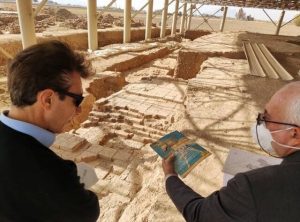
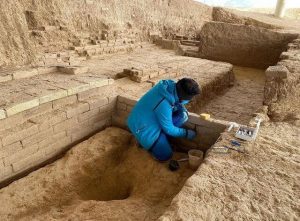
According to local Iranian news agencies, another chapter of the joint archaeological excavations of the Iranian and Italian archaeologists in the ancient site of “Tol-e Ajori” in the city of Perse has been completed.

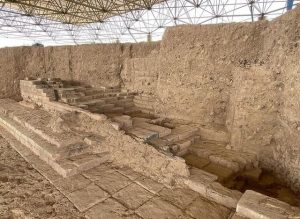
Alireza Askari Chavardi, the head of the Iranian Archaeological Board, declared this chapter of archaeological excavations and collaboration as focusing on “identifying the foundations of two large towers on the southeast and southwest sides of this historic gate,” and added that “this large and magnificent building has now been located in the Turquoise Garden area, about 3.5 km northwest of Takht-e Jamshid.”

According to the archaeologists, during this part of the excavations, the plan of this historical monument has appeared more and more akin to the Ishtar Gate of Babylon, in which new and original features such as the clay and mud cores of the brick walls have been revealed.

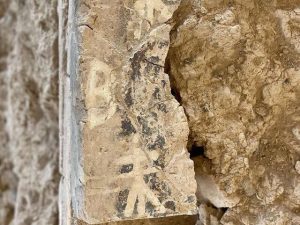
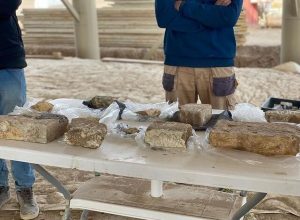
The head of the Iranian Archaeological Board also said, “In this recent chapter of excavations, fragments of cuneiform inscriptions in Babylonian and Elamite languages, along with prominent glazed bricks belonging to paintings with the motifs of bulls and the snake-like symbol of the god Marduk from ancient Mesopotamia have been obtained from the area.”

In spite of the reveal of these great findings, the Iranian people and even journalists are unaware of how these historical artifacts are to be protected and whether they will actually be preserved by Iranian authorities, as is the case over the last few decades since the Iranian revolution.

New Restoration WorkNew Restoration Works to Repair the Sassanian Wall of Ctesiphon


New Restoration WorkNew Restoration Works to Repair the Sassanian Wall of Ctesiphon

By Dr. Kaveh Farrokh

The article “New restoration works shore-up Iraq’s historic Arch of Ctesiphon” was posted in the Arab News outlet of Saudi Arabia on November 25, 2021.

Kindly note that excepting one photo, all other images and accompanying captions printed below do not appear in the original Arab News report. For more on the Sassanians, Ctesiphon and their architecture see:


Iraq’s 1,400-year-old Arch of Ctesiphon, the world’s largest brick-built arch, is undergoing restoration work as part of efforts to return it to its former splendour, authorities noted in September 2021.

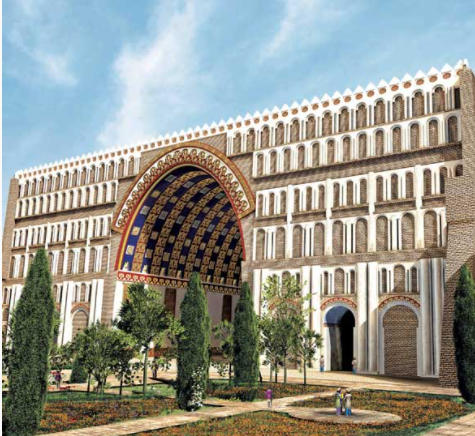
A reconstruction of Ctesiphon as it may have appeared in the 6th and early 7th centuries CE (Source: Sunrisefilmco.com in Pinterest).

The famed sixth-century monument, located around 30 kilometres (20 miles) south of the capital Baghdad, is the last structure still standing from the ancient Persian imperial capital Ctesiphon. Restoration work on the arch, also known as Taq-i Kisra from its Persian name, was carried out in 2013 after a massive slab fell off due to damp caused by heavy rain.

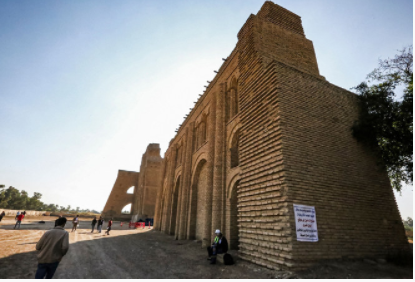
The above photo taken on November 24, 2021 shows a lateral view of the Arch of Ctesiphon, also known as Taq Kisra (Khosrow’s Arch), stands before the conservators’ scaffolding at the ancient site of Ctesiphon near modern al-Madain in central Iraq (Source: Arab News). The famed sixth-century monument, located around 30 kilometres (20 miles) south of the capital Baghdad.

But the new bricks too have begun to fall following downpours last year. A first phase of “emergency” works that began in March are due to end next month, said David Michelmore, a conservation expert working with a team of archaeologists from the University of Pennsylvania. Michelmore told AFP:

What is falling down at the minute is not the original Sassanian construction, it’s the modern repairs. There was quite a lot of reconstruction done in 2013-2014 and probably all of this will need to be taken down and replaced.”

Construction of the arch began in 540 CE during the Persian Sassanian dynasty’s long wars with the Romano-Byzantine Empire. It formed part of a palace complex started three centuries earlier. At 37 metres (122 feet) tall and 48 meters (158 feet) long, it is the largest brick-built arch in the world.

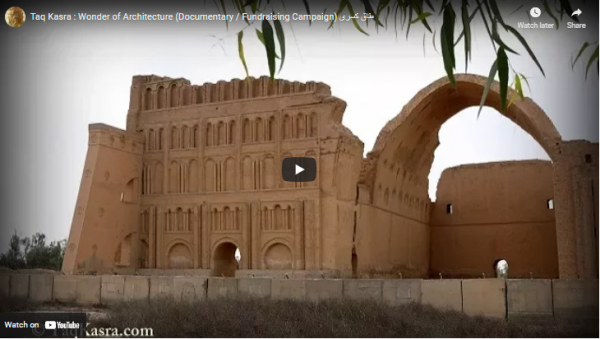
First ever documentary film about the palace of Persian kings TAQ KASRA, the world’s largest brickwork vault – Directed by Pejman Akbarzadeh. The monument is now in Al-Madain area in Iraq (Source: Persian Dutch Network). Taq-i Kisra is the symbol of Persian empire in Sassanian era (3rd century AD- 6th century CE).

Iraqi Culture Minister Hassan Nazim said the works aimed to “consolidate” the site, which is near the bank of the Tigris River and is at risk of groundwater infiltration.

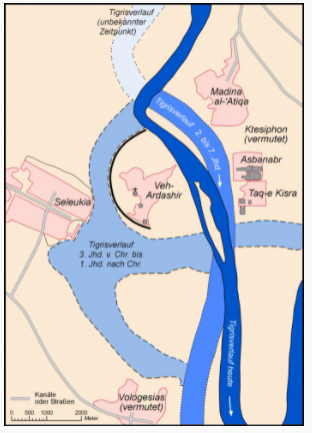
German archeological Map of Seleucia-Ctesiphon during the Sassanian era (Map redrawn by user “Lencer” in Public Domain from original Mesopotamia XL, 2005, 169).

The current phase is financed thanks to a budget of $700,000 from the International Alliance for the Protection of Heritage in Conflict Areas (ALIPH), said Laith Majid Hussein, director of the Iraqi State Board of Antiquities and Heritage. He lamented “numerous mistakes” in the previous restoration, including the installation of a heavy “layer of cement on the arch”. The next stage would be a “total restoration” that would help strengthen the structure and prevent any collapse, he said.

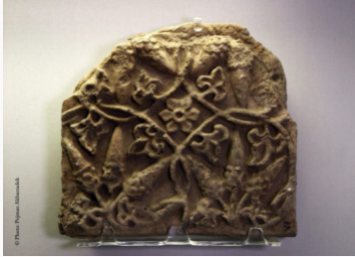
Sassanian stucco from Ctesiphon housed at the British Museum (Photo: Pejman Akbarzadeh).

In 2004, the Global Heritage Fund said that, as a result of disrepair, the arch was “in danger of collapse”. Those warnings proved prescient — in late 2012, a slab about two metres (six feet) in length fell off.

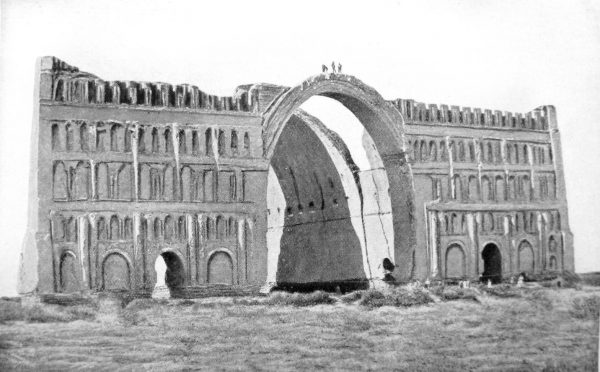
Rare 1864 photograph of the Gateway of Ctesiphon before the right-hand facade of the structure collapsed (Source: Public Domain).

Related posts:

The Great Wall of Gorgan: Longest Ancient Barrier between Central Europe and China

Historia de la Guerra: The Arab Invasion of Sassanian Persia

Viking-era Sassanian and Arab-Sassanian Silver Coins Found in Sweden

Ancient 70-Mile-Long Wall Found in Western Iran. But Who Built It?

The Ancient Sassanian City of Bishapur

Documentary Film Production: the UNESCO Sassanian Fortress in Darband

Restoration of Cyrus the Great Tomb Completed

UNESCO: Sassanian Archaeological Landscape of the Fars Region

1,600-Year-Old Flute and Key Unearthed

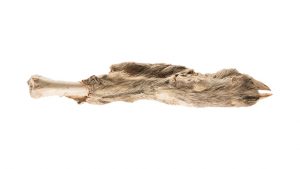
Recording Hürriyet Daily News  a 1,600-year-old flute made from a small cattle bone and a bronze ring with a key has been uncovered in southeastern Turkey, at the site of Zerzevan Castle, a structure first built in the fourth century A.D. as a military base on an ancient trade route in the Eastern Roman Empire. The castle site includes a temple of Mithras, 1,300 yards of walls standing up to 16 feet tall, a watchtower, an administration building, traces of dwellings, warehouses for grain and weapons, tombs, cisterns, and water channels. Aytaç Coşkun of Dicle University said the presence of the flute in the fort suggests its inhabitants had an interest in art and music. “The ring with key, which was used to open a chest keeping very special items, is also dated to the fourth and fifth centuries A.D.,” Coşkun added

Medieval Scot with strong jawbone wasn’t a local

By Laura Geggel about 9 hours ago

A medieval man whose face was immortalized in a striking reconstruction isn’t quite who we thought he was. The so-called Blair Atholl Man, who died at the age of 45 and was buried near Blair Atholl in the Scottish Highlands some 1,600 years ago, was not a local, researchers now say. 

Instead, Blair Atholl Man likely spent his childhood on the western coast of Scotland, perhaps on one of the islands of the western Hebrides, such as Mull, Iona or Tiree, or maybe he grew up farther away, in Ireland, a chemical analysis of his remains revealed. 

News of this man’s journeys adds to a growing line of evidence that people traveled long distances in early medieval Scotland. Research at two other archeological sites — the villages of Lundin Links and Cramond on the eastern coast of Scotland — show “that these types of movements may have not been uncommon,” study co-researcher Kate Britton, a professor of archaeological science and head of the Department of Archaeology at the University of Aberdeen in Scotland, told Live Science in an email. 

It wasn’t just men who were journeying to far-flung spots, either. “What is interesting is that at both those east-coast sites [Lundin Links and Cramond], our west-coasters were females, suggesting that both men and women — and perhaps for a variety of reasons — were making these journeys,” Britton said.

https://www.livescience.com/blair-atholl-man-scotland

Day of Remembrance for all Victims of Chemical Warfare

The Conference of the States Parties to the Chemical Weapons Convention, at its 20th Session, decided that a memorial Day of Remembrance for all Victims of Chemical Warfare would be observed on 30 November each year or, when appropriate, on the first day of the regular session of the Conference.

This commemoration provides an opportunity to pay tribute to the victims of chemical warfare, as well as to reaffirm the commitment of the Organisation for the Prohibition of Chemical Weapons (OPCW) to the elimination of the threat of chemical weapons, thereby promoting the goals of peace, security, and multilateralism.

The Third Review Conference of States Parties to the Chemical Convention held 8-19 April 2013 in the Hague, the Netherlands, adopted by consensus a political declaration that confirms the “unequivocal commitment” of the States Parties to the global chemical weapons ban, and a comprehensive review of CWC implementation since the last Review Conference in 2008, which also maps out the OPCW’s priorities for the coming five years.

Background

The history of the serious efforts to achieve chemical disarmament that culminated in the conclusion of the Chemical Weapons Convention began more than a century ago. Chemical weapons were used on a massive scale during World War I, resulting in more than 100,000 fatalities and a million casualties.

However, chemical weapons were not used on the battleground in Europe in World War II. Following World War II, and with the advent of the nuclear debate, several countries gradually came to the realisation that the marginal value of having chemical weapons in their arsenals was limited, while the threat posed by the availability and proliferation of such weapons made a comprehensive ban desirable.

Adopted in 1993, the Chemical Weapons Convention entered into force on 29 April 1997. It determined, “for the sake of all mankind, to exclude completely the possibility of the use of chemical weapons.” (Preamble)

The States Parties to this Convention established the Organisation for the Prohibition of Chemical Weapons “to achieve the object and purpose of this Convention, to ensure the implementation of its provisions, including those for international verification of compliance with it, and to provide a forum for consultation and cooperation among States Parties.” (Article VIII).

https://www.un.org/en/observances/chemical-warfare-victims-day