We believe that all cultural, historical and natural heritage, wherever they are should be preserved. LEARN MORE
News

Default Category

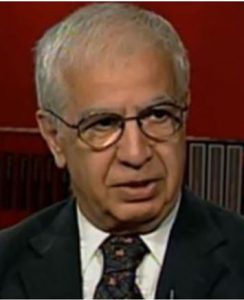
Dr. Mansoureh Ettehadieh, recipient of the Pasargad Heritage Foundation’s 1401 (2022) Nowruz Award

Dr. Mansoureh Ettehadieh
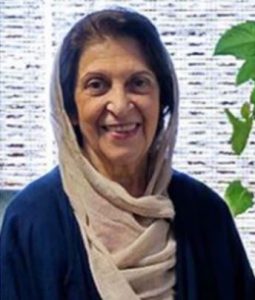
Dr. Mansoureh Ettehadieh, researcher, historian, university professor, and founder of publishing firm, Nashr-e Tarikh-e Iran (Publishing History of Iran), is the recipient of the Nowruz Award in the field of cultural and historical heritage for:

    • Years of efforts to preserve Iran’s cultural and historical heritage
    • Years of research and teaching at university
    • Publication of numerous books about famous men and women during the Qajar period
    • Establishment of the publishing firm, Publishing History of Iran, focusing on publication of books on the history and culture of Iran

Biography of Dr. Mansoureh Ettehadieh

Mansoureh Ettehadieh, recipient of the Pasargad Heritage Foundation’s 1401 (2022) Nowruz Award

Dr. Mansoureh Ettehadieh, a historian, author, professor, and publisher of »Institute for the Publication of the History« is this year’s recipient of the Nowruz Award in the category of Cultural and Historical Heritage.

Dr. Ettehadieh is a historian, author, publisher, and a university professor and was born on 1934 in Tehran, Iran.  She had a difficult childhood in Iran during World War II while Iran was under allied occupation. After being homeschooled for a time she attended schools including Kayhan, Anoushiravan Dadgar, and Jandrak.  She then completed her secondary education in England and completed her higher education in history at the University of Edinburgh in Scotland, where she received her master’s degree in 1959. Upon returning to Iran in 1969, she worked as an instructor at the University of Tehran, and in 1977, she returned to the UK to pursue her doctorate in history at the University of Edinburgh. Dr. Ettehadieh’s doctoral dissertation focused on “political parties during the constitutional period.” She returned to Iran in 1980 and started working once again at the University of Tehran. At the university, she taught a variety of subjects, including Qajar history, recent 100-year movements, and Middle Eastern history until she retired, where she continued to work and teach at the Iranian Studies Foundation.

In 1984, Dr. Ettehadieh established the Institute for the Publication of the History of Iran in order to publish documents and research in the field of contemporary Iranian history, where she still actively works.
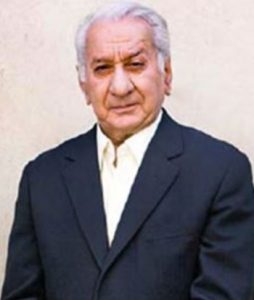
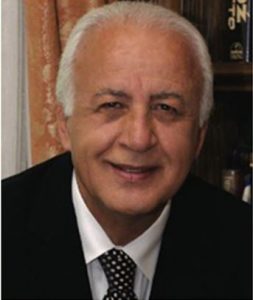
Dr. Bahram Akasheh, recipient of the Pasargad Heritage Foundation’s 1401 (2022) Nowruz Award

Dr. Bahram Akasheh

Dr. Bahram Akasheh, seismologist and expert in geology and professor of geophysics, university professor, and dean of engineering faculty of Islamic Azad University North Tehran Branch, is the recipient of the Nowruz Award in the field of natural heritage and environment for:

    • Decades of efforts to introduce seismology to students to educate and inform and reduce risks of earthquakes
    • Establishment of the department of geophysics at the University of Tehran
    • Publication of more than one hundred scholarly articles and papers
    • Construction and operation of several seismic bases

Biography of Dr.Bahram Akhasheh

    • Dr. Bahram Akasheh is an Iranian seismologist and geophysicist. He is considered one of Iran’s leading experts on earthquakes and seismic activity.Dr. Akasheh was born in 1936 in Masjed Soleyman, Iran. He completed his primary and high school education in Masjed Soleyman and Ahvaz and his undergraduate university education in physics at the University of Tehran in 1956. He then pursued his postgraduate and doctoral studies at the University of Stuttgart, Germany in physics, geophysics and seismology, and geology.  After receiving his doctorate, Dr. Akasheh returned to the University of Tehran to teach at the Institute of Geophysics in 1985. Dr. Akasheh was later appointed as the chair of the department of Seismology, and went on to become the founder of the department of Geophysics at the University of Tehran. He later became the chair of the Department of Geophysics, at Islamic Azad University and served in that position for 14 years.Dr. Akasheh is the Dean of engineering faculty of Islamic Azad University North Tehran Branch.

Dr. Ardeshir Babaknia, recipient of the Pasargad Heritage Foundation’s 1401 (2022) Nowruz Award

Dr. Ardeshir Babaknia

Dr. Ardeshir Babaknia, physician, university professor, scientific and historical researcher, and cultural and artistic activist, is the recipient of the Nowruz Award in the field of culture and art for:

    • More than a decade of extensive research into the holocaust during World War II, and other genocides in the Middle East, with the goal of rooting out this type of human catastrophe
    • Four volumes of books on the Holocaust in Persian
    • Establishment of several cultural-scientific and social institutions
    • Supporting and cooperating with cultural and social institutions
    • Collecting and preserving a collection of Iranian historical artifacts
    • Creating beautiful artistic works on glass and ceramics with concepts related to the cultural and historical heritage of the ancient Persians


Biography of Ardeshir Babaknia

    • Dr. Ardeshir Babaknia, MD, is a Professor of Health Sciences, Medical Director and master of Health Sciences. Dr. Babaknia is also a special advisor to the Chapman University Provost in Health Initiative, Irvine CA.
    • Dr. Babaknia received his medical training at Johns Hopkins University, Maryland, US. He was trained in women’s reproductive health, and has been practicing Reproductive Medicine in Newport Beach, California for the last 25 years as well as serving as a Clinical Associate Professor at the School of Medicine, University of California in Irvine. Dr. Babaknia is one of the pioneers of minimally invasive laser surgery in medicine since the early 1980s. In addition to publishing more than 50 research and clinical articles on women’s health and wellness in peer reviewed journals, he is the author and co-author of over a dozen books in the field of women’s health, including two books on women’s health on nutrition: Soy: The Right Protein for Improving Your Health and Soy: One Choice for Menopausal Health.
    • He is the recipient of the National Medical Research Award for excellence in medical research from the American College of Obstetricians and Gynecologists.
    • Dr. Babaknia has been a patron of the arts and of literature for many years. He is the Founder and Executive Director of the Persian Heritage Foundation (1987-2007) and the Graduate Society (Society for Iranian Jewish University Graduates) studying Jewish contributions and influences on Iranian life and culture in their over 2500 years of living in Iran. This culminated in the publication of several books on the subject (1991-2012), and he became a member of the Board of Directors of several other scientific, charity and cultural Foundations.
    • Dr. Babaknia has served as the Chairman of the Institute for the Holocaust Studies in Washington D.C. (2011-2013), as well as the Chairman of the Holocaust Remembrance Day of Orange County, California (1993-2013). He has been on an international book tour promoting genocide awareness and prevention, (2012-2020). Dr. Babaknia is the Founder and Chairman of the Board of Directors of the Menorah Foundation with the specific mission of spreading the truth about the Holocaust and other genocides in the Middle East.
    • His dedicated studies and research on the subject of the Holocaust for over a decade culminated in the publication of a 4-volume groundbreaking book in Farsi about the Holocaust and other genocides of the last one hundred years (Wyman, 2012), which was awarded reference book of the year by the Association of the Jewish Librarians (2013).
    • In his book, Humanity, NOT, released January 2014, Dr. Babaknia has tried to weave in actual words from victims of the Holocaust along with letters and quotes from diaries of the victims, perpetrators, bystanders, and survivors of the Holocaust, accompanied by powerful paintings by renowned Iranian graphic artist Ardeshir Mohasses, in a way that touches the personal stories of man’s inhumanity to man, the brutality of the Holocaust, and the fragility of humanity. He believes reading first-hand horrifying experiences of the victims as well as some thoughts from philosophers and scholars helps us understand that the “reaction to the Holocaust has to be other than mere horror and revulsion. It has to be more than empathy with the victims, sharing their fear and some part of their actual suffering.”
    • In the past few years, he has embarked on one of his lifetime dreams, a journey long in making; creating sandblasted glass and ceramics artworks on social justice and human rights, global peace, women’s rights, children’s rights, the global climate crisis, water rights, refugee life and rights, and many other pressing social issues of our time.

Mr. Amir Taheri, recipient of the Pasargad Heritage Foundation’s 1401 (2022) Nowruz Award

Mr. Amir Taheri

Mr. Amir Taheri, author, journalist, political analyst, cultural and literary critic, is the recipient of a Lifetime Nowruz Award in the field of journalism and communication sciences for:

    • Lifelong tireless efforts as a modern author and journalist in Iran and in exile
    • Commitment to journalism, and emphasis on concrete facts and reliable documents for writing, analysis, and critique
    • Authoring of ten successful books related to sensitive issues in the last few decades of Iran in Farsi and English
    • Writing hundreds of lasting articles and reviews of political, literary, and artistic books
    • Constant attention to human rights violations in Iran and writings on them in the popular European and American press
    • Utmost attention to the brilliant culture and history of Iran in his writings for various Iranian and non-Iranian publications
    • To say that Amir Taheri is the most important journalist in the history of Iran is not an exaggeration. It has been less than 200 years since we came across something called “modern journalism.” During this period, especially after the revolution, we have had a large number of good journalists who continued their work after they immigrated to other countries or have been forced to live in exile. We however have had only a few men and women who have written in languages other than Farsi and for magazines and papers or have been active as a journalist in radio and television of other countries. None of them have had the position that Amir Taheri has had as an Iranian journalist.
    • Amir Taheri started his career as a writer, translator and journalist well before the revolution in Iran, working in widely circulated newspapers for over 40 years. He has also worked as a successful journalist, widely published author, and a liberal political analyst outside Iran, working with international publications and in countries around the world. Taheri’s articles published in the international press have not only covered Iran’s issues and topics. Rather, he has been able to speak and write well and publish widely as a writer, a capable political analyst, and a good journalist on important European and American issues.
    • One of Taheri’s admirable values ​​is that in spite of all his great success outside Iran, he has never lost touch with his native country. He has been a vocal critic on every occasion to convey to the world the cries of Iranian people which are otherwise ignored, even in the presence of many journalists from abroad for various reasons.
    • Amir Taheri, like many social people, has his own political beliefs which he has never hidden in order to please others. However, he has not included them in his writings and analysis, as his writings and analysis have always been based on existing facts, clear and undeniable documents. In addition, he has never forgotten the humane and moral virtues that some journalists have forgotten in order to please readers or catch viewer’s attention.
    • Amir Taheri is an example of a brilliant and modern journalist who still embraces Iranian culture beautifully and lovingly.
    • The Pasargad Heritage Foundation is proud to present its “Nowruz Award” to Mr. Amir Taheri for his lifetime achievement.


Biography of Mr. Amir Taheri.

    • Amir Taheri was born in Ahvaz, southwest Iran and educated in Tehran, London and Paris. He started his journalistic life by editing his school magazine, Sepideh Sadaf in 1955-58 before becoming a contributor to a number of publications including the literary magazine Ashna, the “pocket-magazine” Bamshad, and the weeklies Roshanfekr and Omid Iran.
    • Between 1967 and 1968 he was Cultural Editor of the English-language daily Kayhan International before being named the paper’s Political Editor for almost four years.
    • From 1972 to 1979 he was the executive editor-in-chief of Kayhan, Iran’s main daily newspaper.
    • Between 1980 and 1984 he was Middle East editor for the London Sunday Times. He also wrote for the Daily Times and contributed to The Daily Telegraph, The Sunday Telegraph, The Guardian, and the Daily Mail among other leading British publications. From 1984 to 1987 he was editor-in-chief of Jeune Afrique, the French weekly specializing in Africa. He has been a columnist for the pan-Arab daily Asharq Alawsat and its sister daily Arab News since 1987. Taheri was a contributor to the International Herald Tribune between 1980 and 1992. Between 2003 and 2018 he was a columnist for The New York Post. He has also written for The Wall Street Journal, The New York Times, The Los Angeles Times, Newsday, and The Washington Post. Between 1989 and 1995. Taheri has also been an editorial writer for the German daily Die Welt.
    • Furthermore, as a syndicated columnist, he has written for other publications including Der Spiegel, Die Zeit, Frankfurter Algemeine Zeitung, La Repubblica, L’Express, Politique Internationale, Le Nouvel Observateur, and El Mundo in Spain.  He was also a contributor to the German weekly Focus for almost ten years. Taheri has published twelve books. In 1988 Publishers’ Weekly in New York chose his study of Islamist terrorism, Holy Terror, as one of the Best Books of The Year. Some of his books have been translated into more than twenty languages. Between 1974 and 1979 he served as a member of the Board of Trustees of The Institute for International Political and Economic Studies in Tehran and Chairman of the board of the Iran Computer magazine. Between 1982 and 2000 he served as a member of the Executive Board of the International Press Institute (IPI) and its liaison officer with UNESCO in Paris.
    • In 1984 he helped launch the weekly Kayhan in London and worked as its Editor-in-Chief for a year. In 1988-89 he was a political advisor on Afghanistan to the UN Secretary-General Xavier Perez de Cuellar and chaired a series of seminars on Afghan issues in Geneva, Paris, and New York. As a journalist, he has interviewed dozens of world leaders, among them the Shah of Iran, US presidents, British prime ministers, Arab monarchs, and presidents, as well as Chinese and Soviet leaders.
    • Taheri has been Chairman of Gatestone Institute Europe, a public policy group since 2008. He has won a number of prizes for his journalism and was named International Journalist of the Year in 2012 by The Society of British Newspaper Editors.
    • Since leaving for exile in 1979 he has lived and worked in Paris and London with frequent visits to the Middle East, The United States, Russia, China, and The European Union nations.


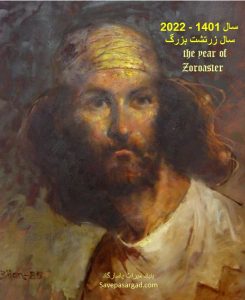
Pasargad Heritage Foundation announces the Iranian New Year 1401 (Nowruz) as the year of the great Zarathustra

Every year, Pasargad Heritage Foundation (PHF) announces its dedicatee of the year. This year, on the eve of the most important Iranian celebrations, Nowruz and the beginning of spring and the new near, PHF proposes and dedicates the coming New Year to the great Zarathustra.

This choice has always been made based on the framework of preservation and the value of Iran’s cultural and historical heritage throughout history. Legacies that have been overshadowed by negligence and ignorance, anti-culturalism, or cultural discrimination, have unfortunately been in greater danger of destruction or annihilation during the Islamic rule than ever before. One of these legacies are those individuals who, due to their exceptional scientific, literary, and cultural backgrounds, have made significant contributions to the history of our land and to human societies, or can be included in the UNESCO World Heritage List. This year, the Pasargad Heritage Foundation has decided to name 1401 after the great Zoroaster—philosopher, thinker, and messenger of goodness.

Also known as Zoroaster and Zarathushtra Spitama, Zarathustra’s date of birth and the exact period of his life are not clear. Based on linguistic and cultural evidence, scholars say he was present in the second millennium BC, and some historians consider him a contemporary of Cyrus the Great and Darius I. But what seems clear is that the religion of Zoroaster from the sixth century BC to the seventh century AD was the religion of the Persians and some other peoples. European theologians consider Zarathustra a religious reformer because of his moral teachings and believe that he was able to exert significant influence on other religions such as Judaism and Islam, and especially Christianity. At the same time, many world thinkers and philosophers have named and praised Zarathustra as the first philosopher and thinker in the world. He was the first to call animal sacrifice a sin, and the preservation of nature, water, soil, plants, and animals as a form of worship. Apart from all this, what has further augmented our support and nomination for this year is the effects that the teachings of Zoroaster have had, directly or indirectly, on the lives of Persians then and on today’s Iranians, effects that are far greater than the effects of any other religion or creed.

The ideas of Zarathustra as a philosopher, a humanist thinker, and a great poet and writer in his time have given the foundations for building the cultural foundation that we now call “Iranian culture,” a culture that, with all its antiquity, has been and is completely relevant today. For this reason, the ideas of Zarathustra have been present in the works of Iranian philosophers, poets, and thinkers for centuries and have been placed in the hearts and souls of every Iranian with any religion or creed or in those with no particular religious beliefs. As to this day no religion or ideology has been able to destroy these foundations.

The essence and cultural value that Zarathustra has given us are based on the important and modern principles that “man has will and authority; the choice between evil and good, light and darkness” and emphasizing that the defeat of evil and darkness by man is inevitable.

And it is from the heart of this culture that Nowruz, Mehregan, Yalda, Sadeh, and Espandegan and many other Iranian celebrations were born, as a way to build the resilience of humans who have endured and continue to endure the harsh suffering over centuries.

With regards to the cultural values that Zarathustra has given us, beautiful and magical words have already been written: “Good thoughts, good words, and good deeds.”

Pasargad Heritage Foundation, in announcing the year 1401 in the name of the great Zarathustra, congratulates everyone on the beautiful world of this Nowruz and Iranian New Year. Let us start the new year in the name of the great Zoroaster and his humane and enlightened thought, and wish all the people of Iran and the world a year full of peace, freedom, and happiness.

With kindness and best wishes,

Pasargad Heritage Foundation

https://savepasargad.com

International Women’s Day March 8, 2022


History of Women’s Day

International Women’s Day is celebrated in many countries around the world. It is a day when women are recognized for their achievements without regard to divisions, whether national, ethnic, linguistic, cultural, economic or political.

Since those early years, International Women’s Day has assumed a new global dimension for women in developed and developing countries alike. The growing international women’s movement, which has been strengthened by four global United Nations women’s conferences, has helped make the commemoration a rallying point to build support for women’s rights and participation in the political and economic arenas.

We invite you to learn about the history of women’s rights and the UN’s contribution to the cause.  https://www.un.org/en/observances/womens-day/background

World Wildlife Day – March 3, 2022

On 20 December 2013, at its 68th session, the United Nations General Assembly (UNGA) proclaimed 3 March – the day of signature of the Convention on International Trade in Endangered Species of Wild Fauna and Flora (CITES) in 1973 – as UN World Wildlife Day to celebrate and raise awareness of the world’s wild animals and plants. The UNGA resolution also designated the CITES Secretariat as the facilitator for the global observance of this special day for wildlife on the UN calendar. World Wildlife Day has now become the most important global annual event dedicated to wildlife.

World Wildlife Day (WWD) will be celebrated in 2022 under the theme “Recovering key species for ecosystem restoration”. The celebrations will seek to draw attention to the conservation status of some of the most critically endangered species of wild fauna and flora, and to drive discussions towards imagining and implementing solutions to conserve them. All conversations will be inspired by and seek to inform efforts towards the achievement of UN Sustainable Development Goals 1 (No Poverty), 2 (Zero hunger) 12 (Ensure sustainable consumption and production patterns), 13 (Climate Action) 14 (Life Below Water) and 15 (Life on Land).

According to data from the International Union for Conservation of Nature (IUCN) Red List of Threatened Species, over 8,400 species of wild fauna and flora are critically endangered, while close to 30,000 more are understood to be endangered or vulnerable. Based on these estimates, it is suggested that over a million species are threatened with extinction.

Continued loss of species, habitats and ecosystems also threatens all life on Earth, including us. People everywhere rely on wildlife and biodiversity-based resources to meet all our needs, from food, to fuel, medicines, housing, and clothing. Millions of people also rely on nature as the source of their livelihoods and economic opportunities.

In 2022, World Wildlife Day will therefore drive the debate towards the imperative need to reverse the fate of the most critically endangered species, to support the restoration of their habitats and ecosystems and to promote their sustainable use by humanity.

https://wildlifeday.org/

ICOMOS Statement on Ukraine

Paris, 24 February 2022

ICOMOS deplores the lives already lost and threatened by the deterioration of the situation in the Ukrainian territory. ICOMOS also fears that serious threats weigh on Ukraine’s heritage. As one of the foremost organisations in the heritage field and Advisory Body to the World Heritage Committee, it reminds all involved of the extreme fragility of the cultural heritage during armed conflict, even to unintentional damage, and the commitments of care they have made under the UNESCO Cultural Conventions – in particular the 1954 Hague Convention and its two Protocols, the 1972 World Heritage Convention and the 2003 Convention for the Safeguarding of the Intangible Cultural Heritage – and their absolute duty to do everything in their power to preserve all heritage, in all its components and layers, from damage. ICOMOS is at the disposal of its colleagues and the authorities in Ukraine for any support or advice it may be able to give in safeguarding cultural heritage or risk preparedness measures.

International Day of Women and Girls in Science – February 11, 2022

Full and equal access and participation for women and girls in science

Science and gender equality are both vital for the achievement of the internationally agreed development goals, including the 2030 Agenda for Sustainable Development. Over the past decades, the global community has made a lot of effort in inspiring and engaging women and girls in science. Yet women and girls continue to be excluded from participating fully in science.

In order to achieve full and equal access to and participation in science for women and girls, and further achieve gender equality and the empowerment of women and girls, the United Nations General Assembly declared 11 February as the International Day of Women and Girls in Science

Background

A significant gender gap has persisted throughout the years at all levels of science, technology, engineering and mathematics (STEM) disciplines all over the world. Even though women have made tremendous progress towards increasing their participation in higher education, they are still under-represented in these fields.

Gender equality has always been a core issue for the United Nations. Gender equality and the empowerment of women and girls will make a crucial contribution not only to economic development of the world, but to progress across all the goals and targets of the 2030 Agenda for Sustainable Development, as well.

On 14 March 2011, the Commission on the Status of Women adopted a report at its fifty-fifth session, with agreed conclusions on access and participation of women and girls in education, training and science and technology, and for the promotion of women’s equal access to full employment and decent work. On 20 December 2013, the General Assembly adopted a resolution on science, technology and innovation for development, in which it recognized that full and equal access to and participation in science, technology and innovation for women and girls of all ages is imperative for achieving gender equality and the empowerment of women and girls.

Hominin Bone in Israel Dated to 1.5 Million Years Ago

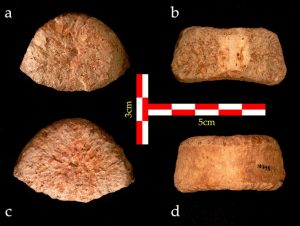
TEL AVIV, ISRAEL—Cosmos Magazine reports that a vertebra unearthed at the site of ‘Ubeidiya, which is located in the Jordan Valley, has been dated to 1.5 million years ago. When compared to the remains of other early humans, the fossil is evidence of human dispersal out of Africa in successive waves, rather than as a single event, according to Alon Barash of Bar-Ilan University. Palaeoanthropologist Ella Been of Ono Academic College suggests that the bone belonged to a male child between six and 12 years of age who stood about 70 inches tall, making him relatively tall when compared to the 1.8-million-year-old remains of early humans found at the Dmanisi site in Georgia. “Due to the difference in size and shape of the vertebra from ‘Ubeidiya and those found in the Republic of Georgia, we now have unambiguous evidence of the presence of [at least] two distinct dispersal waves,” Barash said. The two species also produced different stone tools, and lived in different types of habitats, he added. Read the original scholarly article about this research in Scientific Reports