We believe that all cultural, historical and natural heritage, wherever they are should be preserved. LEARN MORE
News

Default Category

Seventy Seven Species are Placed on IUCN Red List


red logoAccording to the latest International Union for Conservation of Nature (IUCN), there are more than 20,000 endangered species on their Red List of Threatened Species. Out of this number, seventy seven belong to Iran, and this number is 3/4th of all animal species in Iran.

Destruction or deterioration of conditions in their natural habitats, new industries and factories, building roads in restricted areas, illegal fishing and hunting, droughts, and lack of attention by the governmental departments are among the causes that have resulted in the present situation.

Among the endangered animal species of the country, the Iranian panther and Persian Zebra are considered the most important ones.

zebraPersian_Panter_Leopard


Neglect of Historical Fortresses on Islands in Southern Iran

fortressLack of attention and neglect by officials has resulted in the destruction of a number of historic castles on the southern islands of Iran.

One great example of a historical structure that has experienced deterioration and destruction because of neglect is Hormouz castle, which is the most important structure built during the Portuguese domination of the Gulf coast and islands. This Castle was built by a Portuguese admiral in 1507.

Another castle known as the Portuguese Castle is 400 years old and has seen major deterioration and it is in very bad condition.

Unfortunately, the restoration work that has been done a couple of times by the specialists who do not have the right training has resulted in major destructions of these sites.

India’s Rajasthan Forts Included on UNESCO’s List

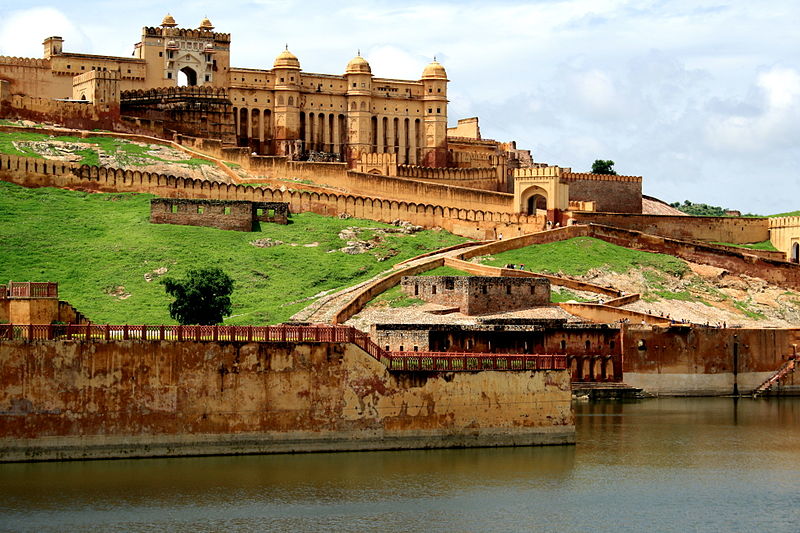
Rajasthan_Fort_IndiaSix forts of Rajasthan that date back to 8th-19th centuries have been included in UNESCO’s World Heritage list.  The International Council in Monuments and Sites (ICOMOS), which evaluates cultural properties for UNESCO, recommendated last month (May 2013) the inclusion of Chittaurgarh fort in Chittaurgarh district, Kumbhalgarh fort in Rajsamand, Ranthambhore fort in Sawai Madhopur, Jaisalmer fort in Jaisalmer, Amber fort in Jaipur and Gagron fort in Jhalawar on the UNESCO’s list.

These forts are examples of military architecture and the structures range from 8th to 19th century and comprise multi-gated approaches through massive and high fortification walls, palaces, temples, memorials and water reservoirs according to archeologists. The extensive fortifications that are up to 20 km in circumference exploit the contours of the hills, and specifically the river at Gagron, dense forest at Ranthambhore, and desert at Jaisalmer.

India currently has 29 heritage sites listed by UNESCO which 23 in the cultural category and six in the natural category. Last year, the Western Ghats were inscribed on the list in the natural sites category. The Majuli islands of Assam are also currently in referral stage.  The sites that have been approved this time were rejected by UNESCO last year. India’s Ministry of Culture had written to the UNESCO, objecting to the rejection as factual errors were found in the reasons listed for the rejection as reported by Times of India.

Syria’s Heritage Sites: Home to Refugees

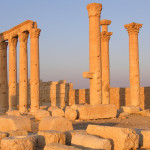
Idlib_SyriaRoman structures, columns, temples and churches that date back to the 1st century are a few U.N. World Heritage sites in the northern Syrian province of Idlib. They’re known as the Dead Cities, tracing the transition from ancient pagan Rome to Christian Byzantium, and until recently, they were deserted and frozen in time. Last month, as the U.S. National Public Radio (NPR) reported, these once quiet ancient sites have now become homes for Syrians who seek refuge and a safe place from the unrest in Syria.

Recent survey by Syrian and international aid workers says there are millions of displaced Syrians inside the country. In Idlib, villages are now completely empty. These refugees have in many cases fled from one village or city to another and then to another, basically running away from the war. In most cases, these are families with small children and/or pregnant women. Many of these families now live in ancient cities among the graves and artifacts.

As international experts have been monitoring the destruction to Syria’s vast archaeological and historical heritage even before the uprising began in 2011, it is especially difficult to watch the destruction to the Dead Cities. Experts believe that not only are people now using these ghost towns as a place to live, but also as a way to make a living. Every day, remains of a site are dug up and pieces and relics are taken and sold in the international market after being transported out of Syria. It is believed that there are well-established networks for selling such artifacts in the region, and internationally. In a recent auction a Syrian Bronze Age artifact that was thought to be looted sold for $400,000.

Heritage Center Planned for Cairo

Egypt Construction

Even though Unesco has declined to comment on reports (published in the Egyptian press as well as the Art Newspaper) that it plans to set up a regional center for world heritage in Cairo, the news has been widely reported.  A few months ago Unesco’s director general Irina Bokova discussed establishing such a center in the Egyptian capital with Mohamed Ibrahim, the minister of state for antiquities, during a recent meeting. This was reported at that time by the press and WCHV too.

Specialists at the planned venue would assist in protecting archaeological sites in Africa included on the World Heritage list. African archaeologists would also receive training in conserving and studying artifacts and monuments. 

Japan’s Mount Fuji

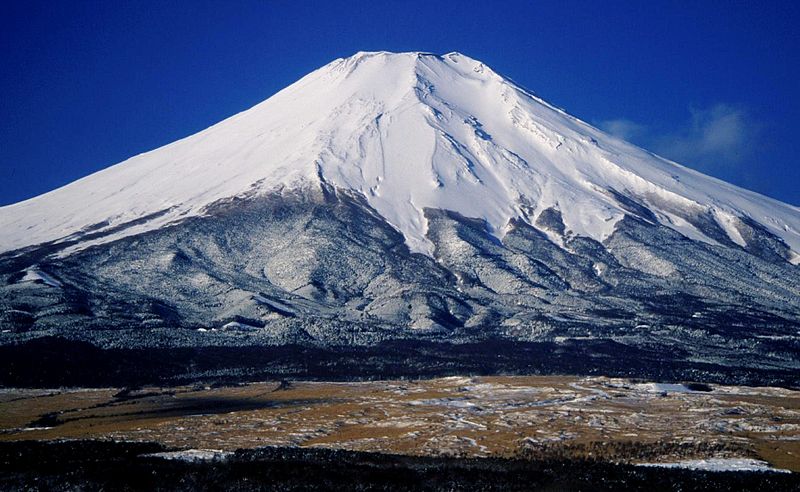
Mt FujiEarlier this month, it was reported by the Agency for Cultural Affairs in Japan that the magnificent and beautiful Mount Fuji will most likely be recognized as a World Heritage Site by UNESCO.  The agency received a notice that Mt. Fuji was recommended by the advisory panel, known as the International Council on Monuments and Sites (ICOMOS) for World Heritage status, a body affiliated with UNESCO.  However, the panel also said that it had rejected a request to add a group of cultural assets in the ancient city of Kamakura, Kanagawa Prefecture, to the World Heritage List, citing scarce resources directly linked to the medieval Shogunate’s rule as reported by Japan Times in early May 2013.

The formal approval is expected in June at a meeting in Cambodia.  Mt. Fuji would be Japan’s 13th cultural World Heritage site. The 3,776-meter (12,388-foot) volcanic peak is ringed by lakes, national parks, temples and shrines. It rises from the Pacific coast and is seen as a sacred part of Japan’s cultural landscape.  In its request for registration, the Cultural Affairs Agency said Mount Fuji covers roughly 70,000 hectares in Yamanashi and Shizuoka prefectures, including five major lakes and the Shiraito Falls.  It is widely believed that Mount Fuji is a national symbol of Japan and blends religious and artistic traditions.

Registration on the World Heritage list greatly boosts tourism.

Total Oil Won’t Drill in Virunga World Heritage Site

virungaEarlier this month, (May, 2013) the World Wildlife Fund (WWF) reported that the French company, Total Oil has made an assurance that it won’t explore for oil within the boundaries of Virunga National Park in Democratic Republic of Congo (DRC). At the company’s annual shareholder meeting in Paris, chairman and CEO Christophe de Margerie responded to questions posed by WWF-France by confirming that Total is making a “commitment to respect the current limits” of the park, Africa’s oldest World Heritage Site.

Virunga National Park is recognized by UNESCO and the DRC government as a place of outstanding natural value. WWF stated that environmental experts and WWF are pleased that Total has given this clear and comprehensive assurance that they won’t conduct any oil exploration inside Virunga National Park.

Bulgaria’s Cherven Fortress Seeking UNESCO Status

Cherven_(Bulgaria)Earlier this month (May 2013), Sofia News Agency, Novinite reported that the central part of Bulgaria’s Danube city of Ruse and the Cherven medieval fortress will be proposed for inscription into the indicative list of sites to be included on UNESCO’s World Heritage List.

The proposal was sent to Bulgaria’s Culture Minister Vladimir Penev.  Pavel Dochev, who is an architect  is also one of the initiators of the proposal. He declared that preliminary studies have shown that the proposal was in line with requirements and the official criteria.

Bulgaria has a total of 9 sites on the list, one of which, the Ivanovski rock monastery, is located 12 km south of Ruse. The last Bulgarian site to be included on UNESCO World Heritage List, the Thracian tomb of Sveshtari, was inscribed in 1985.

An Ancient Wooden Boat

boatAn ancient wooden log-boat, which could be possibly thousands of years old, has been discovered partly embedded in the banks of the River Boyne in Drogheda, Ireland.

An initial examination by archeologists, suggests that, the boat could be unique because, unlike other dug-outs or log boats found, it has a pair of oval shaped blisters on the upper edge. Similar boats have been found in the past in Northern Ireland and Britain but not in Ireland. Archeologists suggest that they could have been used for holding oars and this recent find could indicate that Drogheda could have other hidden treasures and more crafts could be found in the River Boyne. According to archeologists, River Boyne is such an important river and crafts have been operating on it since the Stone Age. Such vessels can get swept downstream towards the estuary so there might be a concentration of them in the Drogheda area. Such boats were in use from prehistoric times to transport people, goods and invading tribes.

The boat was found by members of the Boyne Fishermen’s Rescue and Recovery Service (BFRRS) as they were carrying out one of their regular operations to remove shopping trolleys from the Boyne as reported by Irish Times. It is believed that the recent heavy rainfall and the introduction of waste water treatment has led to a lot of sediment and silt being removed from the river bank and this could be possibly the reason why the boat has become visible for the first time in hundreds of years.

Despite its short course of only about 112 kilometres (70 mi), the Boyne has major historical and archaeological significance. The Battle of the Boyne, a major battle in Irish history, took place along the Boyne near Drogheda in 1690 during the Williamite war in Ireland. It passes near the ancient city of Trim, Trim Castle, the Hill of Tara (the ancient capital of the High King of Ireland), Navan, the Hill of Slane, Brú na Bóinne (an archaeological site), Mellifont Abbey, and the medieval city of Drogheda.

Golestan Palace: Recent News

Golestan-takht2

While the Golestan Palace awaits recognition and being listed by UNESCO on the World’s Cultural Heritage list, the area in the vicinity and close proximity to the palace is now under construction.  These few buildings that are being built in the close vicinity of the Golestan Palace are receiving building permits from the city of Tehran.  It is very difficult to understand the timing of these recent developments and the fact that it coincides with UNESCO’s reviews.

A few days ago one of the members of the Islamic parliament by the name of Bijan Nobavaeh told the reporters that many high ranking members of the parliament have connections and are influencing the construction projects.  He also told the reporters that UNESCO has warned the Iranian Government that if these new buildings are built in the very close vicinity of the Golestan Palace, the listing by UNESCO could be jeopardized.

Golestan Palace is the latest Cultural heritage site in Iran which is considered endangered, similar to a number of other sites. These deteriorations have resulted in these sites not being recognized and listed on the UNESCO’s World Cultural Heritage sites list.

Golestān Palace pronounced “Kakheh Golestān” (The Rose Garden Palace) was built during the reign of Tahmasp I of the Safavid dynasty (1502–1736), and was later renovated by Karim Khan Zand (r. 1750-1779). When  Agha Mohamd Khan Qajar (1742–1797) chose Tehran as his capital, the Court and Golestan Palace became the official residence of the royal Qajar family. During the Pahlavi era (1925–1979), the last dynasty in Iran, before the Iranian revolution,  Golestan Palace was used for formal royal receptions and the Pahlavi dynasty built their own palace at Niavaran. A major part of the Golestan Palace is now a museum open to the public.