
We believe that all cultural, historical and natural heritage, wherever they are should be preserved. LEARN MORE
News

Default Category

New Important Archeological Discovery in Iran

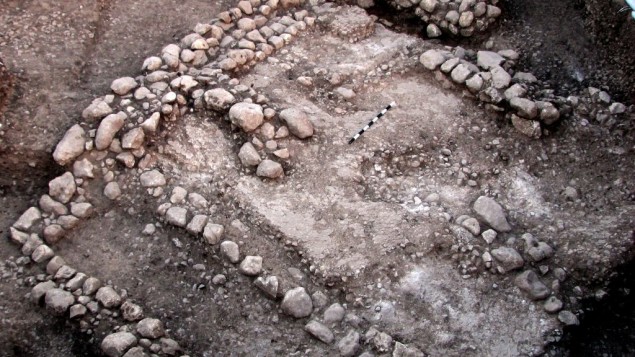
banaye-tazeh-az-zaman-kourosh2At about the same time as many celebrated the Day of Cyrus the Great, Iranian and Italian archaeologists announced a major discovery in the Fars Province of Iran near the site of Persepolis.

According to the archaeologists, they have found what seems to be remains of a Babylonian temple with widespread use of decorated glazed clay bricks, colored motifs and frescos, and symbols of gods.  Many symbols pertaining to the God Marduk of the city of Babylon are adorned with 16 full lotus flowers.  Archeologists also believe that the temple most probably was built during the Cyrus reign.

It should be noted that Cyrus conquered Babylon in 539 BC and declared his decree of human rights and religion. He also freed the  enslaved Jews. So therefore, it is quite possible that after this time Babylonians built more temples and Jewish migration to Iran started at that time.

banaye-tazeh-az-zaman-kourosh1banaye-tazeh-az-zaman-kourosh3

Returned Persian Artifact Believed to be Fake

cupAs reported by many news outlets as well as our WCHV a few weeks ago a Persian artifact believed at that time to be dated 700 BC, was returned by the US government to the Iranian government as a symbol of good will and a sign that perhaps the tense political relations between the two countries are changing. However, the recent publication by a retired Metropolitan Museum of Art curator Oscar White Muscarella clearly demonstrates that the artifact is fake (as reported by New Network Archeology).

In fact, it looks like that the artifact cannot be older than a couple of decades or even newer.  It has also been reported that the artifact was sold in 2002 to a wealthy New York Collector who was also given proof of authenticity by three prominent art dealers.  The rest of the story has been known to many: When the artifact arrived in NYC in 2003, it was confiscated and then stored away in a government warehouse for over a decade. Mr. Muscarella who has made these new claims has only seen a photograph of the artifact but is convinced that the item is fake. 

The structure of the artifact includes silver sections joined together to form a winged griffin that walks on splayed, clawed feet. Most improbable are three funnels (as suggested by Muscarella), two on the sides coming out of the body below the wings and one that protrudes the creature’s rear end. Muscarella went on to say: “The vessel has been consistently labeled a rhyton in print, but this would be correct only if the creature’s open mouth served as a pouring spout for liquids poured into the funnels (wine, water, body wastes?). It is a modern Iranian artifact.  For stylistic and technical reasons — the griffin’s head is frozen mute, its eyes stare, the head, wing and leg patterns are awkward and meaningless, and the leg rivets are modern: all attributes unlike any ancient conception — I condemned it as a forgery.”  

Now, there are still many questions and concerns to be addressed. Smuggling historical artifacts and national heritage is profitable and for smugglers who take great risk to take the pieces out of the original countries, there will always be a wealthy buyer somewhere across the world. The questions in this case are many: Who the original smuggler was (were) and how they managed to create a fake item and then smuggle it out of Iran to Switzerland and then sell it to an American buyer? In addition, how did three supposed experts actually authenticate the item in 2002?  

The main major question for us is how we could stop many more acts of smuggling of national heritage pieces that result in loss and in many cases the destruction of these beautiful artifacts from around the world.

Digital Heritage International Congress 2013

FSJ-457px

“Digital Heritage International Congress 2013” will be held from October 28th to November 1st, 2013 in Marseille, France.  The Digital Heritage International Congress will bring together a multidisciplinary audience to debate, discuss and present digital technology applicable to the protection, documentation and understanding of humanity’s shared heritage, according to an EU website.  This conference is believed to be the largest international scientific event on digital heritage in history, bringing together hundreds of researchers, educators, scientists, industry professionals and policy makers. For the first time ever, under the patronage of UNESCO, the leading scientific and industry teams from across the digital and heritage communities will join together at a conference to explore the state-of-the-art and discuss future emerging technologies that will change research and preservation of world cultural heritage.  Participants will be guided through a series of interactive workshops and exhibitions dedicated to showcasing state-of-the-art technologies used in heritage preservation.

This event has been organized by CNRS (French National Center for Scientific Research) on behalf of the MAP Laboratory, in collaboration with local research institutions Provence (Aix-Marseille University, Arts et Métiers Paris Tech, CICRP, School of Architecture and INRIA).

For further information, please visit: 
http://www.digitalheritage2013.org/

Pakistan’s “Moenjodaro” Facing Uncertain Future

Mohenjo-daro

It is widely believed by archeologists that the city of Moenjodaro in southern Pakistan was remarkably advanced for its time, with sophisticated civil engineering and urban planning, and because of its size and the richness of its monuments, has been generally regarded as a capital of an extensive state.

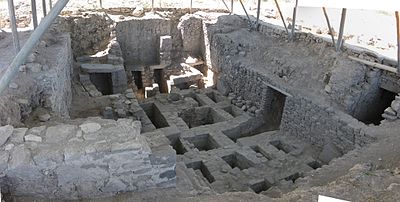
Moenjodaro, which means “the mound of the dead’ was a major center of the pre-Hindu Indus civilization dating back to 3000 BC and one of the earliest cities in the world.  Archeologists estimate that over 40,000 people lived in Moenjodaro and the city which was rediscovered in 1922 has had extensive excavations but only one third of the site has been revealed so far.  The stupa mound, built on a massive platform of mud brick, is composed of the ruins of several major structures – Great bath, Great Granary, College Square and Pillared Hall – as well as a number of private homes.  The extensive lower city is a complex of private and public houses, wells, shops and commercial buildings.  These buildings are laid out along streets intersecting reach other at right angles, in a highly form of city planning that also incorporated important systems of sanitation and drainage (UNESCO).

However, the site which was  designated a UNESCO World Heritage Site in 1980 is now facing major environmental threats from extreme summer heat and high temperatures, winter frosts, torrential rains and humid air as reported by the Telegraph newspaper.  The structures which are mostly made of clay bricks (hardened unbaked mud bricks) have greatly been damaged by the humidity during the monsoon season, and salt crystals blown and deposited on the clay has caused extensive breakage and damage to the structures.  All of these environmental factors have caused this significant archeological site to literally crumble. 


It is also greatly believed that there is a lot more funding needed to help to preserve and maintain the site otherwise, Pakistan’s “Moenjodaro” will face an uncertain future. 

Ukraine’s World Heritage Site: Ancient City of Tauric Chersonese

Tauric ChersoneseLast month (Sep 2013) after two decades of research and gathering data by the Ukrainian and US archaeologists the ancient city of Tauric Chersonese and its Chora was granted World Heritage status by the United Nations Educational, Scientific and Cultural Organization (UNESCO).

A port city founded by Greeks in the fifth century B.C., Chersonesos is the site of an excavation led since 1994 by Professor Joseph Carter, professor of classical archaeology and the director of the Institute of Classical Archaeology (ICA) at University of Texas, Austin.

According to UNESCO, the site features the remains of a city founded by Dorian Greeks in the 5th century BC on the northern shores of the Black Sea. It encompasses six component sites with urban remains and agricultural lands divided into several hundreds of chora, rectangular plots of equal size. The plots supported vineyards whose production was exported by the city which thrived until the 15th century. The site features several public building complexes and residential neighborhoods, as well as early Christian monuments alongside remains from Stone and Bronze Age settlements; Roman and medieval tower fortifications and water supply systems; and exceptionally well-preserved examples of vineyard planting and dividing walls. In the 3rd century AD, the site was known as the most productive wine center of the Black Sea and remained a hub of exchange between the Greek, Roman and Byzantine Empires and populations north of the Black Sea. It is an outstanding example of democratic land organization linked to an ancient polis, reflecting the city’s social organization.

The excavation was supported by David Packard and the Packard Humanities Institute (PHI), which contributed more than $12 million during a 12-year period to the project.

Lumbini: New Book of Photographs

lumbini

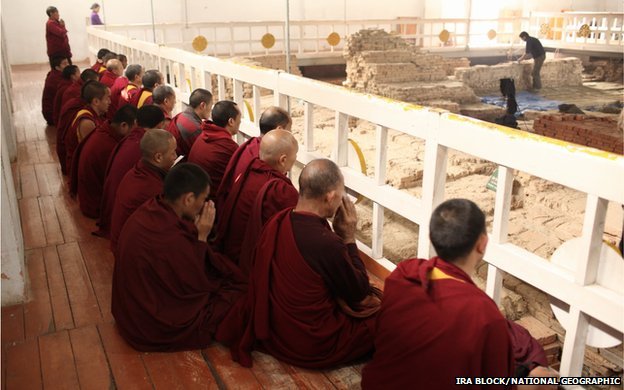
Lumbini, Birthplace of Buddha is a new and joint publication of UNESCO and the Paris-based NGO Oriental Cultural Heritage Sites Protection Alliance.  The effort brought together eight photographers: three from Nepal and five from around the world who used their vision to capture the uniqueness of this World Heritage Site which has long been a sacred place for many pilgrims.  The result is a collection of over two hundred photographs depicting seven distinct themes of knowledge, beliefs, people, nature, spaces and dangers. Each theme is introduced by a short text written by national and international personalities affiliated with Lumbini. The national launch for Lumbini, Birthplace of Buddha will be in Kathmandu on 31 October, 2013, followed by a planned international unveiling at the U.N. Headquarters in New York in the spring of 2014.

Lumbini, set in the fertile plains of Nepal’s Terai region, was inscribed on the World Heritage List in 1997, and is universally regarded as the place where Buddha was born.  As one of the most sacred sites significant to Buddha’s life and path to enlightenment, the Sacred Garden of Lumbini has been a center of pilgrimage for devout followers from as early as the 3rd century B.C.

Myanmar’s Long Struggle for World Heritage Status

bagan1The ancient city of Bagan, Burma or Myanmar, has re-submitted an application to UNESCO to receive World Heritage status. In 1996 Myanmar nominated eight properties for UNESCO World Heritage Site status. However, not a single one has been accepted yet. While these sites remain on UNESCO’s tentative list, Myanmar is considering UNESCO’s suggested improvements, working towards building heritage sites founded upon stable and effective conservation and preservation strategies.

The territory where Bagan lies stretches over a 26-square-miles plain which encompasses bagan2over 3,000 temples, monasteries and pagodas. For several centuries (from the 9th to the 13th century), the area was the capital city of a kingdom that consolidated and controlled most of modern-day Myanmar, and served as a hub of Buddhist scholarship.
In 1975, a major earthquake destroyed many of Bagan’s crumbling structures and the governing junta began a campaign of reconstruction which was poorly done without much attention to heritage reconstruction standards and techniques. In fact, the government even commissioned the construction of new monuments within the designated historical zone. Although the restoration of the site provoked international criticism, many locals see the refurbishment as a necessity to accommodate Bagan’s function as a living and breathing Buddhist pilgrimage site.

The ruling military junta changed its name from Burma to Myanmar in 1989, a year after thousands were killed in the suppression of a popular uprising. Rangoon also became Yangon. The Adaptation of Expression Law also introduced English language names for other towns, some of which were not ethnically Burmese. The change was recognized by the United Nations, and by countries such as France and Japan, but not by the United States and the UK.

bagan3Myanmar has been extremely politically isolated and as a result until recently only had received very little aid and technical assistance from the outside world. However, the situation has changed over the last few years with new international investment and even a trip by President Obama and former Secretary of State Hillary Clinton to Myanmar in November 2012.  At the same time, the internal ethnic conflicts and tensions have resulted in the ongoing destruction of Muslim sites and mistreatment of minorities.

Many experts are now calling for this recent bid to be accepted by UNESCO bringing attention and much needed help for Myanmar’s heritage sites.

Launch of Emergency Red List of Syrian Antiquities at Risk


On Wednesday, September 25th, 2013, an event was held at the Metropolitan Museum of Art in New York City, where UNESCO officials including Director-General Irina Bokova joined the President of the International Council of Museums (ICOM), Dr. Hans-Martin Hinz, and United States Assistant Secretary of State for Population, Refugees, and Migration, Ms Anne Richard, to launch an Emergency Red List of Syrian Cultural Objects at Risk.

Since 2000, ICOM has published 12 Red Lists for cultural objects at risk from all over the world.  The ICOM Red Lists further facilitate the work of police, customs officials and all other professionals concerned with the protection of heritage objects by helping them identify the categories that are particularly vulnerable to illegal purchase, transaction and export. The Syrian Red List contains many objects from different periods of Syrian history including prehistory and ancient history, Islamic era and middle ages as well as Ottoman period.

After tower destroyed

After tower destroyed

Aleppo before destruction

Aleppo before destruction

Over the last two years, the world has witnessed loss of lives as well as the destruction of heritage sites in Syria caused by the ongoing conflict.


Remains of Ancient Civilizations Found In Brazil

 Brazil Brazil is busy preparing the country for the World Cup in 2014 and the Olympics in 2016, but last month another big news came out of Brazil. Finnish archeologists reported finding the remains of an ancient civilization in the Amazonian area of Brazil. The team has unearthed artifacts including new forms of ceramics and over 200 kg of pot fragments. In addition, many of the geometrical earth mounds found have geometrical patterns and are large in dimension measuring over hundred meters. These structures have been discovered in the Brazilian state of Acre.

     Professor Martti Pärssinen who leads the Danish team of archeologists points out that these large multiple structures perhaps required as much effort and energy for the native ancient civilization to build as the pyramids in Egypt. 

     You can watch a TV report on this story here.

Persian Artifact Returned to Iran

cup


As reported by CNN, and announced by the US State Department a 2,700 year-old Persian artifact has been returned to Iran.  In a tweet the US State Department announced the return of a silver chalice, the ancient Persian artifact to its homeland. The ceremonial drinking vessel or rhyton was confiscated in a U.S. customs warehouse many years ago. The chalice had been in New York since 2003, when an art dealer smuggled it into the country from Iran.  Customs officials have long wanted to return the rhyton to Iran, according to a New York Post report. But decades of bad diplomatic relations between Tehran and Washington made it impossible.


The decision to return the artifact came after President Obama called the Iranian President, Hassan Rouhani, as he was on his way to the airport in NYC and returning to Iran after the UN meetings.  The rhyton, which takes the shape of a mythical beast with the body of a lion and the head of a bird of prey, was fashioned in the Achaemenid era, the early Persian Empire, around 700 BC. The U.S. officials handed it off directly to the Iranian delegation, who BBC reports have already met with officials from New York’s Metropolitan Museum of Art about potential exhibitions of Iranian artifacts.  It is still not clear if Iran will ever put more restrictive measures in place in order to stop the smuggling of Persian artifacts out of Iran.