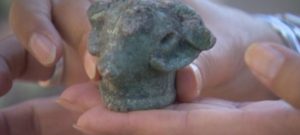
 According sofiaglobe archaeologists have found a bronze statuette of a ram’s head, said to date from the sixth century BCE, on St Cyricus Island off the coast of the town of
Sozopol on Bulgaria’s Black Sea coast. The statuette, the only one of its kind found there to date, was brought by the founders of Apollonia, the ancient name of Sozopol, according to a report by Bulgarian National Television.
Archaeologists have reached a layer that dates from the time of the first Apollonians. The
town was founded in the seventh century BCE by Greek colonists from Miletus.
The head of the dig team, Associate Professor Krustina Panayotova of the National
Archaeological Institute at the Bulgarian Academy of Sciences, said that the statuette was
found in a pit where ritual drinking vessels were found, evidence that the first generations
of Apollonians offered gifts to their gods at the spot.
Although Apollonia has been studied for many years in dozens of archaeological
expeditions, no bronze objects have been found so far. Bronze from later eras has not
been found, even though there were copper mines nearby, used by the first settlers, the
report said.
Panayotova said that bronze was a metal that was much used. It is believed that the statue of Apollo, which was 12 metres high and from which the town took its name, may have been smelted for use to make cannons in later centures.
She said that the ram was a sacrificial animal, offered as a gift to the gods. “It is quite
possible that the statuette was brought here from Miletus.”
Along with the bronze head, many drinking vessels and jars made of fine ceramics have
been found. Apart from the workmanshop, the wild goats painted on them accurately suggest the date, and the place where the first settlers came from, the report said.
Research fellow Professor Margarit Damyanov said that the artefact was northern Ionian.
There was also hand-made ceramics, characteristic of the Thracian style, he said.
“Although attracted by the copper mines and natural resources of the area, the first
settlers in Apollonia apparently worked and lived in harmony with the local Thracians,”
Damyanov said.