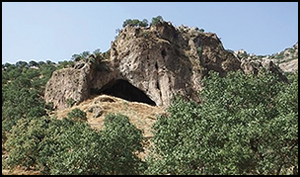
 Once we thought that ours was the only species to use rituals to mourn the dead. Then archaeologists discovered hints of pollen from colourful meadow flowers around a Neanderthal skeleton in a remote cave in Iraq. Now, half a century later, new remains of these human cousins have been unearthed at the same “flower burial” site in Shanidar Cave, about 150 kilometres from Mosul. “It’s almost the entire top half of a body from the waist upwards,” said Emma Pomeroy, an archaeologist from the University of Cambridge who led the discovery.
“We’ve got the skull, we’ve got the left arm and hand fairly complete, the right shoulder and the right hand, then the spinal column down to about the waist level and all of the ribs as well.” Dubbed Shanidar Z, the new Neanderthal skeleton is the most intact discovered anywhere in the world over the past 25 years, the team report in the journal Antiquity