We believe that all cultural, historical and natural heritage, wherever they are should be preserved. LEARN MORE
Archives

International Women’s Day March 8

United Nation:  International Women’s Day is a time to reflect on progress made, to call for change and to celebrate acts of courage and determination by ordinary women, who have played an extraordinary role in the history of their countries and communities. The world has made unprecedented advances, but no country has achieved gender equality.

Fifty years ago, we landed on the moon; in the last decade, we discovered new human
ancestors and photographed a black hole for the first time. In the meantime, legal restrictions have kept 2.7 billion women from accessing the same choice of jobs as men. Less than 25 per cent of parliamentarians were women, as of 2019. One in three women experience gender-based violence, still. Let’s make 2020 count for women and girls everywhere.
****
What is International Women’s Day?
International Women’s Day (March 8) is a global day celebrating the social, economic,
cultural and political achievements of women. The day also marks a call to action for
accelerating gender parity.

No one government, NGO, charity, corporation, academic institution, women’s network
or media hub is solely responsible for International Women’s Day. Many organizations
declare an annual IWD theme that supports their specific agenda or cause, and some of
these are adopted more widely with relevance than others. International Women’s Day is a collective day of global celebration and a call for gender parity.
International Women’s Day is all about unity, celebration, reflection, advocacy and action – whatever that looks like globally at a local level.

Pollution Found in Norway's Prehistoric Food Chain

NORWAY— Science Magazine reports that archaeologist Hans Peter Blankholm of the
Arctic University of Norway and his colleagues found “unhealthy” levels of toxic metals
in the bones of Atlantic cod and harp seals recovered from garbage pits at eight
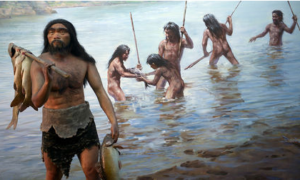
archaeological sites on Norway’s Varanger Peninsula. The sites range in age from 3,800 to 6,300 years old. The analysis revealed that the cod and seal bones both contained high levels of cadmium, lead, and mercury, which can cause organ damage in humans when consumed. The metals are thought to have leached into the water supply as sea levels rose and covered previously dry land. Blankholm and his colleagues said, however, that it is unclear if eating contaminated sea creatures harmed the people who lived in these prehistoric Arctic communities, since they also ate fruit and meat from reindeer and rabbits, and may not have lived long enough to accumulate many pollutants from the otherwise beneficial, high-protein foods from the sea. The next phase of research will analyze human remains recovered from the archaeological sites.
Antiquity Pollution Found in Norway’s Prehistoric Food Chain

Explained: Why the govt wants to locate Dara Shikoh tomb, and why it’s not easy

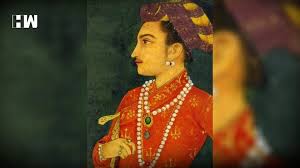
Mughal prince Dara Shikoh is described as a “liberal Muslim” who tried to find commonalities between Hindu and Islamic traditions. (Wikipedia)
The Ministry of Culture recently set up a seven-member panel of the Archaeological
Survey of India (ASI) to locate the grave of the Mughal prince Dara Shikoh (1615-59).
He is believed to be buried somewhere in the Humayun’s Tomb complex in Delhi, one of around 140 graves of the Mughal clan.
Headed by T J Alone, Director-Monument at ASI, the panel has senior archaeologists R S Bisht, Sayeed Jamal Hassan, K N Dikshit, B R Mani, K K Muhammed, Satish Chandra, and B M Pandey as members. It has been given three months. “For the findings to be conclusive, the three-month time can be extended. The panel will use architectural evidence from that time, and also written history and any other information that can be used as evidence,” Culture Minister Prahlad Patel said.

Dara Shikoh’s legacy
The eldest son of Shah Jahan, Dara Shikoh was killed after losing the war of succession against his brother Aurangzeb. Dara Shikoh is described as a “liberal Muslim” who tried to find commonalities between Hindu and Islamic traditions. He translated into Persian the Bhagavad Gita as well as 52 Upanishads.
One of the archaeologists on the panel, Muhammed, described Dara Shikoh as “one of
the greatest free thinkers of that time”. “Dara Shikoh realised the greatness of the
Upanishads and translated them, which were earlier known only to a few upper caste
Hindus. Translations from that Persian translation have inspired a lot of free thinkers of
today, even inspiring the likes of former United States President Barack Obama .”
Dara Shikoh & Aurangzeb
Some historians argue that if Dara Shikoh had ascended the Mughal throne instead of
Aurangzeb, it could have saved thousands of lives lost in religious clashes. “Dara Shukoh was the total antithesis of Aurangzeb, in that he was deeply syncretic, warm-hearted and generous — but at the same time, he was also an indifferent administrator and ineffectual in the field of battle,” Avik Chanda writes in Dara Shukoh, The Man Who Would Be King.

Of late, there have been renewed attempts to compare Dara Shikoh’s legacy against that of Aurangzeb. At a recent conclave in Delhi, speakers included RSS functionaries called Dara Shikoh “a real Hindustani”. A research chair was set up in Dara Shikoh’s name at Aligarh Muslim University (AMU) last year.
Prof Sunil Kumar, professor of medieval history at the University of Delhi, said:
“Whenever you use the past for modern political purposes, you will always twist it
because the past doesn’t serve modernity very well. You end up manipulating it for your
present intentions. If he was the monarch and not Aurangzeb, would India have been any different? These assumptions are coming from a misplaced understanding of Mughal history… He is made to be a good Muslim but why the search for his grave?”
The remains of Dara Shikoh
According to the Shahjahannama, after Aurangzeb defeated Dara Shikoh, he brought the latter to Delhi in chains. His head was cut off and sent to Agra Fort, while his torso was buried in the Humayun’s Tomb complex. Muhammed said: “No one knows where exactly Dara Shikoh was buried. All we know is that it’s a small grave in the Humayun’s Tomb complex. Most people point to a specific small grave there. Italian traveller Niccolao Manucci gave a graphic description of the day in Travels of Manucci, as he was there as a witness to the whole thing. That is the basis of the thesis.”

The way forward
The ASI’s biggest problem is that most graves in the complex have no names.
Panel member Hassan, a former ASI Director, said, “The Shahjahannama compiled by
Muhammad Saleh Kamboh… has dedicated at least two pages to the last days of Dara
Shikoh, on how he was brutally murdered and buried somewhere in the complex.”
But most on the panel are uncertain about how conclusive evidence can be found. “I
don’t know how it will be concluded. Let people go for further research and find out from
literary resources. All people on the panel will apply their areas of expertise,” Mani said.
Muhammed said the committee hasn’t met yet, so no methodology has been decided.
“You can’t say with certainty, but probability is there,” he said. “Let us hope, even as we
can’t open any tomb, that it works out. It’s a step in the right direction. It should have
been done earlier.”
https://indianexpress.com/article/explained/explained-government-locate-dara-shikoh-
tomb-asi-6271332/

Archaeologists Discovered Neanderthal Skeleton in Iraq

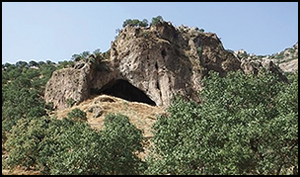
Once we thought that ours was the only species to use rituals to mourn the dead. Then archaeologists discovered hints of pollen from colourful meadow flowers around a Neanderthal skeleton in a remote cave in Iraq. Now, half a century later, new remains of these human cousins have been unearthed at the same “flower burial” site in Shanidar Cave, about 150 kilometres from Mosul. “It’s almost the entire top half of a body from the waist upwards,” said Emma Pomeroy, an archaeologist from the University of Cambridge who led the discovery.
“We’ve got the skull, we’ve got the left arm and hand fairly complete, the right shoulder and the right hand, then the spinal column down to about the waist level and all of the ribs as well.” Dubbed Shanidar Z, the new Neanderthal skeleton is the most intact discovered anywhere in the world over the past 25 years, the team report in the journal Antiquity

International Mother Language Day

Languages, with their complex implications for identity, communication, social
integration, education and development, are of strategic importance for people and planet. Yet, due to globalization processes, they are increasingly under threat, or disappearing altogether. When languages fade, so does the world’s rich tapestry of cultural diversity. Opportunities, traditions, memory, unique modes of thinking and expression — valuable resources for ensuring a better future — are also lost.

At least 43% of the estimated 6000 languages spoken in the world are endangered . Only a few hundred languages have genuinely been given a place in education systems and the public domain, and less than a hundred are used in the digital world.

International Mother Language Day has been observed every year since February 2000 to promote linguistic and cultural diversity and multilingualism.

Languages are the most powerful instruments of preserving and developing our tangible and intangible heritage. All moves to promote the dissemination of mother tongues will serve not only to encourage linguistic diversity and multilingual education but also to develop fuller awareness of linguistic and cultural traditions throughout the world and to inspire solidarity based on understanding, tolerance and dialogue. Every two weeks a language disappears taking with it an entire cultural and intellectual
heritage.

Linguistic diversity is increasingly threatened as more and more languages disappear.
Globally 40 per cent of the population does not have access to an education in a language they speak or understand. Nevertheless, progress is being made in mother tongue-based multilingual education with growing understanding of its importance, particularly in early schooling, and more commitment to its development in public life.
Multilingual and multicultural societies exist through their languages which transmit and
preserve traditional knowledge and cultures in a sustainable way.

Background
International Mother Language Day was proclaimed by the General Conference of the
United Nations Educational, Scientific and Cultural Organization ( UNESCO ) in
November 1999 ( 30C/62 ). The UN General Assembly welcomed the proclamation of the day in its resolution A/RES/56/262 of 2002.

On 16 May 2007 the United Nations General Assembly in its resolution A/RES/61/266 called upon Member States “to promote the preservation and protection of all languages used by peoples of the world”. By the same resolution, the General Assembly proclaimed 2008 as the International Year of Languages , to promote unity in diversity and international understanding, through multilingualism and multiculturalism and named the United Nations Educational, Scientific and Cultural Organization to serve as the lead agency for the Year.

Questioning the Easter Island Collapse

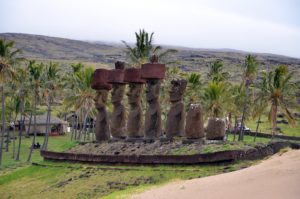
According to a statement released by the University of Oregon , a team of researchers led by archaeologist Robert J. DiNapoli has demonstrated that the people of Easter Island, also known as Rapa Nui, continued to construct monumental stone statues well after 1600, a date around which some scholars believe society on the island suffered a collapse. The team investigated the construction sequence of the statues, also known as moai, by studying radiocarbon dates taken at 11 sites. They found that the islanders began to build moai soon after they settled Rapa Nui in the thirteenth century and continued to construct them at least 150 years after the supposed collapse around 1600. Accounts left by Dutch explorers who reached the island in 1722 suggest the islanders were still using the moai for rituals. Later Spanish voyagers, who landed on the island in 1770, also reported the moai were still in use, though by 1774 the British explorer James Cook found that Rapa Nui was in a state of crisis and that many moai had been overturned. “The way we interpret our results and this sequence of historical accounts is that the notion of a pre-European collapse of monument construction is no longer supported,” DiNapoli said.

Researchers Will Search for Spanish Treasure Ship

Almost 400 years after storms sent one of Spain’s greatest treasure galleons to the bottom of the sea off Mexico , archaeologists from the two countries are to renew their search for the ship and its precious cargo of gold, silver and jewels.
Even before the tempests hit, the omens for the Nuestra Señora del Juncal’s return voyage in October 1631 were decidedly ill. A day before the fleet of which it was a part
set sail from Mexico, its commander died. The ships pressed on even though the Juncal
was in a poor state of repair and taking on water.
After weathering a fortnight’s storms, cutting the main mast and tossing cannons and
other heavy objects overboard in a desperate attempt to lighten the ship, the crew could
do no more. Of the 300 people onboard, 39 survived by climbing into a small launch.
In May, underwater archaeologists from Spain and Mexico will begin a 10-day search for the Juncal. It is hoped that the work will be just the beginning of a two-decade-long
scientific and cultural collaboration.
The joint project, which comes six years after Spain and Mexico signed a memorandum
of understanding over their shared underwater cultural heritage, aims not only to locate
and protect the Juncal but also to train a new generation of Latin American underwater
archaeologists.
https://www.theguardian.com/science/2020/feb/10/spain-and-mexico-renew-search-for-
17th-century-treasure-galleon

2,500-Year-Old Curse Tablets Found in Athens

ATHENS, GREECE Haaretz reports that thirty well-preserved lead curse tablets have been discovered in a 2,500-year-old well in downtown Athens by a team of archaeologists from the German Archaeological Institute, who were investigating the
water supply for a nearby bathhouse built in the first century B.C. More than 6,000 ancient graves have also been found in the area, which served as the ancient city’s primary burial ground. The researchers explained that Athenians often placed tablets engraved with curses near wells or tombs, in the belief that the souls of the dead would carry the tablets to the gods of the underworld, who would enact the curse. Curses were written anonymously against named personal enemies, adversaries in court battles, athletes wishing bad luck on opponents, and rival merchants.

International Day of Women and Girls in Science

On 11 February, the United Nations, partners worldwide, women and girls will mark
the International Day of Women and Girls in Science, celebrating the theme, “Investment in Women and Girls in Science for Inclusive Green Growth.”
The Day focuses on the reality that science and gender equality are both vital for the
achievement of internationally agreed development goals, including the 2030 Agenda for Sustainable Development. However, long-standing biases and gender stereotypes are steering girls and women away from science related fields. According to data from the UN Scientific Education and Cultural Organization (UNESCO), fewer than 30% of
researchers worldwide are women and approximately 30% of all female students select
STEM-related fields in higher education. Globally, female students’ enrollment is
particularly low in ICT (3%), natural science, mathematics and statistics (5%), and
engineering, manufacturing and construction (8%).
In order to achieve full and equal access to and participation in science for women and
girls, and further achieve gender equality and the empowerment of women and girls,
the UN General Assembly adopted resolution A/RES/70/212 declaring 11 February as
the International Day of Women and Girls in Science.

The 1,500-Year-Old Love Story Between a Persian Prince and a Korean Princess that Could Rewrite History

By Dr. Kaveh Farrokh

February 2, 2020/in Anthropology , China, Culture , Heritage , India and Asia , Iran and Central Asia , Iran and China , Iran and Korea , People of Iran and Origins , Sassanians /by Kaveh Farrokh

The article “The 1,500-Year-Old Love Story Between a Persian Prince and a Korean Princess that Could Rewrite History” written by Mark Oliver was originally posted in Ancient Origins on May 8, 2018 . The version printed below has been slightly edited from the original version that appeared in the Ancient Origins venue.

More than a thousand years before the first European explorer reached Korea’s shores, the Persian Empire was writing love stories about Korean princesses. It’s a little-known story that could change the way we see our history. Recently, historians took a second look an old Persian epic written around 500 CE ( during the time of the Sassanians ) and realized that, at the center of the tale, was the unusual story of a Persian prince marrying a Korean princess.

It’s an incredible discovery. Up until recently, we weren’t sure that the Persians of that time even knew Korea existed. This new revelation shows Persia didn’t just make contact with Korea – these countries were intimately connected. And it might just call for a total rewrite of history.

The Kushnameh: A 1,500-Year-Old Persian Epic About Korea

The story is called the Kushnameh, and, in itself, it’s hardly a new discovery. It’s one of the most popular stories to come out of the Persian Empire, one that’s been told and retold countless times in the 1,500 years since it was written. The Kushmaneh is a massive, epic poem about an evil creature with elephant tusks named Kus who terrorizes a Persian family throughout the generations. The whole story spans across hundreds of years and thousands of lines of poetry – but the really interesting part is somewhere around the middle. There, the author sat down and dedicated an incredible 1,000 lines of poetic verse to describing life in Korea during the Silla dynasty.

King and Queen of Silla. South Korea, Seoul National Folk Museum – Traditional Korean Costumes of Silla Kingdom (57 BC – 935 AD) (Source: Ancient Origins ).

A Love Letter to Korea

Korea comes into play when the story starts to focus on a young, noble prince of Persia named Abtin. For his whole life, Abtin has been forced to live in the woods, hiding from the evil Kus the Tusked. He has only one thing to keep him safe: a magic book that tells him his future. It’s almost like breaking the fourth wall – Abtin has a copy of the book we’re reading, and he’s not above flipping ahead a few pages to see how it all ends. In fact, that’s just what he does. He reads the next chapter and finds out that he’s supposed to go to the Silla kingdom of Korea, and – after briefly getting confused and going to China – he winds up being welcomed with open arms by the king of Silla.

From here, the story is just page after page of lavish descriptions of how beautiful Korea is. Admittedly, some of it seems a little over-the-top. It says, for example, that Korea is so overflowing with gold that even the dogs are kept on golden leashes. But on the whole, the description is so accurate that modern historians are sure the author must have visited it himself .

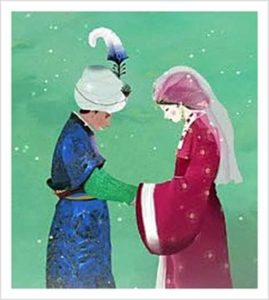
Abtin is mesmerized by the beauty of the country, and, soon after, by the beauty of its princess Frarang. He falls madly in love with Korean princess, begs the king for her hand in marriage, and she soon becomes his wife and the mother of his firstborn son.

Marriage of Abtin and Frarang (Source: Ancient Origins ).

The Story of a Korean Hero

It’s unlikely that any of this really happened, of course. For one thing, there’s limited evidence that Persia spent 1,500 years being terrorized by an immortal monster with elephant tusks, and even less that any early Persian princes had magic books that could tell them the future.

But the symbolism of having a Persian prince taking refuge in Korea and falling in love with a Korean princess is undeniable. This is hard proof that Persians didn’t just know about Korea 1,500 years ago; they had a deep, profound admiration for their nation.

What happens next, though, is what makes it a really big deal. Frarang’s son isn’t just a minor character. His birth is a turning point in the whole story. The fully Persian prince spends his whole life in hiding and, when he finally returns to his homeland, ends up getting killed by Kus’s men. But it’s his half-Korean son who turns things around.

Frarang and Abtin’s son ends up raising up an army and leading the revolt against Kus. For centuries, in this story, Persia gets tormented by an evil, tusked monster. It’s only under the command of a half-korean boy and his mother that Persia finally wins its freedom.
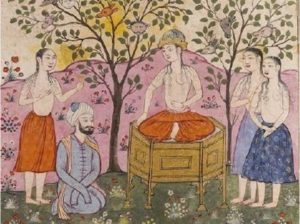
This 14th-century Persian painting portrays a scene from the Kushnameh in what scholars believe could be the betrothal of prince Abtin (kneeling) and Silla princess Frarang (sitting) (Source: Ancient Origins ).

A Secret Hidden in Plain Sight

For 1,500 years, people have been reading this story without any idea what they were looking at. For a long time, we assumed that the story was just about China. In the story, the Korean Silla kingdom is referred to as “Chin”, a name that could refer to either China or Korea. It’s even a plot point in the story, in fact. At first, Abtin, like most historians, misreads the “Chin” in his magic future-telling book and thinks he’s supposed to go to China. And, just like modern historians, it takes him years before he realizes that it’s actually talking about China.

Recently, though, historians have taken a look at those descriptions again and realized just how perfectly they really do match up with Korea . The descriptions in this book don’t sound anything like China, but they’re a perfect, vivid description of 6th-century Korea – a place where, believe it or not, they really did keep their dogs on leashes of pure gold.

A Total Rewrite of History

This really might completely change the way we see history. For a long time, Korea has seemed an isolated, distant place from the Western world; but this story suggests that the east and west may not have been so disconnected after all.

It took until 1653 before the first European explorer reached Korea. That’s more than 1,100 years after Kushnama was written. We’ve always known that Persia had some kind of contact with Korea. They were both a part of the Silk Road, and we’ve known for some time that Persian goods somehow ended up in Korea. Generally, though, it was assumed that they were just part of a bigger trade network. In this story, though, Korea isn’t a trade partner. They’re a trusted ally, and they’re so important to the Persians that they literally can’t overcome evil until they trust the leadership of a half-Korean, half-Persian prince. It’s an incredibly symbolic marriage of cultures. It puts other relics under a new light, as well. In an ancient tomb in Gyeong-Ju, for example, there is an old monument to a Korean war hero who looks an awful lot more like a Persian soldier than a Korean one. Now, some people are starting to wonder if this might really be the monument to a forgotten Persian hero who fought for Korea.

There’s no telling how far this could go. It could change everything about how we see the history of these countries. After all, this is far more than a love story between two people. It’s a love story between two nations.

Related posts:

1. The Persian Prince Pirooz (Pirouz)

2. New Course: The Silk Route-Origins and History

3. Spanish Military History Journal Interview with Kaveh Farrokh

4. UNESCO: Recognition of Polo (Chogan) as a Sport Originating In Iran

5. 2500-Year Old Achaemenid Persian Palace Found In Turkey

6. Two New courses for Fall 2018

7. Pirooz in China: Defeated Persian army takes Refuge

8. The 2,800 Year Embrace in the Hasanlu Tomb

9. Persian Roots of Puccini’s Opera Turandot (Turandokht)

10. A Survey and History of the Persian Population of the Caucasus

http://kavehfarrokh.com/uncategorized/the-1500-year-old-love-story-between-a-persian-

prince-and-a-korean-princess-that-could-rewrite-history