
We believe that all cultural, historical and natural heritage, wherever they are should be preserved. LEARN MORE
Archives

International Day of Zero Tolerance for Female Genital Mutilation

Female genital mutilation (FGM) comprises all procedures that involve altering or injuring the female genitalia for non-medical reasons and is recognized internationally as a violation of the human rights, the health and the integrity of girls and women.
Girls who undergo female genital mutilation face short-term complications such as severe pain, shock, excessive bleeding, infections, and difficulty in passing urine, as well as long-term consequences for their sexual and reproductive health and mental health.
Although primarily concentrated in 30 countries in Africa and the Middle East, female genital mutilation is a universal problem and is also practiced in some countries in Asia and Latin America. Female genital mutilation continues to persist amongst immigrant populations living in Western Europe, North America, Australia and New Zealand.
To promote the elimination of female genital mutilation, coordinated and systematic
efforts are needed, and they must engage whole communities and focus on human rights, gender equality, sexual education and attention to the needs of women and girls who suffer from its consequences.

* In 2020 alone, there are 4.1 million girls around the world are at risk of
undergoing female genital mutilation.
* According to UNFPA, the cost of preventing female genital mutilation is $95 per
girl today.
* 30 countries where female genital mutilation is prevalent are experiencing high
population growth, with at least 30 per cent of girls undergoing female population
under the age of 15.
* Young people aged 15 to 19 in countries where female genital mutilation is
prevalent are less supportive of continuing the practice than are adults aged 45 to
49.
* In many countries where female genital mutilation is prevalent, young girls have a
dramatically increased chance of growing up without the risk of undergoing this
harmful practice compared to their mothers and grandmothers.

Calvin Klein perfume “big hit” with Banham Zoo’s big cats

A zoo has appealed for people to donate any unwanted perfume to its big cats. Banham Zoo, in Norfolk, said the scents were a roaring success with their lions, tigers
and leopards who “respond very positively to unique scents when sprayed in their enclosures”.
The zoo has asked visitors to drop off any perfume when they visit as stocks are running low. Animal manager Mike Woolham said: “For some reason Calvin Klein perfume is a huge hit with all big cats.” Keepers say the strong scents help enrich the animals’ environments and investigating the smells keeps the big cats mentally and physically active. In October 2018 bottles of Obsession for Men by Calvin Klein were brought in by wildlife officials to try to capture a tiger thought to have killed people in India’s western state of Maharashtra.
The experts there said the fragrance contains a pheromone called civetone derived from the scent glands of a cat-like mammal called the civet, which is often used in cologne. During an experiment at New York’s Bronx Zoo, jaguars were showed to love the perfume.
https://www.bbc.com/news/uk-england-norfolk-51301815

Well-Preserved Artifacts Recovered from London Cesspit

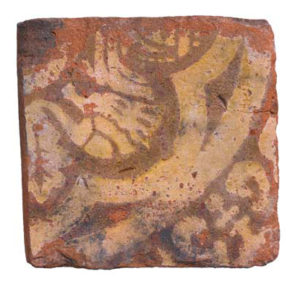
LONDON, ENGLAND— The Guardian reports that archaeologists have recovered a variety of medieval artifacts from a 15-foot-deep cesspit under Somerset House, an eighteenth-century Neoclassical building in central London. The well-preserved objects, which include pottery vessels, an iron spur, a ring, a belt buckle, a bone-handled fork, a
pendant, a thick chain that might have been attached to a candlestick, and floor tiles usually found in palaces and monasteries, are thought to have come from medieval mansions that previously stood on the site. In the seventeenth century, the cesspit was partially filled and used as a cellar. All four walls of the chalk-lined cesspit remain intact.

The International Day of Education

The world will celebrate the International Day of Education on 24 January 2020, a day proclaimed by the United Nations General Assembly to honor education and its entrality to human well-being and sustainable development. The 2020 celebration will position education and the learning it enables as humanity’s greatest renewable resource and reaffirm the role of education as a fundamental right, a public good and an enabler of the 2030 Agenda for Sustainable Development. It will frame ‘inclusive and equitable quality education and lifelong learning for all’ as a goal in and of itself, as well as a necessary means to accelerate progress to meet the targets of all 17 Sustainable Development Goals. As the UN organization mandated to lead on education in the 2030 Agenda, UNESCO will draw on its convening power and engage with education and development partners to celebrate the Day around the world by focusing on the many ways learning can empower people, preserve the planet, build shared prosperity and foster peace.The 2020 theme ‘Learning for people, planet, prosperity and peace’, highlights the integrated nature of education, its humanistic aims, as well as its centrality to our collective development ambitions. It also gives stakeholders and partners flexibility to tailor the celebration for diverse audiences, a variety of contexts and for priority themes.

A humanistic approach to education implies an integrated approach to the multiple individual and collective purposes of education. Education is at the heart of both personal and community development. Its mission is to help all people develop their talents fully and to realize their creative potentials, including responsibility for their own lives and the capacity to contribute to society. Education is also a powerful catalyst – for combating poverty and inequality, improving health and well-being, and overcoming discrimination. It is the key to achieving gender equality and is vital for peacebuilding and reconciliation. Education initiatives have a proven potential to help marginalized populations gain access to justice that contributes to peaceful societies.

Portrait of a Lady found in wall confirmed as stolen Klimt

A painting discovered by chance last month is a Gustav Klimt original that was stolen nearly 23 years ago, Italian authorities have confirmed. The painting, Portrait of a Lady, was taken from a gallery in the northern city of Piacenza in 1997. It was thought to have disappeared for good until gardeners clearing away ivy found it concealed in an external wall at the same gallery. The Klimt has an estimated value of at least €60m ($66m; £51m). Why the painting was left in the wall at the Ricci Oddi Gallery of Modern Art is still a mystery.
Read more: https://www.bbc.com/news/world-europe-51156682

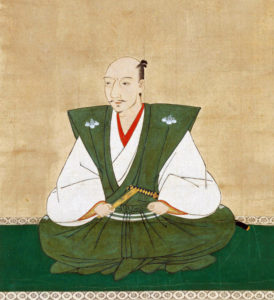
Sixteenth-Century Wall Unearthed at Japan’s Gifu Castle

GIFU, JAPAN— The Asahi Shimbun reports that a stone wall uncovered at Gifu Castle
may have been built by feudal lord Oda Nobunaga, who is remembered for attempting to unify Japan and ruling over much of the island of Honshu. The castle was first built atop central Japan’s Mount Kinkasan in the early thirteenth century A.D. Nobunga captured it in 1567, after a two-week siege, and renovated the structure with stone walls whose gaps were filled with smaller stones. The surviving section of wall measures about six feet long and two feet tall, and matches historic descriptions. It had been previously thought that Nobunaga’s structure was completely torn down during reconstruction work in 1910. To read about an important Shinto shrine where mariners made offerings as early as the
fourth century A.D.

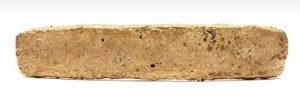
Gold Bar Recovered in Mexico City Analyzed

According to a report in The Guardian , fluorescent X-ray chemical analysis conducted by scientists at the National Autonomous University of Mexico has revealed that a four-
pound gold bar, unearthed in downtown Mexico City during a 1981 construction project,
was cast between 1519 and 1520. At that time, historical records indicate that Spanish
conquistador Hernán Cortés melted down gold objects taken from the Aztec treasury and formed them into gold bars for transport to Europe. The conquistadors are thought to have dropped this gold bar in what had been a canal in the Aztec capital city of
Tenochtitlan while fleeing a battle that began after Moctezuma, the Aztec emperor, was
assassinated. A year later, in 1521, Cortés returned and laid siege to and captured
Tenochtitlan, whose residents had been weakened by smallpox

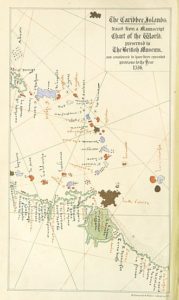
New Thoughts on the Colonization of the Caribbean

Live Science reports that William Keegan of the Florida Museum of Natural History and Ann Ross of North Carolina State University analyzed the structure of 103 skulls unearthed in the Caribbean, Florida, and Panama, and concluded that the Carib people may have traveled to the Bahamas from South America as early as A.D. 800. When Christopher Columbus arrived in the Bahamas in 1492, he recorded conflicts between the indigenous Arawak and Caribs, whom he described as marauding cannibals. But researchers lacked evidence showing that the Caribs had actually migrated so far north, and therefore doubted the accuracy of the explorer’s account. The new test results and archaeological evidence suggest that Carib settlers from the Yucatán Peninsula reached the Caribbean around 5000 B.C., and they then traveled to Cuba
and the northern Antilles, while Arawaks from Colombia and Venezuela arrived in Puerto Rico between 800 and 200 B.C. The study also indicates that Caribs from the northwest Amazon were the first to arrive in the Bahamas and the island of Hispaniola. Keegan said this migration pattern fits with the spread of a unique pottery type as well. He and Ross now think Columbus may have actually encountered the Caribs, but they said that there is still no real evidence that the Caribs practiced cannibalism..”

A new kind of research is blossoming at Historic Jamestown

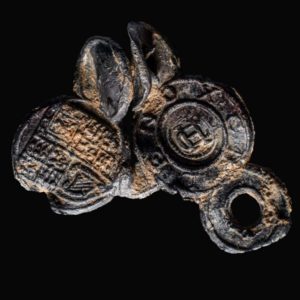
After decades of research, a new project with Jamestown Rediscovery is highlighting a little-known aspect of 17th century life. Cathrine Davis, a PhD student in anthropology at William & Mary and extern at Historic Jamestown, has undertaken a project to organize and classify hundreds of lead seals that have been found on the site.
The seals have been discovered on the site since Jamestown Rediscovery started in 1994, said Leah Stricker, associate curator at Historic Jamestown. They help understand and identify the shipping and creation of textiles in Jamestown.
“Lead seals are like clothing tags,” Davis said. “They’re attached to goods and give
information about their origins, merchants that sold them and dyers. They track the
movement of textiles throughout the production system.”
Stricker said each lead seal is different and unique, providing a look into different stamps from various locations and most times even having imprints of the material on them. Davis said there aren’t that many scholars researching the topic, making her one of the only specialists of lead seals in North America. She said she first became interested in lead seals as a student in Michigan where she was learning how goods were packaged in the fur trade. A professor told her about lead seals and she realized that no one was researching the topic. “It’s a very small world, so there’s little known about them,” she said. “That’s what makes them so rewarding, I’m doing all my own original research for the most part andit’s like a giant jigsaw puzzle. It’s a whole different world.” At Historic Jamestown, Davis started a project this semester to identify, organize and catalog the more than 300 lead seals in the collection.
Stricker said the project is important to the organization’s research because it makes it
easier for local and surrounding archaeologists to better access the information. Once
Davis is done, a researcher can come to Historic Jamestown and find, identify and match new lead seals with ones already in the collection. She said the goal is to have the collection accessible to researchers online as well. But more importantly, organizing and understanding the lead seals gives historians a greater insight to life in the Jamestown Colony.

“These help us look at bigger questions, like international trade and what was going on in the world,” Stricker said. “It seems like now our world is more globalized than ever, but even in 1607 there was a huge movement of trade.” Davis said it helps the interpreters at Historic Jamestown to better understand their clothing, which is an aspect of historical research that is missed because textiles don’t preserve well over time. “We know a lot about how people were living but not a lot about what they were
wearing,” she said. Davis expects to have the project completed by May, at which point archaeologists from all over can utilize her work. But until then, she is content to continue putting together the pieces of this historical puzzle.
https://wydaily.com/local-news/2019/12/26/a-new-kind-of-research-is-blossoming-at-
historic-jamestown/

Archaeologists Have Discovered the World’s Oldest Illustrated Book in an Ancient Egyptian Burial Site

By Sarah Cascone
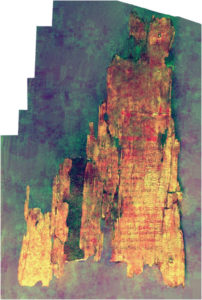
Egyptologists have discovered the oldest copy of what is being called the world’s first illustrated book, a 4,000-year-old edition of the “Book of Two Ways,” an ancient Egyptian guide to the afterlife considered to be a forerunner to the “Book of the Dead.” The text predates previously known versions by some 40 years. The find was first published in the Journal of Egyptian Archaeology in September by Harco Willems, a professor at the University of Leuven in Belgium. Unlike modern books, these historic writings weren’t inscribed on bound pages, but on the walls of sarcophagi. They were meant to aid the deceased through the perilous journey to the underworld, during which they might be beset by demons or raging fires. If one were to cast the correct spells, he or she might achieve immortality. Though the plank’s inscriptions reference a governor named Djehutynakht, Willems’s research has revealed that the coffin originally held the remains of a woman named Ankh, referred to throughout the text as “he.” That is in keeping with Egyptian mythology, where rebirth was the purview of male deities, and dead women adopted male pronouns to be more like Osiris, god of death.
Coffin fragments bearing the earliest known version of the “Book of Two Ways,” an
ancient Egyptian text considered the world’s first illustrated book. Photo courtesy of
Harco Willems. “To me, what’s funny is the idea that how you survive in the netherworld is expressed in male terms,” Willems told the New York Times .
The Egyptologist has overseen digs at the Coptic necropolis of Dayr al-Barshā, used as a cemetery during the Middle Kingdom period, from about 2055 to 1650 B.C, since 2001. He excavated the ancient coffin fragments about 20 feet down a burial shaft at the complex of an ancient Egyptian provincial governor, or nomarch, named Ahanakhtin, in 2012. The fragile state of the artifacts, repeatedly ransacked by looters long ago, prevented them from being studied until now.
The planks of wood bear carved ink inscriptions and painted illustrations meant to ensure successful passage through the netherworld to Rostau, the realm of Osiris. (The text is called the “Book of Two Ways” because it offers instructions on how to travel either by land or by water.)
The pigments, however, have faded with time, and the faint markings are visible largely
thanks to high resolution imagery processed with DStretch software. Based on inscriptions on other tomb artifacts referencing Pharaoh Mentuhotep II, who reigned until 2010 B.C., Willems believes this newly identified “Book of Two Ways” is at least four decades older than any of the two dozen previously known versions of the text.
https://news.artnet.com/art-world/ancient-egyptian-oldest-book-1744110