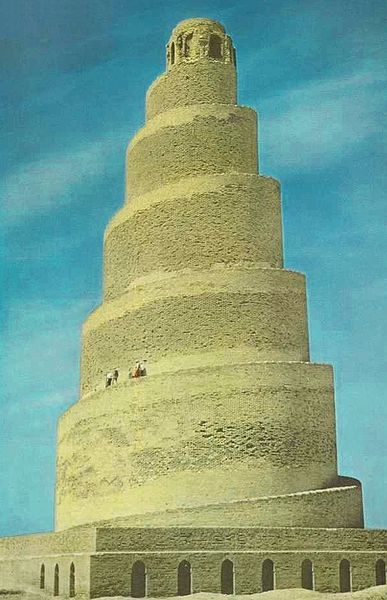

We believe that all cultural, historical and natural heritage, wherever they are should be preserved. LEARN MORE
Education

International Day to End Impunity for Crimes against Journalists

In the past eleven years close to 930 journalists have been killed for reporting the news and bringing information to the public. On average, this constitutes one death every four days. In nine out of ten cases the killers go unpunished. Impunity leads to more killings and is often a symptom of worsening conflict and the breakdown of law and judicial systems. UNESCO is concerned that impunity damages whole societies by covering up serious human rights abuses, corruption, and crime. Governments, civil society, the media, and everyone concerned to uphold the rule of law are being asked to join in the global efforts to end impunity.

The United Nations General Assembly adopted Resolution A/RES/68/163  (link is external)at its 68th session in 2013 which proclaimed 2 November as the ‘International Day to End Impunity for Crimes against Journalists’ (IDEI). The Resolution urged Member States to implement definite measures countering the present culture of impunity. The date was chosen in commemoration of the assassination of two French journalists in Mali on 2 November 2013.The United Nations General Assembly adopted Resolution A/RES/68/163 (link is external) at its 68th session in 2013 which proclaimed 2 November as the ‘International Day to End Impunity for Crimes against Journalists’ (IDEI). The Resolution urged Member States to implement definite measures countering the present culture of impunity. The date was chosen in commemoration of the assassination of two French journalists in Mali on 2 November 2013.


World Teachers’ Day

The United Nations’ (UN) World Teachers’ Day celebrates the role teachers play in providing quality education at all levels. This enables children and adults of all ages to learn to take part in and contribute to their local community and global society.

Teachers are recognized for their contributions to society on World Teachers’ Day.©iStockphoto.com/Ekaterina Monakhova
What Do People Do?
Various events are arranged in many countries around the world on or around October 5. These include celebrations to honor teachers in general or those who have made a special contribution to a particular community. The day may also be marked by conferences emphasizing the importance of teachers and learning, extra training sessions for teachers, recruitment drives for the teaching profession among university students or other suitably qualified professionals and events to increase the profile of teachers and the role they play in the media.
Trade unions or other professional organizations that represent teachers play an important role in organizing World Teachers’ Day events in many countries. These include:
• The Australian Education Union.
• The Canadian Teachers’ Federation.
• The Elementary Teachers’ Federation of Ontario (Canada).
• The All India Secondary Teachers’ Federation.
• The Japan Teachers’ Union.
• The Teachers Council (New Zealand).
• The National Union of Teachers (United Kingdom).
• The National Association of Schoolmasters Union of Women Teachers (United Kingdom).
• The National Education Association (United States).
Moreover, international organizations such as TESOL (Teachers of English to Speakers of Other Languages) and Education International organize international, national and local events. In some areas posters are displayed and pupils and ex-pupils are encouraged to send e-cards or letters of appreciation to teachers who made a special or memorable contribution to their education.
Background
On October 5, 1966, the Special Intergovernmental Conference on the Status of Teachers in Paris, France, was closed and the “Recommendation concerning the Status of Teachers” was signed by representatives of UNESCO and International Labour Organization. On October 12, 1997, the 29th session of UNESCO’s General Conference was opened. During this conference, on November 11, 1997, the “Recommendation concerning the Status of Higher Education Teaching Personnel” was adopted.
On October 5, 1994, the first World Teachers’ Day was held. This event has been organized on the same date each year since then. However, local events may be on some other date close to October 5, so that they do not fall during fall (northern hemisphere) or spring (southern hemisphere) school vacations. In 2002, Canada Post issued a postage stamp to commemorate World Teachers’ Day.

International Day for the Total Elimination of Nuclear Weapons

On September 26, the United Nations (UN) promotes a special day that calls for all countries to get rid of nuclear weapons.

17,000 Nuclear Weapons Worldwide

Nuclear weapons are explosive devices with a destructive power that comes from nuclear energy being released. More than half the world’s population live in countries that have nuclear weapons or are members of nuclear alliances. There are at least 17,000 nuclear weapons in the world today.

One single nuclear device can destroy a whole city and eliminate the natural environment and lives of future generations. They have already destroyed entire cities, like Hiroshima in Japan, where at least 150,000 people were killed or wounded after the city was bombed during World War II.

A World Without Nuclear Weapons

One of the UN’s oldest goals is to achieve worldwide nuclear disarmament – in other words, to see the world free of nuclear weapons. In December 2013, the UN decided to create a day to inform people and push governments to see the social and economic benefits of not having nuclear weapons. The Day for the Total Elimination of Nuclear Weapons is one of the UN’s efforts to seek more action on nuclear disarmament.

International Day for the Preservation of the Ozone Layer

The United Nations’ (UN) International Day for the Preservation of the Ozone Layer is celebrated on September 16 every year. This event commemorates the date of the signing of the Montreal Protocol on Substances that Deplete the Ozone Layer in 1987.

What Do People Do?

On this day primary and secondary school educators throughout the world organize classroom activities that focus on topics related to the ozone layer, climate change and ozone depletion. Some teachers use educational packages from the UN Environment Programme (UNEP) that have been specifically tailored to address topics about the Earth’s ozone layer.

Other activities that are organized by different community groups, individuals, schools and local organizations across the world include: the promotion of ozone-friendly products; special programs and events on saving the ozone layer; the distribution of the UNEP’s public awareness posters to be used for events centered on the International Day for the Preservation of the Ozone Layer; and the distribution of awards to those who worked hard to protect the Earth’s ozone layer.

Background

In 1987 representatives from 24 countries met in Montreal and announced to the world that it was time to stop destroying the ozone layer. In so doing, these countries committed themselves, via the Montreal Protocol on Substances that Deplete the Ozone Layer, to rid the world of substances that threaten the ozone layer.

On December 19, 1994, the UN General Assembly proclaimed September 16 to be the International Day for the Preservation of the Ozone Layer, commemorating the date when the Montreal Protocol on Substances that Deplete the Ozone Layer was signed in 1987. The day was first celebrated on September 16, 1995.

People may have lived in Brazil more than 20,000 years ago

People hunted giant sloths in the center of South America around 23,120 years ago, researchers say — a find that adds to evidence that humans reached South America well before Clovis hunters roamed North America roughly 13,000 years ago.

Evidence of people’s presence at Santa Elina rock shelter, located in a forested part of eastern Brazil, so long ago raises questions about how people first entered South America. Early settlers may have floated down the Pacific Coast in canoes before heading 2,000 kilometers east to the remote rock shelter, or they might have taken an inland route from North America, archaeologist Denis Vialou of the National Museum of Natural History in Paris and his colleagues report in the August Antiquity. Other South American sites reportedly occupied by Stone Age humans lie much closer to the coast than Santa Elina does.